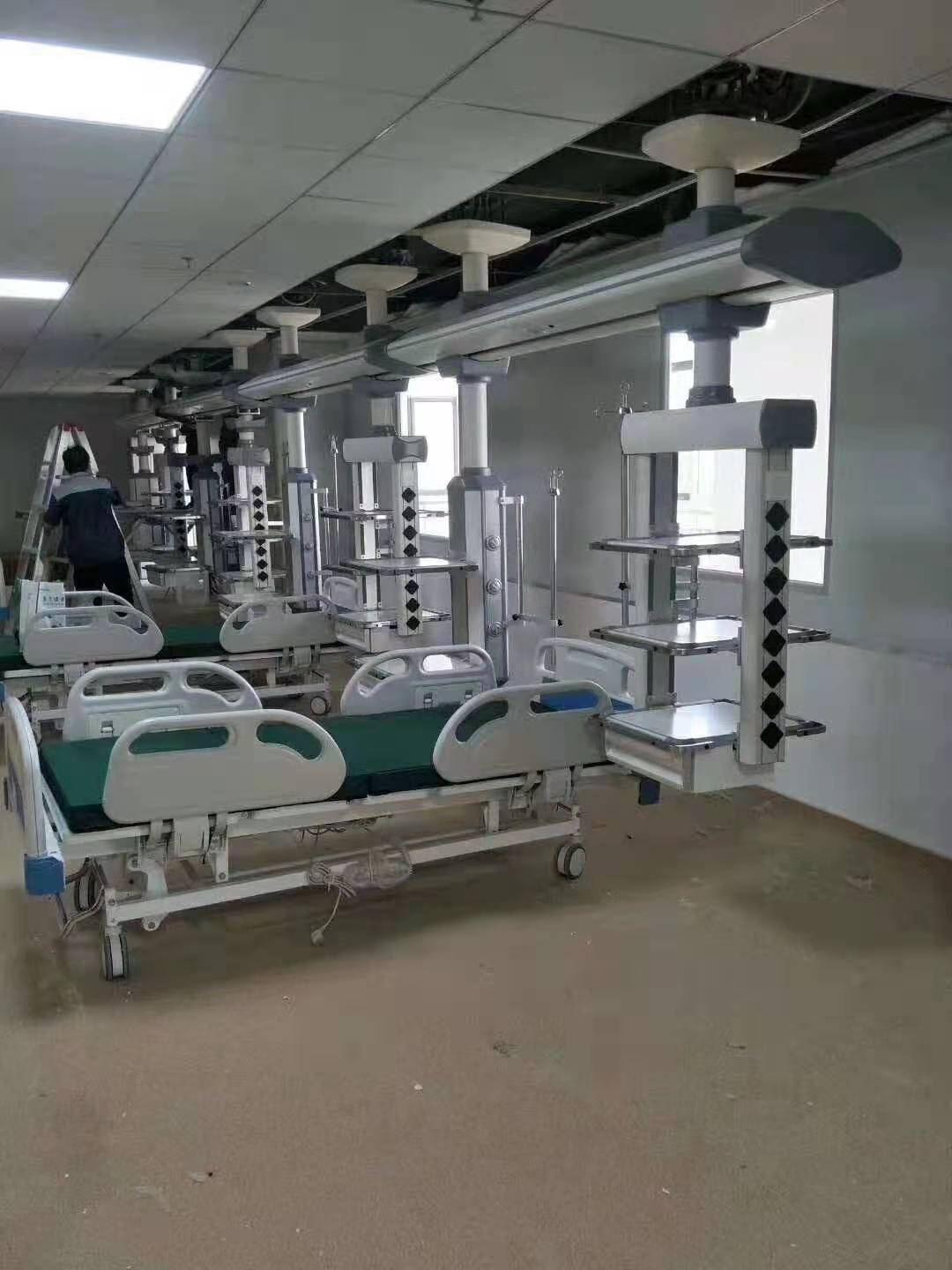

Executive Summary
ICU bed vs ward bed explained: the functional and configuration differences, the shared IEC 80601-2-52 compliance floor, real price ranges, and a step-by-step framework for configuring the right bed mix for your facility.
Every hospital bed tender I review contains the same expensive confusion. One procurement committee asks why it cannot fill every ward with ICU-specification beds “for future flexibility.” Another tries to equip a brand-new intensive care unit with discounted ward beds to protect the capital budget. Both mistakes come from the same place: treating the ICU bed vs ward bed question as a feature checklist instead of what it really is — a clinical risk and capacity planning decision that will shape patient safety, nurse workload, and lifecycle cost for the next ten to fifteen years.
Here is the shortest honest answer. An ICU bed is an integrated life-support platform: five or more powered functions, one-touch CPR release, Trendelenburg and reverse Trendelenburg tilt, a high safe working load that carries the combined weight of a ventilated patient and the machines attached to them, and connectivity that feeds alarms and patient data back to the care team. A ward bed is a recovery platform: two or three powered functions, straightforward safety rails, a comfortable pressure-redistribution surface, and a price point that lets a hospital deploy hundreds of units without breaking the capital plan. Neither is “better.” They are engineered for different levels of care — and buying the wrong one for the wrong unit is costly in both directions.
This guide breaks the decision down the way we walk through it with distributors and hospital groups sourcing from our hospital bed product line: what each bed type actually is, the specification gap function by function, the compliance baseline both must meet, what these beds really cost, and a practical framework for configuring the right mix across a facility. If you are mid-tender, pair this article with our hospital bed procurement checklist before you finalize the technical annex.
What an ICU Bed Actually Is — and What a Ward Bed Is For
The cleanest way to separate the two categories is by level of care. In the UK framework used widely in critical care planning, patients are graded from Level 0 (normal ward care) to Level 3 (advanced respiratory support plus multi-organ system support). Ward beds serve Level 0 and Level 1 patients: stable, recovering, needing observation and help with mobility. ICU beds serve Level 2 and Level 3 patients: ventilated, haemodynamically unstable, requiring continuous monitoring and frequent repositioning. The bed has to match the sickest patient who will realistically occupy it — not the average patient the hospital usually sees.
Critical care planning guidelines make the expectations explicit. The UK Department of Health and Social Care’s critical care unit design guidance requires ICU beds to be electrically operated, to provide cardiac chair and Trendelenburg positioning, and to accept pressure-relieving mattresses. Those three requirements alone already rule out the manual and semi-electric beds that fill most general wards. Everything else on an ICU bed — the integrated scale, the bed-exit alarms, the fifth-wheel steering — exists because a critically ill patient cannot wait for a portable X-ray, a bathroom scale, or four staff members to turn them safely.
A ward bed has a different job description. It must let a recovering patient sit up, eat, breathe more easily, and get in and out safely, with enough adjustability to protect nurses’ backs during routine care. Most modern ward beds offer two to three powered functions — backrest and knee break, sometimes height — and many hospitals still buy semi-electric models where height remains manual, because the clinical case for powered height in a low-acuity ward is thin and the budget math is unforgiving. The design priorities are comfort, durability at scale, and simple maintenance, because a general hospital runs these beds at high occupancy for a decade or more.
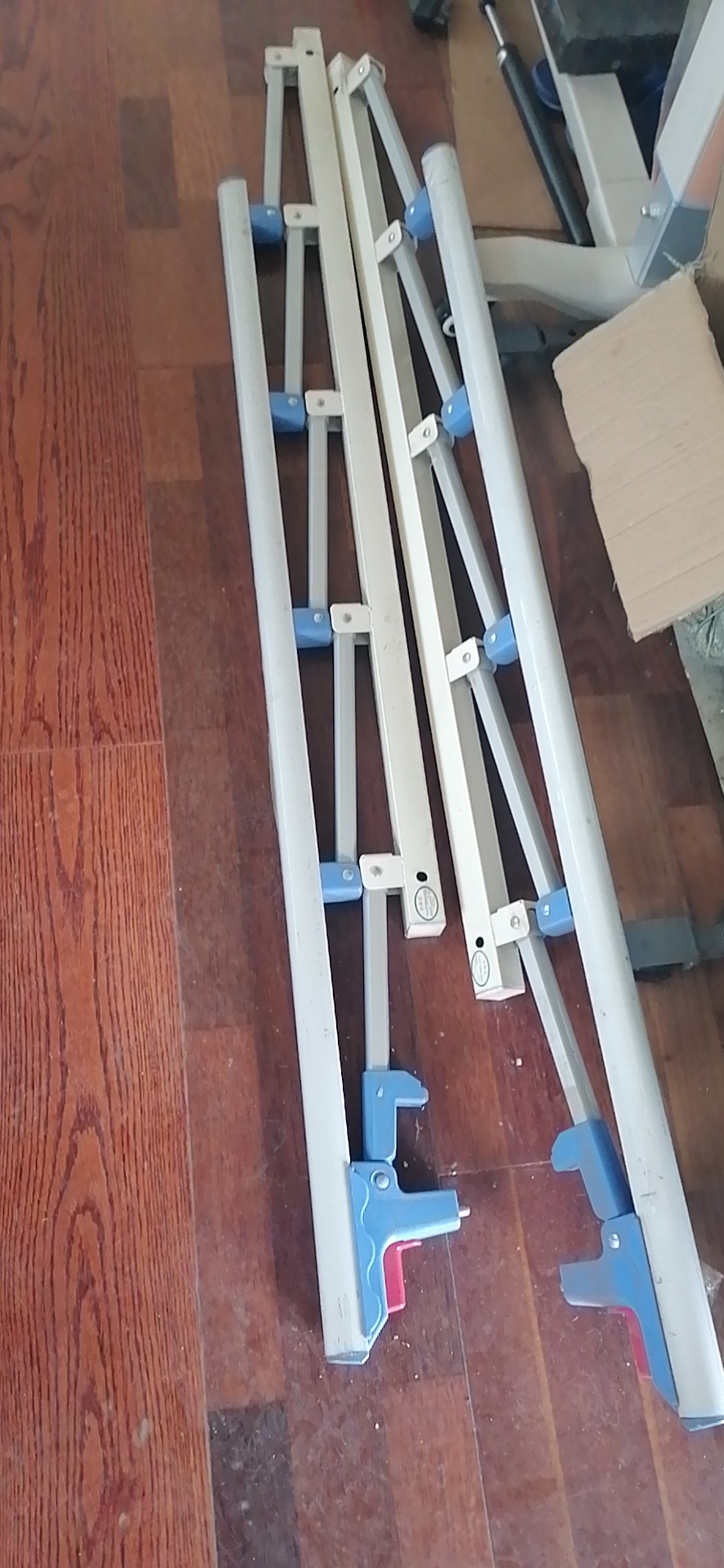
ICU Bed vs Ward Bed: The Specification Gap, Function by Function
The table below is the comparison we build into tender technical annexes. It reflects typical specifications across the market — individual models vary, so always verify each row against the manufacturer’s datasheet and the test reports behind it.
| Specification | ICU Bed (Typical) | Ward Bed (Typical) |
|---|---|---|
| Powered functions | 5–7+: height, backrest, knee, Trendelenburg, reverse Trendelenburg, often cardiac chair | 2–3: backrest, knee break, sometimes height |
| Trendelenburg / reverse tilt | Standard, commonly up to 12–18° each direction | Rarely offered; not clinically required |
| One-touch CPR release | Standard — flattens the platform in seconds | Rare; manual flattening accepted in low acuity |
| Safe working load (SWL) | Typically 250–320 kg, incl. patient + attached equipment | Typically 180–250 kg |
| Mattress platform | Up to ~224 cm long (often extendable), up to ~107 cm wide | ~190–200 cm × ~90 cm |
| Mobility / steering | Fifth-wheel steering or powered drive; central locking | Four corner casters with central brake |
| Side rails | Full-length ABS split rails, often with integrated controls | Full or half-length fold-down rails |
| Integrated weighing scale | Common — daily weights without transfer | Rare |
| Bed-exit / head-of-bed alarms | Common, multi-zone | Optional add-on |
| Nurse controls / patient lockout | Nurse panel with selective function lockout, standard | Basic patient handset |
| Connectivity (EHR, nurse call) | Increasingly standard on premium models | Rare |
| Support surface | Powered air / low-air-loss pressure-relief mattress standard | Foam or static-air pressure-redistribution mattress |
| Typical deployment | ICU/CCU, ED resuscitation bays, PACU, burn units | Medical-surgical wards, rehab, long-term care, home care |
Three rows deserve a closer look because they drive real clinical outcomes, not just spec-sheet points. First, Trendelenburg and reverse Trendelenburg: whole-frame tilt is how critical care teams manage shock, support airway procedures, and improve oxygenation, and premium ICU platforms now pair tilt with lateral-rotation therapy that vendor clinical programs link to shorter ICU stays and fewer pulmonary complications. Second, the one-touch CPR release: when a patient arrests, staff need a flat, firm surface in seconds, not a two-person manual flattening sequence. Third, safe working load: an ICU bed carries the patient plus ventilator, pumps, and monitors, which is why bariatric-capable frames with SWL above 250 kg are increasingly the ICU default — our bariatric hospital bed selection guide covers the SWL math in detail.
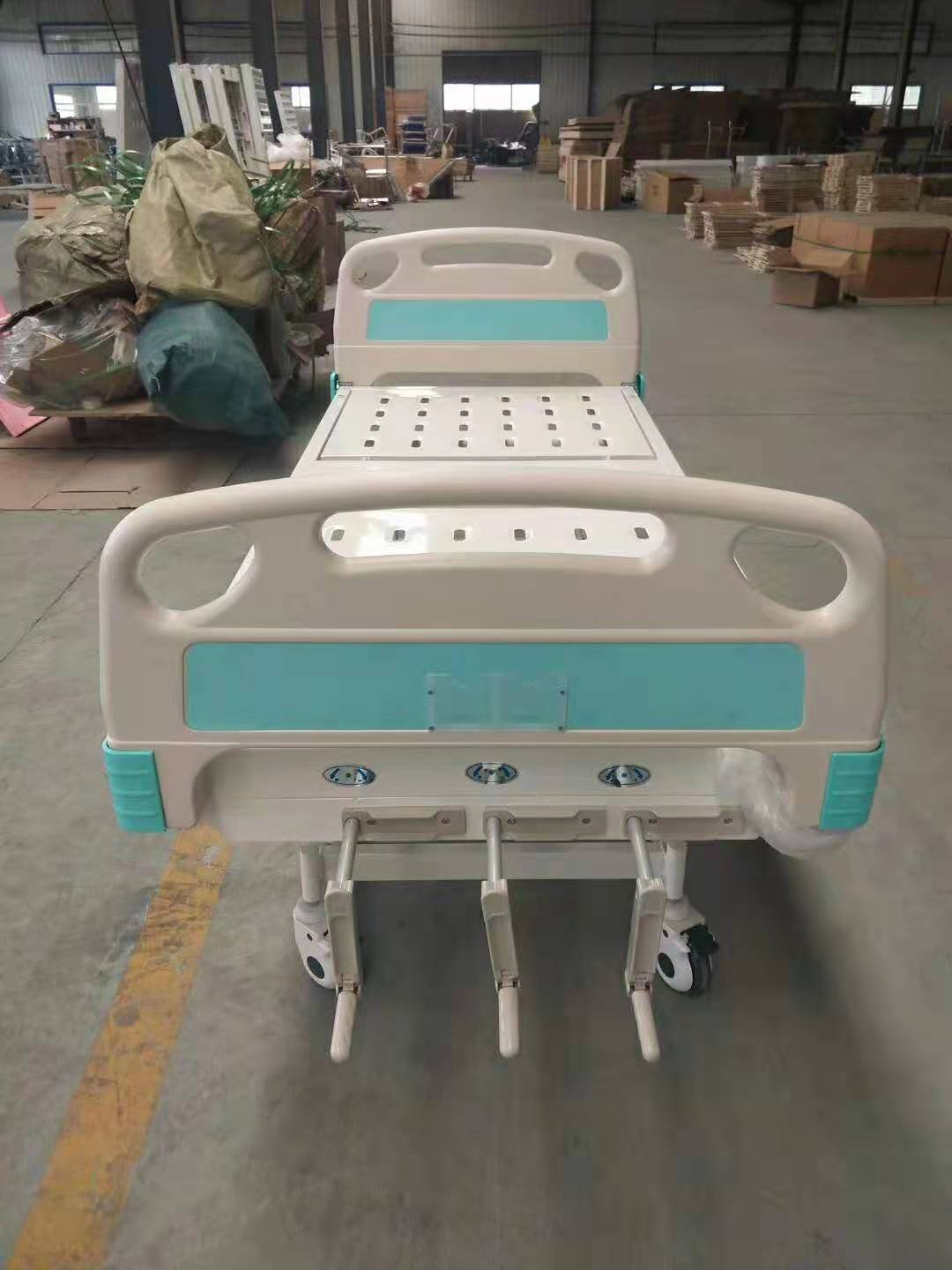
The Compliance Baseline Both Bed Types Must Meet
A common misconception is that ward beds are “just furniture” and escape medical device regulation. They do not. The international safety baseline for both categories is the IEC 60601-2-52 family — particular requirements for the basic safety and essential performance of medical beds — which the IEC has now republished as IEC 80601-2-52:2026, effective May 2026, replacing the long-serving IEC 60601-2-52:2009+AMD1:2015 edition. The new edition covers electric and manual adult medical beds alike and tightens requirements around entrapment zones (including the informative Annex CC guidance on V-shaped openings), side rail strength and height, lateral and longitudinal stability, and SWL marking. If a bed — ICU or ward — cannot show conformity with the current edition, it should not be on your shortlist.
Market access rules layer on top. In the United States, the FDA classifies an AC-powered adjustable hospital bed as a Class II device under 21 CFR 880.5100 (product code FNL), while manual beds fall to Class I — a useful reminder that adding motors raises the regulatory class, and with it the evidence burden. The FDA’s recognition of the older IEC 60601-2-52 Edition 1.0 runs out in July 2026, so US-bound buyers should insist on test reports against the current recognized edition. In Europe, beds are regulated under MDR 2017/745, and the manufacturer’s quality system should be certified to ISO 13485 — the same compliance floor we documented in our hospital bed safety standards overview. Our IEC 60601-1 electrical safety testing guide explains the general standard that sits underneath the bed-specific particular standard.
Warning: never let a “basic” ward bed skip the compliance floor. Entrapment-gap geometry, side rail fatigue, and electrical safety testing are exactly the same physics at a $900 ward bed as at a $20,000 ICU bed — and the patient who gets injured does not care which budget line paid for the frame.
For ICU beds specifically, verify the extras that the generic standard does not spell out: CPR release reliability over thousands of cycles, alarm integration with your nurse call system, electromagnetic compatibility with the bedside monitor stack, and — if you run portable imaging — C-arm clearance under the platform. These are acceptance-test items, not brochure items, and they belong in the tender’s mandatory requirements column.
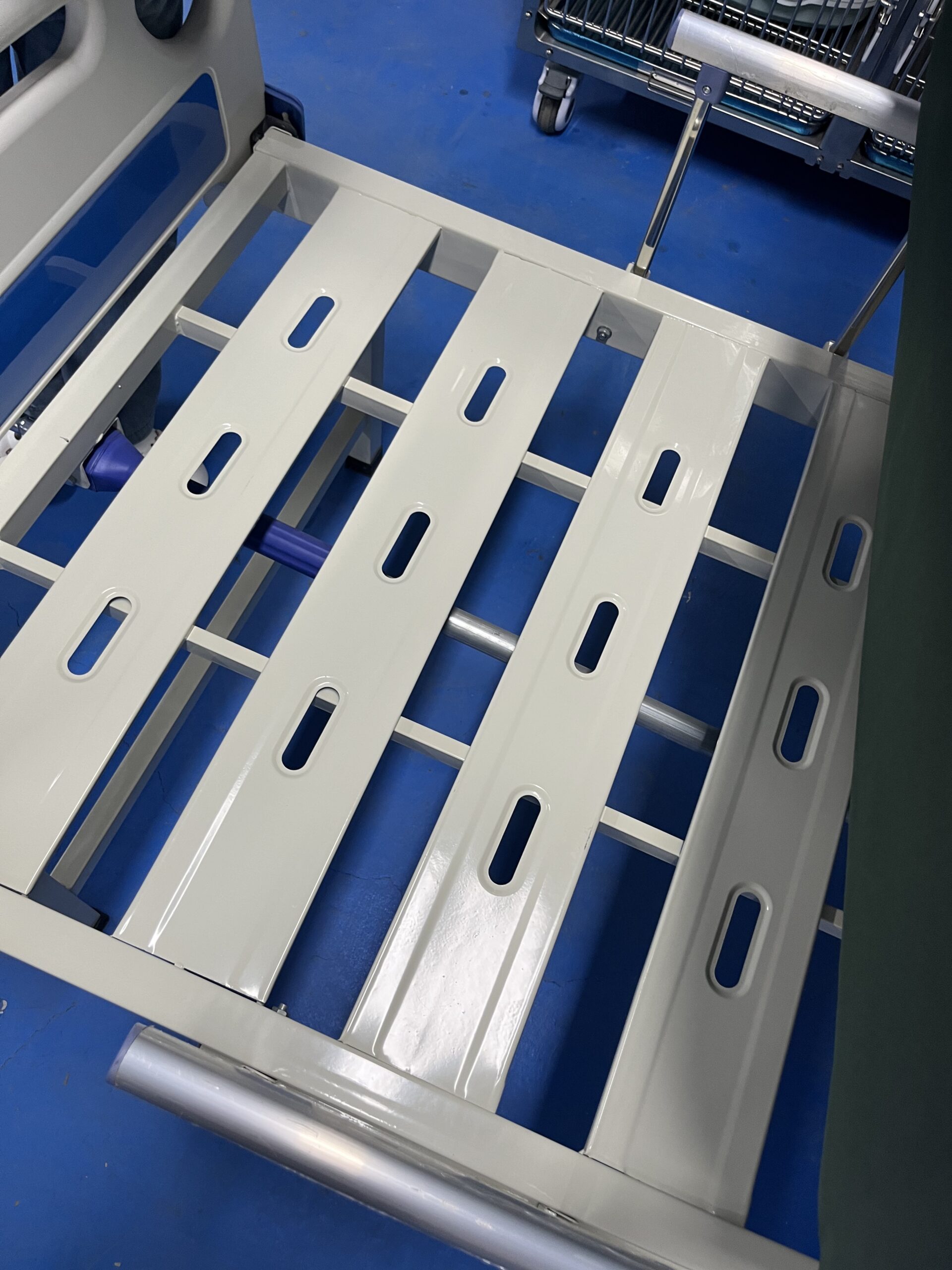
The Price Reality: What ICU Beds and Ward Beds Actually Cost
The price gap between the two categories is not a markup story; it is an engineering story. Published market references put a fully equipped ICU bed in the $10,000–$25,000+ range in high-income markets, against roughly $500–$2,500 for a general ward bed. Direct-from-manufacturer and OEM pricing compresses both bands substantially, but the ratio holds: an ICU bed costs several times what a ward bed costs, because it carries five to seven actuators instead of two, a heavier frame, integrated electronics, scales, and alarm systems. Anyone quoting an “ICU bed” at ward-bed prices is selling you a ward bed with a marketing label.
The market data confirms where the industry is heading. Mordor Intelligence sizes the global ICU beds market at $2.45 billion in 2026, growing at a 7.25% CAGR to $3.47 billion by 2031, with electric beds already holding about 39% of ICU bed revenue and Asia-Pacific the fastest-growing region as new critical care capacity comes online. The broader hospital beds market is projected to grow from $5.64 billion in 2026 to $10.74 billion by 2034, and industry analysts report that electric configurations now account for the majority of new installations, with roughly four in ten newly installed beds worldwide carrying digital monitoring features. Hospitals are voting with their budgets: higher-acuity capability, connected beds, and safer patient handling.
Then there is the cost of getting the bed-surface decision wrong. In the United States alone, an estimated 2.5 million acute care patients develop a hospital-acquired pressure injury each year, and the literature puts the cost of a single case at $20,000 to over $150,000 per stay. That is why ICU procurement should always budget the bed and its pressure-relief surface as one therapeutic system, and why early-mobility features — stand-assist positions, lateral rotation, low-height egress — have moved from premium options to expected specifications in critical care. The same whole-life logic applies to the ward fleet, as we detailed in our hospital bed total cost of ownership analysis: acquisition is typically only 40–60% of what a bed costs over a decade.
Experience tip: price the bed and its mattress as one line item in every tender. A $15,000 ICU bed with the wrong surface will cost you more in one pressure injury than the entire price difference between it and the premium surface you deleted to save budget.

How to Configure the Mix: A Procurement Framework That Works
Hospitals rarely buy “ICU beds or ward beds” — they buy a fleet that has to cover a spectrum of acuity. The facilities that get this right follow a four-step framework we have refined across dozens of fleet projects, from district hospitals to multi-site groups. If you are comparing electric configurations for the ward tier, our electric hospital bed models overview maps the common two-, three-, and five-function layouts.
Step 1: Map Acuity Before You Count Beds
Start from patient flow, not bed counts. Classify every care area by the level of care it delivers: Level 3 and Level 2 patients need true ICU beds; high-dependency and step-down areas need five-function beds with pressure-relief surfaces even if they are not licensed ICU; general medical-surgical wards need reliable two-to-three-function beds; rehab and long-term care add low-height and fall-prevention priorities. The most common configuration error we see is a hospital buying its ICU beds last, after the ward budget is spent — which is exactly backwards, because the ICU tier is the one you cannot clinically compromise.
Step 2: Build a Tiered Specification Matrix
Translate the acuity map into a tiered matrix so every department gets the right bed and nothing gets over- or under-specified. A typical tiering looks like this:
| Care Tier | Recommended Bed Configuration | Key Requirements |
|---|---|---|
| ICU / CCU / ED resus | Full ICU bed, 5–7 functions | CPR release, Trendelenburg, high SWL, integrated scale, alarms, powered pressure surface |
| High dependency / step-down | Five-function electric bed | Powered height + tilt, pressure-relief surface, nurse lockout; CPR release preferred |
| General medical-surgical ward | Two-to-three-function electric or semi-electric | Backrest + knee break, safe rails, pressure-redistribution mattress, easy-clean design |
| Rehab / long-term care | Low-height electric profiling bed | Fall mitigation, egress support, homely aesthetics, durable casters |
Step 3: Standardize Platforms Across Tiers
Where clinical requirements allow, buy tiers from the same manufacturer platform. Shared actuators, one handset family, interchangeable rails and casters, and common control electronics shrink your spare parts inventory, simplify technician training, and turn most repairs into same-day swaps. A 200-bed hospital running three bed platforms instead of seven typically cuts its parts stockholding by a third or more — and every part that is in stock is a bed that never went down waiting for freight.
Step 4: Lock Parts and Service Into the Contract
The bed contract is not finished when the purchase order is signed. For the ICU tier especially — where a down bed can mean a diverted ambulance — negotiate a committed parts availability period of eight to ten years, a first-fill spare kit (handsets, actuators, control boxes, caster sets, CPR release cables), and defined dispatch times for critical spares. Our spare parts and service program is built around exactly this structure, because the lifecycle cost of a bed is decided in the parts pipeline, not the showroom.

Five Mistakes We See in ICU Bed vs Ward Bed Tenders
- Buying ward beds for the ICU to save budget. The savings evaporate the first time staff need Trendelenburg, a flat CPR surface in seconds, or a scale weight on a vasoactive drip protocol — and the risk never goes away.
- Buying ICU beds for every ward “for flexibility.” You pay four to ten times the price, train hundreds of nurses on functions they will never use, and stock expensive spare parts for features that add no clinical value in low acuity.
- Specifying the mattress separately from the bed. Bed and surface are one therapeutic system for pressure injury prevention; mismatched pairs void warranties and underperform clinically.
- Accepting outdated compliance evidence. Test reports against withdrawn editions of IEC 60601-2-52, or missing ISO 13485 certification, are a regulatory and safety liability that outlives the warranty.
- Ignoring doorways, lifts, and floor loads. ICU beds are longer, wider, and far heavier than ward beds; a bed that cannot ride your elevators or pass your corridor corners is a capital asset that never reaches the patient.
Warning: put a live CPR-release test and a full function cycle into your acceptance protocol for every ICU bed, on arrival, before the invoice is released. It takes ten minutes per bed and it is the cheapest insurance policy in the hospital.
If your project involves private-labeling beds for a regional market or adapting specifications to local standards, an experienced manufacturer can compress the whole timeline — our OEM/ODM localization service covers everything from regulatory documentation to market-specific configurations.
Conclusion
The ICU bed vs ward bed question resolves cleanly once you anchor it to acuity instead of price. ICU beds are life-support platforms — five to seven powered functions, CPR release, Trendelenburg, high SWL, integrated scales and alarms — built for Level 2 and 3 patients and priced accordingly at several times the cost of a ward bed. Ward beds are recovery platforms — two to three functions, robust and economical at scale — built for everything below high dependency. Both must meet the same compliance floor, now IEC 80601-2-52:2026, with FDA Class II status for powered beds in the US and MDR 2017/745 in Europe.
Configure the mix by mapping acuity first, building a tiered specification matrix, standardizing platforms, and locking parts and service into the contract. Evaluate every tier on ten-year cost rather than day-one price, and budget the bed and its pressure-relief surface as a single system. If you want a specification matrix and a tiered quotation built for your facility’s actual acuity profile, talk to our engineering team through the contact page — we run this framework with hospitals and distributors every week.
Frequently Asked Questions
Can a hospital use a ward bed in the ICU?
Technically a patient can lie in one, but clinically it is the wrong tool. Critical care planning guidance expects ICU beds to be electric with cardiac chair and Trendelenburg positioning and pressure-relieving mattresses, and real ICU practice adds one-touch CPR release, integrated scales, bed-exit alarms, and high safe working loads. A ward bed provides none of these as standard, which is why using ward beds in critical care is a patient-safety compromise, not a budget saving.
How much more does an ICU bed cost than a ward bed?
Published market references put ICU beds in the $10,000–$25,000+ range in high-income markets, against roughly $500–$2,500 for general ward beds — a multiple of roughly four to ten times depending on configuration and market. Direct-from-manufacturer sourcing narrows both bands, but the ratio holds because the ICU bed carries far more actuators, a heavier frame, and integrated electronics. Always compare on ten-year total cost, not sticker price.
What is the single most important feature on an ICU bed?
If you forced a critical care team to keep one feature, most would name the one-touch CPR release: the ability to flatten the platform into a firm resuscitation surface in seconds, at the push of a button or lever. Close behind it are Trendelenburg positioning for shock management and the pressure-relief support surface, because immobility-related complications are among the most common and most expensive adverse events in critical care.
Do ICU beds and ward beds follow the same safety standard?
Yes — the same baseline. IEC 80601-2-52:2026 (the successor to IEC 60601-2-52) covers the basic safety and essential performance of adult medical beds whether electric or manual, ICU-grade or ward-grade, including entrapment zones, side rail strength, stability, and SWL marking. What differs is the regulatory class and the extra functional verification an ICU bed needs: in the US, an AC-powered adjustable hospital bed is FDA Class II while a manual bed is Class I.
How should a hospital decide how many ICU beds to buy?
Start from your acuity data, not a ratio table: review the last two years of admissions for Level 2 and Level 3 patients, ICU occupancy and refusal rates, and planned service expansion such as new surgical volumes. Then add a step-down tier of five-function beds to stop high-dependency patients occupying ICU beds by default. Most planning exercises land on critical care capacity as a single-digit share of total beds, but the defensible number is the one your own patient-flow data supports.
Related reading: Private Hospital Group ICU Buildout: A 36-Bed Package.
You May Also Like...

Bariatric OR Package: Table, Bed and Trolley Coordination
A bariatric OR package coordinates the operating table, the patient bed and the trolley for...

Lumen vs Lux: What These Surgical Light Units Mean
Lumen and lux are not the same thing. Lumen measures the total light a fixture...

Emergency Department Equipment for Trauma, Resuscitation and Triage
An emergency department is built around speed, and its equipment has to be ready the...