Source ceiling-mounted, wall-mounted, and mobile LED surgical lights from a CE and ISO 13485 medical equipment manufacturer. We support single-head, dual-head, and camera-integrated configurations for distributors, hospitals, and operating room projects.
Surgical Lights (also called OT lights, shadowless operating lamps, or operating room lights) are high-intensity LED illumination systems designed to provide bright, shadow-free, and color-accurate light at the surgical field during operative procedures. Sanyang Medical manufactures ceiling-mounted, wall-mounted, and mobile LED surgical lights delivering 50,000–160,000 lux with CRI ≥ 96, adjustable color temperature (3500K–5000K), and aerodynamic laminar-flow-compatible heads, certified to CE and ISO 13485 standards for hospitals and surgical centers worldwide.
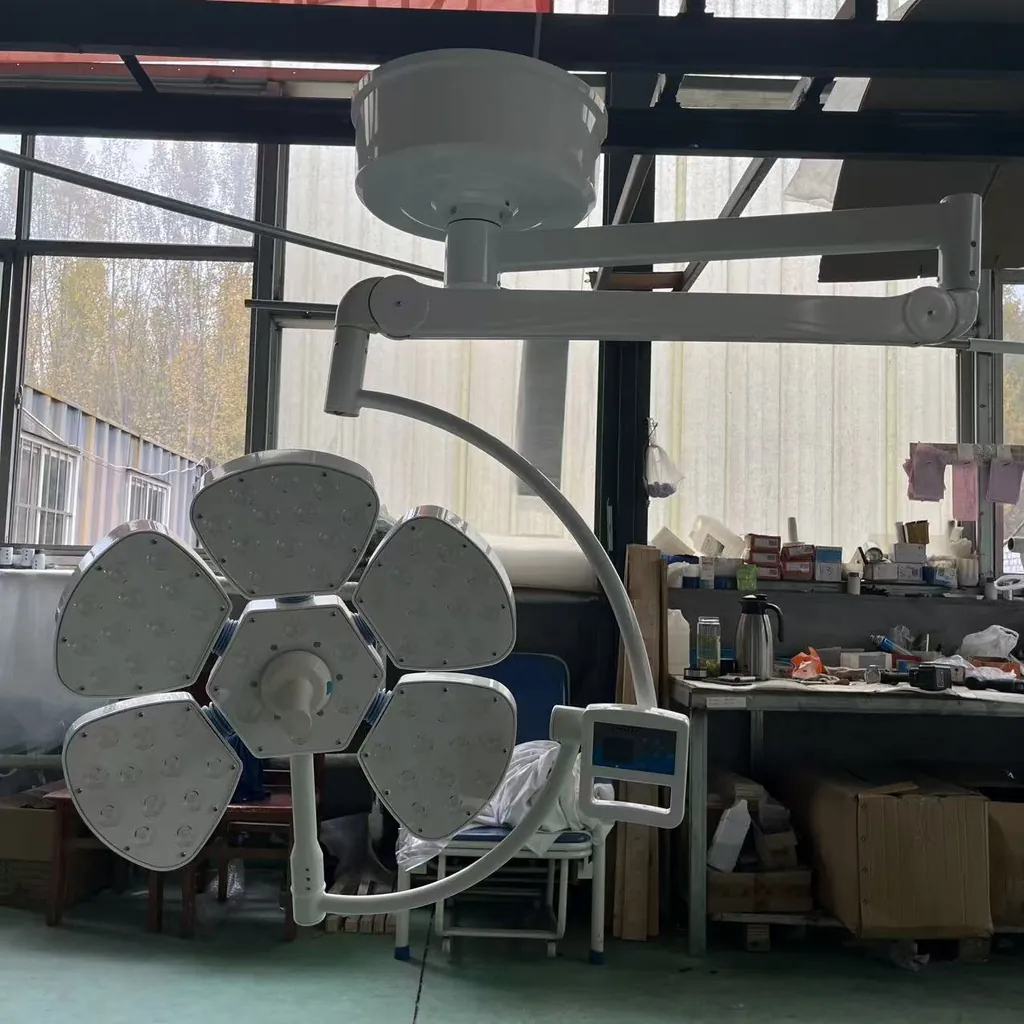
Advanced laminar flow design

Adjustable color temperature

Portable floor stand model

Built-in HD surgical camera

For complex surgical theaters
Three core platforms cover everything from examination rooms to hybrid operating theaters. Use this matrix to shortlist the right series before requesting detailed datasheets.
| Series | Petal Five LED | 700/500 Color LED | LED 500 Mobile |
|---|---|---|---|
| Central Illuminance | Up to 160,000 Lux | Up to 140,000 Lux | 50,000 – 120,000 Lux |
| Color Temperature | 3500K – 5000K adjustable | 3500K – 5000K adjustable | Fixed 4500K (optional adjustable) |
| Mounting Options | Ceiling single / dual head | Ceiling, wall, dual-head | Mobile floor stand with battery option |
| Best-Fit Scenario | Class 100-10,000 laminar flow ORs, teaching hospitals | General surgery and multi-specialty operating theaters | Outpatient clinics, emergency rooms, field hospitals |
| Camera Integration | Optional HD/4K camera arm | Optional HD camera module | Not applicable |
Core parameters for our standard surgical light configurations, aligned with the verification points hospital engineers apply during tender evaluation. Custom OEM specifications and multi-language panels are available upon request.
| Illuminance (Lux) | 50,000 – 160,000 Lux (Continuously Adjustable) |
|---|---|
| Color Temperature (K) | 3500K – 5000K (Variable options available) |
| Color Rendering Index (CRI) | Ra ≥ 95, ensuring accurate tissue differentiation |
| Depth of Illumination | Deep-cavity light column engineered for narrow incisions |
| LED Bulb Lifespan | > 50,000 Hours |
| Temperature Rise (Surgeon’s Head) | < 1°C (Cold-light thermal management) |
| Safety Standard | Designed to IEC 60601-2-41 for surgical luminaires |
| Power Supply | 110-240V, 50/60Hz (Compatible with global grids) |
| Minimum Order Quantity (MOQ) | 10 Units |
Surgeons rely on consistent tissue differentiation and zero visual fatigue. Our LED light engines are calibrated to deliver stable illumination metrics throughout long procedures.

Advanced LED heat dissipation ensures the temperature rise at the surgeon’s head remains under 1°C. Prevents tissue desiccation in the surgical cavity and keeps the operating team comfortable during long procedures.

Accurate color reproduction across the spectrum allows surgeons to clearly distinguish between subtle variations in blood vessels, muscle, and organ tissue, reducing operative risk and visual fatigue.
Hundreds of individually calculated LED lenses create an overlapping light column. It penetrates deep into narrow cavities and eliminates shadows even when partially blocked by heads or hands.
Shadow dilution and depth of illumination are the two metrics that separate a true surgical luminaire from a bright ceiling lamp. Here is what happens inside the light head.

Different procedures place different demands on illuminance, field size, and positioning range. Our configurations are deployed across the following clinical scenarios.

Main/satellite dome pairs deliver 160,000 lux peak output with independent angle control, covering multi-surgeon teams and large open-cavity procedures without repositioning mid-operation.

The LED 500 floor-stand platform rolls between treatment bays on lockable casters, with battery backup options for facilities where ceiling infrastructure or power stability is limited.

HD/4K camera arms mounted at the sterile center of the light head capture the surgeon’s field of view for live broadcast, recording, and telemedicine consultation in digital operating rooms.
Procurement goes beyond the light head. We support hospital contractors and distributors with the engineering reliability required for smooth installation and zero-maintenance operation.
From budget-sensitive outpatient clinics to high-end teaching hospitals, our modular systems scale to match your specific clinical and budgetary requirements.
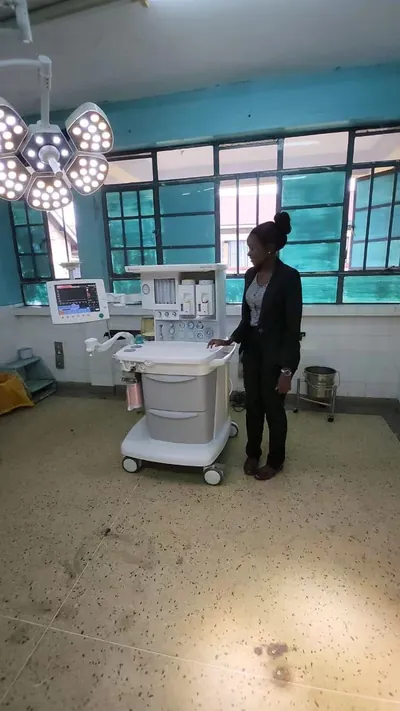
The standard choice for minor surgery rooms, outpatient clinics, and budget-conscious procurement. Delivers focused, uncompromising shadowless performance with a simplified ceiling or wall footprint and lower installation cost.

The workhorse of major operating theaters. The main/satellite double dome combination allows surgeons to illuminate different angles simultaneously, eliminating blind spots in complex, multi-surgeon procedures.

Designed for teaching hospitals and digital ORs. Features built-in HD/4K cameras and integrated monitor suspension arms for real-time surgical recording, broadcasting, and telemedicine consultation.
We control the entire manufacturing process of our surgical lights, from CNC machining of the suspension arms to the dynamic balance testing of the LED heads. This ensures stable lead times and consistent quality for your major hospital projects.
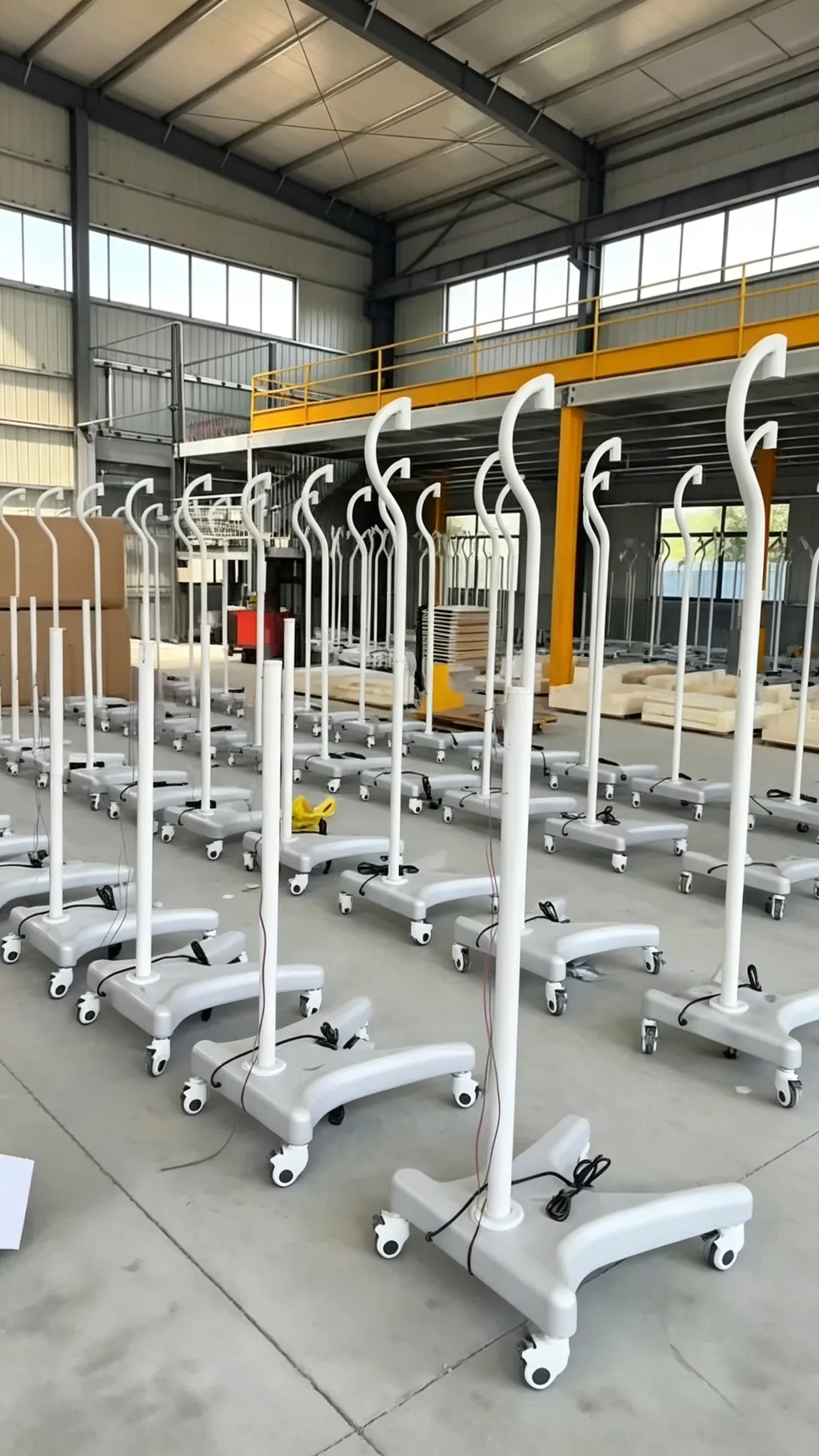

Our surgical lights are manufactured under strict international quality management systems. We provide complete documentation packs to support your local registration, tender bidding, and customs clearance. Sanyang Medical has manufactured hospital equipment in its 15,000 m2 factory in Qufu, Shandong since 2015, supplying CE-certified surgical lights and shadowless operating lamps to distributors and hospital projects across five export regions: North America, Europe, Africa, the Middle East, and Southeast Asia.
Confirms compliance with European medical device safety and performance standards.
Download PDFCertifies our comprehensive quality management system for medical device manufacturing.
Download PDFEssential document for product registration and import clearance in many international markets.
Download PDFA surgical light project succeeds or fails at installation. Our delivery workflow is built to keep contractors, biomedical engineers, and clinical staff aligned from purchase order to first surgery.
Before production is released, your contractor receives ceiling load-bearing specifications, pre-embedded flange drawings, and wiring diagrams so structural work finishes before the crates arrive. Typical lead time is 25-35 days depending on configuration volume.
Export-grade seaworthy packaging protects optical components in transit. We supply step-by-step installation manuals and video guidance, and our engineers support remote commissioning calls with your local installation team.
We provide operation and preventive-maintenance training materials in English (localized on request), covering sterilizable handle replacement, dimming presets, and routine cleaning protocols for infection-control teams.
Private hospitals and distributors choose suppliers who stay reachable after the invoice. Our after-sales system is designed to keep downtime near zero across the product’s service life.

Clear answers to the structural and optical questions distributors and hospital buyers ask most often.
Ask a Custom QuestionOur surgical lights use a multi-lens matrix design that creates overlapping light beams. This ensures that even if the surgeon’s head or hands block part of the light, the remaining beams still fully illuminate the surgical cavity without casting shadows.
Match the configuration to surgery complexity, coverage needs, and budget. Single-head models suit minor surgery rooms, outpatient clinics, and budget-sensitive projects. Dual-head main/satellite combinations are the standard for major operating theaters where multiple surgeons work from different angles simultaneously.
Yes. The light heads feature an aerodynamic petal or streamlined dome shape that minimizes air turbulence. This allows purified laminar airflow to reach the surgical table seamlessly, meeting Class 100 to Class 10,000 clean room standards.
Standard configurations deliver 50,000 to 160,000 lux of continuously adjustable central illuminance, with a color rendering index of Ra 95 or higher and adjustable color temperature between 3500K and 5000K for accurate tissue differentiation.
Absolutely. Ceiling load-bearing is a critical safety factor. We provide detailed CAD installation drawings, pre-embedded parts guidance, and exact load-bearing requirements for contractors before the equipment arrives on-site to prevent installation delays.
Yes. We support OEM/ODM customization for regional distributors. The touchscreen interface can be programmed in your local language, and documentation, labels, and packaging can be localized for your market.
Surgical lights carry a standard 24-month warranty from installation acceptance. LED engines are rated for more than 50,000 hours, and we hold spare LED modules, control boards, and sterilizable handles in stock for rapid dispatch to distributors.
LED surgical lights use solid-state LED engines instead of halogen bulbs. They run cooler at the surgeon’s head, deliver 50,000–160,000 lux with CRI ≥ 95, and last more than 50,000 hours, while halogen OT lamps typically need bulb replacement after roughly 1,000 hours and radiate more heat into the surgical field. See our spare parts service for LED module availability.
A surgical light typically delivers 40,000 to 160,000 lux at a 1-meter working distance. IEC 60601-2-41, the international standard for surgical luminaires, sets a minimum central illuminance of 40,000 lux, and major operating theaters usually specify 120,000–160,000 lux for deep-cavity procedures. Our LED OT light series covers this full range with continuous dimming.
A shadowless operating lamp is an OT light built with multiple lenses or reflectors whose light beams overlap at the surgical field, so the surgeon’s head and hands never cast a dark shadow into the wound. Shadowless operating lamps are standard equipment in operation theatres across South Asia, the Middle East, and Africa.
An OT light (operation theatre light) is the standard term for a surgical light in South Asia, the Middle East, and Africa. It refers to the same shadowless operating lamp equipment used worldwide. Sanyang manufactures ceiling mounted, wall mounted, and mobile LED OT lights for hospitals, clinics, and distributors in these markets.
Choose a ceiling mounted surgical light when the room has fixed operating tables and solid ceiling structure — it saves floor space and supports double dome configurations for major surgery. Choose a mobile surgical light with floor stand and battery option for clinics, emergency rooms, or facilities sharing one light between rooms. Request a double dome surgical light price list or mobile unit quotation from our export team.
Surgical lights are one part of a functioning theater. Bundle procurement with our matching OR equipment to simplify logistics, installation, and after-sales under a single factory contact.
Electric and hydraulic operating tables engineered to pair with our ceiling light coordinates for full-field illumination coverage.
View Operating TablesCeiling supply units for gas, power, and equipment management, coordinated with light suspension layouts during CAD planning.
View Medical PendantsSee how we deliver complete operating room packages for hospital projects, from layout design to equipment commissioning.
Explore Solutions