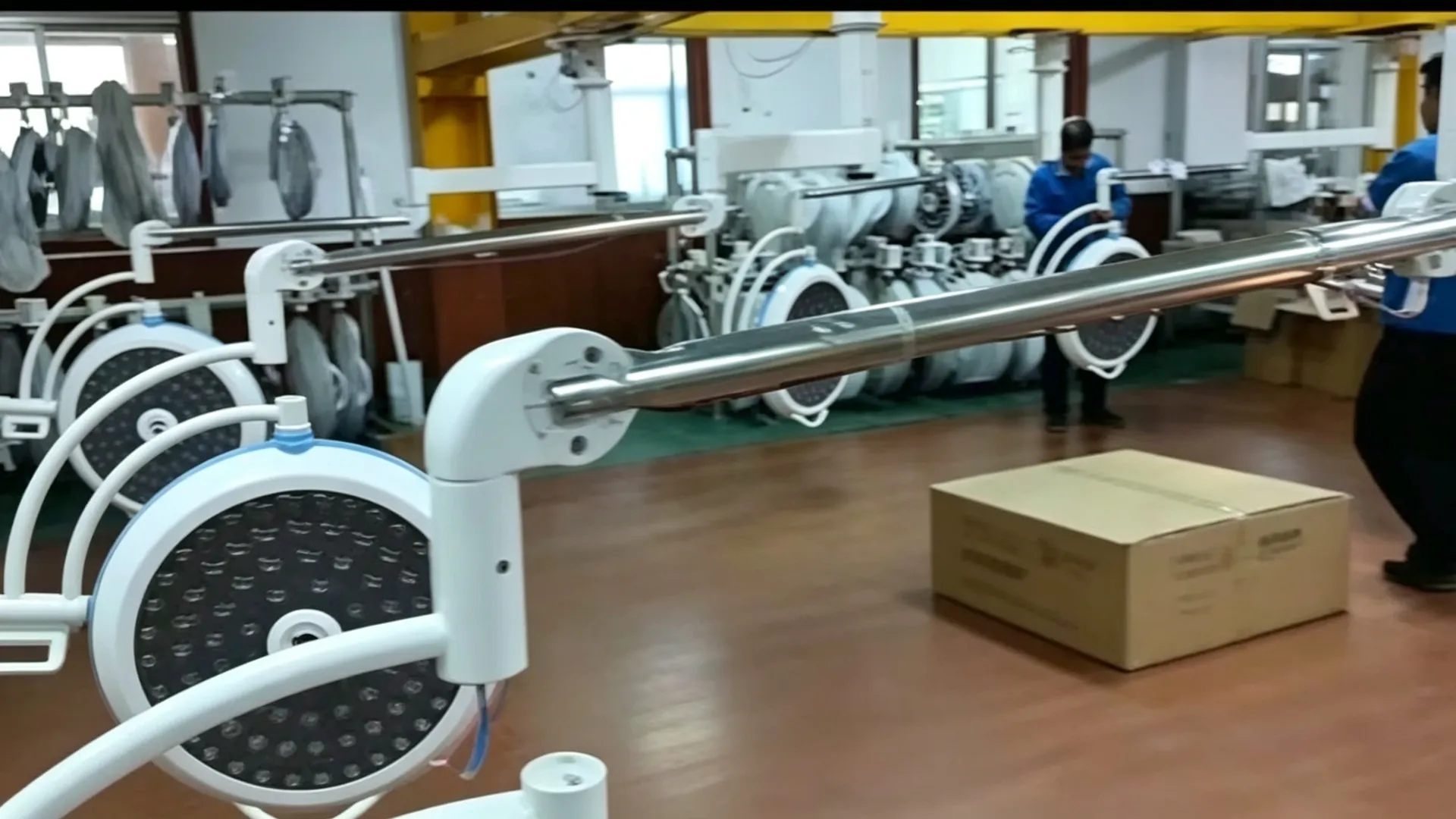

The modern operating room depends on far more than a bright overhead lamp. Surgical light accessories — sterile handles, integrated camera systems, on-board monitors, and articulating mounting arms — transform a basic illumination source into a precision surgical tool. For procurement managers and biomedical engineers evaluating an operating room equipment package, understanding what each accessory does, how it integrates with existing systems, and what specifications to request in a quotation can save significant time and budget downstream.
This guide walks through the most common surgical light accessories, explains why they matter clinically, and offers practical tips for specifying them correctly when sourcing from a medical equipment manufacturer.
Why Surgical Light Accessories Matter
A surgical light by itself provides illumination, typically in the range of 40,000 to 160,000 lux at the center of the light field. However, surgery is rarely a one-person operation, and the needs of the surgical team extend well beyond raw brightness. Surgeons need shadow-free, coaxial illumination that tracks their line of sight. Infection control teams need surfaces that can be draped and sterilized quickly. IT departments need video feeds that integrate with the hospital’s recording and telemetry infrastructure.
According to the World Health Organization, medical devices must be classified and documented according to their intended use, and accessory items carry their own regulatory weight within a device system. The WHO’s medical devices fact sheet explains the regulatory expectations and quality requirements that apply across markets, which is why accessory specification should never be an afterthought in procurement.
The right combination of accessories reduces surgical workflow interruptions. A well-specified sterile handle, for instance, allows the surgeon to reposition the light head without breaking the sterile field — a task that would otherwise require a circulating nurse to adjust the lamp manually, adding seconds of delay each time.
For the complete range of options and a specification sheet on Surgical Lights, see our Lámparas quirúrgicas product guide.
(function(){var f=document.querySelectorAll(‘.yt-facade’);for(var i=0;i<f.length;i++){(function(el){el.addEventListener('click',function(){var id=el.getAttribute('data-yt-id');el.innerHTML='’;});})(f[i]);}})();
Sterile Handles: The Most Overlooked Accessory
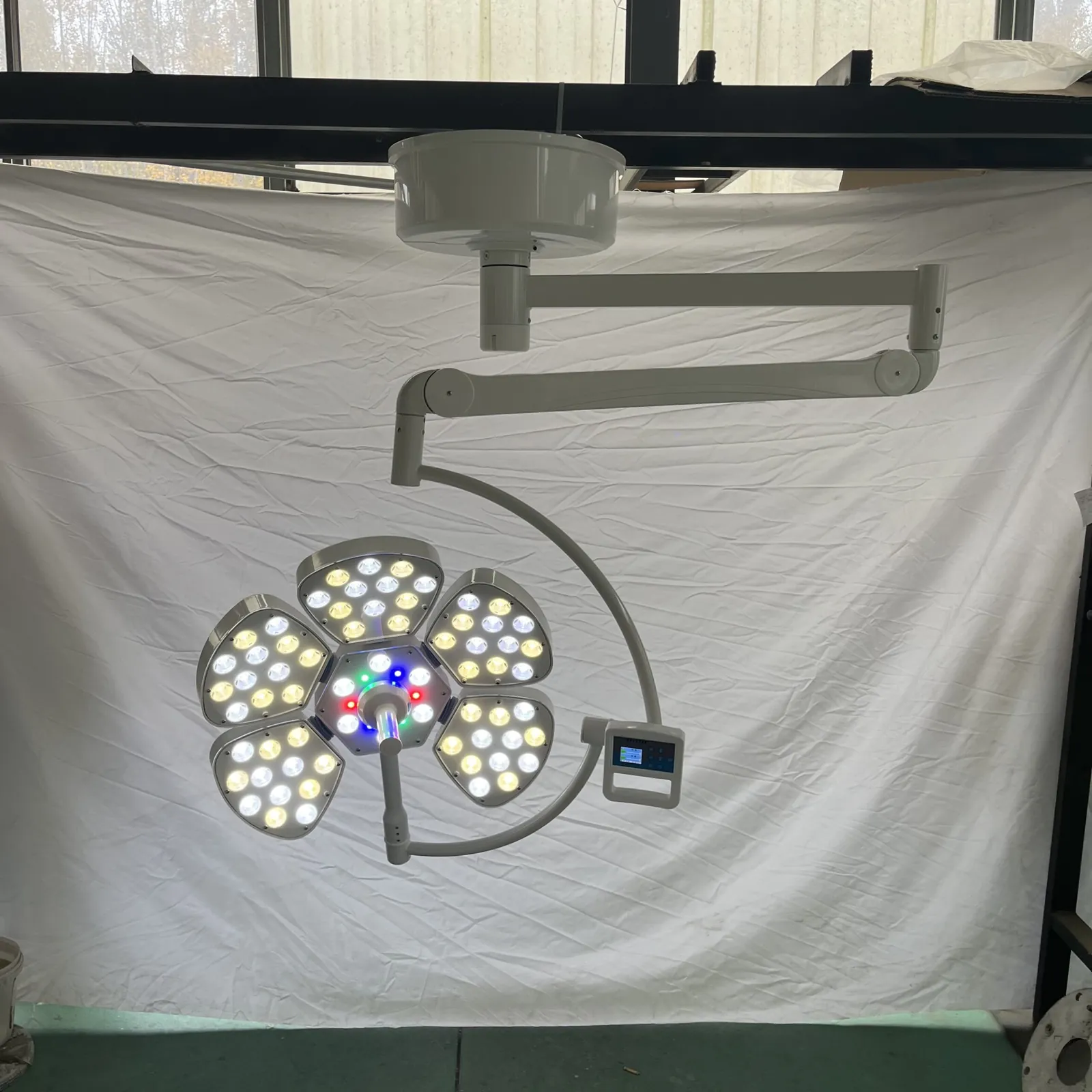
A sterile handle is a rigid or flexible grip attached to the light head that allows the surgeon to reposition the beam angle directly. The handle must be designed to accept a sterile drape or be autoclavable between procedures. Key specifications to evaluate include:
- Material: Most sterile handles are made from anodized aluminum or medical-grade stainless steel (304 or 316 grade). The surface finish should be smooth enough to prevent drape tearing.
- Length: Standard handles range from 150 mm to 300 mm. Longer handles provide greater leverage for repositioning heavy dual-dome light heads but add weight.
- Mounting interface: Handles attach via a clamp, a threaded stud, or a quick-release bayonet. The interface must match the light head’s accessory rail or mounting point.
- Autoclave compatibility: If the handle will be steam-sterilized between cases, confirm it can withstand repeated cycles at 134°C without degradation of any plastic or rubber components.
When sourcing sterile handles, buyers should confirm with the manufacturer whether the handle is included in the base light price or quoted as a separate line item. Some OEM suppliers include a single handle as standard, while others treat it as an add-on that must be explicitly requested in the RFQ.
Integrated Camera Systems
Camera integration has become one of the most requested surgical light accessories in the past five years. A camera mounted at the center of the light head provides a coaxial view — meaning the camera looks in the same direction as the light beam. This gives remote observers, teaching staff, and recording systems a perspective that closely matches what the surgeon sees.
There are two main categories of surgical light cameras:
- Standard-definition or HD cameras that output analog or digital video to an external monitor or recording device. These are the most common and typically offer 1080p resolution at 30 frames per second.
- 4K cameras with integrated encoding that stream video over the hospital network for live viewing on tablets, surgical planning displays, or telemedicine platforms. These units often support protocols such as RTSP or DICOM.
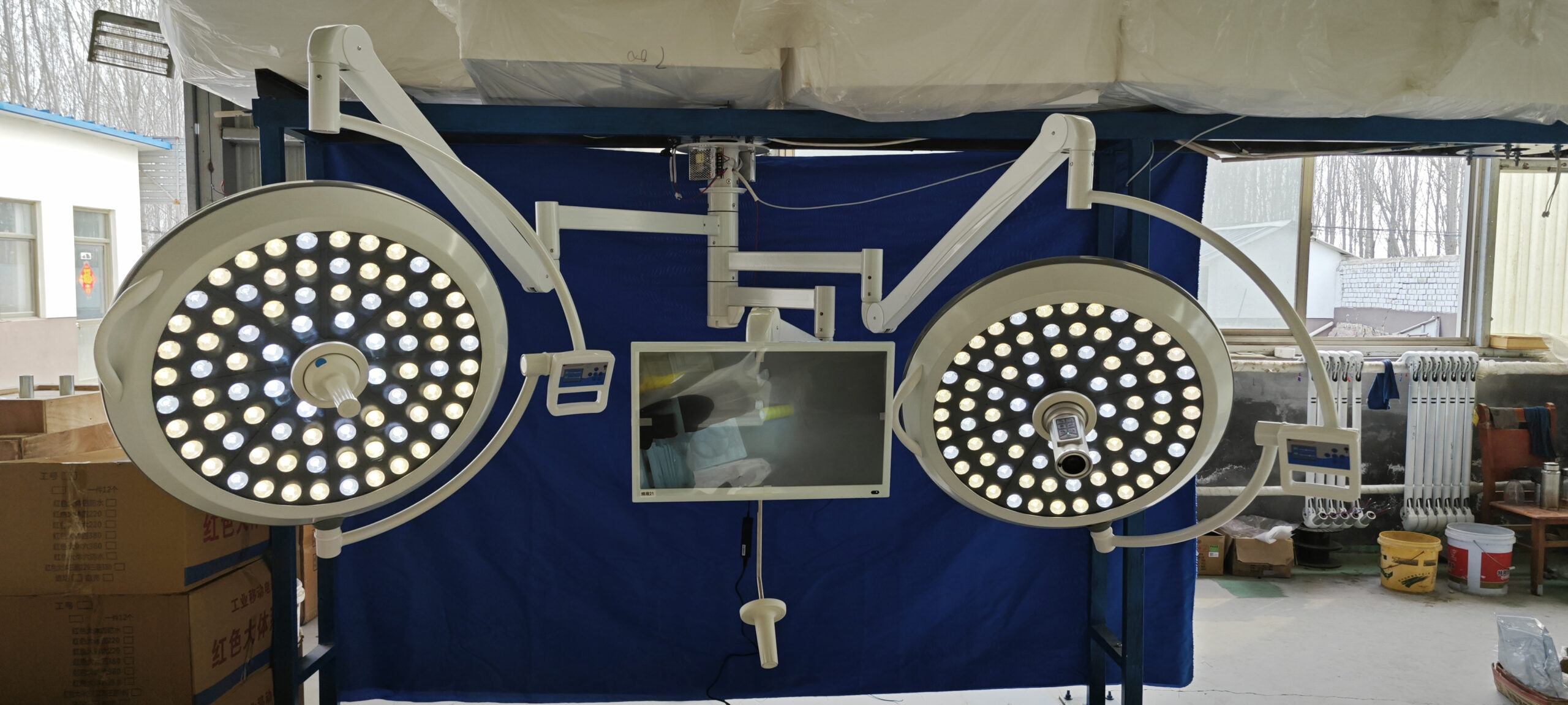
When specifying a camera system, pay attention to the sensor size (larger sensors perform better in low-light conditions), the lens field of view (typically 60° to 90° diagonal), and whether the camera includes an integrated light source for the video feed. Some cameras rely entirely on the surgical light’s illumination, while others include a small LED ring to ensure the video image is adequately lit even when the main beam is dimmed.
On-Board Monitors and Display Panels
A growing number of surgical lights ship with a small LCD or OLED display panel mounted on the light housing. These monitors serve several functions:
- Displaying real-time illumination parameters (lux level, color temperature, lamp hours)
- Showing the live camera feed for the surgeon’s reference
- Providing touch-screen controls for adjusting light settings without reaching for a wall panel
Monitor sizes range from 3.5 inches to 10 inches, with 5 inches being the most popular for surgical light integration. The display must be positioned so that it does not create reflections or glare in the sterile field. High-end models use anti-glare coatings and adjustable brightness to remain readable under bright ambient OR lighting.
For facilities that are upgrading an existing light without replacing the entire unit, aftermarket monitor kits are available. These kits typically include the display panel, a mounting bracket, and a cable harness that connects to the light’s control board. Installation should be performed by a qualified biomedical technician to avoid voiding the light’s warranty or compromising its electromagnetic compatibility (EMC) certification.
Mounting Arms and Suspension Systems
The arm that connects a surgical light to the ceiling or wall is itself an accessory — and one that has a major impact on the light’s usable range of motion. There are three primary arm types:
- Articulated arm (segmented): Two or three joints with friction locks or spring-balanced arms. This type offers the widest range of motion and is the most common for ceiling-mounted surgical lights.
- Single-arm (monolithic): A rigid or slightly flexible single-piece arm. Used for wall-mounted examination lights where the range of motion requirements are less demanding.
- Overhead rail system: The light travels along a ceiling-mounted rail, allowing lateral movement across the operating table. Common in multi-purpose operating rooms where the light may need to serve different table positions.
When evaluating arms, the key metrics are the maximum reach (horizontal distance from the mounting point to the light head center), the vertical drop, and the number of articulation joints. For a detailed discussion of arm maintenance, see our guide on rebalanceo del brazo de la luz quirúrgica.
Some manufacturers offer a configuración de columna médica that integrates the light arm with other ceiling-mounted services such as gas outlets, electrical sockets, and network ports. This consolidation reduces ceiling clutter and simplifies the initial installation.
Reflectors, Lenses, and Beam-Shaping Accessories
While not always classified as “accessories” in the traditional sense, reflectors and lens assemblies are field-replaceable components that affect the light’s beam profile. Modern LED surgical lights use a combination of primary reflectors (behind each LED) and secondary lenses (in front of the LED array) to shape the beam into a uniform circular field with minimal hot spots.
Replacement reflectors and lenses are available for lights that have been in service for several years. Signs that a reflector or lens may need replacement include uneven illumination, visible shadows within the light field, or a reduction in central lux that cannot be corrected by adjusting the intensity control. Biomedical technicians performing preventive maintenance on ceiling-mounted equipment should inspect the reflector surface for oxidation or coating degradation during scheduled service visits.
Accessory Compatibility: What Buyers Should Verify
Not every accessory fits every light. Before ordering, procurement teams should confirm the following with the manufacturer:
- Does the light head have a standardized accessory rail (such as a 20 mm dovetail or a VESA-compatible mount)?
- Is the camera system compatible with the hospital’s existing video infrastructure (HDMI, SDI, IP)?
- Does the monitor kit require a firmware update to the light’s main control board?
- Are sterile handles available in both straight and angled configurations?
- What is the maximum payload that the arm can support with all accessories attached?
These questions are especially important when mixing accessories from different manufacturers. While some accessories follow industry-standard interfaces, others use proprietary connectors that limit cross-brand compatibility.
Common Installation Mistakes to Avoid
Even well-specified accessories can underperform if installed incorrectly. Common mistakes include mounting the camera at an angle that does not align with the light’s optical axis, routing video cables too close to power cables (which introduces electromagnetic interference), and overloading the arm with accessories that exceed its rated payload. For a broader look at installation pitfalls, our article on Instalación y puesta en marcha de equipos de quirófano covers these and other issues in detail.
Summary: Building a Complete Surgical Light Accessory Kit
A well-configured surgical light accessory kit typically includes a sterile handle, a camera system (at least HD resolution), an on-board monitor or an external display connection, and an appropriately rated articulating arm. Procurement teams should specify each accessory as a separate line item in their RFQ to ensure transparent pricing and to make it easier to compare quotes from multiple suppliers.
When sourced from an experienced OEM/ODM manufacturer, these accessories are designed and tested as an integrated system, reducing the risk of compatibility issues and simplifying after-sales support. The key is to communicate your clinical requirements clearly at the quotation stage — the right accessory specification can make the difference between a functional surgical light and a true surgical instrument.