
Executive Summary
Learn how to select medical trolley casters by load rating, noise level, and ESD resistance. EN 12530/12531 specs, brake options and a full procurement checklist.
Every medical trolley in a hospital rolls on four small wheels, and those wheels decide whether the cart glides silently through a 2 a.m. medication round or rattles down the corridor like a shopping trolley on cobblestones. Procurement teams spend weeks negotiating the stainless steel grade of a trolley body, then accept whatever commodity casters the factory fitted as standard. Six months later they are fielding complaints about flat-spotted wheels, dragging brakes, and squealing swivels — problems that were never in the steel. They were in the medical trolley casters, the line item nobody scrutinized.
This guide is the selection process every buyer needs before signing a purchase order. It covers the four decisions that actually matter: load rating (calculated properly, not guessed), rolling noise (measured against WHO ward targets), ESD behaviour (resistance classes, not marketing labels), and braking systems. Along the way I will show you the European standards that govern hospital casters — EN 12530 and EN 12531 — and the specification language to put in your RFQ so suppliers cannot substitute inferior wheels after sample approval.
If you are also evaluating the trolley itself — frame geometry, base footprint, drawer loading — read our companion piece on medical trolley stability first. Caster selection and stability engineering are two halves of the same problem: a balanced trolley on underspecified wheels will still fail, and premium casters cannot rescue a top-heavy frame.
Why Caster Specifications Fail in Real Hospital Corridors
Casters typically represent less than five percent of a trolley’s bill of materials, yet they generate the majority of warranty calls in the first two years of service.
The failure pattern is consistent. A trolley arrives, passes incoming inspection, and rolls smoothly for a few weeks. Then the environment does its work: threshold strips, elevator gaps, floor seams, disinfectants, and loads that creep upward as departments pile on equipment. Commodity casters — hard tread, loose raceways, sleeve bearings or none — flat-spot where they sit overnight, chatter when they roll, and stiffen as swivel bearings corrode. Staff respond by forcing the cart, accelerating the damage and turning a maintenance item into an injury risk.
Noise is the most visible symptom, and it is not a cosmetic one. The World Health Organization’s Guidelines for Community Noise recommend hospital ward levels not exceed 35 dB on average, with nighttime peaks capped at 40 dB. Acoustic surveys tell a different story: ICUs routinely measure 52 to 59 dBA, and rolling equipment is consistently named as a primary contributor. In the United States, the HCAHPS “quiet at night” question feeds value-based purchasing programs that tie reimbursement to performance, so noisy casters are a revenue issue, not just a comfort one.
The mechanical failures are quieter but more expensive. A flat-spotted wheel transmits vibration into everything mounted on the trolley — monitors, infusion pumps, instrument trays. A fatigued brake loses holding force on a slope, which on a crash trolley is a patient-safety event, not a maintenance ticket. If you have dealt with seized wheels on beds, the mechanics are identical; our guide on hospital bed caster wheels jamming covers diagnosis. The rest of this article covers prevention.
Load Rating: The Three-Corner Rule That Prevents Flat-Spotted Wheels
The most common sizing mistake in medical trolley casters is dividing the loaded weight by four. It feels logical — four wheels, four equal shares — and it is wrong on any real floor. Concrete is never perfectly flat, frames flex, and payload distribution shifts as drawers open. At any moment on a four-caster cart, one wheel is carrying less than its share or barely touching the floor. Engineers therefore size casters as if only three wheels were working — the three-corner rule, the most important calculation in caster selection.
The formula is straightforward: add tare weight to maximum realistic payload, divide by three, then apply a safety factor reflecting your operating conditions. Smooth indoor floors with gentle handling call for 1.25 to 1.35; thresholds, elevator transitions, ramps, or brisk towing raise it to 1.5; continuous-duty carts — linen logistics, sterile supply shuttles — justify 1.75 to 2.0. Always calculate with the maximum load, never the average, and round up.
Worked example: a medication trolley with a 60 kg stainless frame carries up to 120 kg of drugs and fluids — 180 kg loaded. Divided by three, each caster must support 60 kg; with a 1.5 safety factor for corridor thresholds and elevator plates, that is 90 kg per caster, so you specify 100 kg-rated casters, not the 45 kg the divide-by-four approach would suggest. That margin is the difference between a wheel that round-rolls for five years and one that flat-spots in six months.
| Trolley Type | Tare + Max Payload | ÷ 3 (Three-Corner) | Safety Factor | Min. Rating per Caster | Typical Wheel Ø |
|---|---|---|---|---|---|
| Medication trolley | 60 + 120 = 180 kg | 60 kg | 1.5 | 90 kg → spec 100 kg | 100–125 mm |
| Crash / emergency trolley | 80 + 100 = 180 kg | 60 kg | 1.75 (fast, urgent movement) | 105 kg → spec 125 kg | 125 mm |
| Linen / logistics cart | 90 + 250 = 340 kg | 113 kg | 1.75 (continuous duty) | 198 kg → spec 200 kg | 150–200 mm |
| Instrument / sterile supply trolley | 70 + 150 = 220 kg | 73 kg | 1.5 | 110 kg → spec 125 kg | 125 mm |
| Waste / soiled-utility cart | 60 + 160 = 220 kg | 73 kg | 1.5 | 110 kg → spec 125 kg | 125–150 mm |
Two further distinctions protect you at specification stage. First, confirm whether the catalog figure is a dynamic rating (load while rolling) or a static rating (load while parked) — static ratings run 1.5 to 3 times the dynamic, so a caster advertised at 150 kg static may only carry 60–75 kg in motion. Size against the dynamic number. Second, anchor your requirement to the standards: EN 12530, for casters on manually propelled institutional and medical equipment, requires a static test load of twice the nominal rating; EN 12531, for hospital bed castors of 100 mm and above, raises that to three times and adds brake fatigue and dynamic obstacle tests. Writing “tested per EN 12527, rated per EN 12530” into your RFQ gives you an enforceable acceptance criterion instead of a brochure promise.
A catalog load rating tells you what the wheel survives in a laboratory. Your job is to specify what it must endure at 6 a.m., loaded to the top drawer, crossing an elevator plate at walking speed.
Wheel Diameter, Tread Material, and Bearings: The Rolling Package
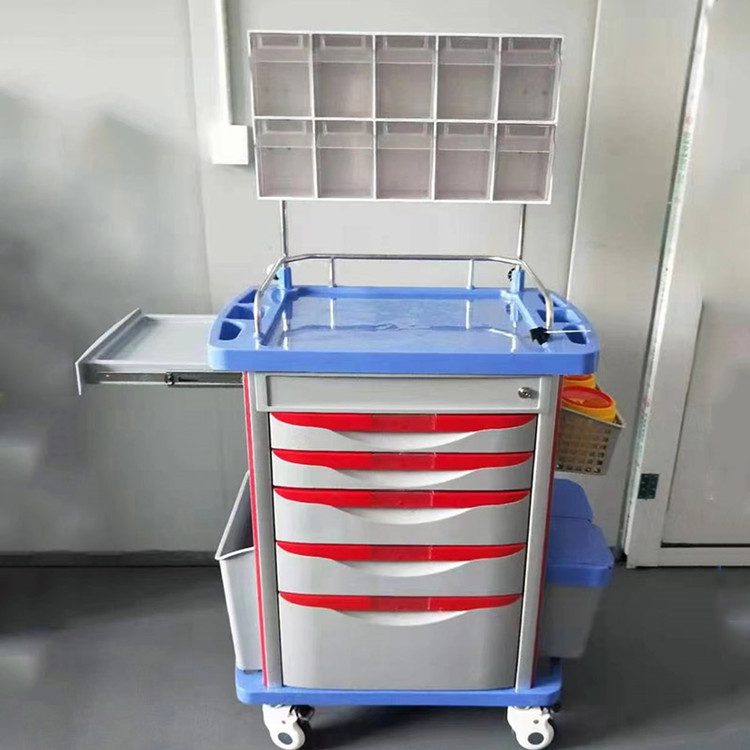
Diameter is the cheapest performance upgrade available. A 125 mm wheel rolls over thresholds and floor seams with roughly half the impact force of a 75 mm wheel, at lower bearing stress for the same speed. For patient-facing trolleys — medication, crash, anaesthesia — 100 to 125 mm is the working standard; EN 12531 itself only applies to wheel diameters of 100 mm and above, which tells you where the industry draws the line for serious clinical equipment. Logistics carts benefit from 150 to 200 mm wheels, which cut rolling resistance and operator effort. The trade-off is increased height and turning clearance, so verify base geometry before upsizing.
Tread material is where noise, floor protection, and chemical resistance get decided. Soft polyurethane in the 75 to 85 Shore A range is the ward default: quiet on vinyl and epoxy, kind to finishes, capable of serious load. Thermoplastic rubber (TPR) is the quietest common option and adds shock absorption, at some cost in capacity and wear life. Nylon transmits floor noise and can flat-spot under prolonged static load, but excels where chemical resistance and washdown matter — sterile processing and soiled utility, covered in our guide on medical trolley disinfection protocols. Conductive carbon-filled compounds enter the picture where ESD control is required.
Bearings are the component most often silently downgraded, because they are invisible after assembly. A sleeve bearing suits an IV stand that moves twice a day, not a medication trolley covering kilometres weekly: friction rises, the axle wears the hub, and the grinding chatter begins. Sealed precision ball bearings keep rolling resistance low and keep disinfectant and debris out of the raceway; for washdown, specify stainless sealed bearings. My rule: if the trolley moves daily, it gets sealed ball bearings.
- Ward trolleys (medication, crash, anaesthesia): 100–125 mm, soft polyurethane tread, sealed precision ball bearings, total-lock brake on at least two casters.
- Logistics carts (linen, supplies, waste): 150–200 mm, polyurethane or TPR, roller or ball bearings, higher dynamic rating with continuous-duty derating.
- Sterile processing / washdown: nylon or polyurethane on stainless hardware, stainless sealed bearings, verify disinfectant compatibility of the tread compound.
- Electronics-carrying carts: conductive or dissipative tread per the resistance classes in the next section, with the full grounding path verified.
Noise: Specifying Casters That Meet WHO Ward Targets
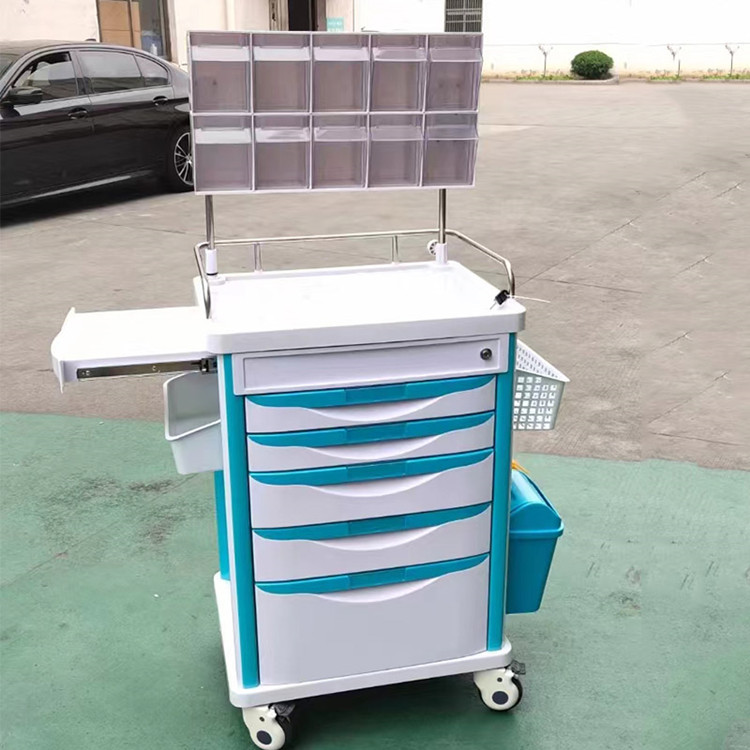
The WHO’s guideline numbers — 35 dB average, 40 dB nighttime maximum for wards — are the benchmark every hospital quotes and almost none meets. Surveys spanning five decades show daytime ward levels drifting from around 57 dBA in the 1960s to over 70 dBA recently. Because cart noise is one of the few sources a facilities team can actually eliminate rather than manage, caster specification deserves the same rigour as any acoustic control measure.
Caster noise comes from three mechanical sources, each with a specific countermeasure. Tread impact — a hard wheel striking a floor seam — produces a sharp click that soft polyurethane (75–85 Shore A) absorbs. Raceway chatter — loose or worn swivel raceways — produces the familiar rattling; preloaded precision raceways keep the assembly tight. Bearing and axle noise — a metal axle grinding in an unbushed plastic core — squeals under load; sealed ball bearings eliminate the contact. When you evaluate a quiet caster, ask which of the three the design addresses — “low noise” without a mechanism is marketing.
There is real-world evidence the investment pays for itself. A system-wide noise reduction initiative at Northwell Health improved HCAHPS “Quiet at Night” top-box scores by 4.7 points — and that question feeds a domain carrying 25 percent weight in CMS value-based purchasing, with 2 percent of base operating DRG payments redistributed on performance. Where patient-experience funding works that way, the arithmetic of upgraded casters is straightforward. Even where it does not, quieter carts mean fewer complaints and better sleep for the people your facility serves.
Specify the quiet package as a system — soft tread, sealed ball bearings, tight raceways — and test it on your floors, not the supplier’s showroom. A caster that is silent on polished demo tile can chatter on your old vinyl.
A practical acceptance test before fleet rollout: load the trolley to working weight, push it at walking speed over your noisiest corridor section — typically an elevator or fire-door threshold — and measure with a handheld sound meter at one metre, comparing against your existing fleet on the same route. A well-specified quiet caster typically cuts rolling noise by 10 dB or more versus a commodity wheel, which the ear perceives as roughly half the loudness.
ESD and Conductive Casters: Resistance Classes Explained
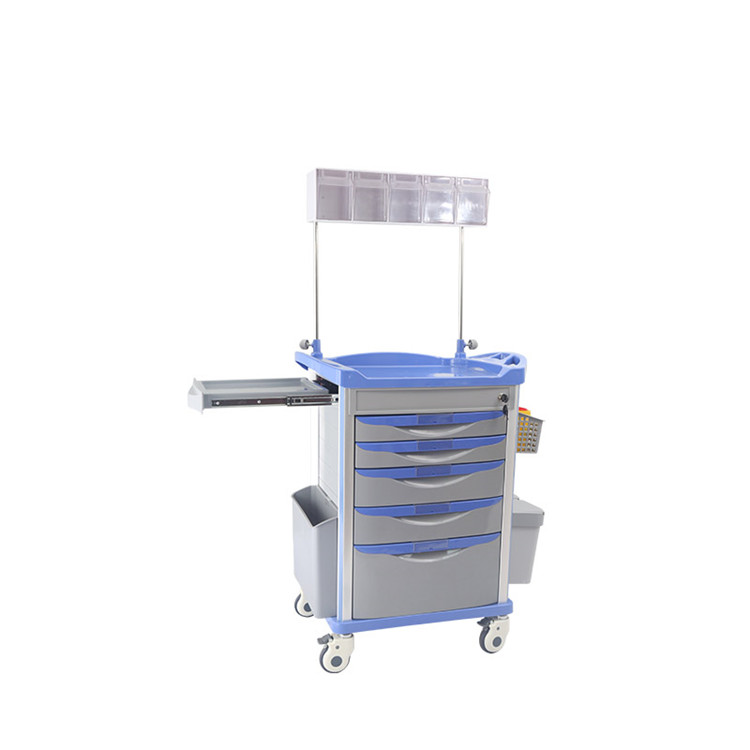
Any trolley carrying powered medical electronics — diagnostic carts, ultrasound workstations, monitoring trolleys — is part of an electrostatic system whether you planned it or not. A cart on insulating wheels accumulates charge as it moves. The risk is not the spark you can feel — humans only sense static above roughly 3,000 volts. It is the discharge you cannot perceive: CMOS electronics can be damaged below 100 volts, often latently, surfacing weeks later as intermittent faults no bench test reproduces.
ESD casters are classified by electrical resistance, and the classes are not interchangeable. Conductive casters sit below 10⁴ Ω — typically carbon-filled nylon or rubber — and drain a charged cart to ground in under a second; that fast discharge suits robust equipment but produces a brief transient that can disturb very sensitive instruments. Dissipative casters, in the 10⁵ to 10⁹ Ω range, bleed charge away over 10 to 100 seconds — slow enough to avoid transients, fast enough to prevent accumulation — and are the preferred class for medical device manufacturing and most clinical electronics carts. Anything above 10⁹ Ω is insulating and provides no static control, whatever the packaging claims. Ask for the measured resistance range and test method, not the label “antistatic”.
The specification trap is treating the wheel as the whole solution. It is one link in a grounding chain: tread compound, hub interface, bearing contact, bracket, mounting fastener, trolley frame, and finally the floor. Break any link — an unmasked powder-coated mounting surface, a plastic-insulated fastener, an insulating floor finish — and the most conductive caster becomes an isolated charge reservoir. A wheel measuring 10⁶ Ω on the bench can exceed 10¹¹ Ω once mounted and rolling, which is why EN 12531 includes an electrical resistance test. Specify the complete path: conductive or dissipative wheels, metal-to-metal mounting contact at clean uncoated points, and a frame-to-ground measurement after installation.
- Conductive (<10⁴ Ω): fast discharge, sub-second drain; use for robust electronics and general ESD areas; verify transient sensitivity of onboard equipment first.
- Dissipative (10⁵–10⁹ Ω): controlled decay in 10–100 seconds; the default for medical electronics carts and device assembly.
- Insulating (>10⁹ Ω): no static drain; acceptable only where ESD is not a design consideration — never in an electrostatic protected area.
- Verification: measure frame-to-ground resistance after installation and at each preventive maintenance interval; log the values.
Brakes and Locking Systems: Holding Force Where It Matters
Brake selection follows the clinical consequence of movement. A wheel-only lock stops rotation but leaves the swivel free, so the trolley can still pivot around the locked wheel — fine for a supply cart on level ground, unacceptable for anything a clinician leans on during a procedure. A total-lock brake engages both wheel and swivel raceway; this is the minimum for medication trolleys, crash trolleys, anaesthesia machines, and any cart used as a working surface. On four-caster trolleys, total-lock on two diagonally opposed casters holds reliably; on heavier carts or any cart used on ramps, specify all four.
Central locking systems, where one lever engages all casters at once, originate in the hospital bed world — EN 12531 is written around central-locking castors. Their advantage is compliance: one action, one check, no ambiguity. The trade-off is cost and linkage complexity. Directional locks, which fix swivel orientation without stopping the wheel, suit long carts that must track straight. For most fleets, the practical answer is total-lock pedals on two casters, sized and colour-contrasted so staff can operate them with a foot, in low light, without bending.
Whatever you specify, demand a brake fatigue rating. EN 12531 subjects locking devices to repeated engagement cycles, then re-tests holding efficiency — because a brake that works on day one and fails at month eighteen is a design defect, not a wear item. Ask for the tested cycle count and the residual holding force after fatigue; a vague answer tells you what you need to know.
Standards, Compliance, and the Procurement Checklist
The European caster standard family gives you a complete specification vocabulary: EN 12526 defines terminology, EN 12527 the test methods, EN 12530 the requirements for casters on manually propelled institutional and medical equipment — the standard your trolley casters should cite — and EN 12531 the stricter regime for hospital bed castors, with the 3× static test load, electrical resistance testing, and brake fatigue testing. Trolleys carrying powered equipment additionally fall under IEC 60601-1, and under EU MDR 2017/745 where the assembly is marketed as a device; the manufacturer’s ISO 13485 quality system is your assurance that production casters match the tested ones. Our overview of CE MDR versus FDA requirements covers how these obligations translate for importers.
| Parameter | Specification Language for Your RFQ | Verification Method |
|---|---|---|
| Load rating | Dynamic rating per caster ≥ (tare + max payload) ÷ 3 × safety factor; tested per EN 12527 | Supplier test report; loaded roll test at acceptance |
| Standard compliance | Casters conforming to EN 12530 (EN 12531 for bed-type equipment), from an ISO 13485 manufacturer | Certificate of conformity; marking on caster body |
| Noise | Soft PU tread 75–85 Shore A, sealed precision ball bearings, preloaded raceways | On-site sound meter test at working load vs. baseline route |
| ESD (where required) | Dissipative 10⁵–10⁹ Ω (or conductive <10⁴ Ω) with verified frame-to-ground path | Resistance measurement after installation, logged at PM intervals |
| Brakes | Total-lock on ≥2 casters (all 4 for ramps/heavy carts); fatigue-tested per EN 12531 methodology | Holding-force test on incline; cycle-count documentation |
| Serviceability | Standard mounting pattern; spare wheels and casters available for 10 years | Spare parts agreement; see our spare parts service model |
Two procurement habits close most remaining risk. First, freeze the caster specification in writing — brand, series, tread compound, bearing type, brake model — in the purchase order, and treat any substitution as a formal engineering change requiring your approval; substitution after sample sign-off is the most common way a compliant sample becomes a non-compliant fleet. Second, standardize across your fleet: fewer variants means simpler spares and faster swaps, the logic we detail in our guide on medical trolley fleet standardization.
Conclusion
Medical trolley casters are a small component with an outsized influence on safety, noise, compliance, and total cost of ownership. Size them with the three-corner rule and a realistic safety factor, never by dividing by four. Choose diameter, tread, and bearings as a system matched to the duty — soft polyurethane and sealed ball bearings for ward work, larger wheels for logistics, stainless hardware for washdown. Where electronics ride on the cart, specify dissipative or conductive casters by measured resistance. Fit total-lock brakes where clinicians work, and anchor every requirement to EN 12530 and EN 12527 so your RFQ has teeth.
If you are specifying a new fleet or retrofitting an existing one, our engineering team can review your load cases and floor conditions and recommend a caster package as part of the trolley design. Contact us with your trolley types and duty profiles, and we will return a documented caster specification you can put straight into your procurement file.
Frequently Asked Questions
What size casters do I need for a hospital medication trolley?
For a typical medication trolley of 150–200 kg loaded weight, 100 to 125 mm wheels with a soft polyurethane tread and sealed ball bearings are standard. Calculate the rating per caster as loaded weight divided by three, times a 1.5 safety factor — about 100 kg per caster for a 180 kg trolley. If the route includes thresholds or elevator transitions, favour 125 mm wheels.
How do I calculate the load rating for trolley casters?
Use the three-corner rule: add tare weight to maximum payload, divide by three (one of four wheels is always partially unloaded on real floors), then multiply by a safety factor of 1.25 to 2.0 depending on floor, speed, and duty cycle. Round up, and compare against the dynamic rating, not the static rating, which can be 1.5 to 3 times higher.
Do all medical carts need ESD casters?
No. ESD casters are required where the cart carries electrostatic-sensitive electronics — diagnostic carts, monitoring trolleys, device assembly and service carts. For a linen or supply cart, standard wheels are fine. Where ESD applies, specify dissipative casters in the 10⁵ to 10⁹ Ω range as the default and verify the full frame-to-ground path after installation; a conductive wheel on an insulated mounting protects nothing.
Why do my new trolley casters still squeak and chatter?
New-caster noise usually traces to a hard tread transmitting floor impacts, loose swivel raceways allowing chatter, or sleeve bearings letting the axle grind against the hub. The fix is specification, not lubrication: soft polyurethane tread (75–85 Shore A), preloaded raceways, and sealed ball bearings eliminate all three. Also check the floor — damaged vinyl seams amplify noise a caster upgrade cannot remove.
How often should medical trolley casters be inspected and replaced?
Inspect casters at every preventive maintenance cycle — typically quarterly for high-use trolleys — checking tread wear, flat spots, swivel play, brake holding force, and, on ESD carts, frame-to-ground resistance. Replace wheels showing flat spots, cracked treads, or bearing roughness rather than waiting for seizure. Standardizing caster models and holding a small spare stock cuts downtime from days to minutes.
For assembly procedures including caster installation and brake adjustment, see the medical trolley assembly guide.
You May Also Like...

Bariatric OR Package: Table, Bed and Trolley Coordination
A bariatric OR package coordinates the operating table, the patient bed and the trolley for...

Lumen vs Lux: What These Surgical Light Units Mean
Lumen and lux are not the same thing. Lumen measures the total light a fixture...

Emergency Department Equipment for Trauma, Resuscitation and Triage
An emergency department is built around speed, and its equipment has to be ready the...