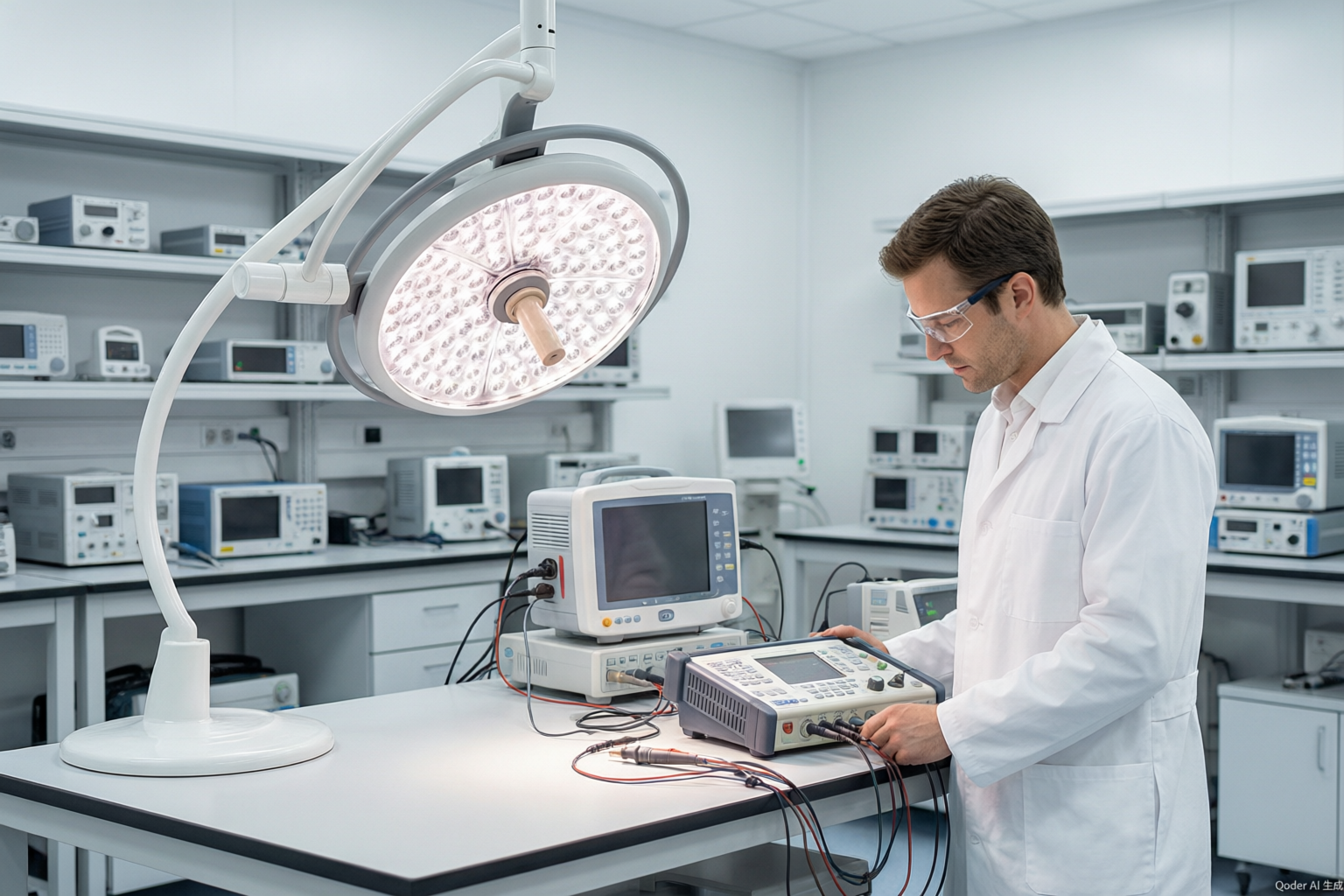

Artificial intelligence is no longer a futuristic concept in surgical care — it is an active area of clinical deployment, regulatory discussion, and equipment development. From computer vision systems that identify anatomical structures in real time, to predictive analytics that optimize operating room scheduling, AI is reshaping how surgical teams work and how hospitals procure equipment. For buyers and procurement managers in the medical device space, understanding what AI can and cannot do — and what to look for when evaluating AI-enabled equipment — is becoming an essential competency.
A 2024 systematic review published in PMC examined the clinical applications of AI in robotic surgery, finding that machine learning algorithms are being used for autonomous assistance, real-time performance evaluation, and tailored surgical education. The review noted that while the technology is advancing rapidly, ethical concerns and regulatory frameworks have not yet caught up with the pace of innovation. The PMC study on AI in robotic surgery provides a comprehensive overview of the current state and future directions.
This article breaks down the key AI applications that hospital buyers are likely to encounter in equipment specifications and explains what each one means for procurement decisions.
Computer Vision in Surgical Illumination
One of the most tangible AI applications in the operating room is computer vision integrated into surgical lighting systems. Modern AI-enabled surgical lights use camera sensors and machine learning algorithms to detect the position of the surgeon’s hands and instruments, then automatically adjust the light beam to minimize shadows and maintain optimal illumination of the surgical site.
Unlike traditional surgical lights that rely on the surgeon to manually reposition the light head (using a sterile handle or voice control), AI-driven systems can track multiple objects simultaneously and make micro-adjustments in real time. This reduces the cognitive load on the surgical team and maintains consistent illumination throughout the procedure.
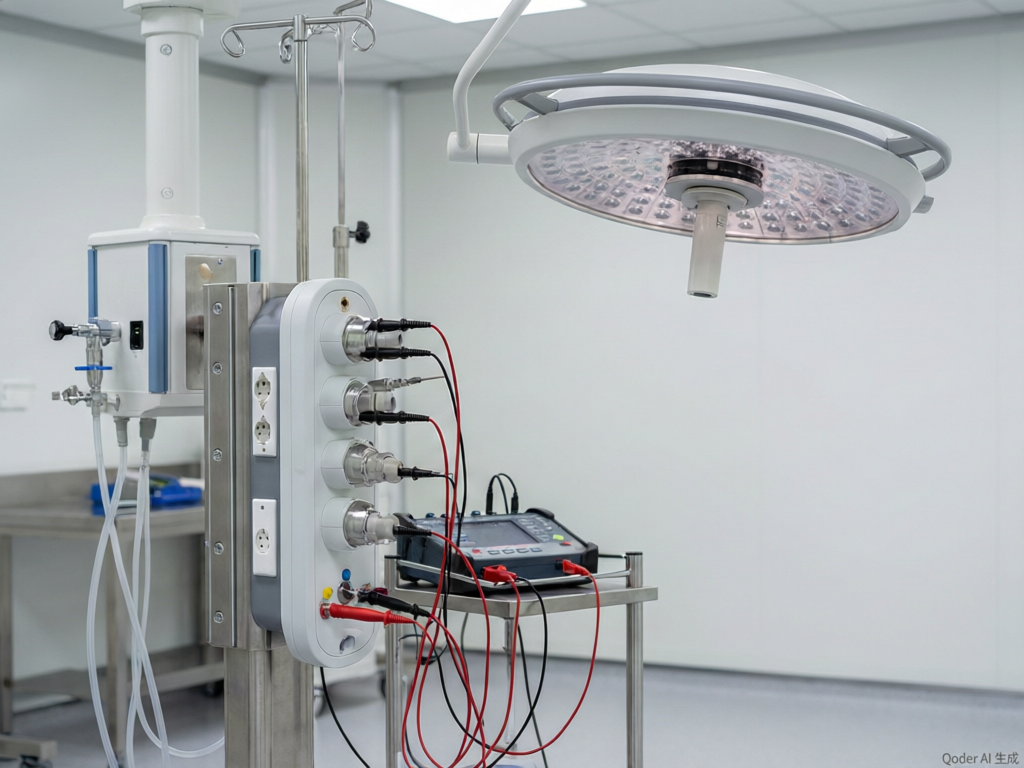
For buyers, the key specification to evaluate is the tracking latency — the time between the surgeon’s movement and the light’s response. Acceptable latency is typically under 100 milliseconds, which is below the threshold of human perception. Systems with higher latency may create a noticeable lag that distracts rather than assists the surgical team.
Predictive Maintenance for OR Equipment
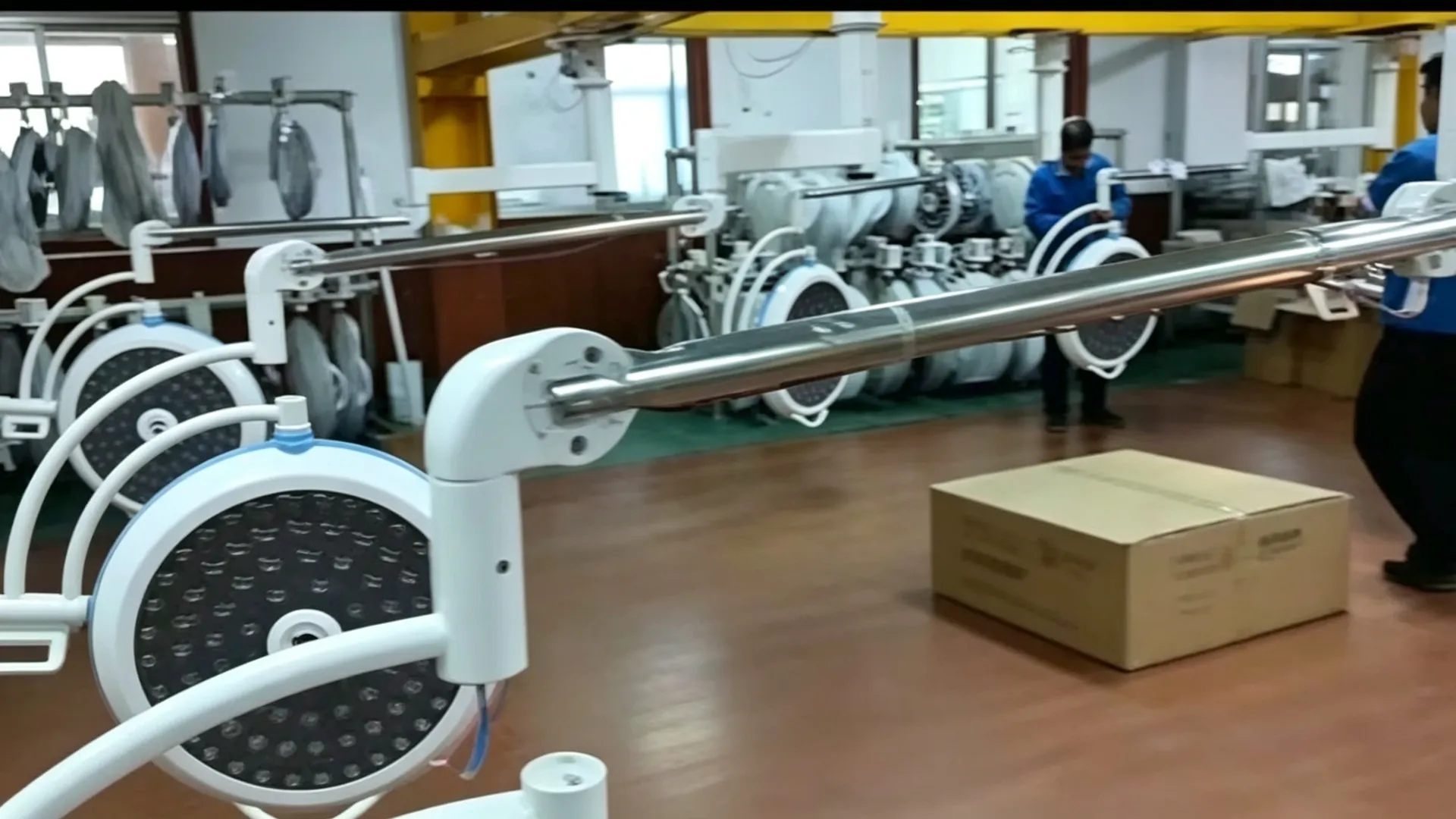
AI is also being applied to equipment maintenance. Predictive maintenance systems use sensors embedded in surgical lights, operating tables, and medical pendants to monitor parameters such as motor current, bearing vibration, LED degradation, and hydraulic pressure. Machine learning algorithms analyze these sensor readings to predict when a component is likely to fail, allowing maintenance teams to replace it before it causes a disruption.
A systematic review published in PMC explored how AI enhances operating room management through predictive scheduling and resource optimization. The AI in OR management study found that machine learning models can predict case durations with greater accuracy than traditional statistical methods, enabling more efficient scheduling and reducing idle time between procedures.
For equipment buyers, predictive maintenance capability is a differentiator that can reduce total cost of ownership. When evaluating equipment, ask the manufacturer:
- Does the equipment include built-in sensors for condition monitoring?
- Is there a software platform that aggregates and analyzes the sensor data?
- What alerts does the system generate, and how are they delivered (email, dashboard, SMS)?
- Does the predictive maintenance system integrate with the hospital’s existing CMMS (Computerized Maintenance Management System)?
(function(){var f=document.querySelectorAll(‘.yt-facade’);for(var i=0;i<f.length;i++){(function(el){el.addEventListener('click',function(){var id=el.getAttribute('data-yt-id');el.innerHTML='’;});})(f[i]);}})();
AI-Enhanced Surgical Cameras and Video Systems
Many surgical lights now include integrated cameras, and AI is transforming what these cameras can do. Beyond simple video recording, AI-enhanced camera systems can:
- Automatically identify surgical phases: Machine learning models trained on thousands of hours of surgical video can recognize which phase of a procedure is currently underway (e.g., incision, dissection, suturing). This information can be used for automated documentation, quality review, and surgical education.
- Detect critical structures: Computer vision algorithms can highlight anatomical structures such as blood vessels, nerves, or bile ducts in the video feed, providing the surgeon with an additional layer of situational awareness.
- Generate automated reports: AI systems can produce a structured summary of the procedure, including duration of each phase, instruments used, and any anomalies detected during the operation.
When procuring surgical lights with integrated camera systems, buyers should consider whether the camera’s AI capabilities are processed locally (on the device) or in the cloud. Local processing offers lower latency and does not require a hospital network connection, but cloud processing enables more complex algorithms and easier software updates.
Robotic Assistance and AI-Guided Positioning
Operating tables with AI-guided positioning are an emerging category. These systems use sensors and machine learning to suggest optimal table positions based on the surgical procedure type, patient anthropometry, and the surgeon’s preferences. The table can automatically move to the programmed position, reducing the time spent on manual adjustment.
While fully autonomous robotic positioning is not yet mainstream for operating tables, semi-automated systems that remember and recall preferred positions for specific procedures are already available. These systems learn from usage patterns and can reduce setup time between cases, which is particularly valuable in high-throughput surgical centers.
For facilities planning a comprehensive OR upgrade, a proyek ruang operasi turnkey approach can ensure that AI-enabled equipment from different manufacturers is integrated into a cohesive system with shared data infrastructure.
What Buyers Should Evaluate Before Purchasing AI-Enabled Equipment
Not all AI claims are created equal. Some manufacturers use “AI” as a marketing label for features that are essentially rule-based automation (e.g., a light that turns on when it detects motion). Buyers should look beyond the label and evaluate the substance of the AI capability:
- What data does the AI system use? Does it rely on a single sensor (e.g., a camera) or multiple data sources (camera, inertial measurement unit, force sensors)? Multi-sensor systems are generally more robust and accurate.
- How was the AI trained? Ask the manufacturer about the training dataset. Was it trained on a diverse set of surgical procedures, patient types, and lighting conditions? A model trained on a narrow dataset may not generalize well to your clinical environment.
- Can the AI be updated? Machine learning models improve with more data. Ask whether the manufacturer provides over-the-air updates to the AI algorithms, and whether these updates require re-certification by regulatory authorities.
- What happens when the AI fails? Every AI system has a failure mode. The equipment should default to safe, manual operation if the AI component malfunctions. A surgical light that cannot be manually repositioned when its tracking system fails is a patient safety risk.
Regulatory Considerations for AI in Medical Devices
Regulatory authorities worldwide are developing frameworks for AI-enabled medical devices. The FDA has issued guidance on “Software as a Medical Device” (SaMD) and has piloted pre-certification approaches for AI/ML-based software before shifting focus to its AI-enabled device lifecycle management framework. The European Union’s MDR treats software as a medical device under specific classification rules, and the NMPA in China has published guidelines for AI-based medical device registration.
For buyers, the practical implication is that AI-enabled equipment may require additional regulatory documentation compared to conventional devices. When requesting quotations, specify that the manufacturer must provide:
- The regulatory classification of the AI component (is it classified as SaMD or as part of the hardware device?)
- Evidence of clinical validation (has the AI been tested in a clinical setting with published results?)
- A software lifecycle management plan (how are updates managed, tested, and deployed?)
- Cybersecurity measures (how is patient data protected if the AI system transmits data to the cloud?)
Practical Implications for OR Design and Installation
AI-enabled equipment often has different infrastructure requirements than conventional devices. Network connectivity (wired Ethernet or Wi-Fi) may be required for cloud-based AI processing. Additional power outlets may be needed for edge computing hardware. And the physical installation must accommodate sensors and cameras that have specific line-of-sight requirements.
During the installation phase, common mistakes such as incorrect sensor placement or inadequate network bandwidth can undermine the AI system’s performance. For a broader look at installation pitfalls, our guide on Pemasangan dan komisioning peralatan ruang operasi covers issues that apply to both conventional and AI-enabled equipment.
The Road Ahead: What to Expect in the Next 3 to 5 Years
The trajectory of AI in the operating room points toward greater integration and autonomy. Key trends to watch include:
- Multi-device coordination: AI systems that coordinate the surgical light, operating table, camera, and medical pendant as a single integrated platform, rather than standalone devices.
- Real-time surgical navigation: Overlaying pre-operative imaging (CT, MRI) onto the live surgical field, similar to how GPS overlays directions onto a road view.
- Outcome prediction: Using intraoperative data (vital signs, surgical duration, blood loss estimates) to predict post-operative complications and trigger early interventions.
- Automated documentation: AI-generated operative notes that reduce the surgeon’s administrative burden and improve the accuracy of medical records.
For biomedical engineers responsible for maintaining OR equipment, these trends mean that preventive maintenance practices will need to evolve to cover software updates, sensor calibration, and AI model performance monitoring alongside traditional mechanical and electrical checks.
Summary
AI in the operating room is not a single product — it is a capability that is being embedded into existing equipment categories (lights, tables, cameras, pendants) and creating new ones. For buyers, the key is to evaluate AI features with the same rigor applied to any clinical specification: demand evidence of performance, confirm regulatory compliance, and ensure that the system degrades gracefully when the AI component fails. The equipment that will deliver the most value is not the one with the most AI features, but the one where AI solves a real clinical problem without introducing new risks.