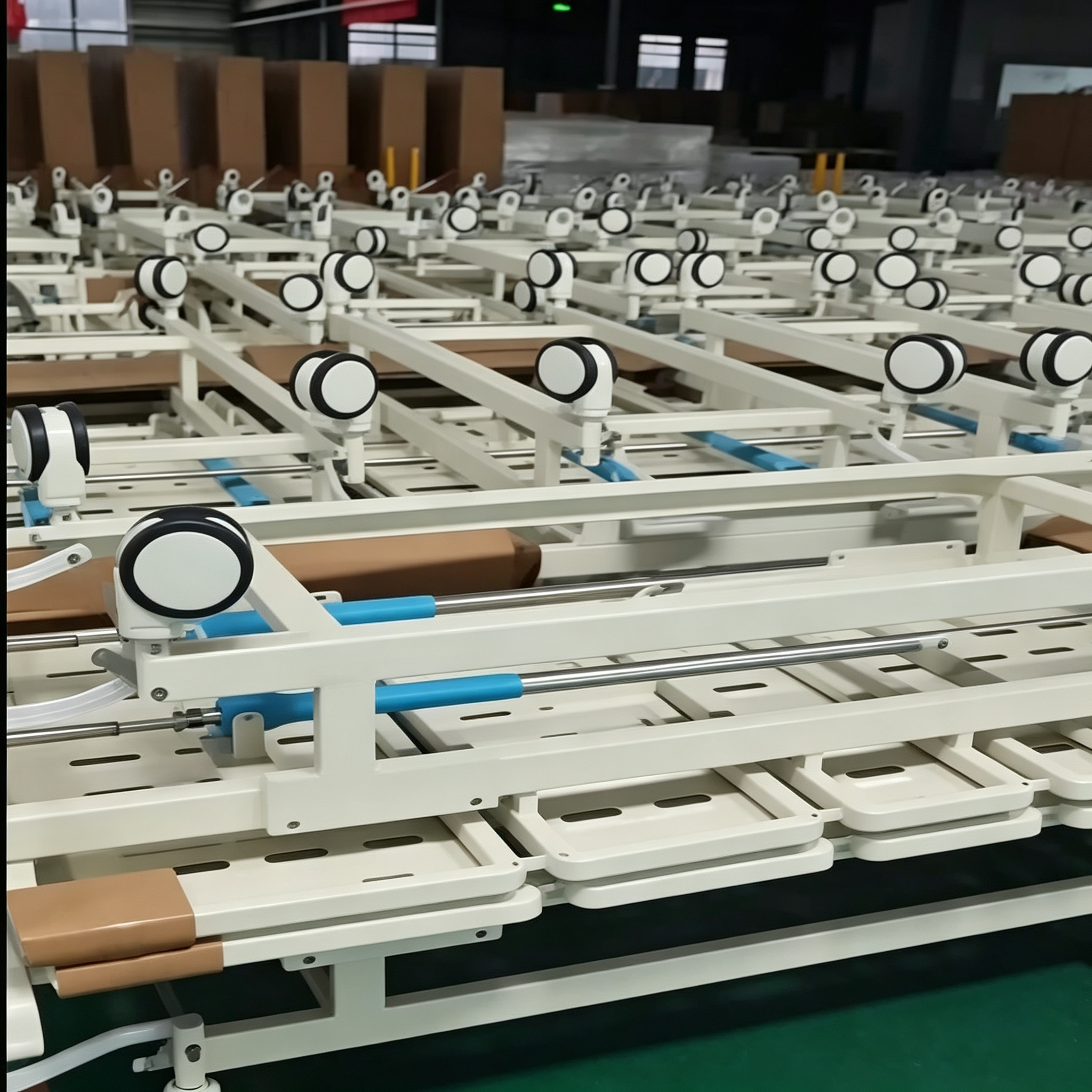

Ringkasan Eksekutif
Referensi lengkap untuk dimensi platform tempat tidur rumah sakit, batas celah rel samping IEC 60601-2-52, beban kerja aman, dan ukuran khusus departemen untuk aplikasi bangsal, ICU, dan bariatrik.
Setiap tahun, tim pengadaan menentukan spesifikasi tempat tidur rumah sakit berdasarkan satu angka—harga—dan baru menyadari terlambat bahwa platform kasur 30mm terlalu sempit untuk kasur redistribusi tekanan mereka, atau bahwa celah rel samping gagal dalam uji penjepitan yang kini diberlakukan oleh badan regulasi mereka. Di pabrik kami, kami telah menyaksikan pembeli menolak tempat tidur yang sebenarnya bagus karena dokumentasi tidak merujuk pada klausul yang benar dari IEC 60601-2-52, dan kami telah melihat fasilitas melakukan retrofit seluruh bangsal karena tempat tidur asli tidak dapat menampung populasi pasien bariatrik yang pertumbuhannya lebih cepat dari perkiraan siapa pun.
Standar dimensi tempat tidur rumah sakit bukanlah sekadar saran. IEC 60601-2-52 mendefinisikan geometri platform minimum, celah maksimum yang diizinkan antara rel dan kasur, beban statis dan dinamis yang harus ditahan oleh rangka, serta kinerja pengereman yang menjaga tempat tidur 250kg tetap diam di kemiringan 3 derajat. Jika angka-angka ini salah, Anda menghadapi insiden penjepitan pasien, kegagalan audit CE atau FDA, dan penggantian armada yang mahal. Panduan ini memberi Anda persyaratan dimensi yang tepat, ambang batas keselamatan, dan logika penentuan ukuran per departemen yang Anda butuhkan untuk menentukan spesifikasi tempat tidur dengan benar sejak awal.
Jika Anda sedang menyusun daftar pendek pengadaan saat ini, mulailah dengan rangkaian produk tempat tidur rumah sakit kami untuk melihat bagaimana dimensi platform yang sesuai standar diterjemahkan menjadi konfigurasi produk yang nyata.
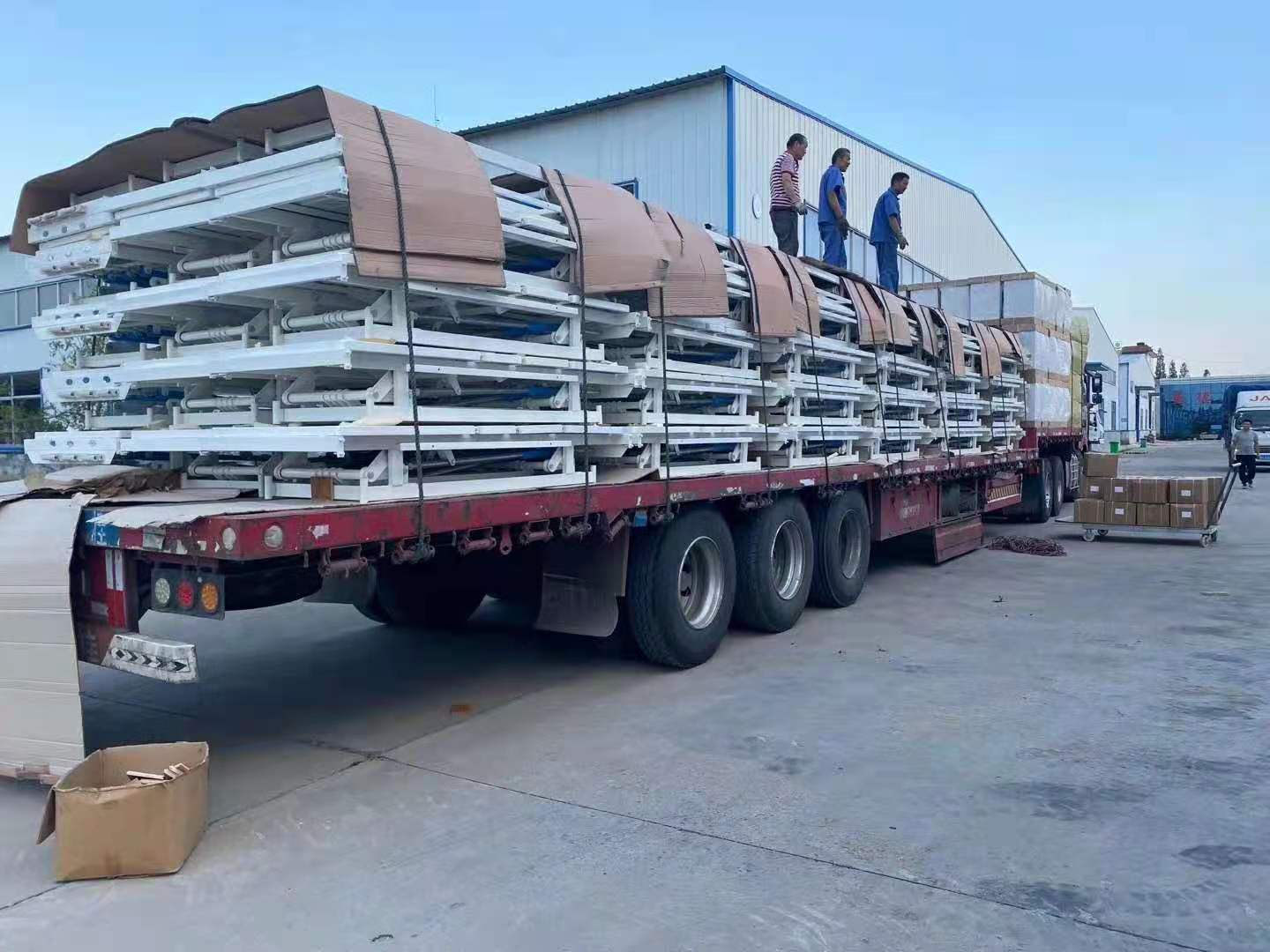
Apa yang Dicakup oleh IEC 60601-2-52 dan Mengapa Standar Ini Menggantikan Standar Lama
IEC 60601-2-52 adalah standar khusus dalam keluarga IEC 60601 yang membahas keselamatan dasar dan kinerja esensial tempat tidur medis dewasa. Diterbitkan sebagai IEC 60601-2-52:2009 dengan Amandemen 1 pada tahun 2015, standar ini menggabungkan dan menggantikan dua dokumen sebelumnya—EN 1970:2005 untuk tempat tidur yang dapat disesuaikan bagi penyandang disabilitas dan DIN EN 60601-2-38:2001 untuk tempat tidur rumah sakit yang digerakkan secara elektrik—menjadi satu persyaratan terharmonisasi internasional. Sejak April 2013, setiap tempat tidur medis dewasa yang dipasarkan di Eropa harus mematuhinya, dan FDA mengakuinya sebagai standar konsensus sukarela untuk pengajuan di AS.
Standar ini berlaku untuk tempat tidur yang digunakan di Lingkungan Aplikasi 1 sampai 5, yang berkisar dari rumah sakit perawatan akut (Lingkungan 1) hingga lingkungan perawatan di rumah (Lingkungan 4). Setiap lingkungan memiliki persyaratan beban minimum yang berbeda, tetapi aturan keselamatan dimensional—khususnya batas celah penjepitan—berlaku secara universal. Kerangka kerja yang diperbarui, yang ditetapkan sebagai IEC 80601-2-52:2026, kini dalam masa transisi dan pada akhirnya akan menggantikan edisi 2009, tetapi persyaratan dimensional inti tetap konsisten di antara kedua edisi tersebut.
Yang membuat standar ini penting bagi pembeli adalah bahwa standar ini tidak sekadar menyatakan “tempat tidur harus aman.” Standar ini memberikan ambang batas spesifik tingkat milimeter yang dapat diukur oleh laboratorium penguji dengan kerucut dan pengukur terstandarisasi. Jika pemasok Anda tidak dapat menghasilkan laporan pengujian yang merujuk pada klausul-klausul yang tepat ini, Anda membeli produk yang belum terverifikasi apa pun klaim brosur.
Peringatan dari orang dalam: Kami telah meninjau puluhan laporan pengujian pemasok yang mencantumkan “sesuai IEC 60601-2-52” di halaman sampul tetapi hanya menguji klausul keselamatan kelistrikan dari IEC 60601-1 sambil melewatkan klausul bahaya mekanis (201.9) sepenuhnya. Selalu verifikasi bahwa laporan tersebut secara eksplisit mencakup Klausul 201.9.4 (ketidakstabilan), 201.9.8 (kekuatan sistem penyangga), dan pengukuran celah penjepitan.
Dimensi Standar Tempat Tidur Rumah Sakit: Ukuran Platform dan Rentang Ketinggian
Platform penyangga kasur—permukaan datar tempat kasur berada—mendefinisikan ukuran fungsional tempat tidur rumah sakit. Di fasilitas perawatan akut Amerika Utara dan Eropa, platform standar menampung kasur dengan panjang sekitar 2000mm hingga 2020mm dan lebar 880mm hingga 910mm. Arjo Enterprise 8000X, salah satu tempat tidur bangsal umum yang paling banyak digunakan secara global, menentukan platform kasur 2020mm panjang kali 880mm lebar dengan lebar tempat tidur keseluruhan 1030mm termasuk struktur rel samping.
Penyesuaian ketinggian sama pentingnya. Rentang standar berkisar dari sekitar 320mm (posisi rendah untuk pasien berisiko jatuh) hingga 760mm (posisi tinggi untuk prosedur perawatan) diukur dari lantai ke atas platform kasur. Rentang pergerakan 440mm ini memungkinkan tempat tidur memiliki dua fungsi: posisi rendah yang aman yang mengurangi keparahan cedera jatuh, dan ketinggian kerja ergonomis yang melindungi punggung perawat selama perawatan luka, kateterisasi, dan reposisi pasien.

Tabel di bawah ini merangkum parameter dimensi di berbagai jenis tempat tidur sesuai spesifikasi produsen yang beroperasi dalam persyaratan IEC 60601-2-52:
| Parameter | Tempat Tidur Rawat Inap Umum | Tempat Tidur ICU / Perawatan Kritis | Tempat Tidur Bariatrik |
|---|---|---|---|
| Panjang platform kasur | 2000–2020 mm | 2020–2140 mm (dapat diperpanjang) | 2020–2240 mm |
| Lebar platform kasur | 880–910 mm | 910–1020 mm | 1070–1370 mm |
| Lebar keseluruhan (dengan rel) | 1000–1050 mm | 1050–1200 mm | 1200–1500 mm |
| Rentang tinggi (lantai ke platform) | 320–760 mm | 350–800 mm | 380–780 mm |
| Beban kerja aman (SWL) | ≥200 kg (2000 N) | ≥250 kg (2500 N) | ≥350 kg (3500 N) |
| Sudut sandaran punggung | 0–70° | 0–70° + kursi jantung | 0–70° |
| Kemiringan Trendelenburg | ±12° | ±12° hingga ±16° | ±10° hingga ±12° |
Ini bukan angka sembarangan. Lebar platform 880mm berasal dari data antropometri: lebar ini mengakomodasi lebar bahu pria persentil ke-95 sambil menyisakan ruang lateral yang cukup bagi perawat untuk menjangkau pasien dari kedua sisi dalam ruang bangsal standar selebar 3,6m. Jika Anda melihat tempat tidur yang dispesifikasikan dengan lebar 850mm, itu adalah tanda bahaya—tempat tidur tersebut tidak akan dapat menampung kasur redistribusi tekanan standar 900mm tanpa bagian yang menggantung yang menciptakan risiko jebakan.
Keamanan Rel Samping: Batas Celah yang Mencegah Pasien Terjebak
Jeratan pasien antara rel samping dan platform kasur merupakan salah satu bahaya paling serius dalam desain tempat tidur rumah sakit, dan IEC 60601-2-52 mengatasinya dengan lima ambang batas dimensi spesifik. Pengukuran ini didasarkan pada data antropometri internasional dan diverifikasi menggunakan kerucut pengujian terstandarisasi selama pengujian tipe.
Batas paling kritis adalah celah maksimum 120mm antara permukaan bagian dalam rel samping dan platform kasur. Dimensi ini berasal dari lebar kepala wanita Sri Lanka persentil ke-5—ukuran kepala dewasa terkecil dalam data referensi internasional—memastikan bahwa tidak ada kepala pasien dewasa yang dapat masuk ke ruang tersebut. Standar ini juga mensyaratkan bahwa celah di antara batang-batang rel samping individual tetap berada di bawah 120mm karena alasan yang sama.
Untuk pencegahan jeratan leher, standar ini mewajibkan celah maksimum konservatif 60mm antara komponen rangka tempat tidur seperti papan kepala dan ujung rel samping. Ini jauh lebih kecil dari pengukuran leher wanita persentil ke-1 yaitu 79mm, dengan mempertimbangkan kompresi leher, kehilangan otot terkait usia, dan profil leher asimetris dari pasien yang berbaring. Antara papan kaki dan ujung rel samping terpisah, celah harus melebihi 318mm—berdasarkan kedalaman dada pria persentil ke-95—sehingga tubuh pasien tidak dapat tersangkut di bukaan tersebut.

Between any moving parts—such as folding rail hinges or height-adjustment mechanisms—the minimum clearance is 25mm to prevent finger pinching. And the side rail height itself must extend at least 220mm above the mattress support platform along a minimum of 50 percent of the platform length. If a facility uses a thicker mattress or overlay that reduces effective rail height below 220mm, the standard requires a documented risk assessment before the bed remains in service.
Procurement tip: Request the manufacturer’s mattress compatibility list with every bed quotation. IEC 60601-2-52 Clause 201.7.9.2.1 requires manufacturers to specify the exact mattress dimensions that maintain compliance. If a supplier cannot tell you which mattress thicknesses keep the rail-to-platform gap under 120mm, their type testing is incomplete.
Load Capacity, Braking, and Structural Integrity Requirements
The structural requirements in IEC 60601-2-52 Clause 201.9 go far beyond a simple “weight limit” sticker. The standard defines Safe Working Load as the sum of patient weight, mattress weight, and all accessories supported by the bed frame. For Application Environments 1 and 2 (acute care and similar), the minimum SWL is 2000N—approximately 200kg—broken down as 1350N for the patient (135kg), 200N for the mattress (20kg), and 450N for accessories such as IV poles, monitor arms, and drainage systems (45kg). For Environments 3, 4, and 5 (long-term care, home care), the minimum drops to 1700N with a reduced accessory allowance of 150N.
The static proof load test is more demanding still. The bed must withstand twice the declared SWL or 4000N, whichever is greater, applied uniformly to the horizontal mattress platform for a minimum of one minute without permanent deformation that impairs function. For a bed rated at 250kg SWL, that means a 5000N static load test. The lateral stability test places 2200N at the side edge distributed over a 250mm by 950mm area at each corner—simulating two people sitting on the bed edge simultaneously—without the bed tipping.
Braking performance is verified through a threshold test: the loaded bed is pushed at 0.8 m/s over a 20mm-high obstruction ten times, and the castors must lock without the bed drifting, the side rails unlatching, or any structural deformation that would alter entrapment gaps. For beds intended for patient transport, this test is conducted with the full SWL in place; for stationary beds, it is performed unloaded.

ICU Beds vs Ward Beds vs Bariatric Beds: Choosing Dimensions by Department
While all adult medical beds fall under the same IEC 60601-2-52 umbrella, the dimensional requirements diverge significantly by clinical department. Understanding these differences prevents both overspending on capabilities you do not need and underspecifying for the patients you actually serve.
General ward beds prioritize space efficiency. The standard 880–910mm platform width fits within a 3.6m ward room while leaving 900mm clearance on each side for caregiver access and equipment trolleys. Height adjustment from 320mm to 760mm covers fall prevention and ergonomic care. SWL of 200–250kg handles the vast majority of the adult population. Backrest articulation to 70 degrees and knee-break positioning support feeding, reading, and respiratory comfort.
ICU and critical care beds share similar platform dimensions but demand greater surrounding clearance for ventilators, infusion pumps, and monitoring equipment. The platform itself may extend to 2140mm with built-in length extensions for tall patients, and width often reaches 910–1020mm to accommodate lateral rotation therapy. ICU beds typically specify SWL of 250kg or higher, Trendelenburg tilt to ±16 degrees for hemodynamic management, and integrated scales. The room footprint expands to 4.2m by 4.5m minimum to maintain emergency resuscitation access on all four sides.
Bariatric beds represent the most significant dimensional departure. Platform widths of 1070mm to 1370mm (42–54 inches) are constructed from high-tensile steel rather than the aluminum or thin-walled tubing used in standard beds. SWL ratings of 350kg to 450kg are common, with some models exceeding 500kg. The wider platform is not merely about comfort—research correlating BMI with in-bed mobility shows that patients with BMI above 35 kg/m² require substantially more lateral space to turn from supine to side-lying, and insufficient width directly increases pressure injury risk and caregiver musculoskeletal strain.
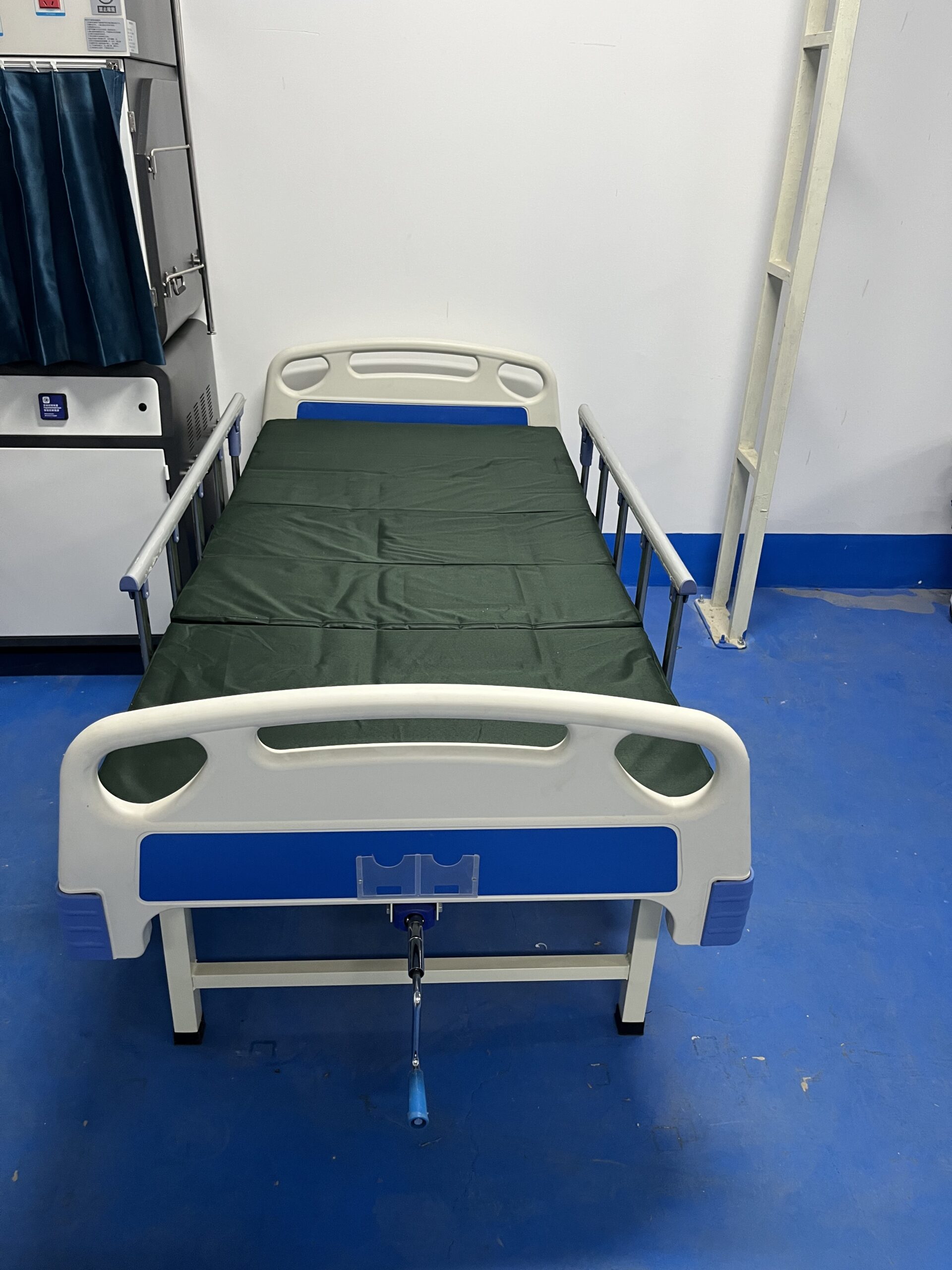
Mattress-to-Platform Fit and Electrical Safety Integration
The interface between mattress and platform is where dimensional compliance either holds or fails in practice. IEC 60601-2-52 explicitly requires manufacturers to document which mattress dimensions maintain the 120mm rail-to-platform gap limit. A standard clinical mattress measures 6 inches (approximately 150mm) thick, but pressure-redistribution overlays, alternating-pressure mattresses, and bariatric-specific surfaces can add 50–100mm to that stack. Each additional millimeter of mattress height reduces the effective rail height and changes the geometry of the entrapment zone.
In our factory, we test every bed-mattress combination with the standardized cone gauge before adding it to the compatibility list. The most common failure mode we see is a facility purchasing a 200mm-thick alternating-pressure mattress for a bed whose rails were validated only with a 150mm mattress. The 50mm difference drops effective rail height from 220mm to 170mm—below the standard’s minimum—and opens a lateral gap that the original type test never evaluated. For a detailed approach to selecting mattresses that work with your bed fleet, see our guide on hospital bed mattress selection for pressure injury prevention.
On the electrical side, IEC 60601-2-52 operates as a particular standard under the general requirements of IEC 60601-1. This means every electrically powered bed must also satisfy the general standard’s requirements for protective earthing, leakage current limits, dielectric strength, and electromagnetic compatibility. The bed’s actuators, control electronics, and battery backup system are tested as a complete system. Beds intended for home care (Application Environment 4) additionally fall under IEC 60601-1-11, which addresses the less controlled electrical installations found in residential settings.
How to Verify Compliance During Procurement
Knowing the standard’s requirements is only half the job. The other half is verifying that the beds you purchase actually meet them. Our daftar periksa pengadaan tempat tidur rumah sakit walks through the full documentation package, but the dimensional verification steps deserve specific attention here.
First, request the CB Test Report or CE type examination certificate that explicitly lists IEC 60601-2-52 (or IEC 80601-2-52:2026 for newer certifications) on the cover page. The report must show pass verdicts for Clause 201.9.4 (instability and overbalance), Clause 201.9.8 (support system strength), and the entrapment gap assessment. A report that only covers IEC 60601-1 electrical clauses is insufficient.
Second, verify the mattress compatibility documentation. The manufacturer must provide a list of mattress dimensions—length, width, and thickness—that maintain compliance with the 120mm gap limit and 220mm rail height requirement. If you plan to use mattresses from a third-party supplier, cross-reference those dimensions against the bed manufacturer’s list before issuing the purchase order.
Third, confirm the SWL marking. IEC 60601-2-52 Clause 201.7.2.2.1 requires the bed to be physically marked with both the maximum patient weight and the total SWL in kilograms. If the bed arrives without these markings, it fails the standard’s identification requirements regardless of its structural performance.
For a broader view of how dimensional compliance fits into the overall safety framework, our article on standar keselamatan tempat tidur rumah sakit covers the full regulatory landscape including MDR 2017/745 classification and post-market surveillance obligations.
Kesimpulan
Hospital bed dimensions are not a matter of preference—they are a regulatory requirement with direct patient safety consequences. IEC 60601-2-52 gives procurement teams a precise, measurable framework: platform geometry, entrapment gap limits, structural load thresholds, and braking performance all defined in millimeters and Newtons. The buyers who succeed are the ones who treat these numbers as non-negotiable line items in their specifications rather than optional features buried in a brochure.
Key Takeaways:
- Standard adult hospital bed platforms measure approximately 2000–2020mm long by 880–910mm wide, with height adjustable from 320mm to 760mm—verify these against your mattress and room dimensions before ordering.
- IEC 60601-2-52 mandates side rail-to-mattress gaps below 120mm, headboard gaps below 60mm, and footboard-to-rail gaps above 318mm; always request the manufacturer’s mattress compatibility list to confirm ongoing compliance.
- Minimum SWL is 2000N (approximately 200kg) for acute care and 1700N for long-term care; bariatric applications require 350kg or more with reinforced steel frames.
- Demand a CB Test Report that explicitly covers Clause 201.9 mechanical hazards—not just the electrical safety clauses from IEC 60601-1—before accepting any bed into your fleet.
Ready to specify beds that meet IEC 60601-2-52 from day one? Browse our IEC-compliant hospital bed range or contact our engineering team for department-specific dimension recommendations.
Pertanyaan yang Sering Diajukan
Berapa ukuran standar platform kasur tempat tidur rumah sakit?
The standard adult hospital bed mattress platform measures approximately 2000–2020mm in length and 880–910mm in width. Height adjusts from roughly 320mm to 760mm above the floor. These dimensions accommodate standard 900mm-wide clinical mattresses while maintaining IEC 60601-2-52 side rail gap compliance.
Berapa ukuran celah antara rel samping dan kasur yang dianggap aman?
IEC 60601-2-52 mensyaratkan celah antara rel samping dan platform kasur tetap di bawah 120mm untuk mencegah terjepitnya kepala. Celah antara komponen rangka tempat tidur harus tetap di bawah 60mm untuk mencegah terjepitnya leher. Batas ini diverifikasi menggunakan kerucut uji standar selama pemeriksaan tipe.
Seberapa lebar seharusnya tempat tidur rumah sakit bariatrik?
Bariatric hospital beds range from 1070mm to 1370mm (42–54 inches) in platform width, with safe working loads of 350kg or more. Patients with BMI above 35 kg/m² require the additional lateral space to turn safely, reducing pressure injury risk and caregiver strain.
Apakah IEC 60601-2-52 berlaku untuk tempat tidur perawatan di rumah?
Ya. IEC 60601-2-52 mencakup Lingkungan Aplikasi 1 hingga 5, termasuk perawatan di rumah (Lingkungan 4). Tempat tidur perawatan di rumah harus memenuhi batas celah jeratan yang sama tetapi memiliki SWL minimum yang dikurangi sebesar 1700N dan juga mematuhi IEC 60601-1-11 untuk instalasi listrik perumahan.
Dokumentasi apa yang membuktikan bahwa tempat tidur rumah sakit memenuhi IEC 60601-2-52?
Minta Laporan Uji CB atau sertifikat pemeriksaan tipe CE yang mencantumkan IEC 60601-2-52 dengan hasil lulus untuk Klausul 201.9 (bahaya mekanis). Produsen juga harus menyediakan dimensi kompatibilitas kasur dan menandai secara fisik tempat tidur dengan berat maksimum pasien dan SWL sesuai Klausul 201.7.2.2.1.
Anda Mungkin Juga Menyukai...

Medical Device Labelling for Export: UDI, Language and Symbol Requirements
A medical equipment label is a regulated document. It carries the manufacturer’s identity, the device...

Infant Bassinets and Baby Trolleys: Specifying for Maternity Units
A maternity unit buys infant bassinets in small numbers and uses them continuously. The cot...

Gas Outlet Colour Coding and Pin Index: What Medical Equipment Importers Must Check
Medical gas systems are built on a simple principle: it must be impossible to connect...