
Your claim died because the dock signed a clean receipt, and the fix is a receiving protocol that captures five things in the first hour: shipment identity, the crate’s condition before anything moves, a specific written exception on the carrier’s delivery receipt, a timestamped photo set of packaging and product, and written notice to every party that may owe you money. Carriers treat a clean signature as proof the freight arrived in apparent good order, so the exception you write before signing outweighs every photo taken afterward. Write those capture points into a one page checklist your team completes during unloading, and a freight damage claim receiving protocol with documentation requirements built in stops failing quietly. For an importer of medical equipment, the same five captures also decide whether the carrier, the forwarder or the cargo insurer ends up paying for the loss.
Steps to Take When Receiving a Damaged Shipment in the First Hour
The first hour is a recording job, not a repair job. Before a wheel is touched, log the identity of the shipment: carrier name, PRO or freight bill number, bill of lading number, purchase order reference, shipper and consignee, arrival date and clock time, trailer or container number, seal number together with the seal’s condition, the piece count against the transport document, and the name of the receiver doing the recording. Photograph the trailer or container before anyone opens it, then the load as the doors come open, then each crate from every visible side while it still sits where the carrier left it. Photograph the seal in place before you break it. This is the essential information to record upon freight delivery, and every later step in the claim depends on it, because an adjuster’s first question is always what arrived, when, and who saw it.
Count before you sign. A shortage is a different event from damage and needs its own line on the receipt: one of six crates short reads very differently from two units visibly damaged. Wet packaging, a broken band, a leaning load or an irregular seal each get a separate note and a separate photograph, because claims examiners read the file event by event and a mixed note invites a mixed answer. Accept the delivery even when it looks bad. Refusing freight adds storage and redelivery costs, can complicate the allocation of liability, and many cargo policies expect the consignee to accept, document and mitigate rather than turn the truck away. Move the shipment to a marked quarantine area away from saleable stock, and leave the crate, the bands, the wrap and the internal bracing exactly as found until the photographs are complete and the carrier has been asked in writing for handling instructions.
Writing a Delivery Receipt Exception That Carriers Cannot Dismiss
The notation on the delivery receipt decides more claims than any photograph taken later. A signature without exceptions tells the carrier the freight was tendered in apparent good order, and reversing that presumption afterward is slow, expensive and often futile. Write the exception on the carrier’s own document, in the remarks space or across the printed conditions if that is what it takes, before the driver leaves your gate. Specific beats generic every time. One crate received with exception, corner crushed and bands broken, gives an adjuster something to price. The words damaged or subject to inspection on their own are widely treated as no exception at all, and they are the two phrases that show up most often in files that end in denial.
 A working template looks like this: received with exception, one of six crates, crate marked C 04, crushed on the right side and top corner, two steel bands broken, puncture of roughly eight inches on the long face, contents not yet inspected, carrier inspection requested. It names the affected unit, describes the outer damage in plain words, and reserves the concealed damage question without pretending you have inspected what you have not yet opened. Then photograph the annotated receipt itself with your own phone before the driver drives away, because the copy that travels back with the driver has a habit of surfacing later without your notes on it. Invite the driver to countersign the notation, and record either way whether the acknowledgment was given or refused. If the driver will not wait or will not sign, write on the receipt that the driver refused the exception notation, photograph the situation if it is practical and safe to do so, and email the carrier, the freight forwarder and the supplier within the hour with the receipt attached, so the timestamp of your notice precedes any argument about when damage was discovered.
How to Document Concealed Damage With Photos and the Bill of Lading
Not all transit damage announces itself at the dock. A crate can arrive square with an intact band and still hold a table with a bent lifting column or a light head with a fractured arm, and claims for concealed damage run on much shorter fuses than visible ones. Many carrier tariffs expect notice of concealed damage within about five days of delivery, and nearly all of them expect you to have opened and inspected the freight promptly, commonly within one to two days of arrival. Build that opening into the protocol as a scheduled event with a named owner and a deadline on the calendar, not something that happens whenever the warehouse gets to it. The claim file then ties together the bill of lading that travelled with the shipment, the signed delivery receipt carrying your exception, and the interior photographs, so the record reads as one continuous sequence from sound origin to damaged destination.
Standardize the photo set so no receiver has to improvise under pressure. The minimum set: a wide context shot of the load where it sits; every visible face of each affected crate; a close-up of each impact, puncture, tear, stain or broken band, with a ruler or tape in frame for scale; the shipping label, crate number and serial plates; the seal and trailer identification; the crate opened with the original internal packing still in place; and the damaged product once exposed, with the cushioning and bracing laid beside it. Keep the original image files with their embedded timestamps rather than compressed copies relayed through chat apps, name each file with the shipment number, and store everything in one folder per shipment that nobody edits after the fact. A short photo log recording who pressed the shutter and when converts a phone full of pictures into evidence a claims examiner can rely on, and that is how to document freight damage for a successful claim.
Match the Claim to the Party That Actually Owes You
Importers face a question the domestic dock checklist never raises: who is the claim against? Three respondents are possible, and the shipping term on your purchase order decides which one owes you an answer. Buy on FCA, FOB or CIF terms and the risk during transit is yours, so the practical route is usually a claim on the marine cargo policy, with the carrying line pursued as a secondary option. Buy on DAP or DDP and the seller carries the transit risk, so your job is to document well enough to support the seller’s claim and to justify your replacement order. United States domestic road freight runs on the Carmack Amendment framework, under which a carrier generally cannot set a formal claim window shorter than nine months, although waiting anywhere near that long destroys the very evidence the claim needs, so the notice clocks stay short in practice regardless of the filing deadline.
International moves add their own clocks and caps. Sea carriage contracts, and the conventions behind them, commonly limit carrier liability per package or per kilogram of weight and set claim windows measured in days rather than months, which is why the notice requirements in your cargo insurance matter so much: insurers typically want notice the same day and the opportunity to appoint a surveyor before anything is moved, repaired or disposed of. Containerized loads shift part of the evidence earlier in the journey: photograph the container number and the seal before breaking it, because an intact seal in good condition points away from theft and toward handling damage. Loose consolidated freight delivered from a container freight station is its own case: the exception belongs on the delivery order you sign at that station, and once the freight is on your own truck your ability to prove where the damage occurred narrows sharply. Where a forwarder or a non vessel operating carrier issued the transport document, the claim generally follows that document, not the underlying vessel.
Turning Dock Notes Into a Claim File for Serialized Medical Equipment
A claim is a quantified schedule, not a story. For each affected unit list the model, the serial or UDI number, the quantity, the unit value, the damage description, the repair estimate or the replacement cost, and any salvage value, then total the amount demanded and put that figure in the claim letter itself. Attach the documents that prove value: the commercial invoice, the packing list, the order confirmation, and the freight invoice with proof of payment. Serialized, UDI marked medical equipment helps you here, because unit level numbers make it hard for an adjuster to argue about what was actually inside the crate or what it cost. Segregate the damaged units in quarantine so nothing migrates back into sellable stock while the claim is open, and record whatever happens to them, because repairing, disposing of or salvaging goods without the carrier’s written release is a classic and avoidable reason for denial.
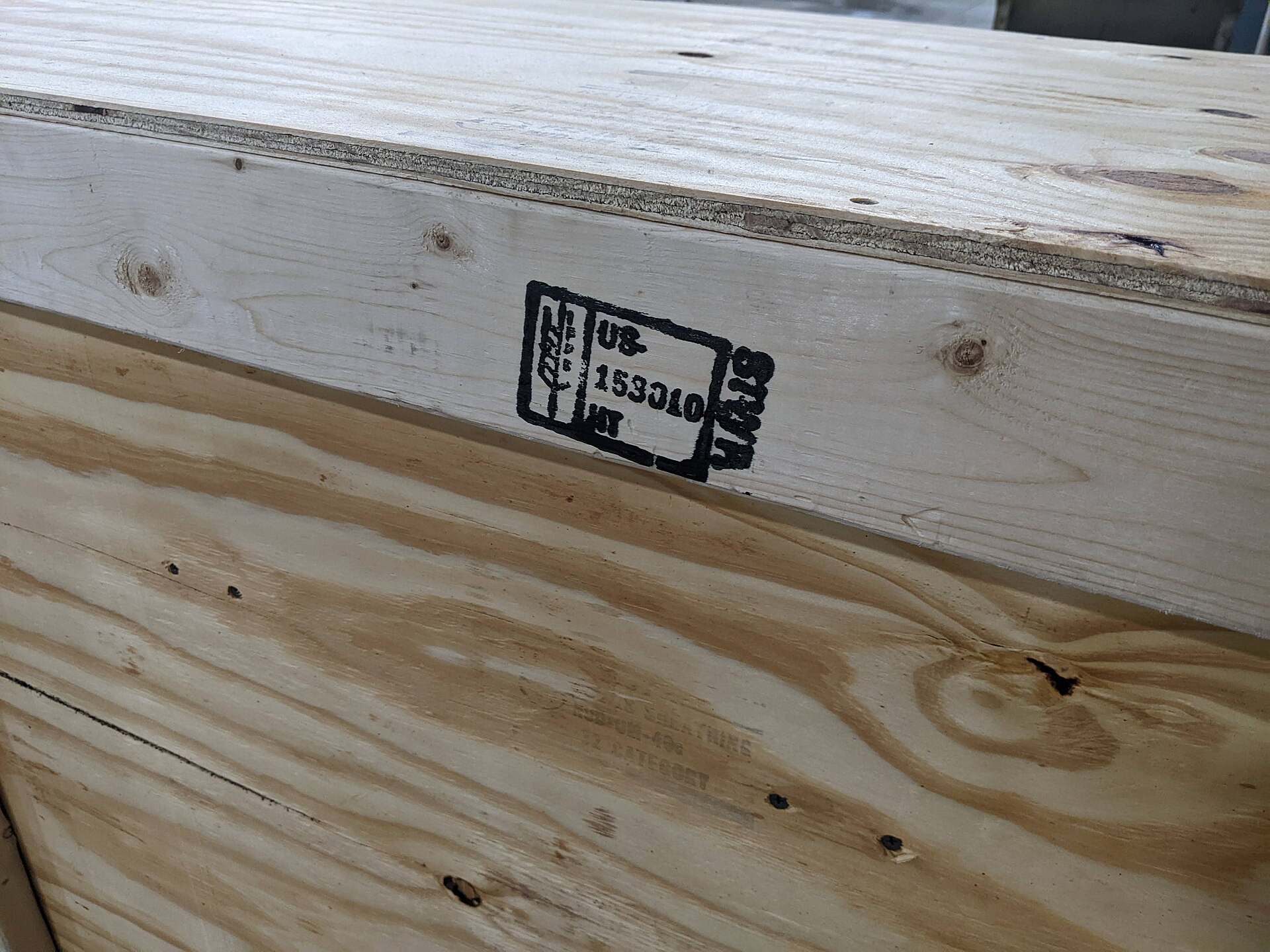
Reach back to origin evidence as well. Photographs of intact, stamped crates at the factory, and wood packaging marks photographed before the container was closed, connect the damage to the journey rather than to the packing, and our earlier piece on what to check on wood packaging before your container is sealed shows which marks to capture at that end. The same file that cleared customs doubles as claim evidence, which is why the import document pack for medical devices belongs in the same folder structure as your receiving photos. Keep the three acts separate on your checklist, too: the exception on the delivery receipt, the notification to the carrier and the insurer, and the formal claim filing are three different events with three different deadlines. Practice in the United States expects a written claim that identifies the shipment, asserts the carrier’s liability and states a specific or determinable amount, and a delivery receipt notation on its own does not meet that bar.
Training the Receiver So the Protocol Runs Without Supervision
Protocols fail at the moment a new or temporary worker signs clean at seven in the morning to keep the dock moving. Close that gap with artifacts on the floor, not memos in an inbox. A one page checklist laminated at the receiving desk, a printed driver script for the exception conversation, a camera policy that keeps original photos on company devices, and a standing rule that only trained receivers sign transport documents. Run a short drill twice a year with a staged damaged crate and grade the paperwork the team produces, not the speed of the cleanup. Review every denied or reduced claim together afterwards and name the exact capture point that was missed. The recurring failure modes never really change: signature before inspection, exception left vague, packaging discarded during cleanup, photographs stranded on personal phones, and the formal claim filed after the contractual window had already closed.
One rule compresses all of it for the dock whiteboard: no signature without inspection, no movement without photographs, no disposal without a written release, and no claim without a quantified schedule. Receiving freight to prevent claim denial is not paperwork for its own sake; it is the habit of recording what the dock sees before the trailer leaves. A distributor who trains every receiver to that rule turns the first hour after delivery from the weakest link in the chain into the strongest piece of evidence the company owns, and the next crushed crate arrives with its claim, in effect, already filed.
You May Also Like...

A Posted Lowering Card and Its Drill Record
Emergency manual lowering means returning an operating table to a flat top when mains power...

Transit Fixings: The Removal Record to Demand
A transit fixing is any bolt, bracket, pin, chock or strap fitted to keep a...

Numbered Document Annex for Equipment Orders
A numbered document annex is a schedule inside the equipment order. The schedule gives every...