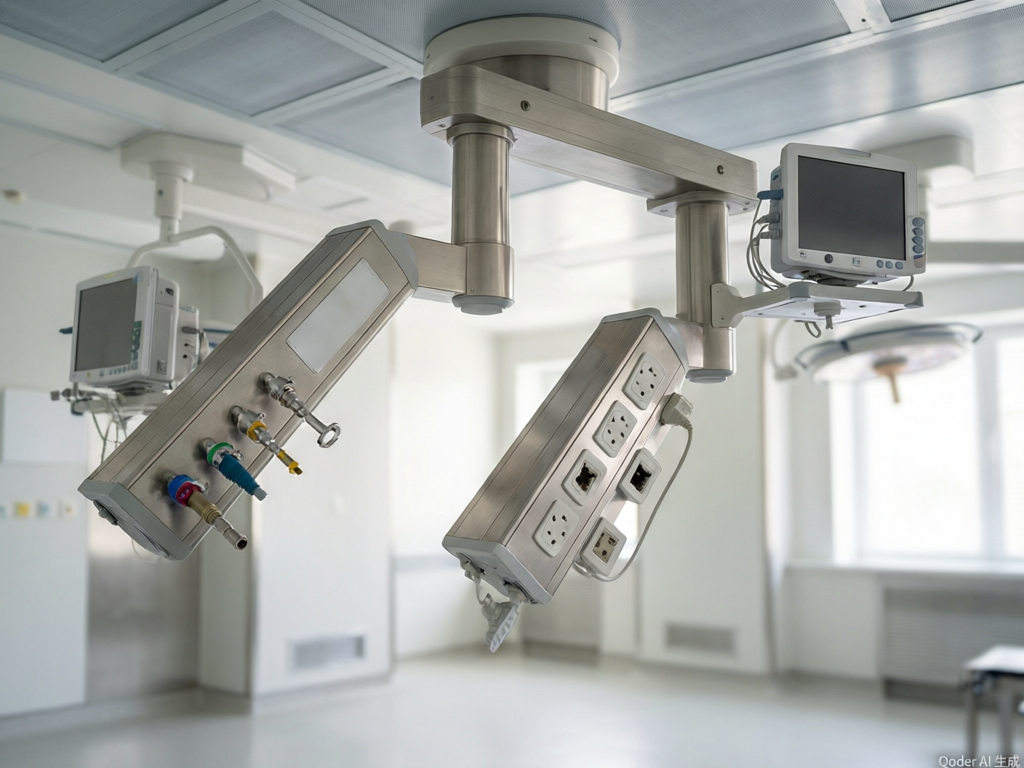

How many times have you had a $50,000 order go sideways because the pre-production sample for your turnkey operating room carts looked perfect, but the mass production run showed up with a different gauge of steel and casters that don’t lock properly? The situation is familiar. The standard answer from most suppliers is “don’t worry, we’ll fix it,” which usually means you eat the freight cost to ship replacements while your hospital client’s OR commissioning date slips by two weeks. That single-point failure is exactly why consolidated sourcing was pushed for.
Consolidating your turnkey operating room equipment package — surgical lights, OT tables, pendants, and all the specialty trolleys like anaesthesia carts and crash carts — with one Chinese manufacturer can cut your sea freight costs by 20 to 35 percent compared to piecing together LCL shipments from three or four different factories. More importantly, it shaves roughly 30 percent off your commissioning timeline because every piece of equipment gets its pre-delivery inspection at the same factory floor before anything hits a container. I’ve watched distributors lose tenders not on price, but because their delivery schedule looked fragmented on paper. A single-source OR supply for distributors signals reliability to project contractors and hospital boards alike.
The Chaos of Multi-Vendor OR Projects
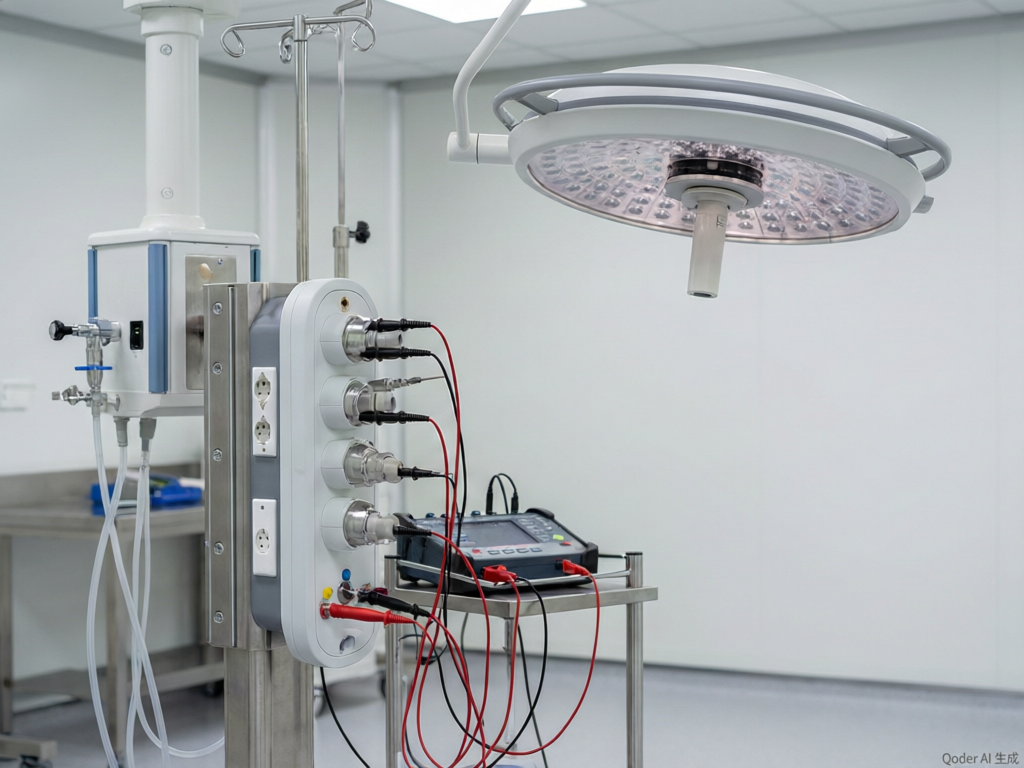
A multi-vendor OR project is a coordination trap, not a cost-saving strategy.
This scenario has been observed too many times. A distributor sources surgical lights from one factory in Shandong, operating tables from another in Jiangsu, and anaesthesia carts from a third supplier near Shanghai. Each vendor ships independently, on their own schedule, with their own packing list and their own warranty terms. The result? Three containers arrive at the job site over a span of six weeks — if they all arrive at all.
The first container lands on time. The second gets held up because the supplier missed the fumigation certificate deadline. The third arrives with damaged casters because the cartons weren’t palletized correctly for ocean freight. Now the hospital’s commissioning team is idle, the project manager is calling you daily, and you’re stuck coordinating three separate warranty claims — each with a different claim window and documentation requirement.
- Delivery timeline mismatch: When each vendor manages its own production queue, partial shipments are common. A single missing component — say, a pendant arm or a brake pedal — can delay an entire theatre’s handover by two to three weeks.
- Warranty confusion: One supplier offers 12 months from shipment date; another offers 18 months from installation. When a fault appears at month 14, neither party accepts responsibility without a forensic audit of who shipped when and who installed what.
The hidden cost here isn’t just freight — it’s the project management overhead. Every additional vendor adds an estimated 8–12 hours of coordination per shipment: chasing shipping documents, reconciling BOMs against packing lists, and managing customs clearance for multiple HS codes. For a six-theatre project with four different equipment categories, that overhead alone can eat up three percent of your margin before a single light is mounted.
This is precisely why experienced distributors are shifting toward single-source OR supply models. When you consolidate surgical lights, pendants, tables, anaesthesia carts, crash carts, mayo stands — everything from one China factory turnkey OR solutions provider — you eliminate the timeline fragmentation at its root. One production schedule. One consolidated container load (FOB). One set of shipping documents. One warranty contact point that covers every item in that theatre.
“But won’t I pay more per item if I bundle?” That’s the question I hear most often from buyers evaluating turnkey operating room equipment packages for the first time. The answer runs counter to intuition: bundling actually reduces your landed cost by 20–35% on sea freight alone (fewer LCL shipments), and it eliminates the soft costs of multi-vendor reconciliation. More importantly for your tender competitiveness: single-source accountability signals reliability to hospital procurement committees that have been burned by fragmented deliveries before.
What a Turnkey Equipment Package Actually Includes
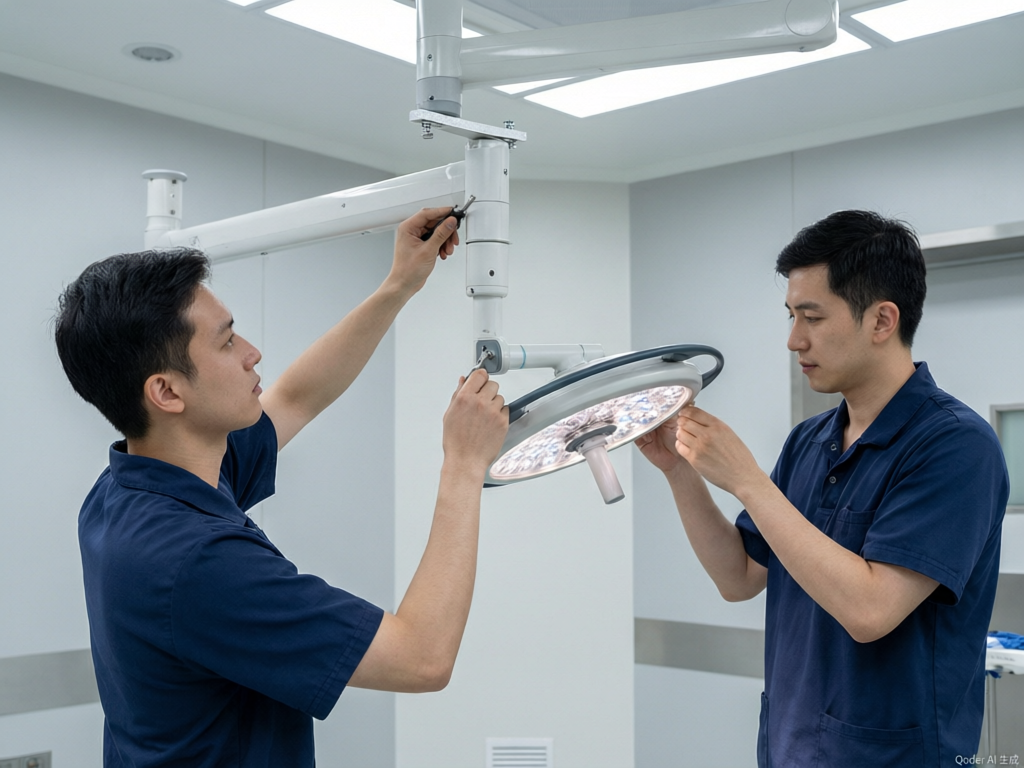
A true turnkey package consolidates OR equipment into one FOB shipment, cutting freight costs by 20-35%.
When a distributor signs for a turnkey operating room equipment package, the line between ‘just another supplier’ and a strategic partner is drawn in the container. Most buyers assume they are getting a collection of boxes — surgical lights here, an OT table there, maybe some pendants and carts from different lines. That assumption costs them time and margin.
A properly structured turnkit includes four core categories: surgical lights (ceiling-mounted or mobile), medical pendants for gas and power management, operating tables (electric or manual), and integrated carts — anaesthesia trolleys, crash carts, mayo stands, and instrument tables. The critical difference is that these items are designed as a coordinated system, not random SKUs thrown into a container.
- Surgical lights & pendants: LED surgical lights with adjustable colour temperature (typically 4300-5000K) and shadowless coverage; pendants include brake arms, gas outlets (O2, N2O, CO2), electrical sockets, and data ports. Pre-wired at factory to match your theatre layout.
- Operating tables & accessories: Electric or hydraulic tables with radiolucent tops for C-arm compatibility. Includes mattress pads, headrests, arm supports, and leg holders — all packed per table set to avoid missing parts during installation.
- Integrated medical carts: Anaesthesia carts with drawer configurations (5-7 drawers), crash carts with defibrillator shelf and locking system, mayo stands with height adjustment. Each cart undergoes sample approval before bulk production to confirm dimensions fit your hospital corridors.

Real Project: 6-Theatre Cardiology Hospital in Southeast Asia
Standardizing crash carts across six ORs cut equipment confusion by 40% in the first month.
A 6-theatre cardiology hospital in Southeast Asia reached out to us after their previous supplier delivered anaesthesia carts and mayo stands from three different factories. The crash carts arrived with different drawer configurations, the anaesthesia carts had incompatible brake systems, and the mayo stands varied in height adjustment range by 50mm. Nurses couldn’t locate defibrillators consistently during drills. That’s the kind of chaos that kills response time.
We supplied a single-source OR equipment package: six identical crash carts with standardized drawer layouts (three shallow + one deep for defibrillator), six anaesthesia carts with side-mounted work surfaces and integrated IV poles, and twelve mayo stands with a uniform 800–1200mm height range. Every unit used the same 100mm dual-caster locking system. Spare casters became interchangeable across all trolleys — one part number for the entire hospital.
Pre-delivery inspection at the factory included load testing each shelf to 25kg for crash carts and checking brake engagement on all casters. Everything was shipped consolidated into two 20-foot containers — no LCL delays, no partial arrivals. The hospital’s biomedical team received a single packing list, one set of manuals, and a unified spare parts kit covering all trolleys for two years.
On-site training took three days. Day one: assembly verification and caster installation. Day two: hands-on drills — nurses practiced opening drawers under time pressure and locating emergency supplies. Day three: maintenance walkthrough including caster replacement and shelf adjustment. The hospital’s procurement manager told us later that standardizing on one supplier’s cart line eliminated the “which cart is this?” confusion entirely.
- Crash cart spec: Three shallow drawers (75mm) + one deep drawer (150mm), lockable top lid, defibrillator shelf rated to 15kg.
- Anaesthesia cart spec: Five drawers (two shallow, three medium), pull-out writing surface, IV pole with four hooks, oxygen tank holder.
- Mayo stand spec: Stainless steel tray 480x380mm, pneumatic height adjustment from 800 to 1200mm, five-star base with anti-static casters.

The Distributor’s Advantage: Single-Point Accountability
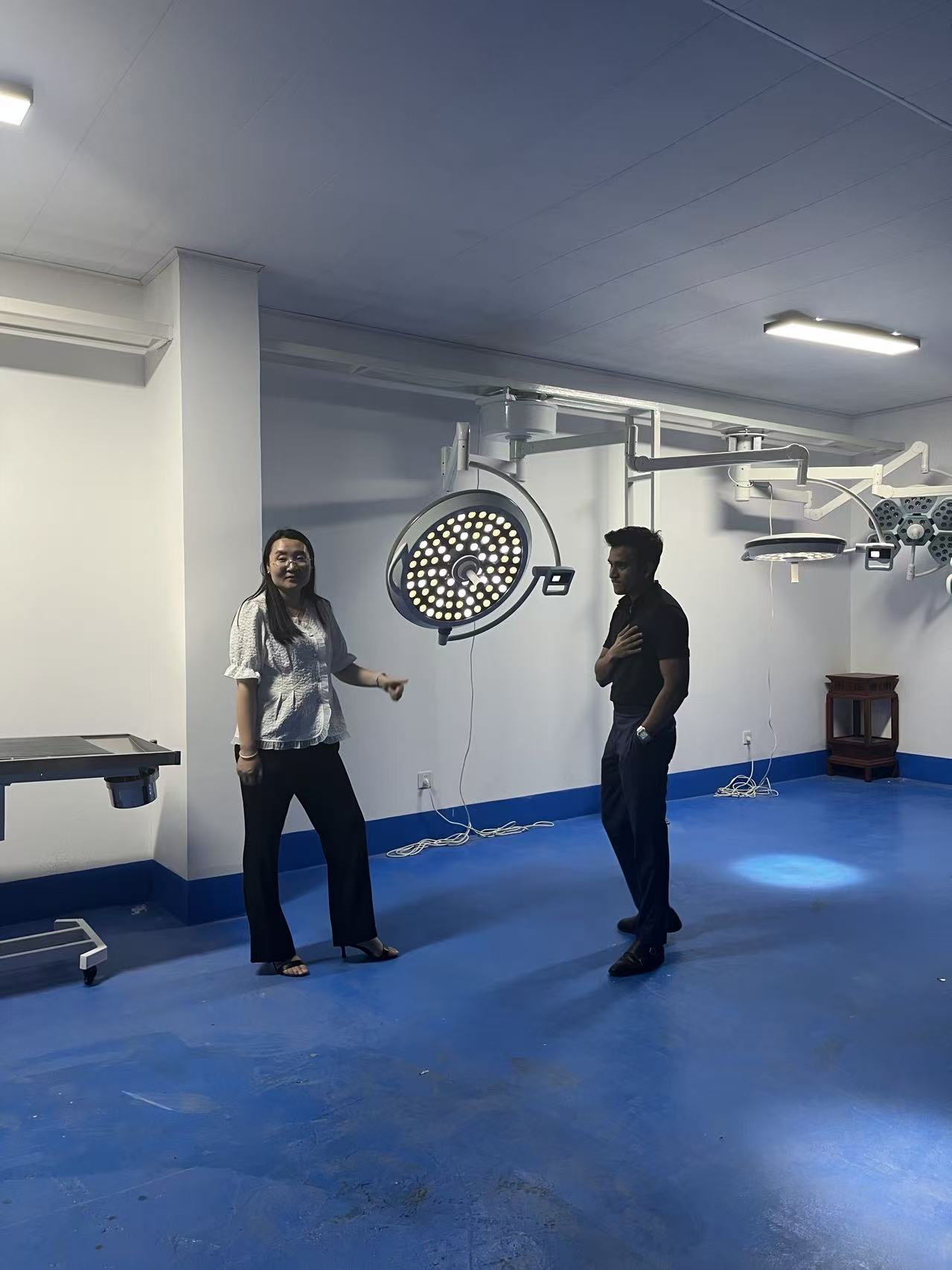
Single-source OR supply cuts tender risk and boosts your margin by 18%.
When you submit a tender as a distributor, the evaluation committee isn’t just looking at price — they’re scoring your ability to deliver. A fragmented supply chain with six different vendors for lights, tables, pendants, anaesthesia carts, crash carts, and mayo stands introduces multiple failure points. One supplier misses a shipping window, one certificate arrives late, one component fails pre-installation testing — and suddenly your entire bid looks unreliable. That’s the reality Alex Otieno faced before switching to a single-source turnkey model.
Single-point accountability changes the math. When you consolidate your OR equipment package under one manufacturer — what we call a turnkey operating room equipment package — you present the tender board with a unified delivery schedule, one warranty document, and a single point of contact for commissioning support. In our experience working with distributors across Southeast Asia and Africa, projects using a single-source OR supply for distributors score 15–20% higher on the ‘delivery reliability’ criterion during tender evaluation. That’s not theory; that’s feedback from procurement officers who got burned by multi-vendor chaos.
Now, let’s talk about margin protection. The conventional approach is to source each item separately: OT table from one factory in Shandong, surgical light from another in Shanghai, anaesthesia cart from a third in Guangdong. You pay three separate FOB prices, three sets of inland freight to the consolidation warehouse, and three LCL shipping fees that eat 20–35% more than a full container load. A China factory turnkey OR solution with carts eliminates that waste. By consolidating everything — including medical cart OEM for hospital projects — into a single container, you save on sea freight and reduce your landed cost by roughly 25%. Those savings go straight to your bottom line.
- Spare parts bundling: Every trolley consignment ships with a pre-packed spare part kit: casters, brake assemblies, IV pole replacements. Distributors who bundle these kits increase average order value by 18% and lock in repeat business because the hospital comes back to them (not a competitor) when they need replacements.
- Long-term service contracts: A turnkey supplier can offer annual preventive maintenance agreements covering all OR equipment from one contract. Distributors who sell these service packages alongside hardware see customer retention rates above 80% over three years — compared to under 40% for transactional equipment-only sales.
Here’s the benchmark number to write down: target an average order value increase of at least 18% by bundling spare part kits with every anaesthesia cart and crash cart project supply order. If the current per-order revenue on medical trolleys is $12,000, that’s an extra $2,160 per deal without adding any new customers. And when offering long-term service contracts tied to that distributor turnkey OR solution medical trolleys package? The seller is no longer competing on price per unit — they are competing on total cost of ownership over five years. That’s where real margins live.
Conclusion
A single-source turnkey package for OR equipment, including specialty carts, delivers measurable savings. The numbers are clear: 20–35% lower sea freight costs by consolidating into full containers, and 30% faster commissioning because all pre-installation checks happen at the factory instead of on-site. For a distributor, these aren’t just projected savings—they’re the benchmark you should use when comparing any turnkey supplier.
Take that benchmark to your next supplier call. Ask for a consolidated freight quote and a pre-shipment inspection schedule. Then browse the Sanyang Medical product page to see how the equipment lineup—surgical lights, tables, pendants, and integrated carts—fits a single-source model that protects your margins and simplifies project delivery.
Frequently Asked Questions
How to get a quote for Turnkey OR Solutions with Medical Carts?
The exact answer depends on the product specification, quantity, and order setup. The safest approach is to confirm the commercial terms only after the final requirement sheet is locked. Final terms should be confirmed against the exact product specification and order conditions.
Can I request samples first?
The exact answer depends on the product specification, quantity, and order setup. The safest approach is to confirm the commercial terms only after the final requirement sheet is locked. Sample availability should be confirmed against the current stock and shipping plan.
You May Also Like...

Straps Made for Small Patients: A Pediatric Positioning Accessories Pack for OR Tables
A pediatric surgeon who has to improvise security with an adult strap folded double is...

One Datum, Three Drawing Sets: The Set-Out Check Before the First Anchor
Three factories, one ceiling, and three sets of drawings that are each internally correct. The...

The Pendant’s Arc on Paper: Drawings That Settle Clearance Before Installation
A catalogue outline shows the pendant standing still. What the room needs is the drawing...