


Executive Summary
Which OR equipment materials actually survive daily disinfection? A practical guide to environmental stress cracking, polymer selection, ASTM D543 / ISO 22088-3 validation, and hospital-side compatibility programs.
Every operating room runs on a paradox. The same disinfectant chemistry that keeps surgical site infection rates low is quietly destroying the equipment it is meant to protect. I have walked into ORs where a three-year-old surgical light had a housing crazed like a dry riverbed, where operating table side rails had lost their anodized finish, and where pendant control panels were fogged beyond readability — not from age, but from daily wipe-downs with a chemistry the materials were never designed to tolerate. Operating room equipment disinfectant compatibility is not a housekeeping footnote; it is a lifecycle cost issue, a patient safety issue, and increasingly a regulatory finding in hospital audits.
The problem accelerated after 2020. Hospitals moved to more aggressive sporicidal and accelerated hydrogen peroxide protocols, increased wipe frequency from once daily to between-case turnover, and started buying whatever disinfectant the supply chain could deliver. Equipment manufacturers saw warranty claims for cracked housings, delaminated touchpads, and corroded gas outlets climb in parallel. In my team’s experience supporting OR installations across more than a dozen countries, roughly a third of “premature aging” complaints we investigate trace back to a chemistry mismatch, not a manufacturing defect. This guide explains which materials actually survive daily cleaning, how to read a compatibility claim, and how to build a disinfectant policy that protects both patients and capital equipment.
Why Disinfectants Destroy OR Equipment
The dominant failure mechanism in polymer housings is environmental stress cracking, or ESC. A disinfectant fluid does not need to dissolve a plastic to destroy it; it only needs to penetrate the surface microstructure while the part is under residual or applied stress. The fluid lowers the energy required for crack initiation, and microscopic crazes propagate until the housing splits — often months after the exposure started, which is why the root cause is so often missed. A 2024 study published in the Journal of Hospital Infection tested eight ready-to-use 2-in-1 disinfectant wipes against thirteen common healthcare plastics under BS EN ISO 22088-3 and found that all eight wipe formulations contained ESC agents. Products with a pH above 8.0 were responsible for 74% of the failures, and formulations combining quaternary ammonium compounds with small or medium amines or alcohol showed the greatest propensity for cracking.
That finding surprises many infection control teams, because quaternary ammonium compounds — “quats” — are marketed as the material-friendly option. The reality is more nuanced: the active ingredient matters less than the full formulation. Surfactants, solvents, chelating agents, and pH buffers all change how aggressively a product attacks plastics, elastomers, and coatings. Two wipes with the same listed active can behave completely differently on a polycarbonate light handle. We documented exactly this pattern in our field report on surgical light housing cracking from cleaners, where housings failed within 18 months under a hospital-grade quat-alcohol wipe that had never been validated against the enclosure polymer.
Metals and coatings fail differently. Chloride-based disinfectants — sodium hypochlorite above roughly 500 ppm free chlorine — attack stainless steel passivation layers and cause pitting, especially at weld seams and laser-etched markings. Accelerated hydrogen peroxide is generally kinder to metals but will cloud acrylic lenses and chalk powder-coated surfaces over time. Elastomers — the gaskets, cable jackets, and sealing rings that keep an IP54 enclosure sealed — swell, harden, or embrittle depending on the chemistry, and once a seal loses compression set, fluid ingress becomes an electrical safety issue under IEC 60601-1, not just a cosmetic one.
Field rule: if a disinfectant’s safety data sheet warns against use on “certain plastics,” assume your equipment is one of those plastics until the manufacturer tells you otherwise in writing.
Materials That Actually Survive Daily Cleaning
Not all engineering polymers are equal under chemical attack. The industry spent the last decade migrating away from plain ABS and polycarbonate because both crack readily under quat-alcohol exposure. Here is how the common OR equipment materials rank in real-world disinfectant resistance, based on published compatibility testing (including PDI’s Sani-Cloth materials compatibility program and resin supplier data from Covestro and Avient) and our own service records:
- Polyphenylsulfone (PPSU) and polysulfone (PSU): The gold standard. Exceptional resistance to virtually all hospital disinfectants including bleach and hydrogen peroxide, plus steam sterilization tolerance. Expensive — typically reserved for sterilizable handles, sterilization-compatible grips, and high-touch removable parts.
- PC/PBT and PC/PET blends: The current workhorse for semi-crystalline housings. The polyester phase dramatically improves chemical resistance versus straight polycarbonate while keeping impact strength. Good choice for surgical light housings and pendant consoles.
- PC/ABS blends: The legacy standard for device enclosures. Acceptable with mild quats and soap-and-water protocols, but vulnerable to alcohol-bearing and high-pH formulations. If your hospital uses accelerated hydrogen peroxide wipes daily, plain PC/ABS housings will show crazing within two to three years.
- Advanced polycarbonate copolymers: Newer copolymers (for example Covestro’s Apec/Makrolon healthcare grades) are engineered specifically to resist ESC from harsh disinfectants while retaining polycarbonate’s impact and clarity. Increasingly common in premium OR equipment.
- Powder-coated steel and anodized aluminum: Excellent with quats and hydrogen peroxide; vulnerable to concentrated bleach at edges, scratches, and fastener holes where the coating film is thin or interrupted.
- 304/316 stainless steel: The safest surface in the room for chemistry, but only if the passive layer is maintained. Chloride pitting starts at crevices and welds; routine passivation after aggressive bleach use is cheap insurance.
- Silicone and EPDM elastomers: Broadly tolerant of hospital disinfectants. Natural rubber and some PVC cable jackets are the weak points — they harden and crack under repeated alcohol exposure.
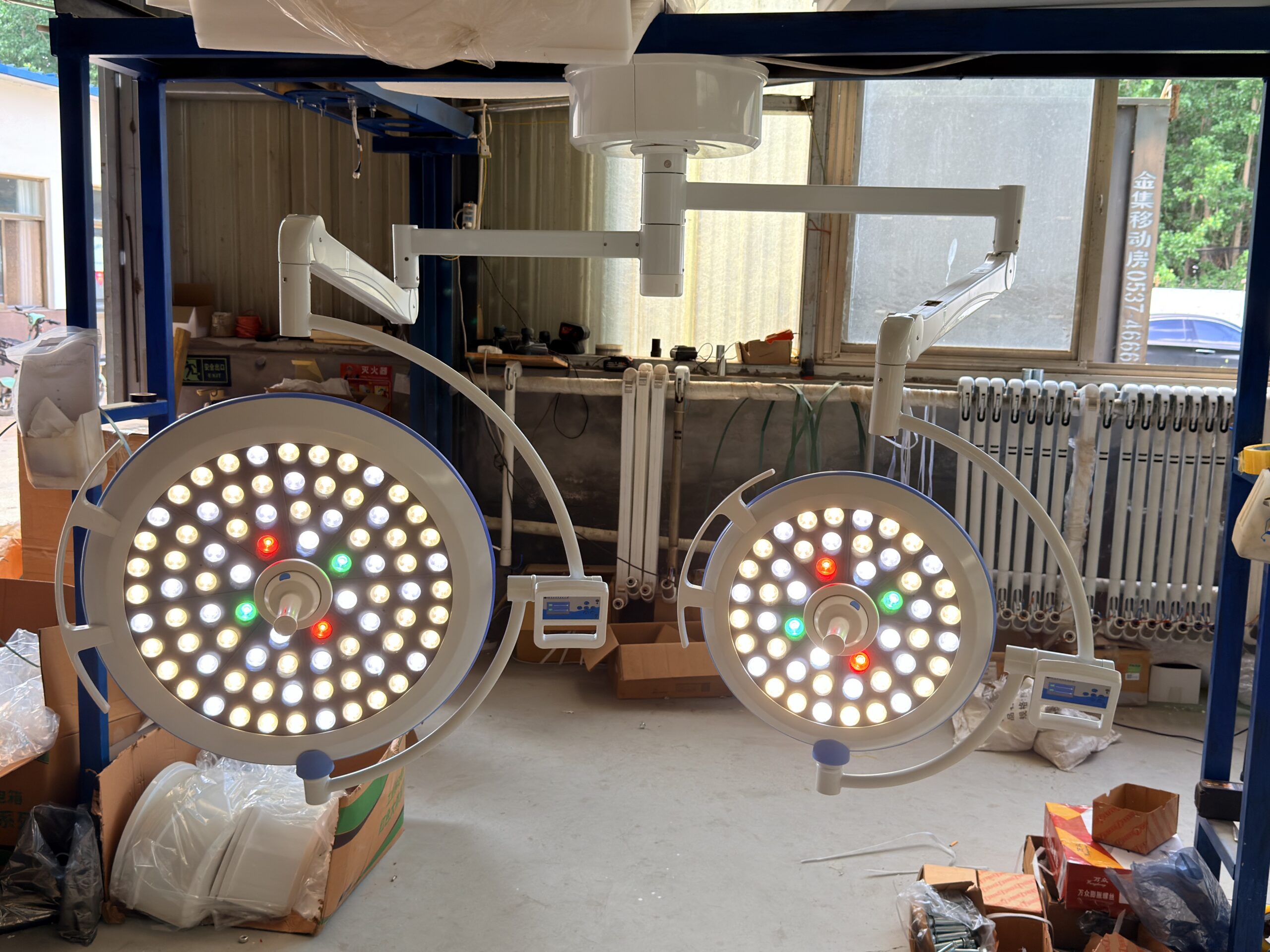
The pattern to remember: semi-crystalline phases (PBT, PET, PPSU) resist chemical attack; amorphous phases (PC, ABS, PMMA) give you impact strength and optical clarity but crack under stress with the wrong chemistry. Any housing that is simultaneously load-bearing, optically clear, and disinfected daily — a light handle, a camera shroud, a touchscreen overlay — is a stress-cracking candidate by design, and deserves explicit material interrogation at procurement.
Disinfectant Chemistry vs. Equipment Surfaces: A Compatibility Matrix
The table below consolidates published compatibility data and manufacturer guidance into a working reference for OR turnover teams. It is a general guide, not a substitute for each device manufacturer’s approved-chemistry list — always defer to the instructions for use (IFU) for a specific device.
| Disinfectant Class | Typical Surfaces at Risk | Failure Mode | Compatible Materials |
|---|---|---|---|
| Quaternary ammonium (low pH, no alcohol) | Generally well tolerated | Slow surface dulling on acrylics | Most polymers, metals, coatings |
| Quat + alcohol / amine blends (pH > 8) | PC, ABS, PC/ABS housings; PMMA lenses | Environmental stress cracking, crazing | PPSU, PC/PBT, stainless steel, anodized aluminum |
| Sodium hypochlorite (bleach, ≥500 ppm) | Stainless welds, anodized edges, powder-coat scratches, fabrics | Pitting corrosion, coating chalking, upholstery bleaching | PPSU, HDPE, intact 316 stainless, glass |
| Accelerated hydrogen peroxide (0.5–2%) | Acrylic lenses, some touchpad overlays, natural rubber | Clouding, yellowing, elastomer hardening | Most metals, PPSU, PC/PBT, silicone |
| Phenolics | Plastics generally; residual films on optics | Surface softening, film buildup on light diffusers | Metals, ceramics; limited polymer use |
| 70% isopropyl alcohol | PMMA, PC, PVC cable jackets, screen-printed legends | Crazing, ink removal, jacket cracking | Stainless, glass, PPSU, silicone |
One row deserves emphasis because it causes the most damage in practice: the quat-alcohol blends with pH above 8.0. These are the most common between-case wipes in North American and European ORs, and they are exactly the formulations the Journal of Hospital Infection study found responsible for nearly three-quarters of plastic failures. If your infection prevention team has standardized on such a wipe, every polymer-housed device in the room needs a confirmed compatibility statement — or a physical barrier strategy, such as disposable covers for handles and control panels.
How to Read a Manufacturer’s Compatibility Claim
“Wipeable” and “disinfectant resistant” are marketing words, not test results. When we evaluate an OR equipment supplier — and when hospitals audit us — the questions that separate engineering from brochure copy are these:
- Which exact chemistries were tested? A serious manufacturer names commercial products or chemical classes with concentrations: “Sani-Cloth AF3, Clorox Healthcare Bleach Germicidal Wipes, 0.5% accelerated hydrogen peroxide.” A vague “resistant to common hospital disinfectants” claim is unverifiable.
- To what test method? Credible methods include ASTM D543 (resistance of plastics to chemical reagents), ISO 22088-3 (environmental stress cracking under constant strain), and ISO 527-2 for tensile property retention after exposure. PDI’s compatibility program, for instance, wipes coupons 120 times under 1% constant strain — a genuine simulation of months of daily cleaning, not a one-time splash test.
- What exposure frequency was simulated? Ten wipes is a lab curiosity; 120 wipes under strain approximates a quarter of daily turnover cleaning. Ask how many cycles the claim covers.
- Does the claim cover seals and moving parts? Housings get tested; gaskets, bearing seals, cable jackets, and membrane keypads often do not — and they fail first.
- Is there a published approved-chemistry list in the IFU? Under IEC 60601-1 and EU MDR 2017/745, cleaning and disinfection instructions are part of the device’s technical documentation. A manufacturer that cannot produce them has a documentation gap an auditor will find.
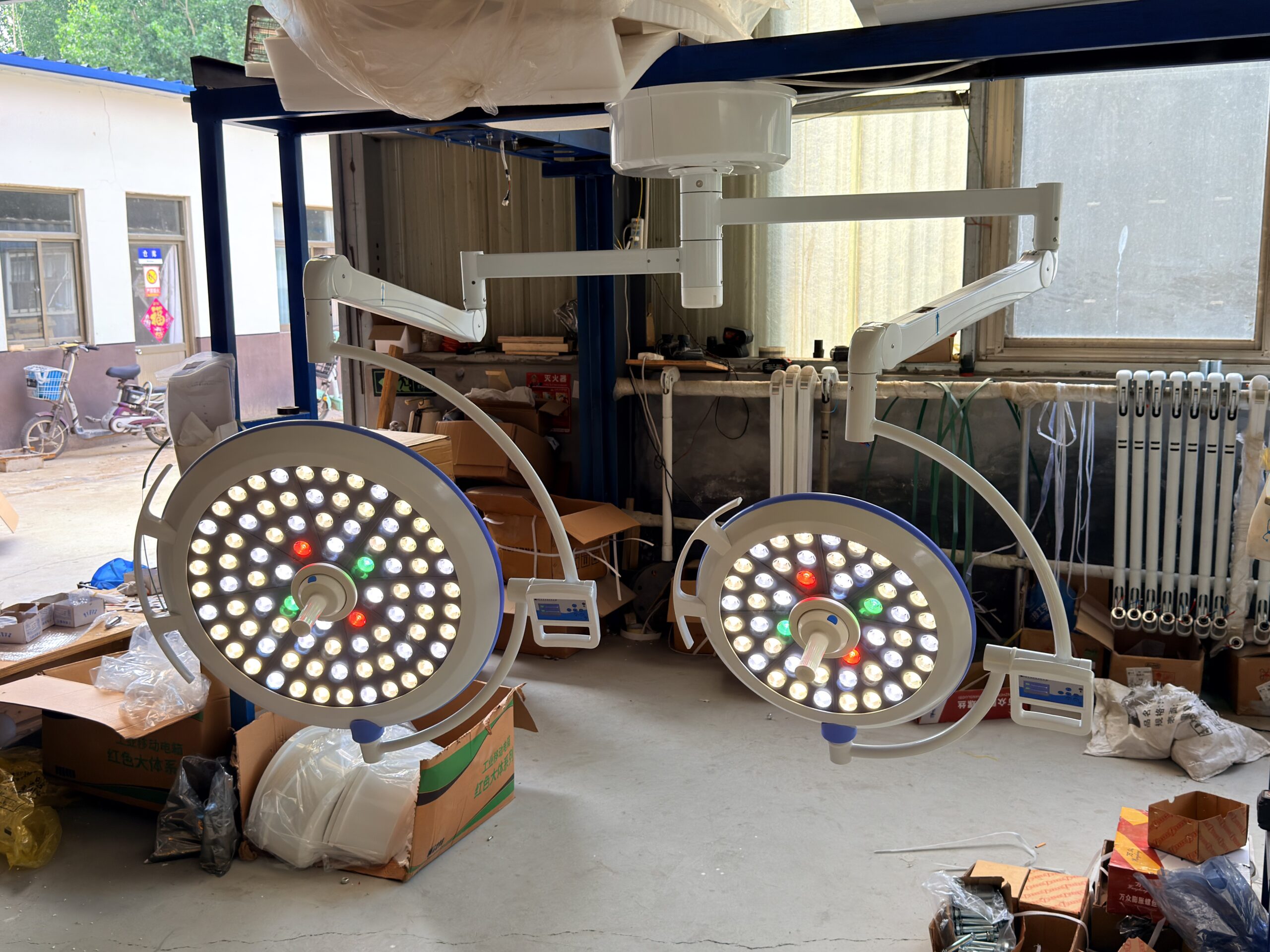
When we supply operating tables and lights into tender projects, we attach the cleaning-agent compatibility statement to the technical file, because hospital biomedical engineers increasingly demand it. If your current supplier cannot tell you which wipe chemistry their housing polymer was validated against, treat that as a red flag during your next OR equipment tender technical specification review.
Never let the disinfectant vendor and the equipment vendor each assume the other validated compatibility. In every failure investigation I have joined, both pointed at the other’s documentation — and the hospital paid for the replacement parts.
Designing and Specifying Equipment for Cleanability
Material choice is only half the equation; geometry decides how much chemistry actually contacts the material and for how long. Contact time — often 1 to 10 minutes of wet dwell for the disinfectant to achieve its claimed kill — means surfaces stay chemically loaded far longer than most people assume. Poor geometry turns that dwell into pooling. The design features that separate long-lived OR equipment from warranty statistics:
Crevice-Free Housings and Sealed Joints
Every seam, screw head, and parting line is a fluid trap where disinfectant concentrates through evaporation. Ultrasonically welded or gasket-sealed housings with radiused internal corners outperform screwed assemblies dramatically. Look for IP54 or better ingress protection on light heads and pendant consoles — the rating that keeps fluid out of the electronics is the same rating that keeps chemistry off internal polymers that were never tested for exposure.
Removable, Sterilizable Touch Points
The highest-exposure components — surgical light handles, table positioning grips — should be designed for removal and steam sterilization rather than repeated chemical wiping. A PPSU handle that goes through the autoclave 500 times outlasts a chemically wiped PC handle many times over, and removes the chemistry question entirely for the part most likely to crack under load.
Protected Optics and Displays
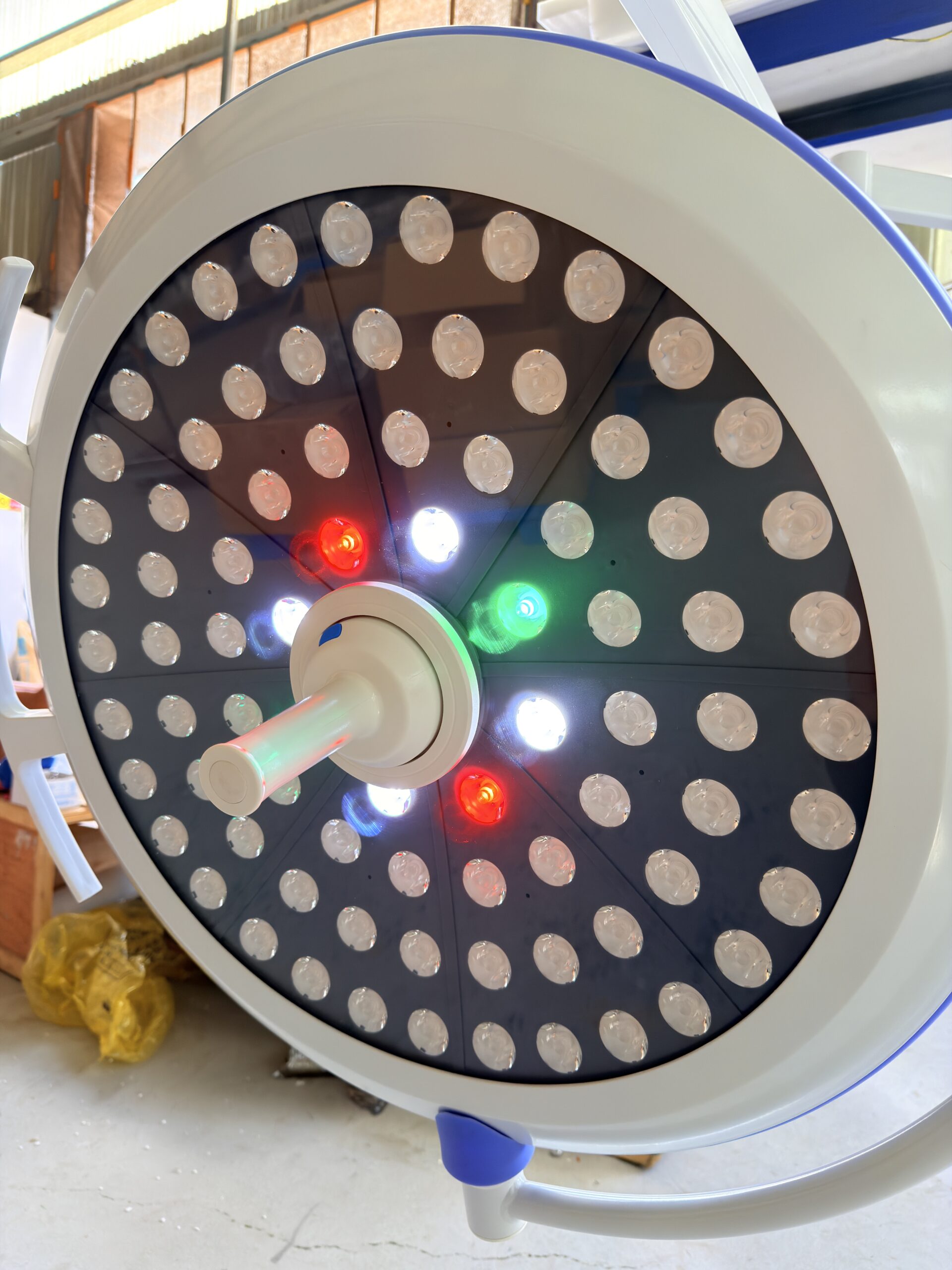
Acrylic and polycarbonate lenses are the most chemically fragile surfaces in the room. Recessed mounting, replaceable diffuser panels, and glass rather than polymer where weight allows all reduce the cost of an inevitable clouding event. On our own light heads the diffuser is a field-replaceable spare part for exactly this reason — a lesson learned from service calls documented in our surgical light cleaning protocol article, where improper wiping technique turned a consumable cleaning step into a multi-hundred-hour repair cost.
Building a Hospital-Side Compatibility Program
Even perfectly specified equipment fails if the cleaning policy drifts. Infection prevention, biomedical engineering, and procurement each own a piece of this, and the failures happen in the gaps between them. A working program has four elements:
- One approved-chemistry list per device category. Biomedical engineering compiles the IFU cleaning instructions for every OR device class — lights, tables, pendants, trolleys, monitors — into a single matrix. Any new disinfectant purchased by supply chain gets checked against this matrix before it reaches the floor, not after the first cracked housing.
- Wipe technique training. Wring out wipes so surfaces are damp, not wet. Never spray disinfectant directly onto equipment — spray into the cloth. Respect the stated contact time, then remove residue with a water-dampened cloth where the IFU requires it. Manufacturer manuals (Maquet, Mindray, and our own among them) are consistent on this: wipe from center outward, never circular, power off and cool first.
- A dilution discipline. Mixing bleach “a bit stronger” is the single fastest way to void warranties and corrode stainless. Wall-mounted dilution systems cost less than one pitted pendant gas column.
- Annual condition audits. Photograph housings, lenses, and seals yearly. Crazing appears long before cracking; catching it early converts an emergency replacement into a planned spare-parts order through your spare parts service channel.
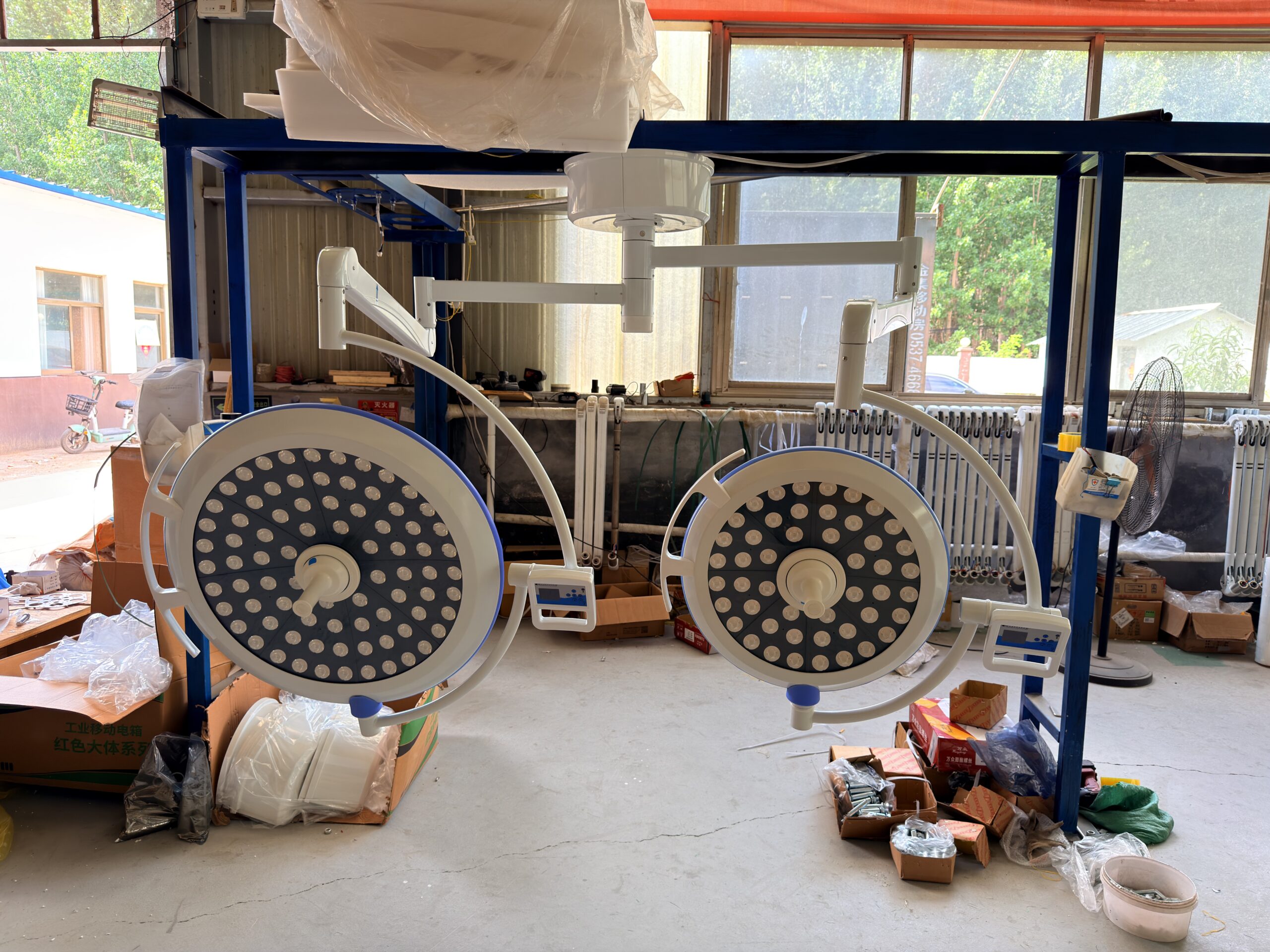
When a hospital tells us their lights “aged five years in two,” the audit almost always finds one of three things: a new wipe introduced during a supply shortage, a well-meaning environmental services team using concentrate instead of working solution, or direct spraying onto warm light heads. All three are policy failures, not product failures — and all three are free to fix.
What to Ask Suppliers Before You Buy
Procurement is where compatibility is cheapest to secure and most expensive to ignore. Before signing any OR equipment purchase order, add these questions to your technical evaluation sheet:
- Provide the polymer identification (ISO 1043 code) for every external housing, lens, and membrane surface.
- Provide the list of validated disinfectant products and concentrations, with the test method used (ASTM D543, ISO 22088-3, or equivalent).
- State which components are designed for steam sterilization and their validated cycle count.
- State the ingress protection rating of all powered enclosures.
- List which external parts are field-replaceable spares — lenses, handles, keypads, cable jackets — and their lead times.
- Confirm the cleaning instructions are included in the IFU submitted for CE (MDR 2017/745) or other regulatory files.
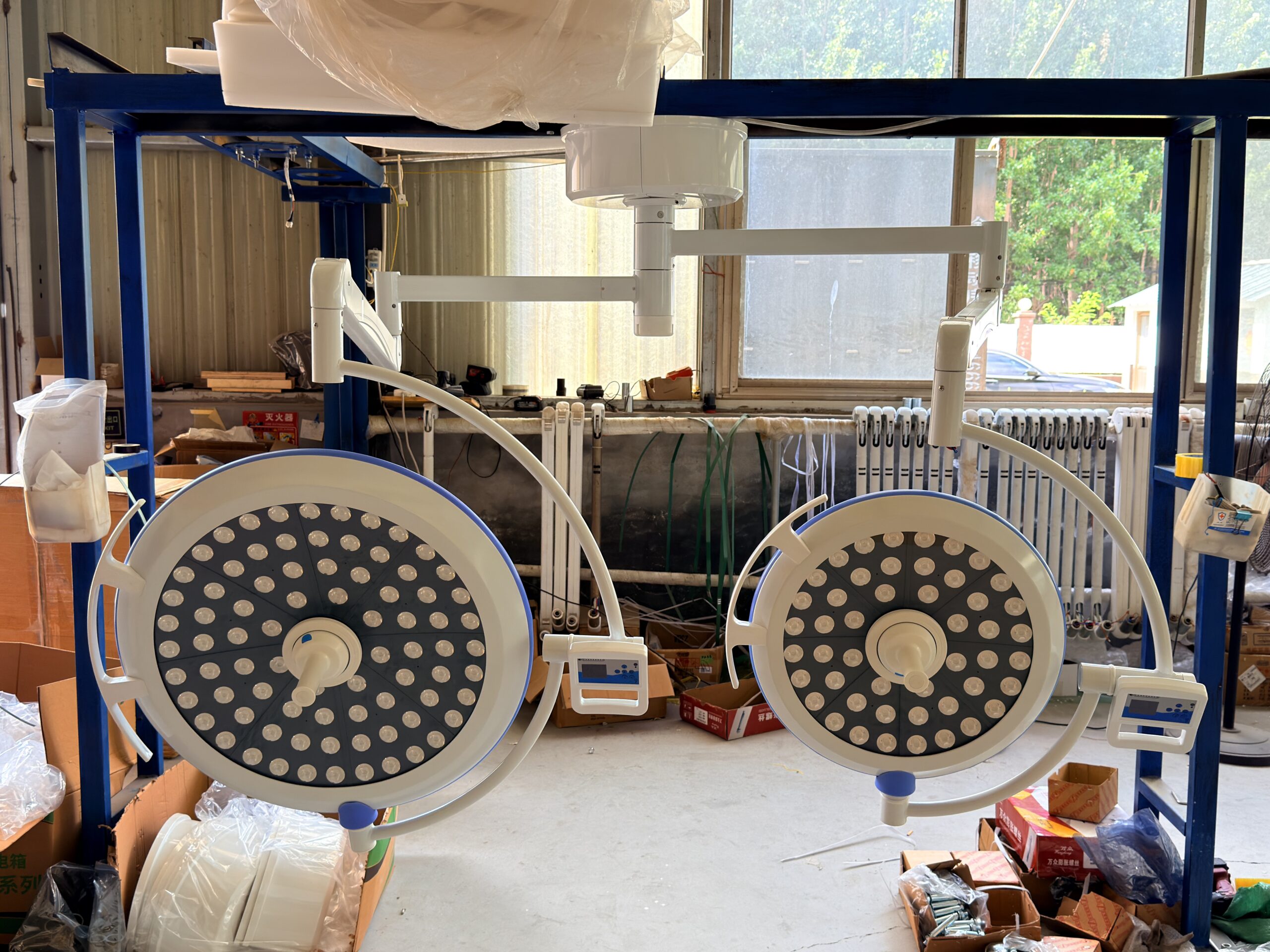
A supplier who answers these six questions fluently has engineered for your cleaning reality. A supplier who deflects them is selling you tomorrow’s warranty dispute. At Sanyang Medical we treat the compatibility statement as part of the product — the same document package that carries the IEC 60601 test reports carries the disinfectant validation, because in a working OR the two are inseparable.
Conclusion
Operating room equipment disinfectant compatibility comes down to three disciplines. First, choose materials engineered for chemical attack — PPSU and PC/PBT over plain PC/ABS for housings, anodized and passivated metals, silicone and EPDM over natural rubber and PVC for seals. Second, verify claims against real test methods — ASTM D543, ISO 22088-3, multi-hundred-cycle wipe testing under strain — rather than marketing adjectives. Third, govern the chemistry after installation: an approved-chemistry matrix, disciplined dilution and wipe technique, and annual condition audits. The disinfectant that saves a patient from infection should not cost you a light head, a table shroud, or a pendant console every few years. With the right materials and the right policy, daily cleaning becomes what it should be — a hygiene routine, not a depreciation accelerator. If you are specifying new OR equipment or troubleshooting premature surface failures, contact our engineering team — material compatibility review is a standard part of our quotation process.
Frequently Asked Questions
Which disinfectants are safest for surgical light housings?
Low-pH quaternary ammonium products without added alcohol or amines are the gentlest broad-spectrum option for polymer housings. Mild soap-and-water cleaning (pH 7.0–10.5, as specified in several major manufacturers’ manuals) handles routine soil. Whatever you use, confirm it appears on the light manufacturer’s approved list — formulation details like pH and co-solvents matter more than the active ingredient name.
Can I use bleach wipes on operating room equipment?
Only where the device IFU explicitly permits it, and at the labeled dilution. Sodium hypochlorite at working-strength concentrations is tolerated by PPSU, HDPE, intact stainless steel, and glass, but it pits stainless welds, chalks powder coatings, bleaches upholstery, and attacks anodized edges. Reserve bleach for sporicidal protocols (for example C. difficile outbreaks) rather than daily turnover, and rinse residue afterward where the IFU requires.
Why did my equipment housing crack even though we used “hospital-grade” wipes?
“Hospital-grade” describes antimicrobial efficacy, not material safety. Research published in 2024 found all tested 2-in-1 wipe formulations contained environmental stress-cracking agents, with high-pH quat-alcohol-amine blends causing the most failures in common healthcare plastics. The cracks typically appear months after exposure begins, on parts under mechanical stress — which is why the wipe is rarely suspected. Request the manufacturer’s ESC test data (ISO 22088-3 or ASTM D543) for both the wipe and the equipment.
How often should OR equipment surfaces be disinfected?
Follow your infection prevention policy — typically between every case for high-touch surfaces, plus terminal cleaning daily. Because each event adds chemical exposure, frequency is exactly why compatibility matters: a surface wiped five times daily accumulates over 1,200 exposure cycles per year. Choose equipment validated for that reality, and prefer removable sterilizable components for the highest-touch parts.
What standards govern cleaning instructions for medical devices?
IEC 60601-1 requires manufacturers to specify cleaning and disinfection methods in the accompanying documents, and under EU MDR 2017/745 those instructions form part of the device’s technical documentation — meaning they must be validated, not aspirational. Material test methods commonly cited include ASTM D543, ISO 22088 (stress cracking), and ISO 527 (tensile retention). If a supplier cannot show validated cleaning instructions in their regulatory file, treat it as an audit risk.
You May Also Like...

Surgical Light Control Systems Explained: Touch Panels, Wall Controls, Sterile Handles and Integrated OR Control
A practical guide to the five surgical light control systems - touch panels, wall control...
Surgical Light Tender Specifications: The Complete Procurement Checklist
A practical checklist of the photometric parameters, certifications, and evaluation steps that belong in every...

Surgical Light Installation Requirements: Ceiling Load, Height and Coordination Guide
A practical guide to surgical light installation requirements: ceiling load and moment, clear height, arm...