
Executive Summary
A zone-by-zone medical pendant cleaning and infection control protocol: CDC/PIDAC risk scoring, disinfectant compatibility, outlet safety, and ATP verification for OR pendants.
Every infection control audit I’ve sat through eventually lands on the same awkward question: “When did you last clean the pendant?” Not the floor. Not the table. The ceiling-mounted supply unit that hangs directly over the sterile field, loaded with gas outlets, electrical sockets, monitor shelves, and brake handles that get touched fifty times a case. Medical pendant cleaning infection control is one of the most neglected line items in OR environmental hygiene — and it’s neglected precisely because pendants don’t look dirty. They hang above eye level, they’re powder-coated white, and the contamination on them is invisible until an ATP swab says otherwise.
The stakes are not theoretical. The World Health Organization has repeatedly identified healthcare-associated infections as the most frequent adverse event in care delivery worldwide, and high-touch equipment surfaces inside the operating room are a documented reservoir. Yet most hospital cleaning schedules were written for floors, walls, and the operating table — with the pendant treated as “engineering equipment” that housekeeping isn’t sure it’s allowed to touch. The result: gas outlet faceplates, equipment rail clamps, and friction brake knobs that go months between proper disinfection.
This guide is the zone-by-zone protocol we hand to hospital biomedical teams and distributor service engineers when they commission our medical pendant installations. It’s built on the CDC/PIDAC risk-assessment framework for environmental cleaning, AORN’s updated instrument and environmental hygiene guidance (the AORN Guideline for Care and Cleaning was re-approved effective October 16, 2025), and fifteen years of watching what actually survives daily quaternary ammonium wipe-downs — and what doesn’t.
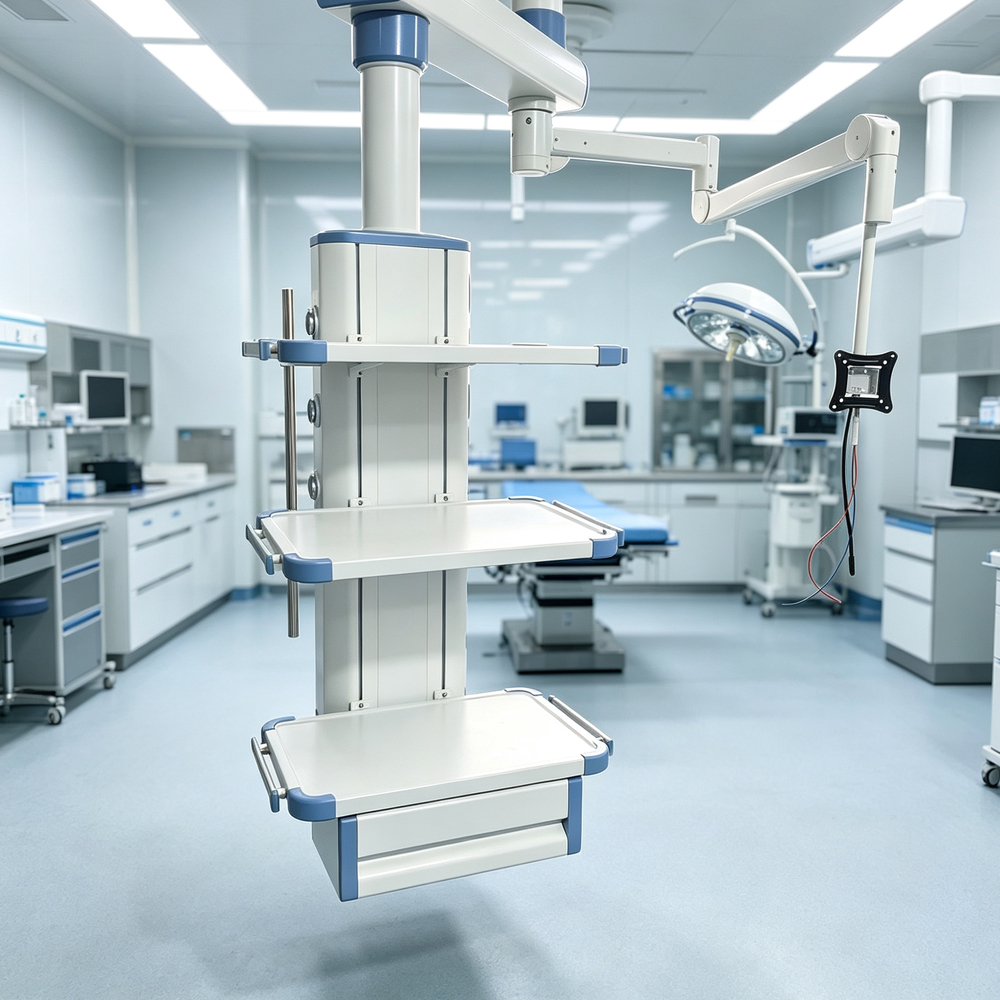
Why Pendants Are a Unique Infection Control Problem
A pendant concentrates every contamination pathway in one hanging assembly. It sits in the air path of the laminar flow field. Staff touch its handles and brake releases with gloved hands mid-case — gloves that have just adjusted the patient, the anesthesia circuit, or a suction line. Droplets and splash travel upward more than most people assume during irrigation and airway events. And unlike a trolley, you can’t roll a pendant to a decontamination room; all cleaning happens in place, above a sterile zone, often under time pressure between cases.
There’s also a materials problem. Pendant housings, shelf liners, and outlet bezels are typically powder-coated steel, PC/ABS or PC/PBT polymer blends. Industry literature on polymer compatibility with healthcare disinfectants documents environmental stress cracking (ESC) in traditional ABS and polycarbonate housings exposed repeatedly to harsh agents — particularly high-concentration chlorine solutions and some accelerated hydrogen peroxide formulations. We covered the same failure mode in our surgical light cleaning protocol, where the wrong disinfectant turned a housing into a $400/hour repair call. The chemistry lesson is identical for pendants: your infection control protocol and your equipment warranty live or die together.
Field rule: if the disinfectant label doesn’t list the surface material as compatible, assume it’s incompatible. “Hospital grade” describes antimicrobial efficacy, not material safety. I’ve replaced more pendant outlet bezels cracked by 5,000 ppm chlorine than by any mechanical cause.
The Zone-by-Zone Framework: Risk-Scoring the Pendant
The CDC’s Best Practices for Environmental Cleaning in Healthcare Facilities (Appendix A, reproduced from PIDAC 2018) gives a simple but powerful method: score each surface by probability of contamination (heavy = 3, moderate = 2, light = 1), frequency of hand contact, and patient vulnerability, then assign cleaning method and frequency from the total. Apply that logic to a pendant and it naturally splits into five zones. This is the core of any defensible medical pendant cleaning infection control program — you’re not cleaning “the pendant,” you’re cleaning five risk zones on different schedules.
| Zone | Components | Contamination Risk (CDC/PIDAC) | Minimum Frequency | Method |
|---|---|---|---|---|
| 1 — Touchpoints | Movement handles, brake release knobs, keypad/touch panel, shelf rail clamps | Heavy contact, moderate contamination (score 2–3) | Between every case + terminal clean daily | Low-level disinfectant wipe (quat or quat-alcohol), manufacturer-compatible |
| 2 — Work surfaces | Equipment shelves, drawer fronts, writing surfaces, drip tray | Moderate contamination, splash exposure (score 2) | After visible soil + at least daily | Detergent clean, then disinfectant with wet contact time per label |
| 3 — Service outlets | Gas terminal faceplates, electrical sockets, data ports, nurse call | Moderate contamination, high hand contact during connect/disconnect (score 2–3) | Daily + after any circuit/gas connection change | Damp (not wet) wipe; never spray directly into outlets |
| 4 — Structure | Arms, joints, column, motor covers, spring arm housings | Light contamination, low contact (score 1) | Weekly scheduled clean | Detergent wipe-down; disinfect if splash events occurred |
| 5 — Hidden geometry | Cable chains, hose loops, top of service head, underside of shelves | Dust reservoir; light contamination but zero visibility (score 1–2) | Monthly + after any ceiling works | HEPA vacuum first, then damp wipe; inspect for dust shedding |
Step 1: Zone 1 — Handles, Brakes, and Touch Panels (Between Every Case)
Zone 1 is where cross-contamination actually happens. The movement handle and friction brake release are grabbed by the anesthesia team, the circulator, and the surgeon’s assistant — usually without hand hygiene between touches, because repositioning a pendant mid-case is treated as an equipment adjustment, not a patient contact. A 2018 study published via PubMed Central on ATP bioluminescence monitoring in operating theatres confirmed what infection preventionists suspected: equipment touchpoints frequently fail cleanliness benchmarks even in theatres that pass visual inspection, and ATP testing, for all its limitations, consistently flags high-touch equipment surfaces as the weak link.
The protocol we recommend:
- Between cases: single-pass wipe of every handle, brake knob, and the touch panel with a low-level disinfectant wipe compatible with the surface finish. Observe the label’s wet contact time — most quaternary ammonium wipes need 1–2 minutes visibly wet, not a flick-and-dry.
- Direction of work: clean to dirty, top to bottom. Touch panel first (least soiled), handles second, brake knobs last.
- Touch panels and keypads: wring the wipe so it’s damp, not saturated. Liquid ingress behind a membrane keypad is a service call, not an infection control win.
- Terminal clean (end of list): full Zone 1 disinfection again, plus shelf rail clamps and any accessory hooks that held suction canisters or IV bags.

Step 2: Zones 2 and 3 — Shelves and Service Outlets (Daily, Done Right)
Shelves look easy and cause the most chemical damage. Two rules. First: clean before you disinfect. Organic load — dried irrigation fluid, gel residue from monitor leads, adhesive from tape — neutralizes most disinfectants on contact. The detergent pass is not optional; AORN’s environmental hygiene guidance and the CDC framework both treat visible soil removal as a prerequisite for disinfection, not an alternative to it. Second: match the agent to the material. On powder-coated shelves and polymer shelf liners, a neutral detergent followed by a quat-based low-level disinfectant covers the bioburden spectrum for intact-skin-contact surfaces without attacking the finish. Reserve chlorine-based agents for confirmed outbreak situations, and even then keep concentration at the low end of the label range and rinse per the equipment IFU.
Gas and Electrical Outlets: The “Damp, Never Wet” Rule
Zone 3 is where good intentions destroy equipment. Gas terminal faceplates and socket surrounds are touched every time a hose or plug connects — that’s heavy contact by any CDC scoring — but the assemblies behind them are precision components that do not forgive liquid ingress. The rule we drill into every EVS team during commissioning:
- Never spray disinfectant directly at a gas outlet, socket, or data port. Apply to the cloth, then wipe.
- Wipe the faceplate and bezel; do not insert anything into the outlet bore. Probe-style cleaning of a medical gas terminal is a maintenance task, not a cleaning task.
- If fluid does enter an outlet, log it. A slow gas leak from a corroded terminal seal shows up weeks later — our pendant gas outlet leak guide walks through the detection side of that failure.
- Isopropyl alcohol (70%) is acceptable for bezels and faceplates on most pendants; it flashes off fast and leaves no residue in the outlet throat. Confirm against your unit’s IFU.
Warning: we’ve traced multiple “mystery” pendant electrical faults to aerosolized disinfectant sprayed near open sockets during terminal cleans. If your EVS crew uses trigger sprays anywhere near the pendant service head, your infection control protocol is creating your maintenance backlog.
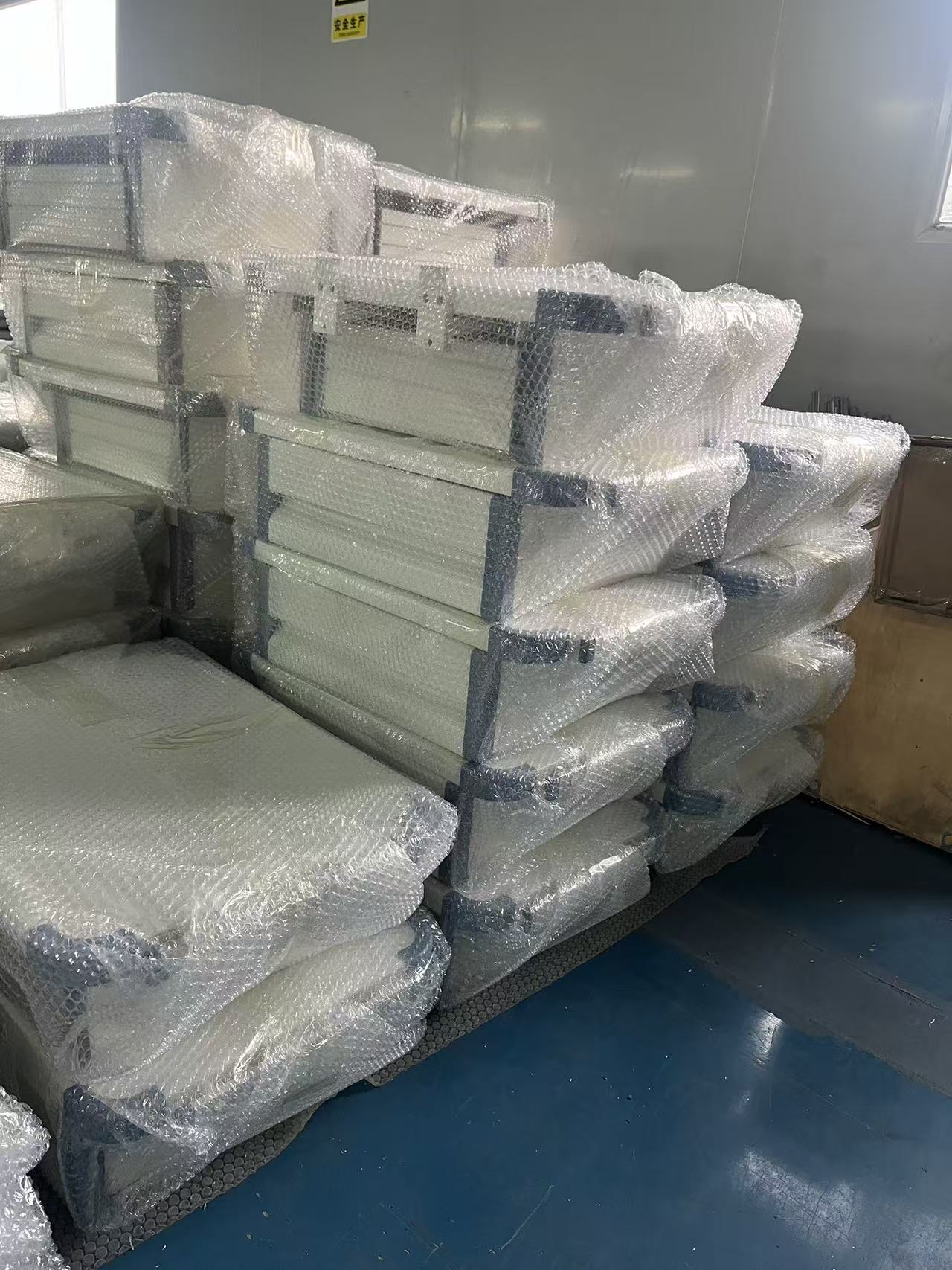
Step 3: Zones 4 and 5 — Arms, Columns, and the Geometry Nobody Sees
The pendant’s arms and column score low on the CDC matrix — light contamination probability, low hand contact — so weekly detergent cleaning is a defensible schedule. What matters here is technique: wipe along joints and seams, not across them, so you’re not pushing debris into bearing gaps. Never flood the friction brake housings or motor covers; water pooling at a bearing seal shortens service life and creates corrosion staining that later gets misread as a contamination issue.
Zone 5 is the audit killer: the top of the service head, the cable chain, the hose loops, the undersides of shelves. Dust accumulates invisibly above sightlines and sheds into the laminar flow field every time the arm moves. Monthly, use a HEPA-filtered vacuum with a soft brush head first — dry removal before any wet step, otherwise you’re making mud in a cable chain — then a damp detergent wipe. While you’re up there, inspect. Frayed cable wraps and cracked hose sleeves hold grime and can’t be cleaned effectively; they’re a replacement item, and our cable management guide covers the tidy-up side. If you need sleeves, bezels, or brake knob kits, that’s squarely a spare parts service request — cleaning-damaged small parts are among the most common orders we ship.
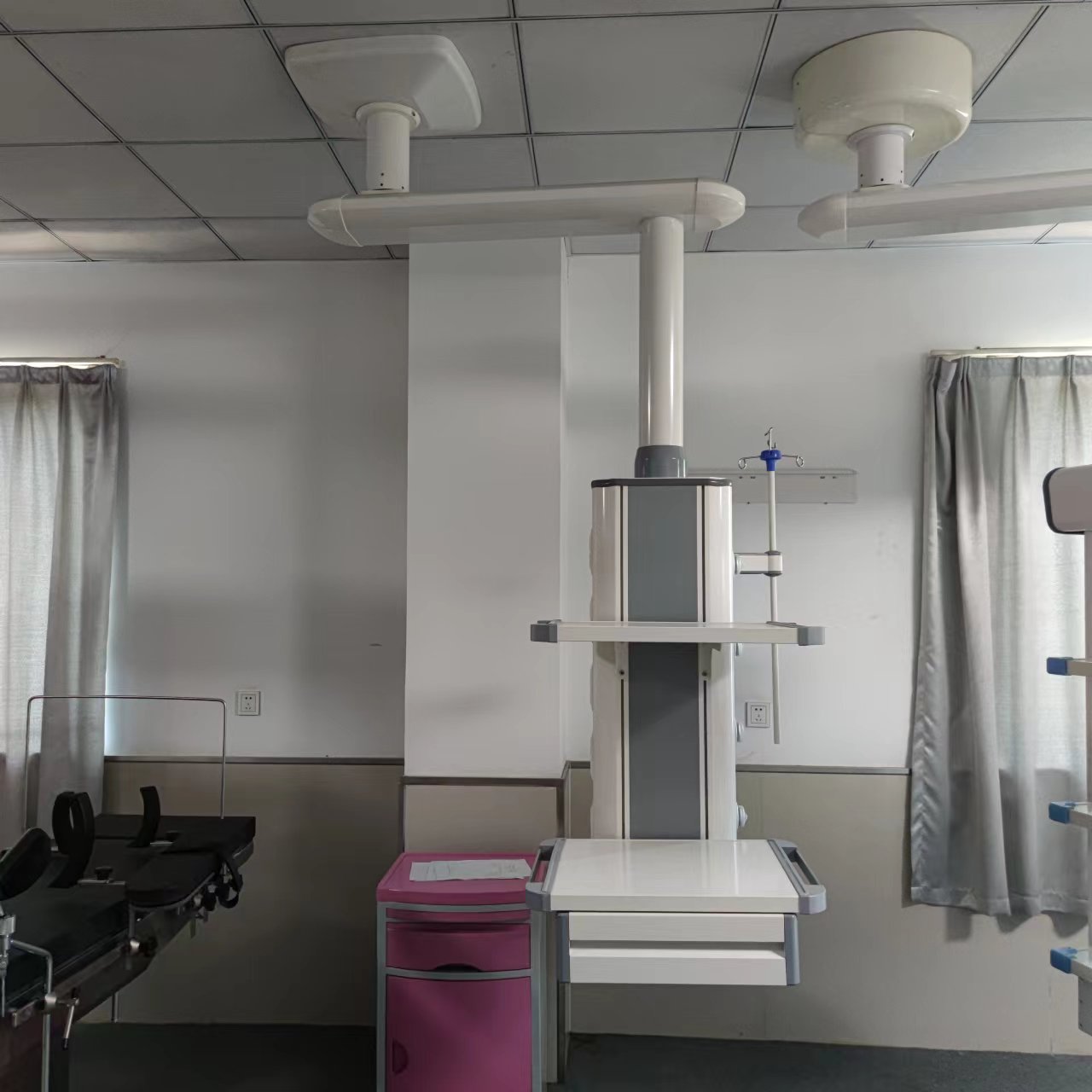
Step 4: Disinfectant Selection Without Voiding Your Equipment
This is the section to pin inside the EVS cabinet. The tension is real: infection prevention wants broad-spectrum kill; the equipment wants gentle chemistry. Both can win if the selection follows a hierarchy:
- Default daily agent: quaternary ammonium (quat) or quat-alcohol low-level disinfectant wipes. Effective against the vegetative bacteria and enveloped viruses that dominate OR surface bioburden, and broadly compatible with powder coat, stainless, and PC/ABS housings.
- Fast-turnover option: 70% isopropyl alcohol on touchpoints when contact time must be short. Verify coating compatibility — some painted legends fade under repeated IPA.
- Escalation only: sodium hypochlorite for blood/body fluid spills or outbreak protocol (e.g., C. difficile, norovirus), at the minimum effective concentration, followed by a clean-water rinse on polymer parts to stop ESC. Document it as an escalation, not a routine.
- Never: phenolics on polymers (stress cracking), undiluted hydrogen peroxide concentrates, abrasive pads on powder coat, or any agent not listed in the pendant manufacturer’s IFU.
Under IEC 60601-1 and the EU MDR 2017/745, the manufacturer must state validated cleaning and disinfection instructions in the IFU — and from a liability standpoint, “we followed the IFU” is the only answer that holds up in an audit. When we certify pendants under ISO 13485 production controls, the IFU cleaning table is tested against the actual surface materials. If your pendants came from a supplier who can’t produce a validated cleaning compatibility statement, that’s a red flag for the next tender.
Step 5: Verification — Making the Protocol Auditable
A cleaning schedule nobody verifies is a rumor. Three layers work in practice:
- Fluorescent gel marking on Zone 1 touchpoints before terminal cleans — cheap, instant feedback for EVS staff, and the marks on pendant handles are a great training tool because misses are so visible.
- ATP bioluminescence swabbing on a monthly rotating basis across zones. Accept its known limitations (the PMC operating theatre study is clear that ATP reads organic residue, not live pathogens, and thresholds vary by device), but as a trend tool it catches protocol drift before an outbreak does.
- Microbiological culture only for outbreak investigation or commissioning baselines — it’s too slow and costly for routine monitoring.
Log everything by zone, not by “pendant cleaned: yes/no.” When an auditor asks about the pendant over Table 2, a zone-based log with dates, agents used, and ATP trends answers the question in one page. In turnkey OR projects we build this logging template into the handover documentation — it’s part of the turnkey operating room commissioning package, because a room that passes acceptance but fails its first infection control audit three months later is a project failure by any honest measure.
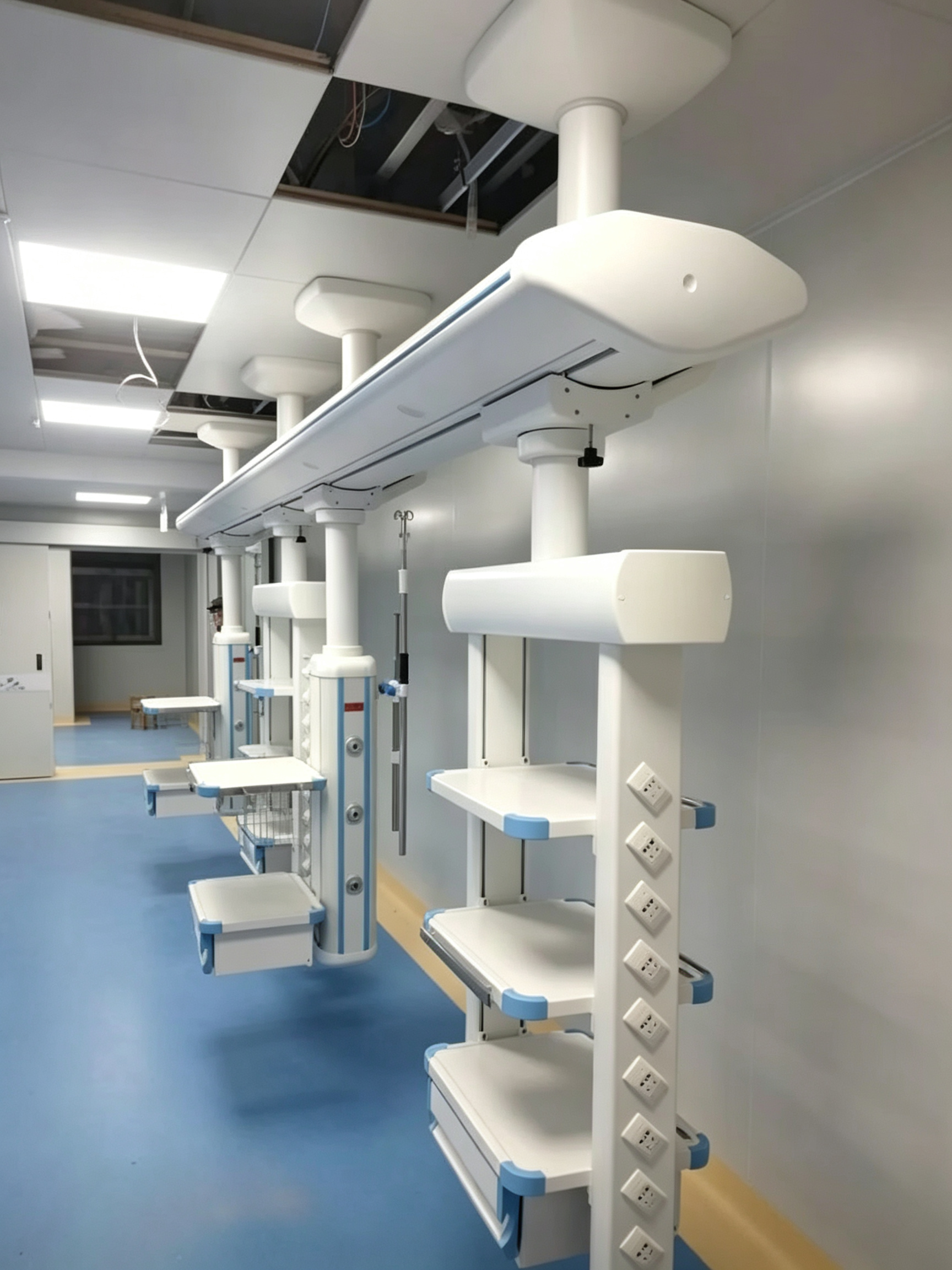
Common Mistakes That Undermine the Whole Protocol
Four failure patterns show up in almost every pendant audit I’ve reviewed. First, the “one cloth” problem: a single wipe carried from the anesthesia machine to the pendant to the table rail redistributes bioburden instead of removing it — assign dedicated wipes per zone. Second, skipping the detergent pass because the surface “looks clean”; invisible organic film from hand contact degrades disinfectant efficacy long before visible soil appears. Third, cleaning around mounted equipment instead of under it — lift the monitor cable bundle, move the suction regulator, wipe the shelf area that never sees daylight. Fourth, no ownership: the pendant falls between EVS, nursing, and biomedical engineering, so it gets everyone’s assumption and nobody’s schedule. Fix ownership first, then frequency, then chemistry — in that order.
Conclusion
Effective medical pendant cleaning infection control isn’t about cleaning harder — it’s about cleaning by zone, on schedules that match actual contamination risk, with chemistry your equipment can survive. Score each zone with the CDC/PIDAC risk matrix, hit touchpoints between every case, keep outlets damp-not-wet, vacuum the hidden geometry monthly, and verify with gel marks and ATP trends. Do that, and the pendant stops being the audit finding nobody owns and becomes one of the easiest surfaces in the room to defend.
If your current pendants can’t produce a validated cleaning-compatibility IFU, or you’re specifying new rooms and want infection control designed in from the start, talk to our engineering team — we write the cleaning protocol into the commissioning documents so your EVS team inherits a system, not a guessing game.
Frequently Asked Questions
How often should a medical pendant be disinfected?
By zone, not by unit. High-touch surfaces (handles, brake knobs, touch panels) between every case and at terminal clean; shelves and service outlets daily; arms and structure weekly; hidden geometry like cable chains and the top of the service head monthly. This mirrors the CDC/PIDAC risk-assessment approach of matching frequency to contamination probability and hand-contact rate.
Can I use bleach (sodium hypochlorite) on pendant surfaces?
Only as an escalation agent for blood/body fluid spills or outbreak protocols — at the minimum effective concentration, followed by a water rinse on polymer components. Routine chlorine use is a leading cause of environmental stress cracking in PC/ABS and PC/PBT housings and can corrode gas outlet faceplates. Default to quaternary ammonium wipes for daily work.
How do I clean gas outlets and electrical sockets safely?
Damp, never wet. Apply disinfectant to the cloth — never spray at the outlet — wipe the faceplate and bezel, and never insert tools or swabs into the outlet bore. If liquid enters a gas terminal, log it and have biomedical engineering check the seal; corrosion-related leaks typically appear weeks later.
Is ATP testing enough to verify pendant cleanliness?
No single method is sufficient. ATP bioluminescence detects organic residue, not viable pathogens, and published operating-theatre studies note its thresholds and limitations. Use it as a monthly trend tool combined with fluorescent gel marking for technique feedback; reserve microbiological culture for outbreak investigation or baseline commissioning.
Who is responsible for pendant cleaning — EVS or biomedical engineering?
Split it explicitly. EVS owns surface cleaning and disinfection of all five zones using manufacturer-compatible agents. Biomedical engineering owns anything involving disassembly, outlet internals, brake mechanisms, or post-ingress inspection. The most common failure mode is a gray zone where each team assumes the other owns the pendant — write the split into the environmental cleaning policy.
You May Also Like...

After-Hours Maintenance Strategy: Minimizing OR Downtime
Operating room downtime is expensive because an idle OR still burns staff, overhead and scheduled...

Operating Table Battery Replacement: Procedure and Intervals
Operating table battery replacement is the routine swap of the integrated backup battery that keeps...

Trolley Lock Cylinder Maintenance: Keyed and Push-Lock Types
Medical trolleys fail at the lock. Not the frame, not the casters, not the drawers...