

Medical equipment distribution in Southeast Asia is a business built on trust, regulatory navigation, and proven clinical outcomes. For a distributor in the region, the path from placing a first sample order to running a multi-product hospital equipment program is rarely linear. It involves product evaluations, regulatory registrations across multiple countries, pilot installations, and the gradual accumulation of clinical references that convince hospital procurement committees to standardize on a brand. This article traces that journey through a representative case study, drawing on patterns observed across distributor partnerships in Vietnam, Indonesia, and the Philippines.
Why Southeast Asia Demands a Different Distribution Model
Southeast Asia is home to more than 680 million people across 11 countries, each with its own medical device regulatory framework. According to the World Health Organization, the region faces a significant gap in medical device availability, particularly in rural and semi-urban hospitals. A report published in Frontiers in Science notes that the integration of advanced medical technologies in emerging markets requires not only product quality but also robust local distribution and service infrastructure.
Unlike mature markets in North America or Western Europe, where group purchasing organizations (GPOs) and centralized tender systems dominate, Southeast Asian hospital procurement often involves direct negotiations between distributors and individual hospital boards. This means the distributor’s role extends well beyond logistics. The distributor must provide clinical evidence, regulatory documentation, installation support, training, and long-term after-sales service. A manufacturer that understands this reality and supports its distributor partners accordingly will see far better outcomes than one that simply ships product and waits for reorders.
Phase 1: The Sample Order (Months 1 to 3)
The relationship typically begins when a distributor identifies a product gap in its portfolio. Perhaps a hospital group has requested quotes for LED surgical lights, and the distributor’s current lineup does not compete on price-to-performance. Or a new private hospital project requires a complete operating room setup, and the distributor needs a supplier that can provide an integrated package of lights, tables, pendants, and beds.
The distributor contacts the manufacturer and requests a sample order. For a surgical light, this might mean a single LED 5-head unit with a floor stand. For an operating table, it could be one hydraulic or electric model. The sample is shipped with full technical documentation: IEC 60601-1 test reports, ISO 13485 certificates, CE declarations, and product catalogs. The manufacturer may also provide high-resolution product photos, installation manuals, and video content that the distributor can localize for its market.
During this phase, the distributor evaluates several dimensions:
- Build quality and finish — whether the product meets the expectations of the target hospital segment
- Regulatory documentation completeness — whether the available certificates support registration in the target country
- Pricing structure — whether the landed cost (product price plus shipping, duties, and registration fees) allows a viable margin
- Manufacturer responsiveness — how quickly the factory answers technical queries and provides customized materials
This evaluation stage is critical. Distributors in Southeast Asia often manage product lines from multiple manufacturers, and their initial assessment of a new supplier will determine how much effort they invest in promoting the product. A manufacturer that provides thorough documentation, prompt communication, and flexible sample terms signals that it is serious about the partnership.

Phase 2: Regulatory Registration and Pilot Installation (Months 3 to 9)
Once the distributor decides to proceed, the next step is regulatory registration. In Thailand, this means submitting a dossier to the Thai FDA. In Indonesia, the distributor works with the BPOM. In the Philippines, the Food and Drug Administration (FDA Philippines) handles medical device registration. In Vietnam, the Ministry of Health (MOH) maintains the registration system. Singapore’s Health Sciences Authority (HSA) has its own framework, though it recognizes CE marking more broadly than some neighboring regulators.
Registration timelines vary significantly. In Singapore, a complete submission with CE marking and IEC 60601-1 test reports may be processed within 30 working days. In Indonesia, the process can take 6 to 9 months, particularly for higher-risk device classifications. The distributor needs the manufacturer to provide specific documents, such as a Certificate of Free Sale, a Letter of Authorization, and sometimes a manufacturing site audit report. Delays in obtaining these documents from the manufacturer can extend the registration timeline considerably.
While registration proceeds, the distributor works to secure a pilot installation. This is often a hospital where the distributor has an existing relationship, and the hospital agrees to trial the equipment at a favorable price. The pilot serves multiple purposes:
- It generates a real-world clinical reference that the distributor can show to other hospitals
- It allows the distributor’s installation team to gain hands-on experience with the product
- It surfaces any installation or compatibility issues before the product is rolled out more broadly
- It provides feedback from surgeons and nurses that the distributor can relay to the manufacturer for product improvement
The manufacturer’s role during this phase is to provide installation support, either by sending a field engineer for the first installation or by guiding the distributor’s team through remote video support. For turnkey operating room projects, the manufacturer may coordinate the delivery of multiple equipment types to ensure that all components integrate properly from day one.
Phase 3: Building the Product Portfolio (Months 9 to 15)
After a successful pilot installation and completed regulatory registration, the distributor begins to expand the product portfolio. A distributor that started with a single surgical light model may now add operating tables, examination lights, and medical pendants to its catalog. The goal is to offer hospitals a comprehensive equipment package that simplifies procurement and reduces the hospital’s need to manage multiple vendors.
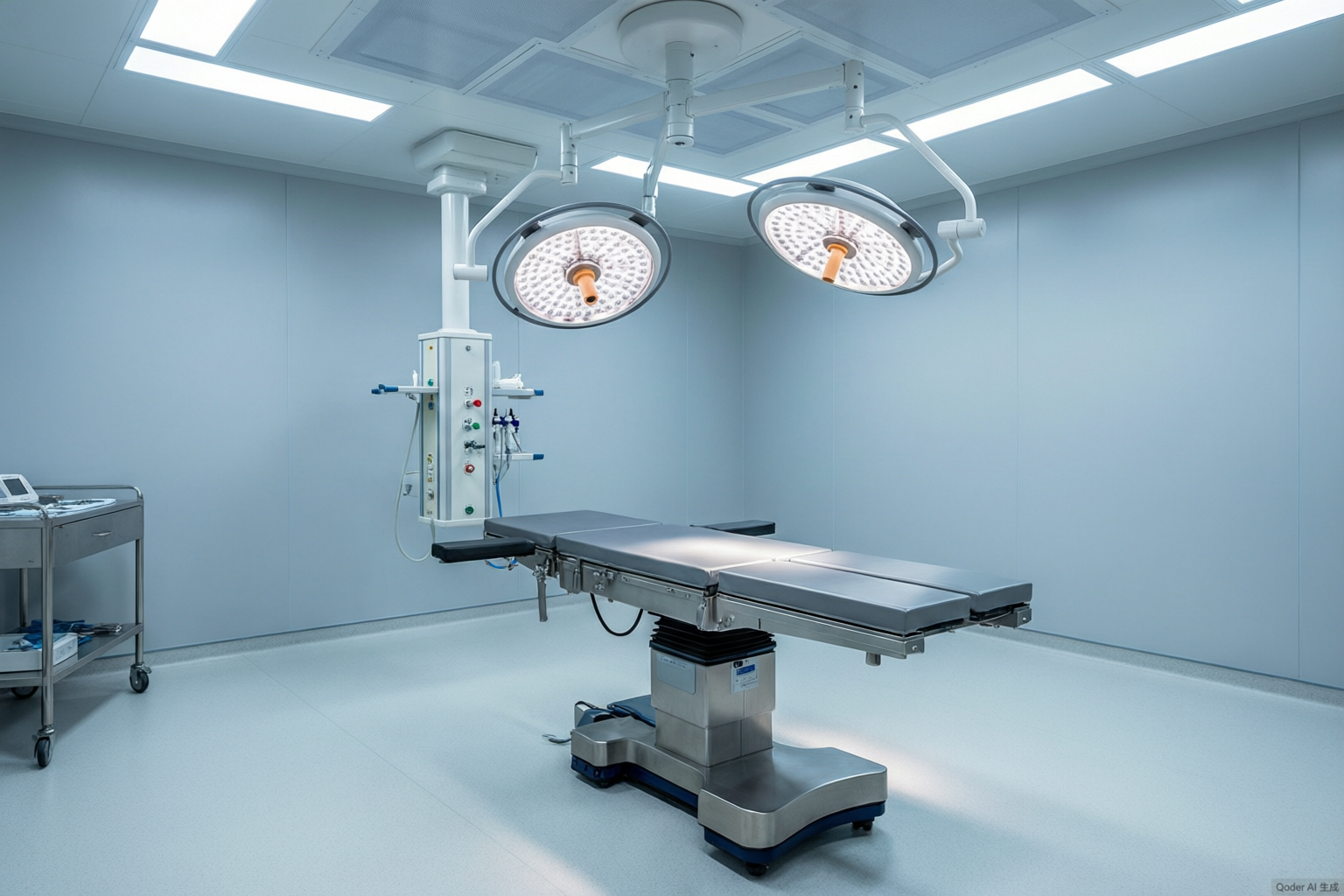
This is where the concept of clinic equipment package deals becomes relevant. Hospitals, especially private hospitals undergoing expansion or renovation, prefer to source equipment in bundles. A package that includes surgical lights, an operating table, electric hospital beds for the ward, and medical pendants for the OR allows the hospital to negotiate a single contract, coordinate a single delivery timeline, and receive integrated installation and training.
The distributor must invest in training its sales team during this phase. Sales representatives need to understand the technical specifications of each product, be able to compare them against competing brands, and articulate the value proposition to hospital procurement committees. Manufacturers that provide structured training programs, product comparison sheets, and competitive intelligence briefings give their distributors a meaningful advantage.
Phase 4: Scaling Across Borders (Months 15 to 24)
A distributor that has established a successful program in one Southeast Asian country often begins to explore expansion into neighboring markets. A Vietnamese distributor may see opportunities in Cambodia or Laos. An Indonesian distributor may target Malaysia or Brunei. A Philippine distributor may look at Myanmar or Bangladesh (which, while South Asian, shares similar procurement dynamics).
Cross-border expansion introduces new regulatory requirements, logistics challenges, and cultural considerations. The distributor must register each product in the new country, which may require additional testing or documentation. Shipping and customs procedures differ. Language localization of product labels, user manuals, and marketing materials becomes necessary.
The manufacturer can support this expansion by providing a regulatory affairs team that understands the specific requirements of each ASEAN market, offering multi-language documentation packages, and coordinating logistics to reduce shipping costs through consolidated container loads. Some manufacturers establish regional buffer stock warehouses, often in Singapore or Thailand, to reduce lead times for spare parts and replacement units.
Key Success Factors for Distributor-Manufacturer Partnerships
Several factors consistently differentiate successful distributor-manufacturer partnerships in Southeast Asia from those that stall after the initial sample order:
Regulatory support. The manufacturer must treat regulatory documentation as a core service, not an afterthought. This means maintaining up-to-date ISO 13485 certificates, providing IEC 60601-1 test reports from accredited laboratories, and responding quickly when the distributor needs additional documents for a specific country’s registration.
Product quality consistency. Southeast Asian distributors operate in price-sensitive markets, but they cannot compete on price alone. The products must perform reliably in tropical climates with high humidity and temperatures, and they must withstand the demands of high-volume surgical departments. Consistency between the sample unit and production units is essential for maintaining the distributor’s credibility with hospital clients.
After-sales infrastructure. Hospitals in Southeast Asia expect rapid response times when equipment fails. A distributor that can guarantee a 48-hour on-site service visit needs a manufacturer that supplies spare parts within days, not weeks. Manufacturers that invest in regional spare parts inventory and provide remote diagnostic support significantly strengthen their distributor partnerships.
Joint marketing and reference development. Successful partnerships involve co-investment in marketing. The manufacturer provides product photography, video content, and technical white papers. The distributor handles localization, local trade show participation, and hospital demonstration events. Together, they develop reference sites that serve as proof points for prospective hospital clients.
Transparent communication. Perhaps the most important factor is open, honest communication. Distributors need accurate lead times, transparent pricing, and early warning about supply chain disruptions. Manufacturers need honest market feedback, competitive intelligence, and clear visibility into the distributor’s sales pipeline and project pipeline.
Lessons From the Field
Distributors who have successfully scaled from sample orders to full hospital programs share several common practices. First, they invest heavily in the first installation, treating it as a showcase project. They ensure that the installation is flawless, that the hospital staff receives thorough training, and that the hospital is willing to serve as a reference site for prospective clients.
Second, they build a technical service capability early. Rather than relying entirely on the manufacturer for after-sales support, they train their own biomedical engineers to handle routine maintenance, troubleshooting, and minor repairs. This reduces response times and builds confidence with hospital clients who need assurance that their equipment investment is protected.
Third, they develop long-term relationships with hospital procurement decision-makers. In Southeast Asia, hospital purchasing decisions are often influenced by personal relationships and trust. A distributor that consistently delivers on promises, provides honest advice, and stands behind the products it sells will earn repeat business and referrals.
Frequently Asked Questions
How does a medical distributor start working with a new equipment manufacturer?
A medical distributor typically begins by requesting product samples or a demo unit for evaluation. The manufacturer provides technical documentation, regulatory certificates (such as ISO 13485 and CE marking), and pricing for sample quantities. The distributor then tests the equipment in a real clinical setting, gathers feedback from surgeons and hospital procurement teams, and uses that data to decide whether to commit to a larger distribution agreement.
What certifications should a medical equipment supplier have for Southeast Asia markets?
Suppliers targeting Southeast Asia should hold ISO 13485 quality management certification, CE marking for European conformity (recognized by most ASEAN regulators), and relevant national registrations such as FDA Thailand, BPOM Indonesia, or HSA Singapore approval. Additional certifications like IEC 60601-1 test reports for electrical safety and ISO 10993 biocompatibility reports strengthen the distributor’s registration dossier.
How long does it take to expand from a sample order to a full hospital equipment program?
In typical Southeast Asia distribution partnerships, the timeline from initial sample order to a multi-product hospital program ranges from 12 to 24 months. The first 3 to 6 months cover sample evaluation and regulatory registration. Months 6 to 12 involve initial commercial orders and installation references. By months 12 to 24, the distributor can bundle surgical lights, operating tables, hospital beds, and pendants into a comprehensive hospital equipment program.
What is a turnkey hospital equipment program?
A turnkey hospital equipment program is a bundled solution where a distributor supplies and installs all major operating room and ward equipment, including surgical lights, operating tables, hospital beds, medical pendants, and ancillary devices. The distributor handles project management, installation, staff training, and after-sales service, giving the hospital a single point of contact rather than managing multiple vendors.
What after-sales support does a medical distributor need from the manufacturer?
A medical distributor needs technical training for service engineers, a spare parts catalog with lead-time commitments, remote troubleshooting support (often via video call), and a clear warranty policy. Manufacturers that provide on-site commissioning support for the first several installations and maintain a regional spare parts buffer warehouse significantly reduce the distributor’s downtime risk and improve hospital satisfaction.
You May Also Like...

Video Diagnosis Preventing OR Downtime: An After-Sales Case
When a surgical light loses brightness between cases, the question that decides everything is how...

A Distributor’s First Container: Import Lessons from the Field
A distributor’s first container of medical equipment is a milestone and a risk, and the...
Endoscopy Suite Buildout for a Regional Hospital
Endoscopy Suite Buildout for a Regional Hospital An endoscopy suite is a specialised space that...