
Ringkasan Eksekutif
Apa yang berikutnya dalam pencahayaan bedah setelah LED: kontrol adaptif, integrasi kamera, kontrol nirkabel dan pencatatan data, dan mengapa persyaratan lapangan tetap sama.
Setelah LED: Pencahayaan Bedah Generasi Berikutnya
LED surgical lights solved the problem that halogen left behind, but the technology is still moving. What comes after the LED head is not a different bulb; it is a different way of managing light: adaptive control, integrated imaging, and the shift from a fixed light head to a controllable x-ray of the field. This guide looks at what is already shipping, what is genuinely next, and what stays the same — the need for the right illuminance, the right colour, and shadow-free light at the working point.
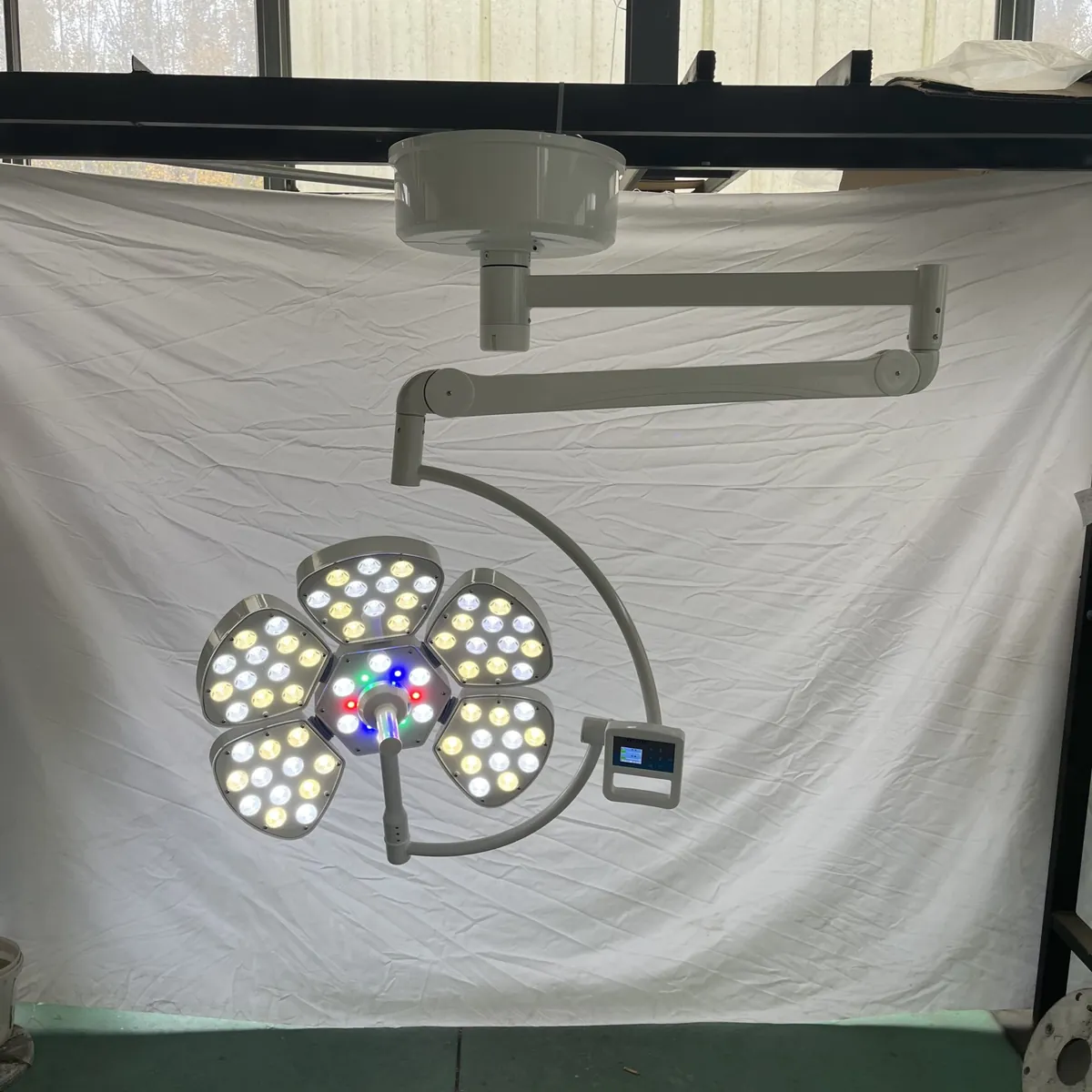
Move to a connected light head on the lampu bedah range, with adaptive control and camera integration an option.
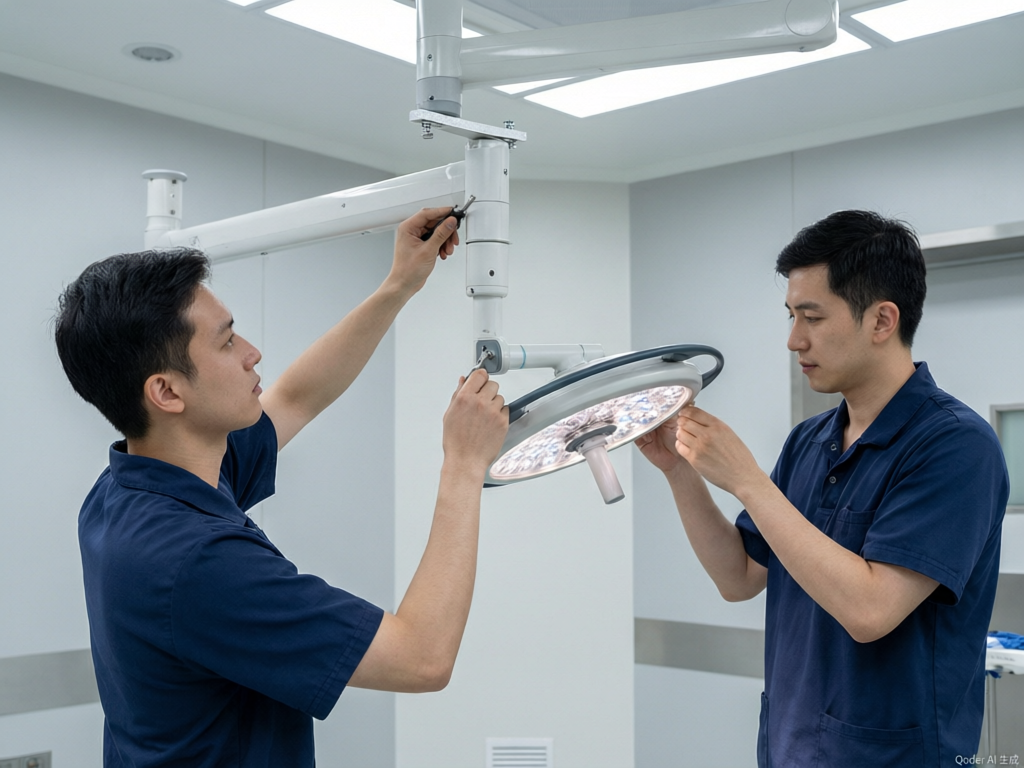
The LED generation
The LED surgical light head is now the default, and it is defined by a long-rated life, a high colour rendering index, and a light field that does not heat the surgical site. The colour temperature is chosen to render tissue accurately, the illuminance at the field reaches the levels the standard requires, and the multiple small emitters are what create the shadow-free field. The generation is mature enough that the comparison is no longer LED vs halogen; it is which LED head, which control, and which integration.
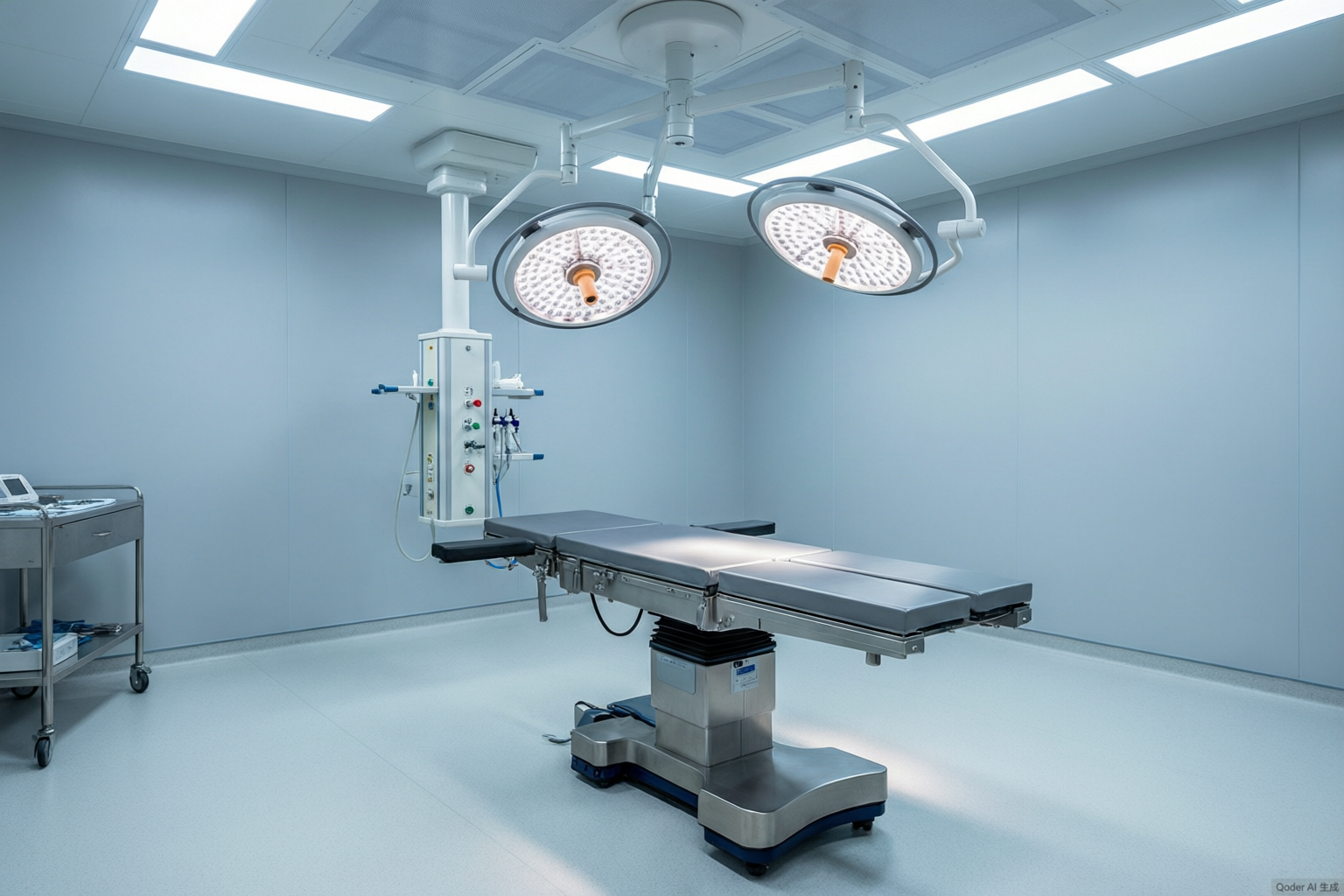
What is genuinely next
The next generation is about control and integration rather than the emitter. Adaptive lighting dims and shifts with the depth of the cavity, so the light follows the field instead of staying fixed. Camera integration puts a video feed on the same axis as the light for training and documentation. A touchscreen or a wireless control changes the way the surgeon adjusts the field, and a data connection lets the room log the lighting settings for the case. The light head becomes part of the connected operating room rather than a standalone lamp.
What stays the same
Whatever the next generation of emitter, the requirement on the field does not change. The light has to deliver the illuminance that lets the surgeon see, at a colour rendering index that is accurate for tissue, with a field that is shadow-free at the depth of the cavity. The physical positioning — the head, the arm, the reach — is unchanged, and the swing arm still has to position the light where the surgeon wants it. The photometric terms that describe the light, and the standard that the luminaire is tested against, remain the reference, and the CIE sets the measurement of colour and light that the industry uses.
Upgrading an existing light? Send Sanyang your OR count and current photometry for a next-generation light spec.
Bacaan terkait
See the light range on lampu bedah dan program OK di OR turnkey.
Pertanyaan Umum
Apa yang berubah pada lampu bedah setelah LED?
Perubahan terletak pada kontrol dan integrasi, bukan pada emitor. Pencahayaan adaptif, integrasi kamera, kontrol nirkabel, dan pencatatan data mengubah kepala lampu menjadi bagian dari ruang operasi yang terhubung.
Apakah indeks rendering warna yang lebih tinggi selalu lebih baik?
Dalam rentang standar, CRI yang tinggi membantu ahli bedah membedakan jaringan, tetapi nilainya harus tetap akurat untuk suhu warna yang digunakan; CRI dinilai berdasarkan iluminasi yang dipasangkan dengannya.
Apakah LED akan diganti?
Emitor kemungkinan besar akan tetap berbasis LED, jadi perubahannya ada pada sistem kontrol, bukan bola lampu baru.
Related: where the energy savings of next-generation lighting really land
Before specifying a new head, check whether the fixture only needs lens and filter cleaning or replacement.
Anda Mungkin Juga Menyukai...

Group Purchasing and Consolidated National Tenders
Group purchasing and consolidated national tenders are how hospitals and buying groups pool demand to...

Refurbished vs New Medical Equipment: Market Reality
Honest definitions, where refurbished wins, the inspection checklist that separates value from risk and the...
Sustainability in Medical Equipment: Where Eco-Design and Energy Use Really Count
Sustainability in Medical Equipment: Where Eco-Design and Energy Use Really Count Sustainability conversations in hospitals...