
Executive Summary
A field-proven hospital bed mattress decontamination framework: CDC cleaning and disinfection levels, FDA cover integrity checks, EPA-registered chemistry, and practical replacement cycles.
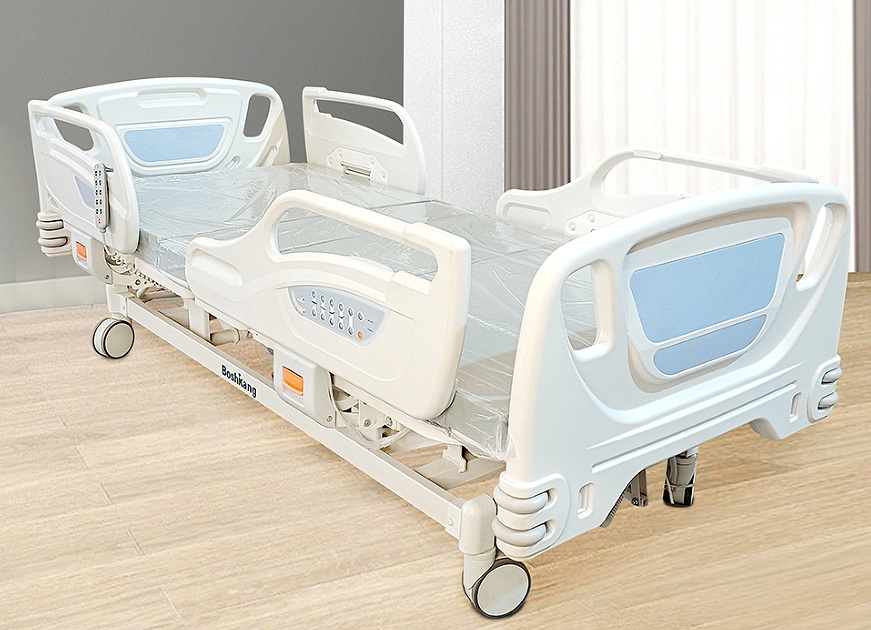
Ask any infection preventionist what keeps them up at night, and the hospital bed mattress will be near the top of the list. Not the bed frame, not the rails — the mattress. It is the single surface in the patient zone that stays in direct, prolonged contact with every occupant, through sweat, blood, wound drainage, and incontinence events, often for years on end. Yet in my experience auditing wards and sourcing hospital beds and support surfaces for facilities across three continents, mattress decontamination is the most inconsistently executed protocol in the entire environmental hygiene program. Everyone wipes the bed rail. Far fewer teams can tell you the last time the mattress core was inspected, or what concentration of disinfectant actually touched the cover seam.
The consequences are not theoretical. Investigations cited by the FDA and CDC have linked damaged, poorly disinfected mattress covers to outbreaks of multidrug-resistant organisms, because fluid that penetrates a compromised cover turns the foam core into a protected reservoir that no surface wipe can reach. The FDA has received hundreds of medical device reports describing blood and body fluids leaking through worn covers into mattress cores — in some cases onto subsequent patients. That is why hospital bed mattress decontamination has to be treated as a documented system: a defined cleaning-and-disinfection protocol, a chemical compatibility rule, a cover integrity inspection routine, and a hard replacement cycle. This guide lays out exactly that system, the way we specify it when we deliver beds and mattresses to hospitals and the way disciplined facilities run it day to day.
Whether you manage a 40-bed district hospital or a 600-bed tertiary center, the framework below — built on the CDC Guideline for Disinfection and Sterilization in Healthcare Facilities (2008, updated 2024), FDA mattress cover safety communications, and EPA-registered disinfectant classifications — will let you audit what your team is actually doing, close the gaps, and know with confidence when a mattress has reached the end of its safe service life.
Why the Mattress Is a Special Decontamination Problem
Most noncritical environmental surfaces in a patient room — bed rails, tray tables, monitor housings — are single-layer, intact, and smooth. You clean them, you disinfect them, you move on. A hospital mattress is a layered composite: a vapor-permeable or waterproof cover (usually a polyurethane-coated fabric with welded or stitched seams and a zipper), over a core of polyurethane foam, memory foam, gel, air cells, or a hybrid. Every layer adds a failure mode:
- Seam wicking. Stitched seams and needle holes let fluid travel along thread into the core even when the cover surface looks intact.
- Zipper channels. The zipper track is the highest-risk ingress point on most covers, and it is rarely opened or inspected during terminal cleaning.
- Abrasion thinning. Repeated transfers, shear from repositioning, and aggressive disinfectants erode the polyurethane coating until it becomes micro-porous — invisible to the eye, permeable to fluid.
- Chemical degradation. The wrong disinfectant (or the right one at the wrong dilution) cracks and hardens covers within months, which is why decontamination protocol and mattress lifespan are inseparable topics.
Epidemiologically, mattresses sit in the CDC’s “noncritical” category — items that contact intact skin but not mucous membranes. Noncritical does not mean low stakes. Pathogens including MRSA, VRE, Acinetobacter, and Candida auris survive on dry surfaces for days to months, and Clostridioides difficile spores survive far longer. A mattress that is visibly clean but microbiologically seeded is still a transmission vehicle, because the next patient’s intact skin is not always intact — pressure injuries, IV sites, and surgical wounds change the risk calculus entirely.
The Regulatory Baseline: What CDC, FDA, and EPA Actually Require
Before writing a protocol, anchor it to the three documents that auditors and surveyors will cite:
CDC/HICPAC Guideline for Disinfection and Sterilization in Healthcare Facilities (Rutala & Weber, 2008; updated June 2024). The foundational rule for mattresses: noncritical surfaces require, at minimum, cleaning followed by low-level disinfection; surfaces visibly soiled with blood or body fluids require intermediate-level disinfection with a tuberculocidal agent. The guideline is equally clear that cleaning — the physical removal of organic soil with detergent and water — must precede disinfection, because organic load neutralizes most disinfectants on contact.
FDA safety communication on hospital bed mattress covers. The FDA’s message to facilities is blunt: inspect covers regularly for visible signs of damage — cuts, tears, cracks, pinholes, snags, stains — remove any damaged cover from service immediately, and never “patch” a fluid barrier with tape. The FDA also directs facilities to follow the mattress manufacturer’s instructions for use (IFU) for cleaning chemistry, which makes your decontamination protocol partly a compliance document, not just a hygiene document.
EPA-registered hospital disinfectants. In the US framework, only EPA-registered products with hospital-grade claims belong on a mattress. The EPA organizes efficacy into lists — most relevant here are products with claims against the organisms in your facility’s risk profile, including sporicidal products on List K for C. difficile. In MDR markets, the equivalent anchor is EN 14885 and the national disinfectant lists built on it. Either way: if the product is not on the applicable register with a surface claim, it does not belong in your protocol.
Field note: the most common audit failure I see is not a dirty mattress — it is a protocol that names a disinfectant brand without naming a dilution, a contact time, or a compatibility check against the mattress IFU. Three specifics turn a vague instruction into an enforceable standard.
Step 1 — Cleaning: Remove the Soil Before You Disinfect
Every terminal mattress decontamination starts with mechanical cleaning. Strip the bed, bag the linen, and move the mattress to a position where all six faces are accessible — flat on the bed frame with the deck fully raised works; a dedicated mattress cleaning station is better. Then:
- Detergent wash. Use a neutral-pH detergent and clean water with a soft cloth or wipe. Work top surface, then sides, then underside. Never soak; the cover is a barrier, not a sponge.
- Detail the high-risk geometry. Seams, zipper tracks, handle stitching, and the corners where the cover folds over the foam — these hold dried organic matter that a fast wipe misses. A soft brush on the zipper channel takes thirty seconds and is the difference between cleaning and pretending to clean.
- Rinse residue. Detergent film left on the cover both degrades coatings over time and chemically interferes with some disinfectants (notably quaternary ammonium compounds). A clean-water wipe-down after the detergent step is not optional.
- Dry before disinfection. A wet surface dilutes the disinfectant below its validated concentration. The cover should be visibly dry before the chemistry step begins.
One process tip from high-volume facilities: separate the roles. The person who cleans should not be the person who disinfects on the same shift rotation, because task compression under time pressure is how the cleaning step quietly disappears.
Step 2 — Disinfection: Match the Level to the Soil and the Pathogen
With the mattress clean and dry, select the disinfection level using the CDC logic and your facility’s risk assessment:
| Scenario | Disinfection Level | Typical Chemistry | Key Rule |
|---|---|---|---|
| Routine between-patient turnover, no visible soil | Low-level | EPA-registered quaternary ammonium (quat) or improved hydrogen peroxide wipe | Respect full label contact time (typically 1–10 min) |
| Visible blood or body fluid contamination | Intermediate-level (tuberculocidal) | Diluted sodium hypochlorite or EPA-registered tuberculocidal product | Clean first, then disinfect; check IFU bleach compatibility |
| C. difficile or other spore-former room discharge | Sporicidal | EPA List K sporicidal product (e.g., hypochlorite-based) | Quats do NOT kill spores — never substitute |
| Isolation discharge (MDRO: MRSA, VRE, C. auris) | Intermediate-level minimum | Product with specific organism claims on label | Full six-face treatment incl. underside and zipper |
Three execution details decide whether this step works in practice. First, contact time: the surface must remain visibly wet for the full label contact time — spraying and immediately wiping dry achieves almost nothing. Second, dilution discipline: bleach solutions mixed by feel drift in both directions; too weak fails microbiologically, too strong (above roughly 5,000–6,000 ppm free chlorine used routinely) accelerates cover cracking. Third, compatibility: alcohol-heavy products and high-concentration hypochlorite embrittle many polyurethane covers. Cross-check your facility’s standard products against the mattress IFU once, document the approved list, and forbid substitutions.
Warning from the field: I have seen a ward destroy forty mattress covers in under a year because procurement switched to a cheaper high-alcohol wipe without telling infection control. The disinfection logs looked perfect. The covers crazed, fluid reached the cores, and every mattress had to be condemned. Chemistry compatibility is a mattress lifespan issue, not just a hygiene issue.

Step 3 — Cover Integrity Inspection: The Step Most Protocols Skip
Disinfection only protects the next patient if the barrier is intact. Build a formal cover inspection into every terminal clean and a deeper inspection on a fixed schedule (monthly is common; high-turnover units often go fortnightly). The inspection checklist:
- Visual scan under raking light. Look for cuts, tears, cracks, pinholes, snags, abrasion sheen loss, and any staining that will not wipe off — staining that persists often means fluid has entered the fabric matrix.
- The zip test. Open the zipper fully and inspect the inner cover faces and the foam core beneath. Moisture, discoloration, or odor inside the cover means the barrier has failed regardless of how good the outside looks.
- Seam pull check. Gently flex stitched seams. Needle holes that open under flexing are ingress points; welded seams should show no delamination.
- Core assessment. Foam that is permanently compressed, stained, or malodorous after a cover breach is not salvageable by surface disinfection — the mattress is done. Some facilities send cores for validated reprocessing, but unvalidated “steam cleaning” of foam is not a defensible substitute for replacement.
Document each inspection against the mattress asset ID. A mattress without an asset tag is a mattress that will quietly outlive its safe life. When we supply beds, we push customers to tag mattresses at commissioning and tie them into the same maintenance log as the bed frame — the same discipline that keeps mechanical parts on schedule, as anyone who has dealt with jammed caster wheels from neglected maintenance already knows.

Replacement Cycles: Planning the End of a Mattress’s Life
There is no single universal number — manufacturer IFUs, patient acuity, cleaning chemistry, and handling all shift the curve — but disciplined facilities plan around these working ranges:
| Component | Typical Service Life (Acute Care) | Shortens Life | Replace Immediately If |
|---|---|---|---|
| Mattress cover | 2–4 years | Incompatible disinfectants, high-turnover wards, bariatric shear | Any tear, crack, pinhole, or failed seam; interior staining |
| Standard foam core | 5–7 years | Cover breaches, moisture exposure, overload beyond rated weight | Fluid ingress, permanent compression set, odor |
| Pressure-redistribution / air surface | Per IFU; often 5+ years with cell/pump service | Unserviced pumps, kinked hoses, missed filter changes | Failed pressure mapping or persistent low-pressure alarms |
The practical replacement triggers, in priority order: (1) any cover breach — replace the cover now, not at the next budget cycle; (2) fluid confirmed in the core — condemn the mattress; (3) foam compression beyond roughly a quarter of original thickness in load-bearing zones — pressure redistribution performance is gone even if hygiene is fine; (4) the IFU age limit — many manufacturers warrant and validate covers and cores to defined service lives, and running past them shifts liability to the facility.
Budget-wise, covers and cores should be a planned consumable line, not a surprise capital event. A facility that tracks mattress asset age can forecast replacement spend two to three years out and negotiate supply in batches. This is exactly the kind of lifecycle planning our spare parts and service program supports — keeping replacement covers, foam cores, and air cells in the supply pipeline so a failed inspection never means a bed out of service for weeks waiting on a part.
Step 4 — Documentation, Training, and Audit
A protocol that exists only in a binder fails at 3 a.m. on a short-staffed shift. The facilities that execute mattress decontamination well share three habits:
- One-page visual SOPs at the point of use. Photos of the correct sequence — strip, clean, rinse, dry, disinfect with wet contact time, inspect, document — posted in the dirty utility room, not buried in a policy PDF.
- Logged terminal cleans. Bed number, mattress asset ID, date, disinfectant used, contact time observed, cover condition, initials. When an outbreak investigation starts, this log is the first thing infection control reaches for.
- Periodic validation. ATP bioluminescence swabbing or fluorescent marker audits on a sample of mattresses per month. What gets measured gets done; unmeasured protocols decay within a quarter.
Training cadence matters more than training length. Fifteen minutes at shift handover, quarterly, with a real mattress and real product, outperforms an annual hour-long lecture. Include the “why” — staff who have seen a photo of a stained foam core pulled from an intact-looking cover never skip the zip test again.
Conclusion
Hospital bed mattress decontamination is a system, not a wipe. The system has four moving parts: clean before you disinfect; match the disinfection level to the soil and the pathogen using registered products at label dilution and contact time; inspect the cover barrier — inside the zipper, not just across the surface — on every terminal clean and on a fixed schedule; and run replacement as a planned cycle with asset tags, condition triggers, and a stocked pipeline of covers and cores. Anchor all of it to the CDC guideline, the FDA’s mattress cover safety communication, and the manufacturer’s IFU, and document every step.
If your facility is refreshing its bed fleet or standardizing mattresses across wards, start the conversation early — mattress specification, cover material, and disinfectant compatibility are cheapest to get right at procurement time. Review our hospital bed procurement checklist for the full buying framework, or contact our team to spec mattresses and a spare-cover supply plan matched to your cleaning chemistry and census.
Frequently Asked Questions
How often should a hospital bed mattress be disinfected?
At minimum, after every patient discharge or transfer (terminal cleaning), and after any visible soiling event. Isolation discharges — especially C. difficile and MDRO rooms — require an upgraded sporicidal or intermediate-level protocol. Many facilities add a scheduled deep clean with full zipper-open inspection monthly or fortnightly in high-turnover units.
Can bleach be used on hospital mattress covers?
Only if the mattress manufacturer’s IFU permits it, and only at the validated dilution. Diluted sodium hypochlorite is the standard for blood/body fluid and sporicidal disinfection, but routine use of overly concentrated solutions cracks and hardens polyurethane covers within months. Always confirm compatibility in writing before adopting a bleach-based product as your ward standard.
When must a hospital mattress be replaced rather than cleaned?
Replace immediately when the cover is torn, cracked, or punctured; when fluid has reached the foam core (interior staining, moisture, or odor under the cover); when the foam shows permanent compression that defeats pressure redistribution; or when the mattress has passed the manufacturer’s stated service life. Tape patches on a fluid barrier are never acceptable.
What disinfectant level does the CDC require for mattresses?
Mattresses are noncritical surfaces: low-level disinfection suffices for routine turnover, but surfaces visibly contaminated with blood or body fluids require intermediate-level, tuberculocidal disinfection after cleaning. For C. difficile rooms, use an EPA List K sporicidal product — standard quaternary ammonium disinfectants do not kill spores.
How can we tell if a mattress cover has failed without visible damage?
Open the zipper and inspect the interior. Micro-abrasion and coating thinning are often invisible from the outside, so look for moisture, staining, or odor on the inner cover faces and foam, flex seams to reveal opening needle holes, and check for a loss of the coating’s matte finish in high-shear zones. Any interior evidence of fluid means the barrier has failed and the core is compromised.
You May Also Like...

After-Hours Maintenance Strategy: Minimizing OR Downtime
Operating room downtime is expensive because an idle OR still burns staff, overhead and scheduled...

Operating Table Battery Replacement: Procedure and Intervals
Operating table battery replacement is the routine swap of the integrated backup battery that keeps...

Trolley Lock Cylinder Maintenance: Keyed and Push-Lock Types
Medical trolleys fail at the lock. Not the frame, not the casters, not the drawers...