
A sample order is the single most cost-effective risk reduction tool in medical equipment sourcing. For a fraction of the cost of a full container, a distributor can confirm whether a manufacturer’s build quality, finish, and functionality match their claims — before committing to a production order that could represent six figures of inventory. Yet many buyers treat samples as a formality: they order one, glance at it, and place the bulk order without a structured evaluation.
For sample-stage evaluation with an independent inspector, see our third-party inspection services guide.
The problem is that a sample that looks good in a showroom can fail on a hospital ward within weeks. Welds that passed visual inspection crack under patient load. Paint that looked glossy chips in a sterilization cycle. A handset that paired in the factory loses connection in a ward with 40 beds and wireless interference. A structured sample evaluation catches these issues before the purchase order is signed.
Before the balance payment moves, run a structured pre-shipment inspection: see our medical equipment pre-shipment inspection guide.
Key Takeaways
- Order samples for the highest-risk product first — usually the motorized or electronically complex item, not the simplest SKU.
- Request a production sample, not a showroom sample — a unit built on the production line with standard tooling, not a hand-finished display piece.
- Evaluate against a written checklist with 6 categories: build quality, finish, function, safety, documentation, and packaging.
- Test paint and weld integrity with a crosshatch adhesion test and a dye penetrant inspection — not just visual checks.
- Run the sample for 48 hours of continuous operation to catch thermal failures that appear only after extended use.
- Document every discrepancy with photos and specific deviations from the datasheet — this becomes the baseline for the bulk order quality agreement.
Table des matières
- What to Sample: Prioritizing Your Highest-Risk Products
- Requesting a Production Sample, Not a Showroom Piece
- Build Quality: Welds, Joints, and Material Verification
- Finish Durability: Paint, Plating, and Sterilization Compatibility
- Functional Testing: The 48-Hour Endurance Run
- Safety and Compliance Documentation Check
- Packaging Evaluation: Surviving the Journey to Your Warehouse
- From Sample to Bulk: Writing the Quality Agreement
- FAQ

Healthcare Procurement — TechNation TV
What to Sample: Prioritizing Your Highest-Risk Products
When a distributor starts sourcing from a new manufacturer, the instinct is to sample everything. For a factory like Sanyang that produces five product lines — surgical lights, operating tables, medical pendants, hospital beds, and medical trolleys — sampling all five simultaneously is reasonable if the distributor plans to carry the full range. But if the initial order is focused on one or two categories, sample those first and sample them deeply rather than spreading the evaluation budget thin across everything.
The highest-risk product is the one with the most failure modes: electric hospital beds and operating tables top this list because they combine mechanical articulation, electrical systems, patient weight loads, and safety-critical features. A medical trolley, by contrast, is a steel frame with casters — lower complexity, lower risk. If the budget allows one sample, sample the electric bed or the operating table. If it allows two, add the surgical light. Trolleys and pendants can be evaluated as part of the first bulk order with a pre-shipment inspection instead.
Le MOQ and lead time guide covers how manufacturers handle sample orders, but the key point for evaluation is that a sample should represent the production process — meaning it should be built on the same production line, with the same tooling, by the same workers who will build the bulk order.
Requesting a Production Sample, Not a Showroom Piece
Manufacturers maintain showroom samples for trade shows and factory visits. These are often hand-finished: extra attention to weld cleanup, paint thickness, and alignment. They look better than production units because they were built to impress, not to ship. A production sample, by contrast, is a unit pulled from the standard production run or built to the standard production specification.
When requesting a sample, specify “production-line sample, not showroom sample” in writing. State that the sample should be built using the standard production tooling, standard paint process, and standard quality control checks — not the enhanced QC applied to display units. A manufacturer who refuses this request is telling you something important: their production quality does not match their showroom quality.
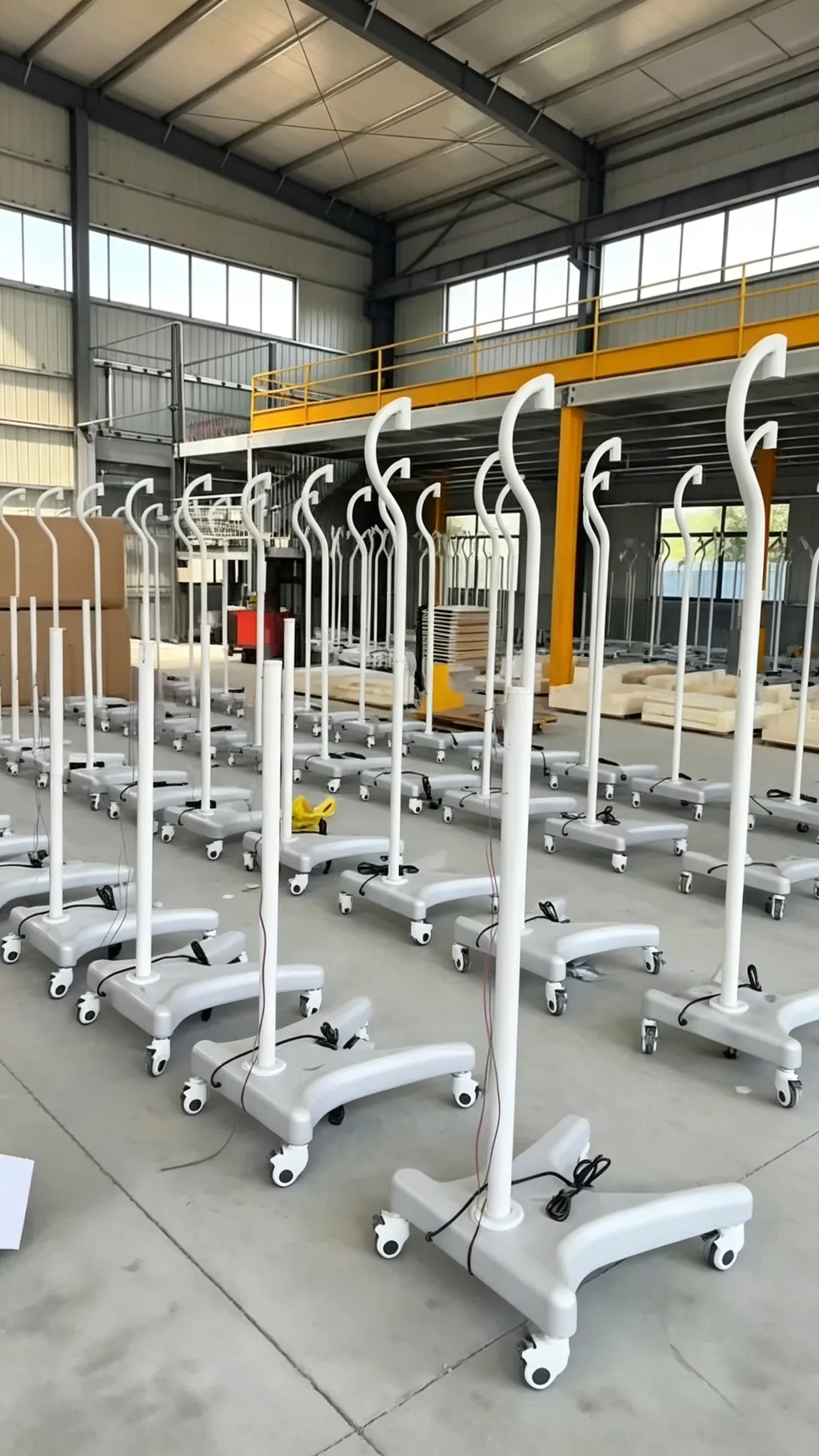
The sample should arrive with the same packaging the bulk order will use — not special sample packaging. If the sample comes in a foam-lined crate that the production order will not use, the packaging evaluation is invalid. Request that the sample be packed identically to the bulk order specification, including the carton type, foam density, and pallet configuration.
Build Quality: Welds, Joints, and Material Verification
Build quality is the foundation of equipment lifespan. A bed frame welded with proper penetration and consistent bead profile will outlast one with cold welds and spatter by years. During sample evaluation, inspect welds at every joint — particularly the high-stress connections: the lifting column to the bed frame, the side rail bracket to the frame, the caster socket welds, and the pendant arm pivot points.
Three checks separate a good weld from a bad one. First, visual inspection: the weld bead should be uniform in width and height, with no undercut (a groove carved into the parent metal at the weld toe). Undercut is a stress concentrator that initiates cracks. Second, a dye penetrant test on critical welds — apply dye to the weld, wipe clean, then apply developer to reveal any surface cracks. This costs under $20 in supplies and takes 15 minutes. Third, check for weld spatter — small metal droplets stuck to the surrounding surface. Excessive spatter indicates poor weld parameter setup and can interfere with paint adhesion.
Material verification confirms that the frame material matches the specification. A datasheet stating “304 stainless steel” should be verified with a material test report (MTR) from the supplier. If the MTR is unavailable, a spot test with a magnet distinguishes 304 (non-magnetic or weakly magnetic) from 430 or 201 grades (strongly magnetic) that are cheaper but less corrosion-resistant. For powder-coated steel frames, verify the wall thickness with a caliper at a cut edge or access hole — a frame specified at 1.5 mm should measure 1.5 mm, not 1.2 mm.
Finish Durability: Paint, Plating, and Sterilization Compatibility
The finish on medical equipment must survive repeated cleaning with hospital-grade disinfectants — typically quaternary ammonium compounds, sodium hypochlorite, or hydrogen peroxide solutions. A finish that looks perfect on delivery but chalks, fades, or lifts after 50 wipe-down cycles is a warranty claim waiting to happen.
Test the sample’s finish with a crosshatch adhesion test: score a 2 cm square grid pattern into the paint with a utility knife (5 mm spacing), apply adhesive tape, press firmly, and pull off. If more than 5% of the paint squares come off, the paint adhesion fails the standard. This is a basic test that any powder coating line should pass — failure means the pre-treatment (phosphating or chromate conversion) was skipped or the curing temperature was wrong.
Sterilization compatibility depends on the chemicals the hospital will use. Ask the sample manufacturer which disinfectants their finish is rated for — if they cannot answer or say “all common disinfectants,” that is not a specification. The correct answer names specific compounds and concentrations, e.g., “compatible with 0.5% sodium hypochlorite and 70% isopropyl alcohol per ISO 17664.” The cleaning protocol guide covers the financial impact of finish failures on surgical equipment.
For stainless steel components, check the surface finish with a roughness comparison gauge. A No. 4 (brushed) finish is standard for hospital equipment — it resists fingerprint marking and is easy to clean. A No. 2B (mill) finish is smoother but shows every scratch. If the sample specifies No. 4 and arrives with a No. 2B finish, the manufacturer is using a cheaper material or skipping the finishing step.
Functional Testing: The 48-Hour Endurance Run
Visual and material checks catch build defects, but functional failures often appear only after extended operation. An electric hospital bed actuator may work perfectly for 2 hours and overheat on hour 3. A surgical light LED driver may run cool for a shift and fail when left on overnight. The 48-hour endurance run is designed to expose these thermal and electrical failure modes before the sample is approved.
The endurance run protocol is straightforward: cycle the equipment through its full range of motion at 15-minute intervals for 48 continuous hours. For an electric bed, this means raising and lowering each function (backrest, knee section, height, Trendelenburg) every 15 minutes, with a 2-second pause at each end of stroke. For a surgical light, run at full illuminance for 4 hours, then cycle dimming from 100% to 5% every 15 minutes for 4 hours, then full illuminance for 4 hours, repeating. Log the ambient temperature — if it exceeds 30 degrees C during the test, the equipment is under more thermal stress than in a climate-controlled OR, which is actually a useful accelerated test.
Check three things during and after the run: (1) any unusual noise from actuators or motors — grinding, clicking, or whining indicates bearing or gear wear; (2) surface temperature of the motor housing or LED driver enclosure — anything too hot to touch (above 60 degrees C) is a thermal management failure; (3) any position drift — a bed that starts at 60 degrees backrest and settles to 55 degrees after 100 cycles has actuator back-drift, which will compound over months of patient use.
Safety and Compliance Documentation Check
The sample should arrive with the same documentation the bulk order will carry. This includes:
- CE declaration of conformity — naming the specific product model and the directives it complies with (Medical Device Regulation, IEC 60601 series).
- ISO 13485 certificate — current and covering the product category. Verify the certificate scope includes the specific device class, not just “medical devices” generically.
- Rapports d'essais — for electrical safety (IEC 60601-1), electromagnetic compatibility (IEC 60601-1-2), and performance parameters relevant to the device.
- Instructions for use (IFU) — in English, matching the product, covering installation, operation, cleaning, and maintenance.
- Certificat de libre vente — if the buyer’s market requires it for import registration. Sanyang provides FSC with CCPIT notarization and Apostille for markets that demand it.
Documentation gaps on the sample predict documentation gaps on the bulk order. A manufacturer that ships a sample without a CE declaration or with a test report that does not match the product model will likely do the same on a full container. The procurement checklist provides the full document list buyers should verify before ordering.
Packaging Evaluation: Surviving the Journey to Your Warehouse
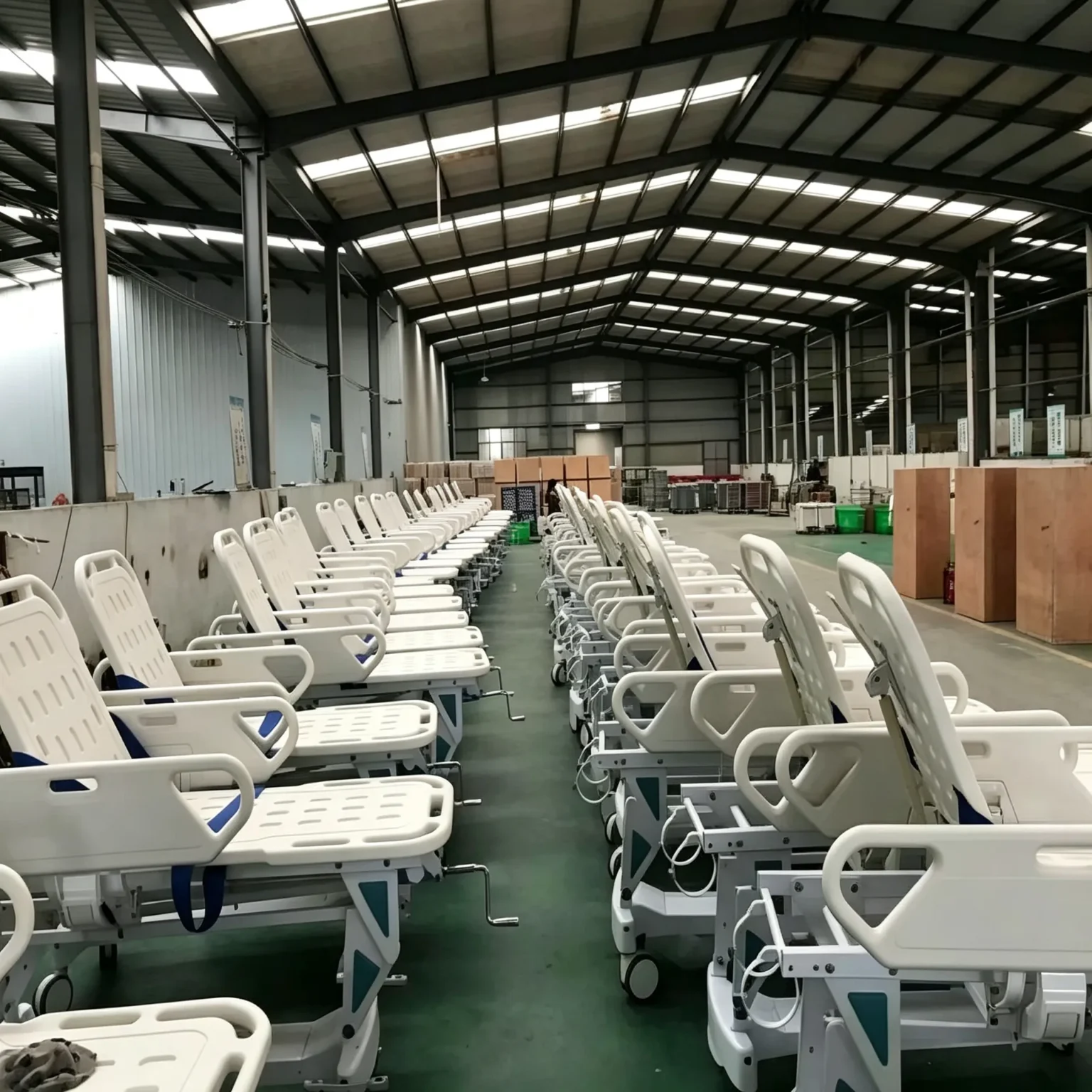
Packaging is the most under-evaluated aspect of sample assessment. A sample that arrives perfect but was packed in a custom foam crate will not tell you whether the production order’s standard carton will survive a 6-week sea freight journey through transshipment ports. Inspect the sample’s packaging as critically as the product itself.
Check four packaging parameters (see the ASTM D4169 shipping container performance testing practice): (1) carton burst strength — the corrugated board should be at least 200 psi burst for hospital equipment; (2) foam density and fit — the foam should fully contact the product on all sides with no movement when the carton is shaken; (3) pallet configuration — the pallet should be stretch-wrapped with corner protectors and the cartons should not overhang the pallet edges; (4) marking and labeling — the shipping marks should include the model, serial number, weight, and “fragile” or “this side up” indicators as applicable.
After unpacking, inspect the sample for any transit damage: dents on metal frames, scratches on paint, or misalignment on assembled components. If the sample arrives damaged despite good packaging, the packaging design needs revision before the bulk order ships. If the packaging is inadequate (thin carton, loose foam, no corner protectors), insist on upgraded packaging for the production order — this is a negotiation point, not a deal-breaker.
From Sample to Bulk: Writing the Quality Agreement
The sample evaluation is not complete until its findings are translated into the bulk order quality agreement. This document specifies the acceptance criteria for the production order based on the sample. It should include:
The key elements of a quality agreement based on sample evaluation: material specifications confirmed (e.g., 304 stainless steel per MTR, 1.5 mm wall thickness per caliper measurement), finish specifications (powder coating with crosshatch adhesion test passing 95%, compatible with named disinfectants), functional acceptance (48-hour endurance run with no failures, no unusual noise, no position drift), packaging specification (200 psi burst carton, custom foam density per sample, pallet configuration per sample), and documentation requirements (CE declaration, ISO 13485 certificate, test reports, IFU, FSC per sample).
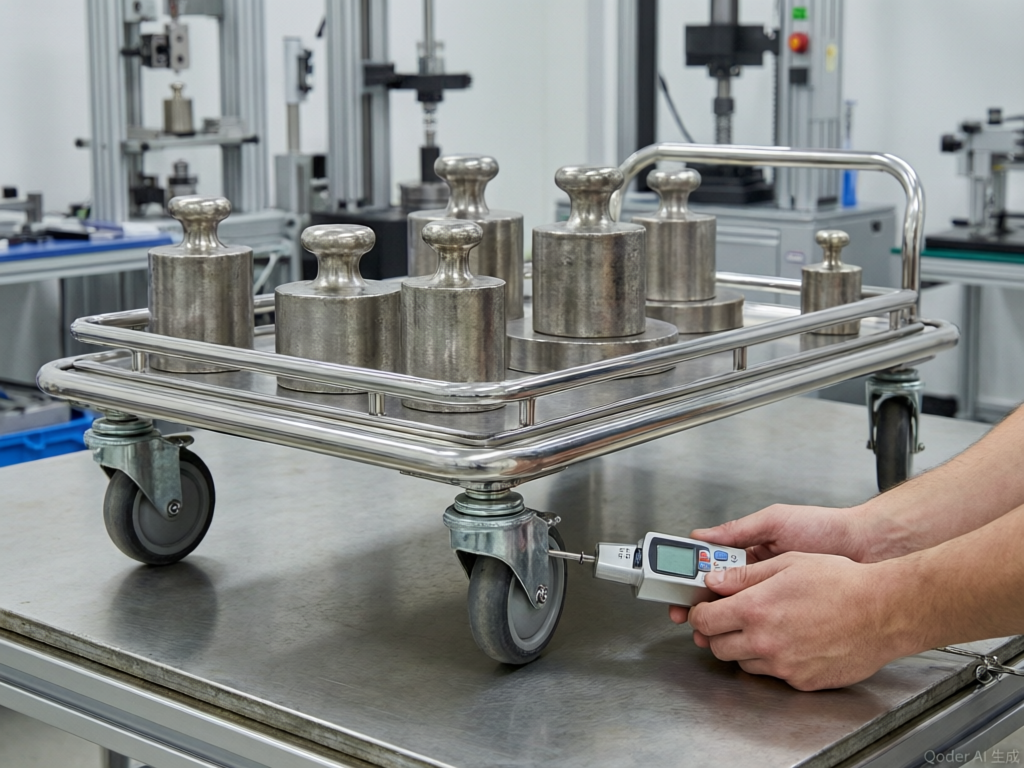
The quality agreement should also specify the pre-shipment inspection (PSI) protocol: what percentage of the order will be inspected (typically AQL 2.5 for major defects), which checks will be performed, and who will perform them (buyer’s agent, third-party inspection service, or factory self-inspection with photo/video evidence). Sanyang supports sample orders across all five product lines with standard lead times of 3–7 days for stock configurations and 15–20 days for custom specs.
Foire aux questions
Combien coûte un échantillon d'équipement médical ?
Sample pricing varies by product. Electric hospital beds and operating tables typically cost 1.5–2 times the bulk unit price because production-line setup for a single unit is inefficient. Surgical lights and trolleys may be priced closer to bulk rates. Some manufacturers credit the sample cost against the bulk order if it proceeds.
Dois-je demander un échantillon de showroom ou un échantillon de production ?
Always request a production sample. Showroom samples are hand-finished and do not represent the quality of the bulk production run. A production sample is built on the standard line with standard tooling and standard QC, giving you an accurate preview of what the full order will look like.
What is the crosshatch adhesion test for paint?
The crosshatch test scores a grid pattern into the paint with a utility knife, applies adhesive tape, and pulls it off. If more than 5% of the paint squares lift, the paint adhesion fails. This test costs under $20 in supplies and reveals whether the powder coating pre-treatment and curing process was done correctly.
Why run a 48-hour endurance test on a sample?
Thermal and electrical failures often appear only after extended operation. An actuator that works fine for 2 hours may overheat at hour 3. A 48-hour continuous cycling test exposes these failure modes before the bulk order is placed, when correction is still possible.
What documents should come with a sample order?
A sample should arrive with the same documentation as the bulk order: CE declaration of conformity, ISO 13485 certificate with correct scope, IEC 60601 test reports, English instructions for use, and a Free Sale Certificate if your market requires import registration.
How do I evaluate packaging quality on a sample?
Check carton burst strength (minimum 200 psi for hospital equipment), foam fit (no product movement when shaken), pallet configuration (no overhang, corner protectors, stretch wrap), and inspect for transit damage after unpacking. Inadequate packaging on the sample predicts damage in the bulk shipment.
Ready to evaluate Sanyang equipment?
Order production-line samples across surgical lights, operating tables, hospital beds, medical pendants, and trolleys. CE and ISO 13485 certified factory in Qufu, Shandong. Standard lead time 3–7 days.
Conclusion
A sample order evaluated against a structured checklist is the cheapest insurance policy in medical equipment sourcing. For the cost of one unit and 48 hours of testing, a distributor can avoid a container of equipment that fails on the ward, documentation that does not pass customs, or packaging that delivers dented goods to a hospital dock.
- Request a production-line sample, not a showroom piece, and verify it was built with standard tooling.
- Test welds with dye penetrant, paint with crosshatch adhesion, and materials with an MTR and magnet test.
- Run the 48-hour endurance test to catch thermal and electrical failures invisible at handover.
- Translate every finding into the bulk order quality agreement with specific acceptance criteria.
The manufacturers who welcome structured sample evaluation are the ones whose production quality can survive it. The ones who resist — who ship showroom samples, who cannot name specific disinfectant compatibility, who lack test reports for the exact model — are telling you that their bulk order will not match their marketing. A $2,000 sample that prevents a $50,000 mistake is not a cost. It is the first line of procurement defense.
Vous pourriez aussi aimer...

Service Contracts and SLAs for OR Equipment: What Buyers Should Negotiate
A service contract looks like a maintenance formality until a light fails at 02:00 before...

Import Document Pack: What Customs Asks for Medical Devices
A medical equipment shipment stops at customs for one reason more than any other: the...

Programme de lampes chirurgicales OEM : des échantillons à la marque privée
Private-label surgical lights are how distributors and hospital groups put their own brand on a...