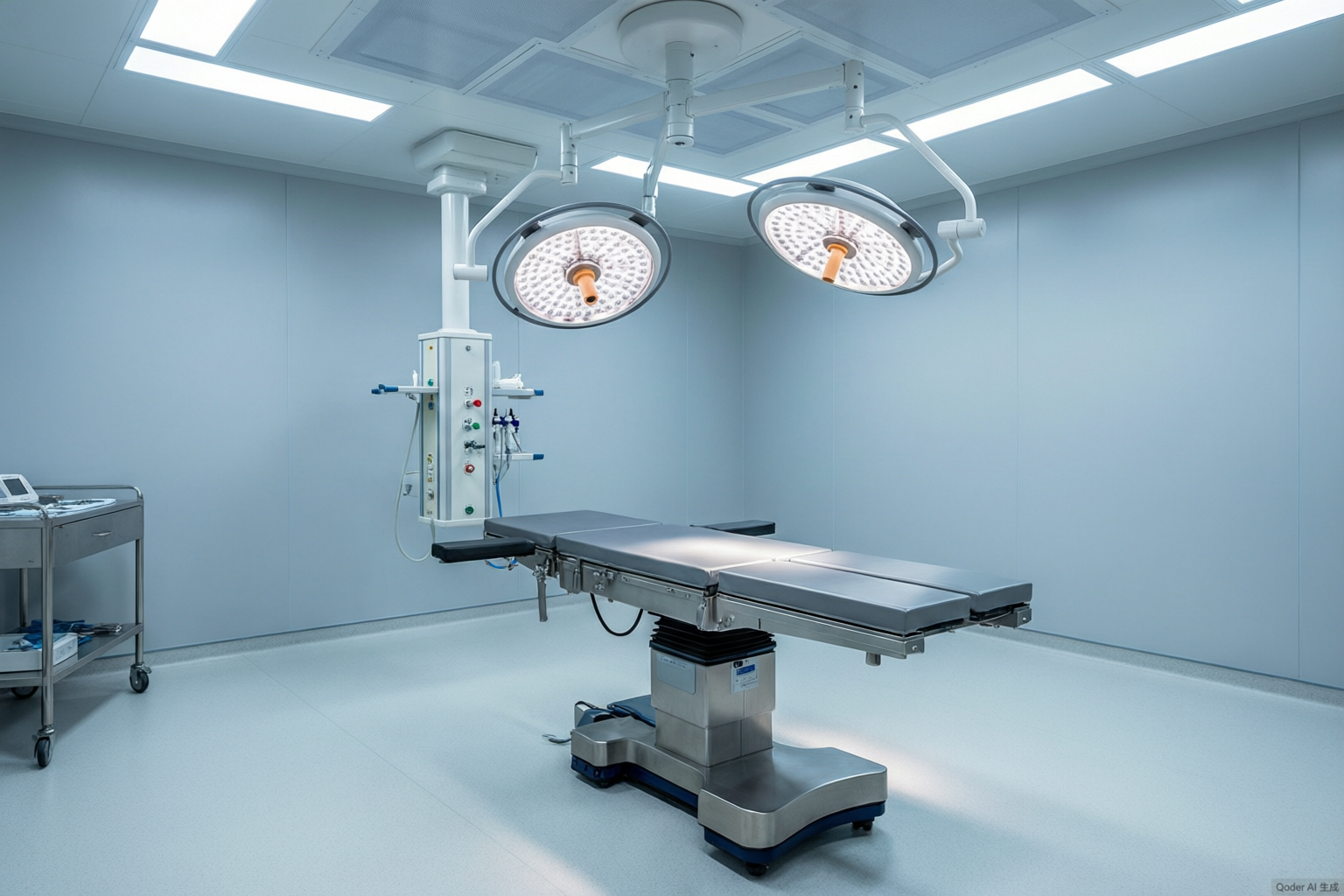

A Request for Quotation (RFQ) is the single most important document in the medical equipment procurement process. It defines what you need, how you need it delivered, and the standards it must meet. A well-structured RFQ produces quotes that are accurate, comparable, and free of hidden assumptions. A poorly written one generates rounds of clarification emails, mismatched specifications, and ultimately a product that does not fit the clinical requirement.
The RFQ should state that the balance payment releases against an inspection report: see our pre-shipment inspection guide.
This guide provides a practical framework for building a medical equipment RFQ that works whether you are sourcing a single surgical light or outfitting an entire operating room suite. For hospitals looking at bundled procurement, our overview of offres groupées d'équipement de clinique illustrates how RFQs can be structured for multi-item orders.
The Purpose of an RFQ in Medical Equipment Procurement
In medical equipment procurement, the RFQ serves a different function than in general commercial purchasing. Medical devices are subject to regulatory oversight, clinical performance requirements, and after-sales service obligations that do not apply to commodity goods. Regulators such as the U.S. Food and Drug Administration (FDA) assign surgical and hospital equipment to device classes, each with specific documentation and quality system requirements. An RFQ that fails to address these regulatory dimensions may receive quotes for products that cannot be legally imported or used in the destination country.
Regulatory frameworks differ by destination market. The European Union’s Medical Device Regulation (EU) 2017/745, whose full text is published on EUR-Lex, is one example; China’s NMPA and other national regulators operate similar systems. Your RFQ should specify which regulatory certifications are required for the destination market, so that manufacturers can confirm compliance in their quotation.
Section 1: Product Identification and Technical Specifications
The first section of every RFQ should clearly identify the product and its key technical parameters. This section is where most RFQs fail — not because the information is missing, but because it is presented in a way that allows different manufacturers to interpret it differently.
For each product, include:
- Product category and common name: For example, “LED Surgical Light, ceiling-mounted, dual dome.” Avoid proprietary model names from a single manufacturer, as this limits competition.
- Key performance parameters: Central illuminance (lux), color rendering index (CRI), color temperature range (Kelvin), light field diameter, and number of LED modules. For operating tables, specify load capacity, height range, Trendelenburg/reverse Trendelenburg angles, and number of sections.
- Dimensions and weight: Maximum footprint, ceiling-to-table height range, and weight for ceiling-mounted units. This determines whether the existing ceiling structure can support the equipment.
- Power requirements: Input voltage range (specify both 110 V and 220 V if the equipment must work in multiple markets), frequency, and power consumption.
- Accessoires : List all required accessories separately — sterile handles, camera systems, monitors, mounting arms, foot brakes for operating tables. This prevents manufacturers from quoting a base unit at an attractive price while excluding items that are essential for clinical use.
When specifying technical parameters, use ranges rather than exact values where possible. For example, “central illuminance: minimum 80,000 lux at 1,000 mm” is better than “central illuminance: 100,000 lux” because it allows manufacturers with products rated at 80,000 lux or above to respond, increasing the competitive field.
Section 2: Regulatory and Compliance Requirements
This section is non-negotiable for medical equipment. Specify every certification and standard that the product must meet for the destination market:
- Medical device registration: FDA 510(k) clearance (for the U.S. market), CE marking under the EU MDR (for European markets), NMPA registration (for China), or equivalent certification for other destination countries.
- Normes de sécurité : IEC 60601-1 (general safety for medical electrical equipment), IEC 60601-1-2 (electromagnetic compatibility), and any applicable particular standards (e.g., IEC 60601-2-41 for surgical luminaires).
- Quality management: ISO 13485 certification for the manufacturer’s quality management system. This is a baseline requirement for most hospital procurement processes worldwide.
- Biocompatibility: For any patient-contacting accessories (e.g., operating table mattresses, side rail pads), specify ISO 10993 biocompatibility testing requirements.
Ask the manufacturer to provide copies of all certificates with their quotation. Some manufacturers list certifications that are expired, pending, or applicable to a different product model. Verification at the quotation stage prevents costly compliance failures during import or installation.
Section 3: Commercial Terms
The commercial section of the RFQ should be structured to produce comparable quotes. Specify the following:
- Incoterms : State the required Incoterm (typically FOB, CIF, or DDP). This determines who bears the cost and risk of shipping, insurance, and customs clearance at each stage of the delivery.
- Quantity: Specify the exact quantity and whether the quote should include tiered pricing (e.g., unit price for 5 units, 10 units, 50 units). Tiered pricing helps buyers evaluate the cost impact of scaling their order.
- Currency: Specify the required quoting currency. If you are comparing quotes from manufacturers in different countries, a common currency eliminates exchange rate confusion.
- Payment terms: State your preferred payment structure (e.g., 30% advance, 70% before shipment; or letter of credit at sight). Manufacturers will factor payment terms into their pricing.
- Delivery timeline: Specify the required delivery date or lead time (e.g., “within 45 days of order confirmation”). Ask the manufacturer to confirm whether this timeline is achievable for the quoted quantity.
- Garantie : Specify the minimum warranty period (typically 12 to 24 months for medical equipment) and what it covers (parts, labor, on-site service).
Section 4: After-Sales Service and Documentation
Medical equipment requires ongoing technical support. The RFQ should specify:
- Support d'installation : Will the manufacturer provide on-site installation, or will local biomedical technicians handle it? If the manufacturer provides installation, specify whether it is included in the quoted price or charged separately.
- Formation : Request operator training (for clinical staff) and maintenance training (for biomedical engineers). Specify the number of trainees and whether training should be on-site or at the manufacturer’s facility.
- Spare parts availability: Ask the manufacturer to confirm the availability and pricing of key spare parts (e.g., LED modules, arm springs, caster wheels, control boards) for a minimum of 5 to 10 years after purchase.
- Documentation technique : Request user manuals, service manuals, wiring diagrams, and parts lists in the required language(s). Confirm that the documentation meets the standards required by local regulatory authorities.
For projects involving multiple equipment types, a projet de bloc opératoire clé en main approach can consolidate installation, training, and documentation under a single contract, reducing coordination overhead.
Section 5: Evaluation Criteria
Some RFQs include an evaluation criteria section that tells respondents how their quotes will be scored. This is particularly useful for institutional buyers (government hospitals, NGOs, procurement agencies) that must demonstrate a transparent selection process. Typical evaluation criteria include:
- Technical compliance (does the product meet the specified parameters?) — typically weighted 40–50%
- Price (total cost of ownership, including shipping, installation, and spare parts) — typically weighted 25–35%
- Manufacturer experience and references — typically weighted 10–15%
- After-sales service capability — typically weighted 10–15%
- Delivery timeline — typically weighted 5–10%
Including the evaluation criteria in the RFQ encourages manufacturers to address each criterion explicitly in their response, making the comparison process more efficient.
Common RFQ Mistakes to Avoid
Based on experience working with hospital procurement teams and medical equipment manufacturers, here are the most common mistakes that delay the quoting process or produce inaccurate results:
- Over-specification: Copying a specific manufacturer’s datasheet into the RFQ. This locks out competitors whose products may be equally suitable but have slightly different parameter values. Use performance ranges instead of exact values.
- Missing accessories: Failing to list required accessories leads to quotes that appear competitive on the base unit price but escalate once all necessary add-ons are included. Always list accessories as separate line items.
- Ignoring regulatory requirements: A quote for a product that lacks the required certification for the destination market is worthless. Always specify the regulatory framework upfront.
- Not specifying the quantity clearly: If the RFQ says “approximately 20 units,” manufacturers may quote for 25 or 50 units to offer a better unit price. Specify the exact quantity and ask for tiered pricing if flexibility is needed.
- Omitting the evaluation timeline: Tell respondents when they will receive a decision. This helps manufacturers prioritize their response and follow up appropriately.
Template: A Minimal RFQ Structure
For buyers who need a starting point, here is a minimal RFQ structure that covers the essential sections:
- Introduction: Your organization, the project name, and the purpose of the RFQ.
- Product list: Item number, product name, quantity, and key technical specifications for each item.
- Regulatory requirements: Certifications and standards required for the destination market.
- Commercial terms: Incoterm, currency, payment terms, delivery timeline, warranty.
- After-sales requirements: Installation, training, spare parts, documentation.
- Response format: How the quote should be structured (itemized pricing, separate technical and commercial envelopes, etc.).
- Evaluation criteria and timeline: How quotes will be evaluated and when respondents can expect a decision.
This structure can be expanded for complex projects (multi-room OR fit-outs, national-level hospital equipment programs) but provides a solid foundation for most single-facility procurement needs. When sourcing equipment like pendants médicaux that integrate with other ceiling-mounted systems, be sure to include interface specifications in the product list section.
Summary
A well-structured medical equipment RFQ is an investment that pays for itself many times over in reduced clarification cycles, more accurate quotes, and fewer post-order surprises. The key is to be specific about what you need, transparent about how you will evaluate responses, and thorough about regulatory and after-sales requirements. Manufacturers who receive a clear, professional RFQ are more likely to respond with their best pricing and most detailed technical proposals — because they know the buyer is serious and organized.