
Quick answer: A ceiling mounted surgical light needs anchors rated for four times the head weight, a mount height between 2.8 m and 3.0 m above the finished floor, and a pull test on every anchor before the arm goes on. Handover covers light output, head drift and brake hold.
What The Ceiling Structure Has To Carry
ceiling anchor installation for lights
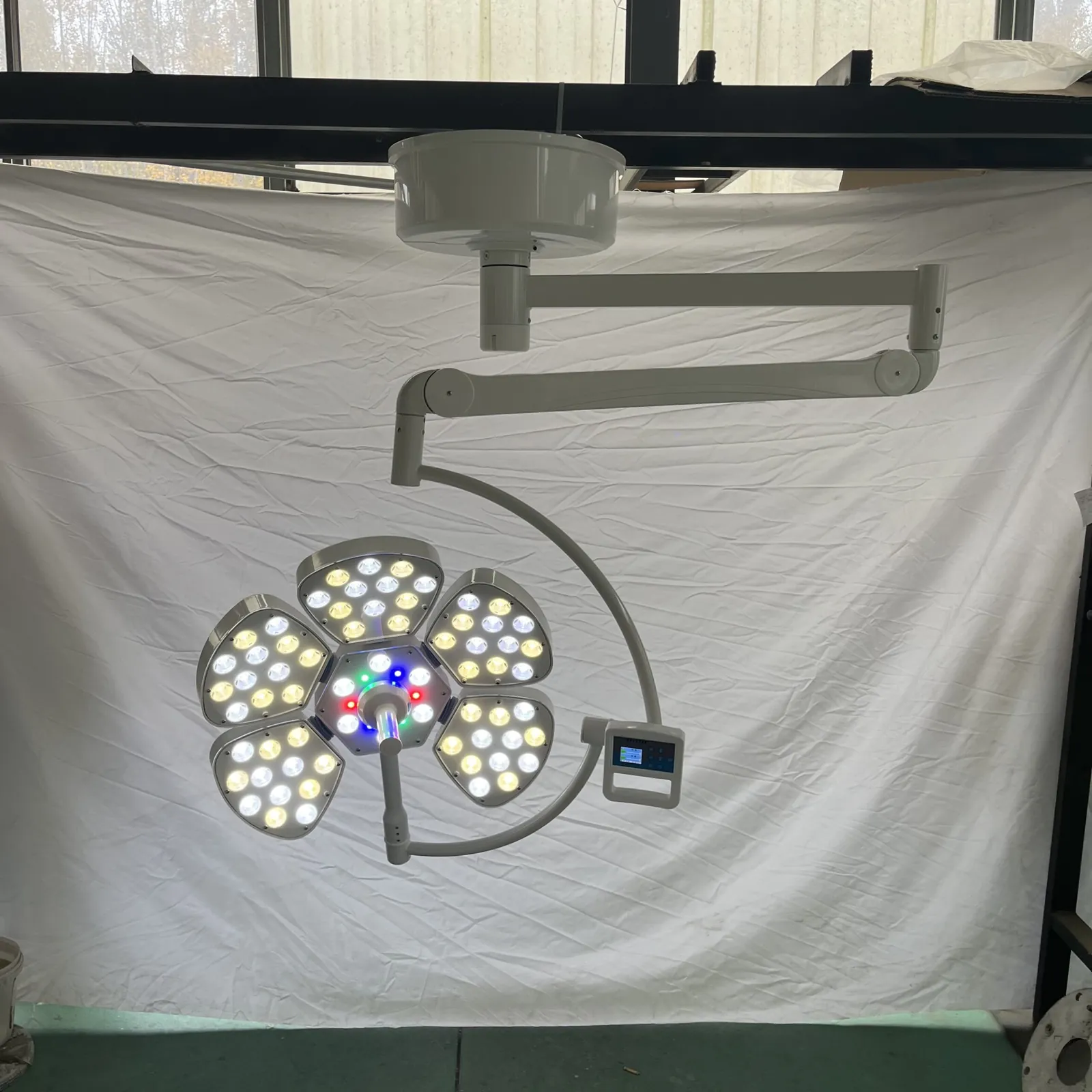
A five-petal LED head weighs 55 kg to 70 kg, and that load reaches the slab through one mount plate. The plate carries the head weight plus a dynamic factor while the arm swings, so the concrete behind it must take the pull-out force of each anchor rather than the light alone. A 200 mm slab in sound condition holds four M12 chemical anchors at 5 kN each, and a suspended ceiling with no slab above it holds the light at no anchor size at all.
- Head weight: 55 kg to 70 kg for a five-petal LED unit.
- Arm reach: 1.0 m to 1.5 m from the column centre.
- Dynamic factor: 1.5 times the static load while the arm rotates.
- Anchor safety factor: 4 times the working load.
Mount Height, Working Distance And Coverage
Height sets both the working distance and the light field at the same time. A head fixed at 2.8 m to 3.0 m above the finished floor keeps the field at 200 mm to 300 mm across a wound at table height, while a head dropped to 2.6 m fouls the surgeon and leaves the arm out of balance at the joint.
| Parámetro | Target | Acceptable range | Measured with | Effect if missed |
|---|---|---|---|---|
| Mount height above finished floor | 2.9 m | 2.8 m to 3.0 m | laser distance meter | head contacts staff below 2.6 m |
| Working distance to wound | 0.9 m | 0.7 m to 1.0 m | tape from head to table | field widens and output falls |
| Diámetro del campo de luz | 250 mm | 200 mm to 300 mm | measuring card at table height | spill light reaches the floor |
| Illuminance on axis at 1 m | 160,000 lux | 120,000 to 160,000 lux | lux meter at the field centre | deep cavity work loses contrast |
| Head drift after brake lock | 0 mm | under 5 mm | floor mark, 10 minute hold | field creeps during long cases |
Installation Sequence From Anchor To Head
Work runs from the slab down, and every step stays open for inspection before the next one starts. Setting anchors before the plate arrives on site, then levelling the plate in two directions, keeps the arm from fighting the column for the life of the fitting.
- Drill and set four anchors in the slab, then pull test each one to 5 kN.
- Bolt the mount plate and check level within 2 mm across its face.
- Lift the column and spring arm, then set brake torque to the figure in the manual.
- Hang the head and balance the arm so it holds position anywhere in 360 degrees of travel.
- Test the emergency circuit and run the battery backup for 3 hours.
Cable routing decides the service life of the whole installation. A loop left tight at the column joint breaks the conductor after a few thousand rotations, and a ceiling void with no slack forces a re-termination every second year. A 300 mm service loop at the column, labelled at both ends, removes that failure from the maintenance schedule.

Handover Checks Before The First Case
Four measurements close an installation: illuminance on the axis, field diameter at working distance, drift after brake lock, and backup duration on the emergency circuit. A sterile team finds a drift fault in the middle of a long procedure, which is the worst possible moment to discover it.
Training runs 1 hour to 2 hours for theatre staff and covers brake release, sterile handle fitment and the battery test. A one page checklist kept in the theatre and signed at each monthly check keeps the light inside specification between service visits.

Preguntas Frecuentes
How high should a surgical light be mounted?
Between 2.8 m and 3.0 m above the finished floor, with 2.6 m as the working minimum. Below that figure the head fouls the surgical team and the arm balance drifts out of trim.
What anchor is needed for a ceiling mounted surgical light?
Four anchors rated for 4 times the working load, normally M12 chemical anchors set in a concrete slab of 200 mm or more, each pull tested to 5 kN before the plate goes on.
How much does a surgical light head weigh?
A five-petal LED head runs 55 kg to 70 kg, and the arm and column add a further 30 kg to 45 kg. The slab carries the total through a single mount plate.
How often should the brake be checked?
Monthly, with a floor mark and a 10 minute hold. Drift under 5 mm passes, and any head that creeps beyond that needs a torque reset or a spring replacement.
Buyers specifying a ceiling mounted unit can review the range on luces quirúrgicas, and the theatre service side is covered in OR maintenance and downtime planning. Matching lights with tables and beds sits in the medical equipment products index. Electrical safety requirements for operating theatre equipment follow the standards published by the International Electrotechnical Commission.
See also our surgical light handle guide. See also our OR ceiling pendant zones guide.
También te puede interesar...

Calibration Records for OR Equipment: What to Keep, How Often and Who Signs
Calibration is one of those words that survives in procurement documents long after everyone has...

The Demo Rail Took Your Clamps. The Delivered Rail Does Not.
Ask for four things before the rest of the tables are built. First, the identity...

Prueba de presión de salida de gas y flujo después de la instalación
Medical gas outlets are the quietest systems in a new operating suite and the least...