


Medical gas outlets are the quietest systems in a new operating suite and the least forgiving: they pass acceptance on the day the certificates sign, and they protect every patient downstream of a mislabeled or under-flowing connection for the building’s life. Post-installation pressure and flow testing is how a turnkey operating room earns its handover signature, and buyers who understand the sequence can hold contractors and suppliers to it. This guide covers what gets tested, in what order, and what the passing results look like on paper.
Why Testing Happens in Stages
Medical gas systems test in stages because the system is built in stages: pipework pressure-tested before walls close, cross-connection and labeling verified before outlets activate, and flow with downstream equipment verified at commissioning, after the surgical pendants, lights and tables that consume the gas are installed. Skipping stages does not save time; it relocates problem findings to the most expensive moment, which for an operating suite is the day before the first case. Healthcare facility gas system requirements are governed in the United States by NFPA 99, the Health Care Facilities Code, whose testing framework (pressure hold, cross-connection, purging and verification) forms the backbone most international specifications adapt from. Buyers working to other national codes will recognize the same sequence wearing different clause numbers.
Stage One: Pressure Hold on the Pipework
Before any outlet is active, the pipework holds pressure: the system is pressurized with an inert gas to a test pressure, isolated, and observed over a defined hold period with pressure gauges at both ends of the run. A drop means a joint is fighting the wall cavity, and the wall is open at that stage rather than after the surgical light is hung. The documentation from this stage is the as-built record: test pressure, hold duration, temperature compensation where relevant, and the gauge readings signed by the installer and witnessed by the buyer’s representative. Factories and contractors supplying turnkey operating rooms, ours included, include this record in the handover file, because a pipework certificate that exists only as a story is not a certificate.
Stage Two: Cross-Connection and Labeling Verification
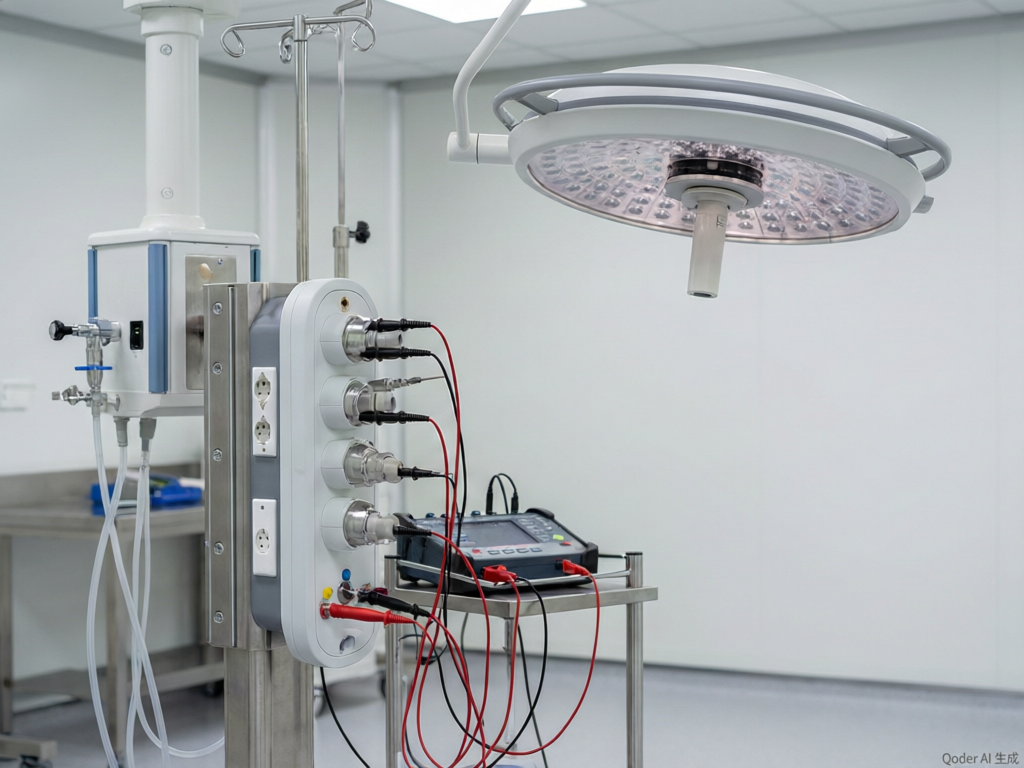
Medical gases injure through misconnection, oxygen where air belongs, vacuum where oxygen belongs, so the cross-connection test verifies that every outlet delivers exactly the gas its label and connector geometry promise. Each outlet is sampled against the labeled service, gas-specific connectors are confirmed, and the labeling on both outlet and valve box matches the as-built drawing. This stage also catches the installation-era classic: swapped labels on parallel lines that passed pressure because pressure does not care which gas flows. The check takes a day in a typical OR suite and prevents the incident that no commissioning apology can undo.
Stage Three: Flow Testing with the Room Equipped
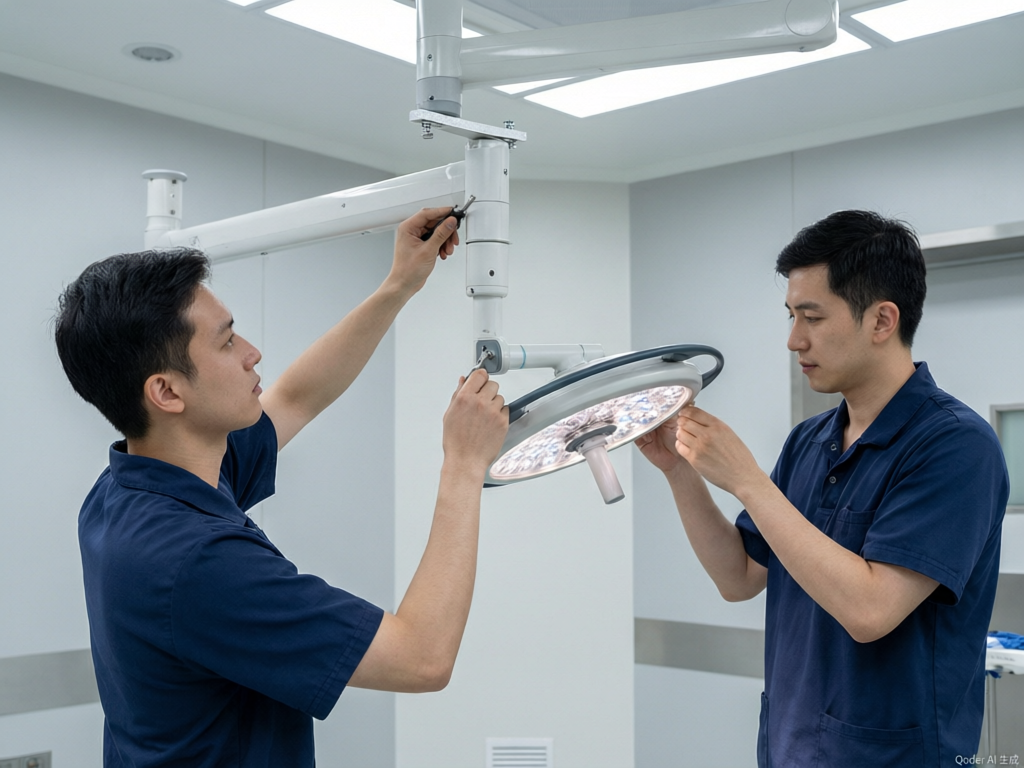
The final stage runs with the room actually equipped: each outlet delivers its designed flow at working pressure with the surgical pendant, anesthesia machine position and table zone occupied, so the test reflects the working room rather than an empty one. Flow rates are measured at the outlets furthest from the manifold (worst case), alarms are exercised at their setpoints, and the zone valve shutoffs are proven by closing them and confirming the right outlets go quiet. A turnkey operating room supplier should run this stage jointly with the pendant and light installation, because ceiling systems share the same ceiling void and the same commissioning window. Our turnkey OR program sequences gas verification inside that joint window, with the 3D layout plan already marking where every pendant and outlet lands.
The Handover File: What Passing Looks Like
A passing suite hands over with a file, not a nod. The file holds the staged test records (pressure hold, cross-connection, flow), the as-built drawings marking every outlet and valve, alarm setpoint records, the purge certificates where new lines were commissioned, and the sign-off signatures of installer, verifier and buyer. Maintenance inherits the same file as its baseline: the outlet testing that repeats on the facility’s preventive schedule compares against the commissioning numbers, which is how a slow leak or a drifting regulator gets noticed years before it becomes an incident. Buyers specifying turnkey suites should name this file, section by section, in the purchase contract, and the spare parts and service program that supports the suite afterward is documented on our página de repuestos y servicio.
Preguntas Frecuentes
When should medical gas outlets be tested?
In stages: pipework pressure hold before walls close, cross-connection and labeling before activation, and flow testing at commissioning with the room equipped.
Which code governs medical gas testing?
NFPA 99 in the United States; most international specifications adapt its testing sequence (pressure hold, cross-connection, purge, verification) to local clauses.
What document proves an outlet system passed?
The handover file: staged test records with gauge readings and signatures, as-built drawings, alarm setpoints and purge certificates.
Who witnesses the testing?
The installer performs it; the buyer’s representative or third party witnesses, and both sign the records that maintenance will baseline against.
Specifying a turnkey operating room? Contact sanyang10086@gmail.com or WhatsApp +86 195 0862 5836, and our project desk will include the staged test plan in the quotation. Program overview: turnkey operating rooms.
Lectura relacionada: Gas Outlet Colour Coding and Pin Index
También te puede interesar...

Calibration Records for OR Equipment: What to Keep, How Often and Who Signs
Calibration is one of those words that survives in procurement documents long after everyone has...

The Demo Rail Took Your Clamps. The Delivered Rail Does Not.
Ask for four things before the rest of the tables are built. First, the identity...

OR Equipment Commissioning Checklist: From Crate to First Surgery
The day a new operating room receives its equipment is not the day the room...

1 comentario en «Gas Outlet Pressure and Flow Testing After Installation»