
A two-OR turnkey operating room project for a Middle East private clinic is a scoped delivery: two fully equipped operating rooms plus the supporting spaces, supplied as one package with one contract, one documentation set and one service line. Private clinic investors choose this route because it compresses the buying process, fixes the scope on paper early, and leaves a single party accountable from the 3D layout to the last file in the closeout pack. This article walks the package contents, the six-phase delivery process, the equipment specifications that match the procedure mix, and the documents a Gulf buyer needs before signing.
The scenario is a composite drawn from the delivery patterns we see across the region, not a named client, because the site publishes composite cases by convention. The structure is real: the same scope matrix, the same phase gates and the same certificate pack apply to any two-OR clinic project in the GCC or wider Middle East.
For the complete range of options and a specification sheet on Turnkey OR Solution, see our حل جاهز لغرفة العمليات product guide.
(function(){var f=document.querySelectorAll(‘.yt-facade’);for(var i=0;i<f.length;i++){(function(el){el.addEventListener('click',function(){var id=el.getAttribute('data-yt-id');el.innerHTML='’;});})(f[i]);}})();
Why a Private Clinic Chooses Two ORs
Two rooms give a clinic the operating rhythm that one room cannot: minor and major procedures run in parallel, a second room covers emergency cases without cancelling the elective list, and the clinic can keep one room in turnover while the other is in use. For a private investor, the second room also changes the revenue picture, because it lets the facility serve two surgical specialties with different equipment needs instead of forcing one compromise setup.
The regulatory angle reinforces the same decision. Health authority licensing in most Gulf markets ties facility approval to the number and size of operating rooms relative to bed count and procedure scope, so the OR plan is part of the license application file. Locking the OR scope early, with the room dimensions, the equipment list and the certificate pack, shortens the licensing conversation because the authority reviews a fixed document rather than a moving target.
الـ تخطيط جناح غرف العمليات article covers the room-level layout logic, and the الجدول الزمني لمشروع غرفة العمليات بنظام تسليم المفتاح guide shows how the schedule is built around the license and construction calendar.
What the Turnkey Package Includes
The package is defined by a scope matrix that lists every item with a specification, a quantity and a drawing reference. For a two-OR clinic project, the matrix covers the five in-house product lines: surgical lights, operating tables, medical pendants, hospital beds for the recovery area, and medical trolleys, plus the modular OR envelope itself.
The modular envelope is the part that surprises first-time buyers. Factory-finished wall and ceiling modules arrive ready to assemble, the sealed surfaces are specified to ISO Class 7-8 performance, and the equipment is pre-installed and tested at the factory before the modules ship. That shifts most of the quality risk from the construction site to the production line, where it can be measured. The free 3D layout design, delivered within 3 working days, fixes the position of every light, pendant and gas outlet before any panel is cut, and the turnkey operating room service page documents the envelope options in detail.
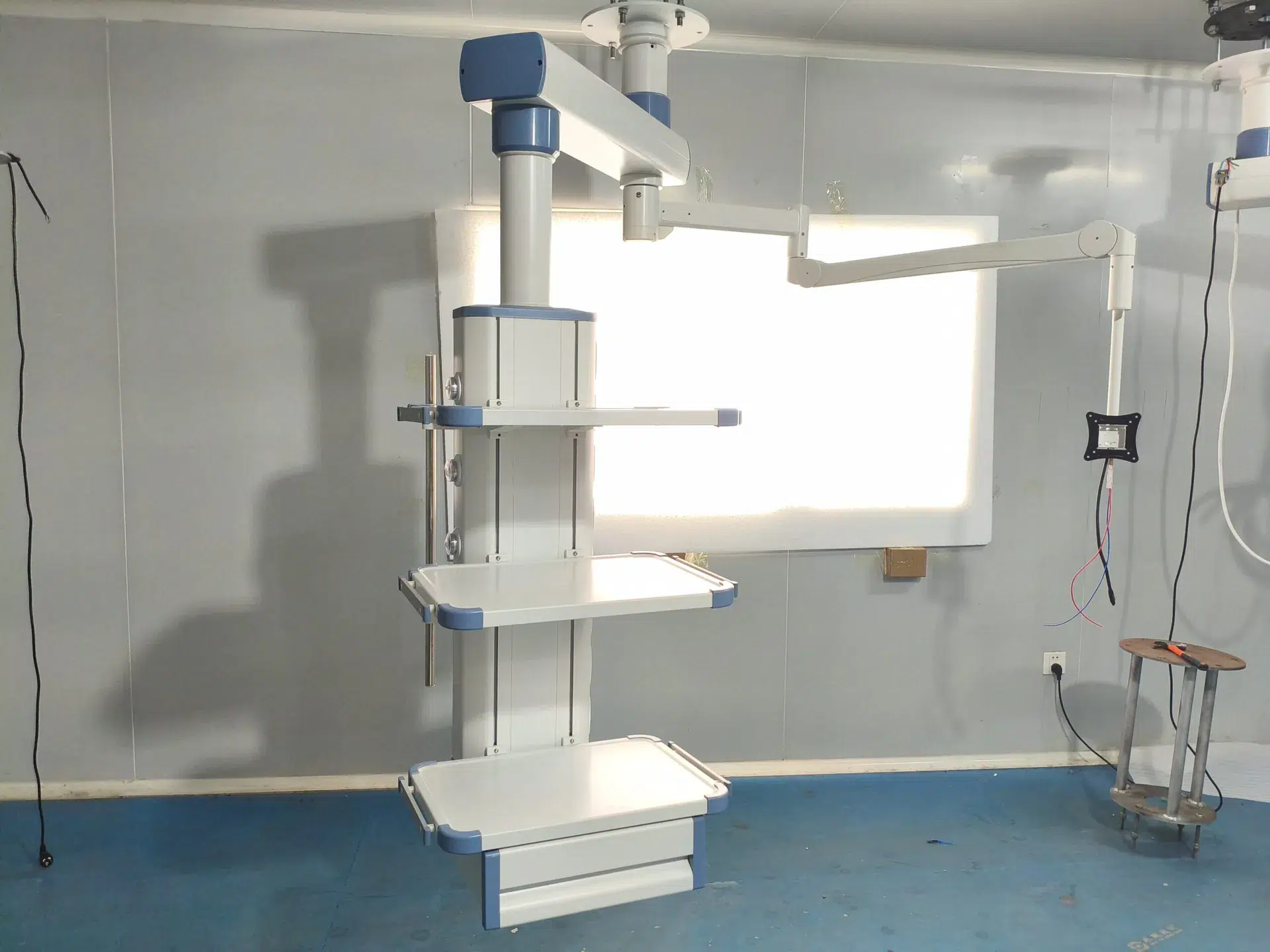
Inside each OR, the core set is a dual-head surgical light, an electric operating table, an anesthesia pendant and a surgical pendant carrying the gas outlets and electrical sockets, plus the integration wiring between them. The حزمة معدات غرفة العمليات الجاهزة article lists the full line-item structure for comparison.
| Package item | Typical specification | Project note |
|---|---|---|
| Dual-head surgical light | 120,000-160,000 lux, Ra above 95 | Deep cavity band per room |
| Electric operating table | General or C-arm compatible series | Series set by specialty list |
| Anesthesia pendant | Gas outlets, sockets, monitor mount | Position fixed in 3D layout |
| Surgical pendant | Single or dual arm | Dual arm for hybrid coverage |
| Recovery beds | Electric ICU or ward series | Quantity per PACU layout |
| عربات طبية | Treatment and nursing series | Workflow support per room |
The table is the summary view of the scope matrix. Every row expands into a specification sheet in the contract, and every specification sheet carries a drawing reference, which is what makes the project auditable at each phase gate.

The Six-Phase Delivery Process
The delivery runs through six fixed phases, and each phase closes with a document. Phase one, Read Context, collects the room drawings, the license requirements, the procedure mix and the construction calendar. Phase two, Freeze Conflicts on Paper, is where the scope matrix is locked: every disagreement about room size, equipment position or gas outlet count is resolved in writing before production starts.
Phase three, Files Moving, starts production with the approved drawings, and phase four, Milestone Feedback, puts progress photos and test records in front of the buyer at fixed milestones. Phase five, Site Prep, coordinates the installation sequence with the contractor: ceiling reinforcement, wall module erection, gas and power connection, and commissioning. Phase six, File Pack Closeout, hands over the complete document set: drawings, test reports, Declarations of Conformity, warranty and spare parts lists.
For a Gulf buyer, the milestone feedback phase carries extra weight because site access is often restricted. The 7×24 video diagnosis channel built for after-sales doubles as the project review channel: the buyer watches the factory floor, the test station and the packing line without travelling.
The same phase discipline applies on the site side. The contractor’s schedule and the factory’s production calendar are joined at the milestone gates, so a slip on ceiling reinforcement shows up in the project file weeks before it would surface as a delay at installation. That is the reason the phase documents are contract deliverables, not courtesy copies: the buyer holds the right to stop production at a milestone if the site is not ready, and the factory holds the same right if the site team has not confirmed the frozen drawings.
Equipment Specs That Match the Workload
The procedure mix decides the specification. A clinic running general surgery, gynecology and orthopedics needs dual-head lights that reach the upper photometry band, 120,000 to 160,000 lux at one meter, for deep cavity work, with color rendering above Ra 95 for tissue differentiation. The site’s photometry guides explain the bands; the practical rule is that the lights must match the deepest cavity the clinic will open.
Tables follow the same logic. The electric and electro-hydraulic series cover general and gynecology work, the C-Arm Compatible series adds imaging access for orthopedic procedures, and the heavy duty series covers bariatric capacity. Matching the table series to the planned specialties in phase two prevents a contract change later, when the table is already inside the modular wall.
Pendants carry the utility load. A two-OR setup typically pairs an anesthesia pendant with a surgical pendant per room, with the gas outlets, electrical sockets and monitor mounts laid out in the 3D design. The dual-arm configuration shown in the package covers hybrid needs, and the Middle East medical device registration guide covers the market entry requirements that apply to every device in the rooms.
Compliance Documents for the Region
The certificate pack for a Gulf turnkey project has three layers. The factory layer: CE marking, ISO 13485 and ISO 9001, which are the quality and conformity anchors for the equipment. The export layer: the Free Sale Certificate with CCPIT notarization and Apostille, issued in the name on the contract, which most health authorities in the region request for device registration. The project layer: the test reports, Declarations of Conformity and the installation and commissioning records that close out each room.
Device registration in the destination country sits on top of this pack, and the registration file is stronger when the manufacturer is auditable: video factory audits, serialized test records and a named quality contact all count as evidence for the regulator. The WHO surgical safety checklist is the clinical reference the commissioning team should build into the room protocols, because it anchors the safety conversation that the documents support.
Localization matters more than most buyers expect. The OEM/ODM service covers logo integration, multilingual UI and software branding under NDA, which lets the clinic’s group name appear on every panel and screen rather than the factory’s. For an investor standardizing across multiple clinics, that branding layer is part of the asset, not decoration.
Timeline, Payment and Shipping Reality
The production clock is the easy part: standard equipment ships in 3 to 7 days and custom configurations in 15 to 20 days, which means the equipment is rarely the critical path in a two-OR project. The critical path is the building side: ceiling reinforcement, gas line connection, power distribution and authority inspections. The six-phase process is built around that reality, with the factory producing to the frozen drawings while the site prepares.
Payment follows the standard 30 percent T/T deposit and 70 percent before shipment, with FOB as the default term and CIF or DDP arranged through long-term forwarders. For a project with multiple containers, the milestone feedback phase can align payment tranches to delivery milestones, but the 30/70 skeleton stays the same unless the contract says otherwise. Insurance, freight and the destination customs file are itemized in the commercial offer so the buyer sees the landed number before signing.
The container plan is part of the closeout pack: loading list, carton marks and the installation sequence on site. A two-OR project typically ships as a mixed load with the modular panels, the equipment and the spare parts kit, and the packing list is organized by room so the site team can install room one without unpacking room two.

What to Verify Before Signing
Run the contract against seven checks before signature. The scope matrix must list every item with a specification and a drawing reference. The phase gates must name the documents produced at each of the six phases. The certificate pack must name the same legal entity as the contract. The site preparation responsibilities must be split in writing: who pours the ceiling reinforcement, who connects the gas and power, who inspects with the authority.
The remaining checks cover the after-sales reality: the spare parts commitment and the response time for the 7×24 video diagnosis line, the warranty period per product line, the training session for the clinic’s staff, and the penalty structure for milestone slippage. A turnkey contract that answers these seven points on paper is a project; one that leaves them open is a negotiation that will happen later, at worse terms.
If you are scoping a two-OR project for a clinic, send the room drawings and the license requirements to our team through the turnkey operating room service page. You will receive the 3D layout within 3 working days, the scope matrix and the certificate pack outline with it, and a commercial offer with the 30/70 payment structure and the FOB or CIF numbers itemized.
الأسئلة المتكررة
What does a turnkey OR project include?
The scope matrix covers surgical lights, operating tables, pendants, recovery beds, trolleys, the modular wall and ceiling envelope, gas and power integration, installation and the full documentation pack.
How long does a turnkey operating room project take?
Equipment production runs 3 to 7 days standard and 15 to 20 days custom. The building side, ceiling reinforcement, utility connections and authority inspections, normally sets the total project calendar.
How is a turnkey OR project paid?
Standard terms are 30 percent T/T deposit and 70 percent before shipment, with FOB as the default delivery term and CIF or DDP arranged through forwarders. The offer itemizes freight and customs costs.
What documents are needed for a Middle East clinic project?
The pack contains CE marking, ISO 13485, ISO 9001, the Free Sale Certificate with CCPIT and Apostille, test reports and Declarations of Conformity, plus the destination country device registration file.