
A warranty annex earns its name only when it reads like a claims procedure with dates attached. To keep a year-two claim out of a correspondence loop, the annex should define the exact unit covered and not just the product family, the start event and every tiered window still open in the second year, what a valid notice looks like and what that notice preserves, the acknowledgment, inspection and cure deadlines with the consequence of missing each one, the cost split when a part is confirmed defective and when it is not, and the escalation route with a role and a time limit attached. When a hospital engineer can open a claim on one page and read every deadline on the day it is sent, the annex is doing the work the one-paragraph warranty promise cannot do.
Define the Unit, Not the Product Family
The offer describes a product family; a year-two claim is about one asset. The annex should carry a schedule that identifies each covered unit by serial number together with the configuration as delivered. Arm lengths, accessory sets, the electrical variant, the control software version loaded at commissioning and the date of handover all belong in that schedule, because those are the facts a factory will ask for before it accepts that a failure is covered. Two mechanisms keep the schedule usable years later. The first is a sentence stating that the warranty runs against the commissioning record attached to the annex, so a claim can be opened from the asset register with a serial number and a date even when the engineer who signed acceptance has moved on and the original order number sits in an archive. The second is a change log, recording every later modification against the same asset number with its date, so a board swap, a firmware update or a different accessory set cannot be presented years later as evidence that the unit is no longer the one that was warranted.
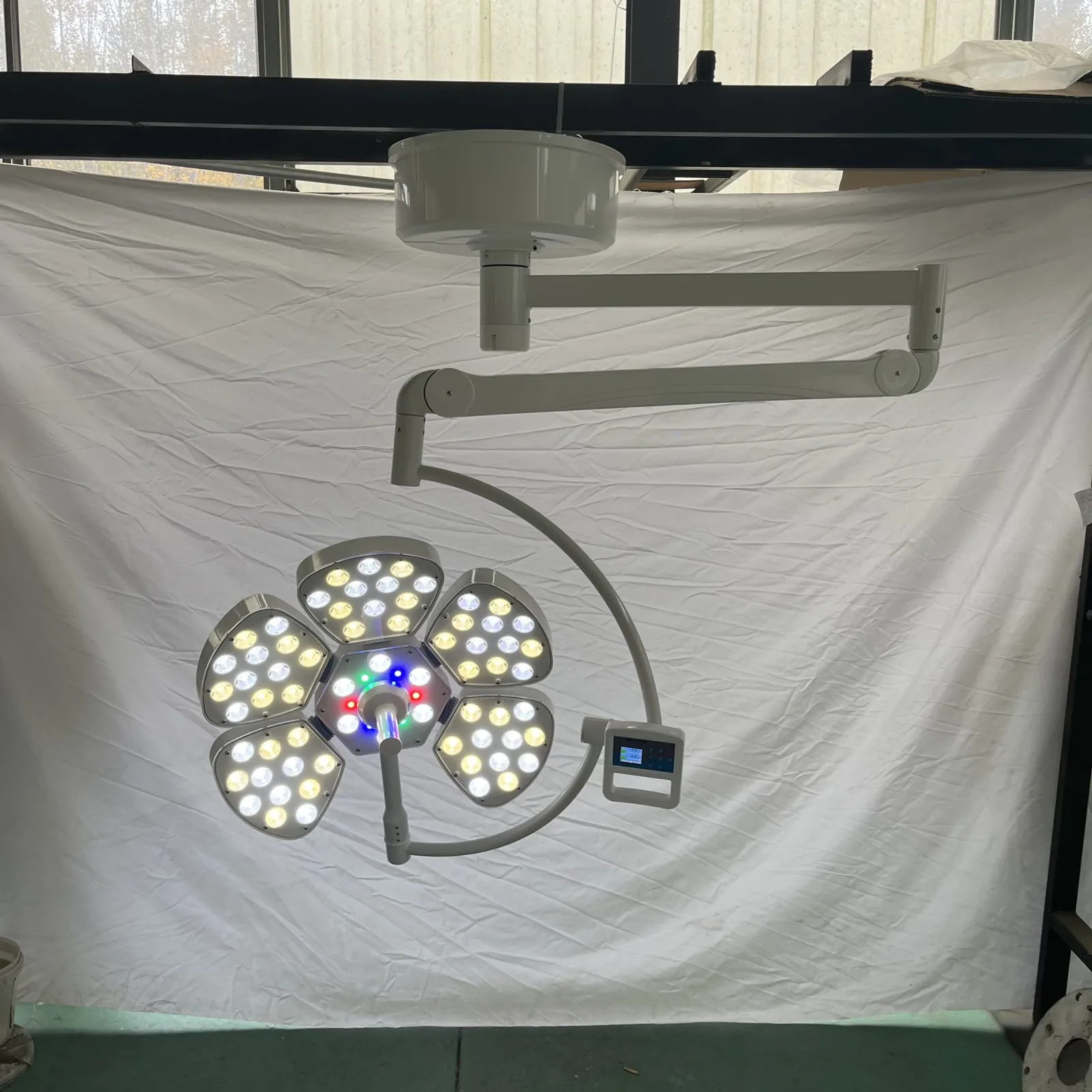
Equipment with moving parts and electronics makes the point plainly. A ceiling mounted surgical light is an asset with a serial number, a software version, a set of wear items and a service history, and every one of those facts can be argued about in year two if the annex does not pin them down at handover. Hospitals that already sign a unit acceptance record before payment, in the manner described in this note on what the acceptance record should contain, have most of this baseline in hand. The annex only has to reference it, name the single identifier that will follow the unit through service reports and parts orders, and state that acceptance does not start a fresh argument about what was delivered.
Name the Start Event and Show Which Clock Is Still Open in Year Two
Advice on what to include in a warranty annex to prevent disputes tends to stop at the list of headings. What decides a year-two claim is narrower: one agreed start event, one set of tiered windows, and a printed answer to whether the failed part is still inside its own clock. The most common reason a year-two claim stalls is a disagreement about which day the clock started. Delivery, arrival on site, completion of installation, successful commissioning and first clinical use can be months apart on a hospital project, and the annex should choose one of those events in words that do not need interpretation. Where the parties cannot agree on a single date, a two-clock rule does the job: a short window running from delivery for anything caused in transit or storage, and a longer window running from commissioning for defects that appear in use, with the switch recorded in the commissioning certificate. The second disagreement concerns tiered windows. Parts, labour and wear items often run on different terms, and a buyer who learns in month fourteen that the parts clock is still open while the labour clock closed at twelve months learns it too late to plan. The annex should print the tiers as a short schedule of item class, window, start event and closing date, so the question of whether a failure is still covered becomes a lookup rather than a negotiation.
Two further rules belong in the same section. The first covers the tail: a defect that appears inside the window but is only diagnosed after it closes should remain claimable if it is notified within a stated period, commonly thirty days, after discovery. The second covers repairs and replacements. State whether the window restarts for the part that was changed, extends only by the days the unit was down, or stays on the original expiry date, because the difference decides whether a component replaced in month twenty is protected in month twenty-five. Where the hospital bought an extension for years two and three, the annex should say which parts of the schedule it covers and whether the response deadlines change, since an extension that inherits only the promise and none of the procedure leaves the buyer with the same correspondence problem it started with.
Make Notice Preserve the Claim, and Put a Date on Every Reply
Notice provisions are where a legitimate claim is most often lost on paperwork. The annex should define a valid notice in plain terms: written, sent to a named mailbox or portal, identifying the asset by serial number, describing the symptom and the operating conditions when it appeared, giving the date of discovery, and stating the remedy the hospital is asking for and whether the failure is urgent. One sentence does the heavy lifting, and it should appear in the annex in roughly these words: notice of a symptom preserves the claim, and the buyer is not required to diagnose the root cause, prove causation or commission an expert report before the supplier responds. Without that sentence, a claim can be rejected for arriving without a diagnosis the hospital was never in a position to produce, and the thread that follows is about the form of the notice rather than the failed equipment. The annex should also attach the claim form itself, one page, with those fields printed on it, so the first exchange is a completed form instead of a request for the correct format.
A warranty annex that names a response time but never says who acknowledges, by when, and what happens if nobody does has only postponed the correspondence. On the supplier side, every stage gets a date. A workable pattern is acknowledgment within two business days, an initial assessment within five, a decision to accept or reject with written reasons within ten, and a cure deadline for each severity class, with the shortest deadline reserved for anything that stops a theatre list or creates a safety risk. Two supporting rules keep those dates honest. Silence must not be treated as a rejection; if the supplier misses the decision date, the claim continues and the escalation step is triggered automatically. And the supplier should keep one claim log, returning a reference number with the acknowledgment, so the hospital quotes a single reference instead of searching a mailbox for subject lines. The annex should also name the channel that counts as written notice, because a message sent to a salesperson’s personal address should not leave the hospital outside the procedure it is trying to use.
Write Down the Evidence the Hospital Already Holds
A year-two claim is decided by records created long before the failure, so the annex should name them and agree who keeps what. On the hospital side: the commissioning record, the preventive maintenance log, daily cleaning and duty logs, alarm and error histories where the equipment stores them, the accessory and consumable replacement schedule, and the date and version of any software update performed in house. On the supplier side: root cause analysis for every failed part it inspects, the readings taken during the repair, and a corrective action report when the same failure appears on more than one unit. The annex should state that these records are accepted as evidence of how the equipment was used, and that a service visit the supplier itself failed to attend cannot be used to void the claim. That point matters more than it first appears, because a hospital that signed a maintenance agreement and never received the visits can be told in year two that servicing lapsed, which punishes the buyer for the supplier’s own missed schedule.
Access rules sit in the same section. The supplier’s right to inspect within a stated number of days, the hospital’s right to take emergency action without losing cover, the duty to preserve failed parts and logs until they are examined, and an explicit statement that inspection, a failed diagnosis or a temporary workaround does not waive the claim. A retention period belongs there too, because a warranty of two years is unenforceable against a filing cabinet that was cleared after eighteen months, and the annex should say how long service records and part histories are kept and who can request them. Buyers who treat the manufacturer’s maintenance schedule as a document to be handed over at commissioning, the approach set out in this note on what to ask the manufacturer for on preventive maintenance, arrive at the claim with the interval list, the part numbers and the sign off dates already in the file. The annex simply commits both sides to use them.
Cover Parts, Like-for-Like Replacement and the Cost of Downtime
Year two is when the parts question arrives. The annex should commit the supplier to a spare parts availability horizon, stated in years from the start event, and to a rule that a replacement part matches the original in form, fit and function. A silent substitution, whether to a different grade, a used assembly or a shorter life component, should require written agreement, because a hospital that accepts a refurbished actuator in month eleven can find its next claim refused on the grounds that the failure belongs to the replacement part rather than the unit that was warranted. Records carry the same weight here. Every replacement part number, its installation date and the software version after the repair are written into the asset history the annex already references, which turns a chain of repairs into evidence of a persistent fault instead of a series of unrelated incidents.
The annex should also settle the arithmetic of downtime. If a repair runs for three weeks because a part has to be made, does the warranty window extend by the idle period, and does the hospital receive a loan unit or a workaround while it waits? Those two answers decide whether a theatre list keeps running, and they cost a supplier far less than the correspondence they prevent. Repeat and safety critical failures deserve their own trigger. The annex should define what counts as a repeat, for example two failed repairs of the same assembly or three failures of the same part within ninety days across the installed fleet, and attach a consequence to it: a corrective action plan with a named engineer, a review of the affected units, and replacement or credit where the fault is systemic rather than isolated. Without that clause, the same failure produces a fresh claim each time and a fresh round of questions about whether it is really the same problem.
Settle Who Pays for a Negative Diagnosis, and How the Thread Ends
The cost question splits into two cases and both belong in the annex. When the supplier confirms the defect, the supplier carries travel, labour, parts, freight, removal, reinstallation, testing and disposal, and those items should be listed rather than compressed into a general phrase about remedying defects free of charge. When the inspection finds no defect, no misuse and no failed component, someone still paid for a flight, a courier and a day of theatre time. The annex should allocate that case explicitly: to the supplier, to the hospital, or on a defined split such as the first inspection at the supplier’s cost and later visits charged at agreed rates. Ambiguity in this one paragraph is why small disputes turn into long threads, because neither side wants to be the party that authorises the visit.
The annex should also write the exit. If the supplier misses a cure deadline, the hospital needs a stated right to have the work done elsewhere, or to buy a replacement and recover reasonable costs, without losing cover on the rest of the equipment. That right, sometimes called self help, is what turns a deadline into a deadline with consequences, and it should be paired with an escalation ladder that names roles rather than individuals: a service manager first, a technical or quality director after a further stated period, and only then the commercial route. Contractual warranties sit alongside the statutory rights a buyer already holds, and the annex should say plainly that the claims procedure does not replace them, since what a warranty grants and what law adds both vary with jurisdiction and with the status of the buyer. A final line is worth drafting for both sides. If the annex has done its work, a year-two failure produces a one-page claim, an acknowledgment carrying a reference number, a dated inspection, and a named engineer with a completion date, and the only correspondence left is the completion report.
You May Also Like...

Transit Fixings: The Removal Record to Demand
A transit fixing is any bolt, bracket, pin, chock or strap fitted to keep a...

Numbered Document Annex for Equipment Orders
A numbered document annex is a schedule inside the equipment order. The schedule gives every...

A Showroom Demo Rig Dealers Can Stand Behind
Every dealer showroom faces the same gap. Surgical lights and pendants are engineered to hang...