

Executive Summary
Compare manual, semi-electric, and fully electric hospital beds across drive mechanisms, clinical use cases, cost of ownership, safety standards, and procurement acceptance criteria.
Every procurement officer I have worked with eventually faces the same frustrating question: should we buy manual, semi-electric, or fully electric hospital beds? The answer seems simple until you realize that a wrong choice means nurses filing injury reports from cranking handles sixty times per shift, or a $200,000 fleet of electric beds sitting useless during rolling blackouts. I have seen both scenarios play out in hospitals across Southeast Asia and Sub-Saharan Africa. The manual vs electric hospital bed decision is not about which is better in absolute terms. It is about matching the drive mechanism to your clinical workflow, power infrastructure, and total cost envelope.
The global hospital bed market was valued at approximately USD 5.2 billion in 2025 and is projected to exceed USD 8 billion by 2033, with electric beds now accounting for over 42 percent of new installations worldwide. Yet manual beds remain the backbone of general wards in emerging markets, and semi-electric models are the fastest-growing segment at a 7.3 percent CAGR. This tells you one thing clearly: there is no single correct answer. The right choice depends on department-level needs, not hospital-wide mandates.
In this guide, I will walk you through the three power types head-to-head: how each drive mechanism works, where each excels clinically, what the real cost difference looks like over a 10-year ownership cycle, and how to write acceptance criteria that protect your investment. Whether you are outfitting a new 200-bed facility or replacing aging ward stock, this comparison will give you the framework to decide with confidence.
Understanding the Three Drive Mechanisms
Before comparing features, you need to understand what physically happens when a nurse adjusts the bed. The drive mechanism determines everything from adjustment speed to maintenance burden.
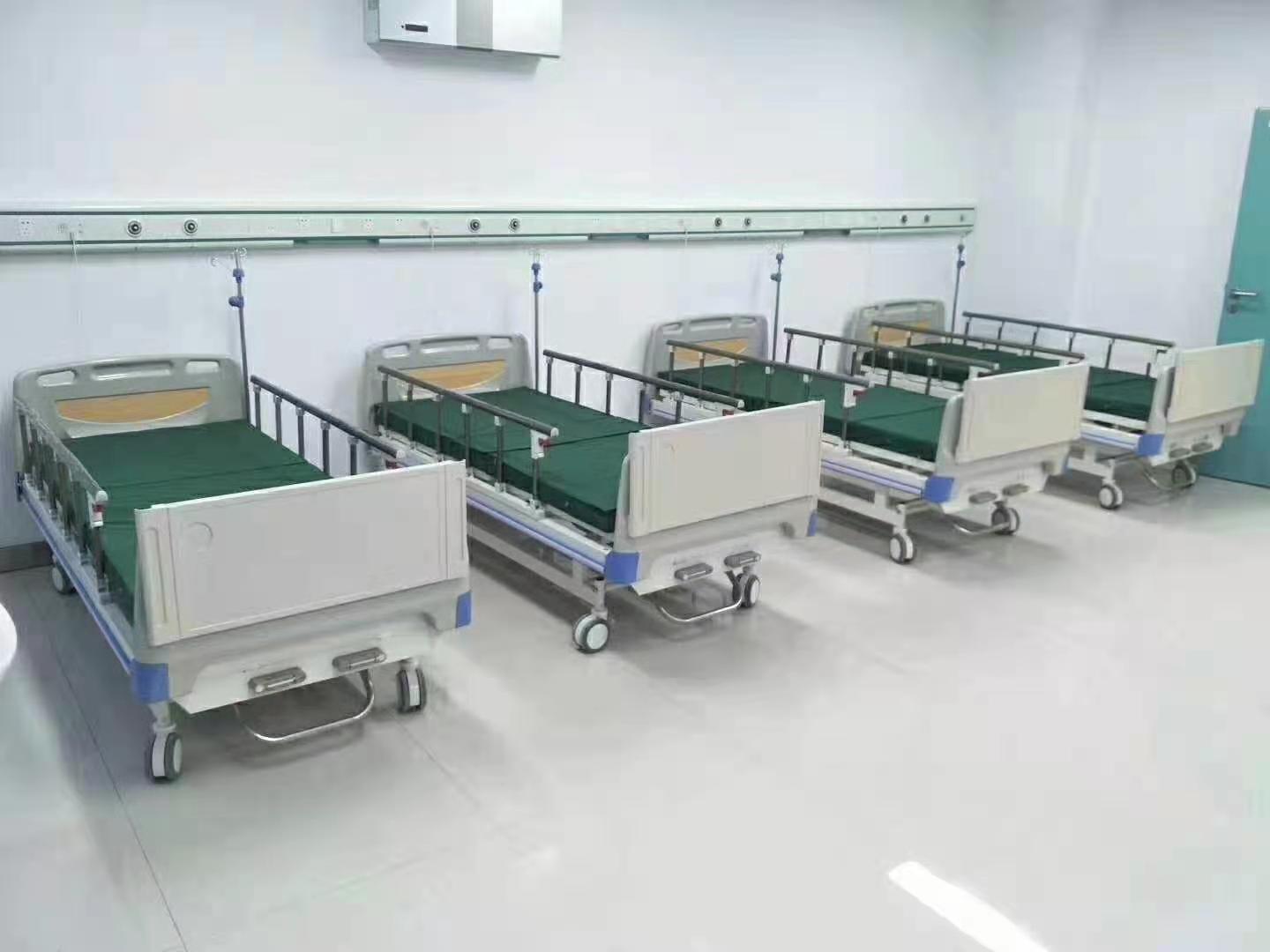
Manual beds use a hand-crank system, typically two or three folding cranks at the foot of the bed. Each crank connects to a gear-and-screw assembly that raises or lowers the back section, knee section, or overall height. A full adjustment requires 10 to 20 complete rotations per function. No electricity, no motors, no circuit boards. The mechanism is purely mechanical, which makes it extremely durable but physically demanding for staff.
Semi-electric beds split the workload. Electric motors handle the back and knee adjustments, the two functions patients request most frequently. Height adjustment, which nurses typically perform less often, remains manual via a crank or hydraulic pump. This hybrid approach delivers most of the convenience of a fully electric bed at a significantly lower price point.
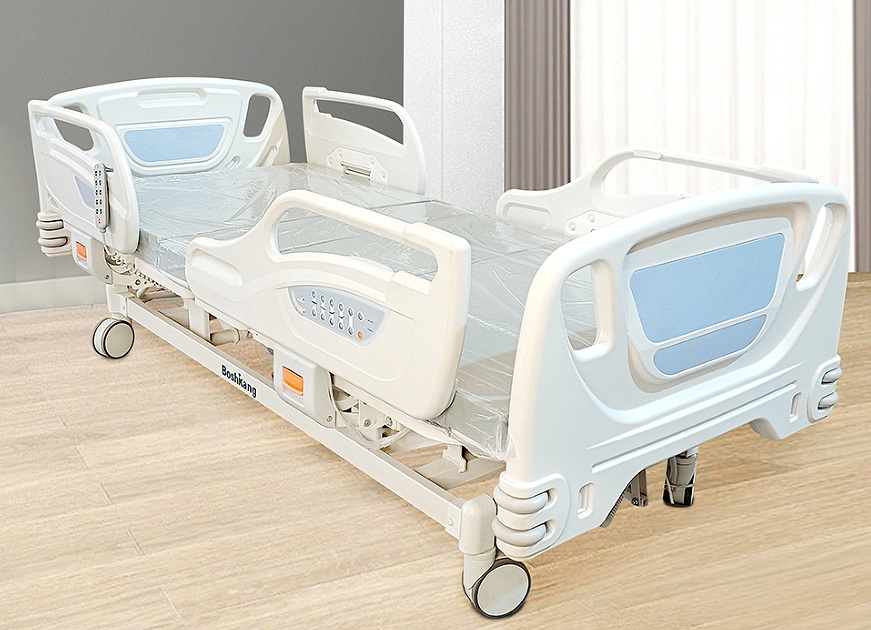
Fully electric beds motorize all three axes: back, knee, and height. A handheld pendant or integrated control panel lets the patient or nurse reposition the bed with a button press. Modern units use linear actuators rated for 10,000-plus cycles, and many include battery backup for 8 to 12 hours of cordless operation.
In my experience across 60-plus facility projects, the single biggest procurement mistake is buying one bed type for the entire hospital. ICU nurses need fully electric. General ward staff can manage semi-electric. Outpatient and day-surgery recovery areas often do fine with manual. Match the bed to the department, not to the budget line.
Feature and Function Comparison
The table below summarizes the core differences that matter in daily clinical use. I have included the parameters that procurement committees ask about most often.
| Parameter | Manual Bed | Semi-Electric Bed | Fully Electric Bed |
|---|---|---|---|
| Back/knee adjustment | Hand crank | Electric motor | Electric motor |
| Height adjustment | Hand crank | Hand crank / hydraulic | Electric motor |
| Patient self-adjustment | Not possible | Back/knee only | All functions |
| Power requirement | None | AC mains (partial) | AC mains + battery backup |
| Typical battery life | N/A | N/A (height is manual) | 8-12 hours |
| Weight capacity | Up to 250 kg | Up to 250 kg | Up to 300+ kg |
| Maintenance complexity | Low (grease cranks annually) | Moderate | Higher (actuators, PCB, battery) |
| Relative unit cost | $ (baseline) | $$ (1.5-2x manual) | $$$ (2.5-4x manual) |

Clinical Scenarios: Which Department Needs Which Bed
The manual vs electric hospital bed question becomes much easier to answer when you map it to specific clinical scenarios rather than treating the hospital as a monolith.
- ICU and CCU: Fully electric is non-negotiable. Nurses reposition critically ill patients 8 to 12 times per shift for pressure ulcer prevention, ventilator alignment, and hemodynamic management. A manual crank in an ICU is a patient safety risk and a staff injury waiting to happen.
- Post-surgical recovery (PACU): Fully electric preferred. Patients emerging from anesthesia need rapid Trendelenburg or reverse Trendelenburg positioning. Speed matters, and a nurse cannot waste 30 seconds cranking.
- General medical wards: Semi-electric is the sweet spot. Patients adjust their own backrest for meals and reading. Nurses handle height changes a few times per shift, which is manageable with a manual crank.
- Long-term care and rehabilitation: Semi-electric or fully electric depending on patient mobility. If patients can operate a pendant independently, fully electric preserves dignity and reduces nursing calls.
- Outpatient and day-surgery units: Manual beds work well. Patients are mobile, stays are short, and repositioning frequency is low. The cost savings free up budget for other equipment.
- Emergency and triage areas: Semi-electric or fully electric. Rapid positioning for trauma assessment and resuscitation demands speed that manual cranks cannot deliver.
A hospital in Lagos once told me they bought 300 fully electric beds for every ward, including outpatient. Within 18 months, 40 percent of the motorized units in low-acuity areas had electrical faults from dust and humidity, and the repair backlog exceeded six months. A mixed fleet would have saved them both money and downtime.
Power Infrastructure and Battery Considerations
This is the section most procurement guides skip, and it is where real-world projects succeed or fail. Before ordering a single electric bed, audit your power infrastructure honestly.
- Voltage stability: Electric bed actuators and control boards are sensitive to voltage fluctuations. If your facility experiences swings beyond plus or minus 10 percent of nominal voltage, invest in voltage stabilizers or specify beds with wide-range power supplies (100-240V AC, 50/60 Hz).
- Outlet availability: Each electric bed needs a dedicated grounded outlet near the headwall. In older wards, outlet density may be insufficient. Budget for electrical upgrades before bed delivery, not after.
- Battery backup: Fully electric beds with integrated batteries provide 8 to 12 hours of operation during power outages. Verify the battery chemistry (lithium-ion preferred over lead-acid for cycle life) and whether the battery is field-replaceable without tools.
- Generator switchover time: If your backup generator takes 15 to 30 seconds to engage, the bed battery bridges that gap. Confirm the bed can resume full function immediately after power restoration without a manual reset.
- Regions with unreliable grids: For facilities in areas with frequent brownouts or no generator backup, semi-electric beds offer a pragmatic compromise. The critical functions (back and knee) run on battery-capable motors, while height remains mechanical and always available.

Total Cost of Ownership: Beyond the Purchase Price
The sticker price of a manual bed is attractive, but it tells you almost nothing about what the bed will cost over its service life. A proper hospital bed total cost of ownership analysis must include maintenance labor, consumable parts, staff injury costs, and energy consumption.
Consider a 50-bed ward over 10 years. Manual beds have near-zero maintenance cost beyond annual greasing of crank mechanisms, but they generate measurable staff injury costs. Studies on nursing ergonomics consistently show that repetitive cranking contributes to musculoskeletal disorders in the lower back and shoulders. If each crank adjustment takes 20 seconds and a nurse performs 15 adjustments per shift, that is five minutes of repetitive motion per patient per shift, multiplied across 50 beds and three shifts.
Electric beds eliminate that physical burden but introduce maintenance line items: actuator replacement every 5 to 7 years, control board diagnostics, battery replacement every 3 to 5 years, and periodic electrical safety testing per IEC 60601-1. Budget approximately 3 to 5 percent of the unit purchase price annually for electric bed maintenance.
- Manual bed 10-year TCO: Purchase price + minimal maintenance + potential staff injury costs + lower patient satisfaction scores
- Semi-electric bed 10-year TCO: Purchase price (1.5-2x manual) + moderate maintenance (2 motors) + reduced injury risk + improved patient experience
- Fully electric bed 10-year TCO: Purchase price (2.5-4x manual) + higher maintenance (3 motors, PCB, battery) + lowest injury risk + highest patient autonomy
For a detailed breakdown of how to model these costs for your specific facility, our hospital bed procurement checklist includes a TCO worksheet you can adapt to your local labor and energy rates.

Safety Standards and Compliance Requirements
All hospital beds, regardless of power type, must comply with international safety standards. The most important standard to know is IEC 80601-2-52:2026, published in May 2026, which supersedes the earlier IEC 60601-2-52:2009+AMD1:2015. This new edition explicitly covers both electrical and non-electrical (manual) medical beds for adults, aligning with the IEC 60601-1:2010 general safety framework plus its amendments.
Key compliance points to verify during procurement:
- Entrapment prevention: IEC 80601-2-52 specifies test tools and clearance dimensions to prevent patient entrapment in side rails, headboard gaps, and mattress platform openings. This applies to all bed types.
- Stability testing: Lateral and longitudinal stability tests under safe working load conditions. The bed must not tip at maximum elevation with the specified load distribution.
- Side rail strength: Force application tests on side rails to ensure they withstand patient weight without deformation or failure.
- Electrical safety (electric beds only): Earth continuity, insulation resistance, dielectric strength, and leakage current per IEC 60601-1. Battery systems must meet additional requirements for thermal runaway prevention.
- EMC compliance: Electric beds must pass electromagnetic compatibility testing to ensure they neither emit nor are susceptible to interference from other medical devices in the ward.
In the United States, the FDA classifies AC-powered adjustable hospital beds as Class II devices (product code FNL) and manual beds as Class I (product code FNJ). For EU market access, all bed types fall under MDR 2017/745 and require CE marking through a notified body. Always request the manufacturer test reports and verify the notified body number against the NANDO database before signing a purchase order.
One often-overlooked compliance detail: the new IEC 80601-2-52:2026 standard introduces updated entrapment test tools and revised clearance measurements around side rails and mattress platform perimeters. If you are replacing beds that were certified under the older IEC 60601-2-52:2009 edition, verify that your new procurement meets the 2026 revision requirements. The FDA transition period for declarations of conformity to the older edition expires in July 2026, meaning any new submissions to the FDA must reference the updated standard. For hospitals in markets that follow CE/MDR pathways, the harmonized standard list under MDR will align with the new IEC edition within the coming regulatory cycle.
Procurement and Acceptance Inspection Checklist
Once you have selected the right power type mix for your facility, the final step is writing acceptance criteria that protect you from substandard deliveries. Here is the inspection protocol I recommend for every bed shipment, whether manual or electric:
- Visual inspection: Check weld seams, surface finish (epoxy powder coating adhesion), and absence of sharp edges or burrs on all patient-accessible surfaces.
- Functional test (manual beds): Operate each crank through full range of motion. Verify smooth engagement, no grinding, and positive locking at all positions.
- Functional test (electric beds): Run all motorized functions through 10 complete cycles. Measure adjustment speed, noise level (should be below 50 dB), and verify pendant response time under 1 second.
- Load test: Apply 1.5 times the rated safe working load for 30 minutes. Check for structural deformation, actuator drift, or brake slippage.
- Battery test (electric beds): Disconnect mains power and verify full function on battery. Measure runtime under load until low-battery warning activates.
- Electrical safety test: Earth continuity below 0.1 ohm, insulation resistance above 2 megaohm, and patient leakage current below 100 microamps.
- Documentation: Verify CE/ISO certificates, IEC 80601-2-52 test reports, user manuals in local language, and spare parts list with ordering codes.

Conclusion
The manual vs electric hospital bed decision is not a binary choice. It is a spectrum, and the optimal point on that spectrum shifts from department to department, from ward to ward, and from country to country. Fully electric beds deliver unmatched clinical efficiency and patient autonomy in high-acuity settings. Semi-electric beds offer the best value for general wards where patients benefit from self-adjustment but do not need powered height changes. Manual beds remain a reliable, cost-effective solution for low-acuity areas and facilities with limited power infrastructure.
The key is to resist the temptation of a one-size-fits-all procurement. Map your clinical needs by department, audit your power infrastructure honestly, model the 10-year total cost of ownership, and write acceptance criteria that hold your supplier accountable. Standardize on one or two manufacturers where possible to simplify training, spare parts management, and warranty administration across your bed fleet.
If you need guidance on specifying the right bed configuration for your facility, our engineering team can help you build a department-by-department bed plan that balances clinical performance, infrastructure reality, and budget constraints. We manufacture manual, semi-electric, and fully electric hospital beds to IEC 80601-2-52 and ISO 13485 standards, with OEM customization available for branded procurement programs.
Frequently Asked Questions
What is the main difference between a manual and an electric hospital bed?
The core difference is the adjustment mechanism. Manual beds use hand cranks that require physical effort from staff to reposition the back, knee, and height sections. Electric beds use motorized actuators controlled by a pendant or panel, allowing effortless repositioning at the push of a button. This affects caregiver workload, patient independence, and clinical response speed.
Are semi-electric hospital beds worth the extra cost over manual beds?
For most general wards, yes. Semi-electric beds motorize the two functions patients use most (back and knee adjustment) while keeping height manual. This gives patients independence for comfort positioning without the full cost of a three-motor system. The price premium over manual is typically 1.5 to 2 times, but the reduction in nurse physical strain and improvement in patient satisfaction justify the investment in medium-to-high occupancy wards.
How long does the battery last on a fully electric hospital bed?
Most modern fully electric hospital beds provide 8 to 12 hours of battery operation on a full charge, sufficient to bridge typical power outages and generator switchover periods. Battery life depends on usage frequency and load. Lithium-ion battery packs are preferred for their longer cycle life and lighter weight compared to older lead-acid systems. Always verify that the battery is field-replaceable to avoid sending the entire bed for service.
Which safety standard applies to hospital beds in 2026?
The current international standard is IEC 80601-2-52:2026, published in May 2026, which covers basic safety and essential performance of medical beds for adults. It supersedes IEC 60601-2-52:2009+AMD1:2015 and applies to both electrical and manual beds. For EU market access, beds must also comply with MDR 2017/745 and carry CE marking. In the US, the FDA recognizes IEC 60601-2-52 Edition 1.1 as a consensus standard for premarket submissions.
Can I mix manual and electric beds in the same hospital?
Absolutely, and most well-planned facilities do exactly this. ICU and post-anesthesia units benefit from fully electric beds, general wards work well with semi-electric models, and outpatient or day-surgery areas can use manual beds effectively. A mixed fleet optimizes your capital budget while ensuring each department gets the functionality it actually needs. The key is standardizing on one or two manufacturers to simplify spare parts inventory and staff training.
You May Also Like...

Hospital Bed Motor Troubleshooting: 3 Checks for Slow Movement
When you’re searching for electric hospital bed motor troubleshooting, the first thing to know is...

Hospital Bed Dimensions and Ward Layout: A Planning Guide for Safer, Compliant Wards
Standard hospital bed dimensions, bed spacing, corridor widths, and area-per-bed ratios explained from the manufacturer's...

Hospital Bed Positioning Features: A Complete Guide to Trendelenburg, CPR, and Therapeutic Positioning
A detailed breakdown of hospital bed positioning features including Trendelenburg, reverse Trendelenburg, CPR release, backrest...