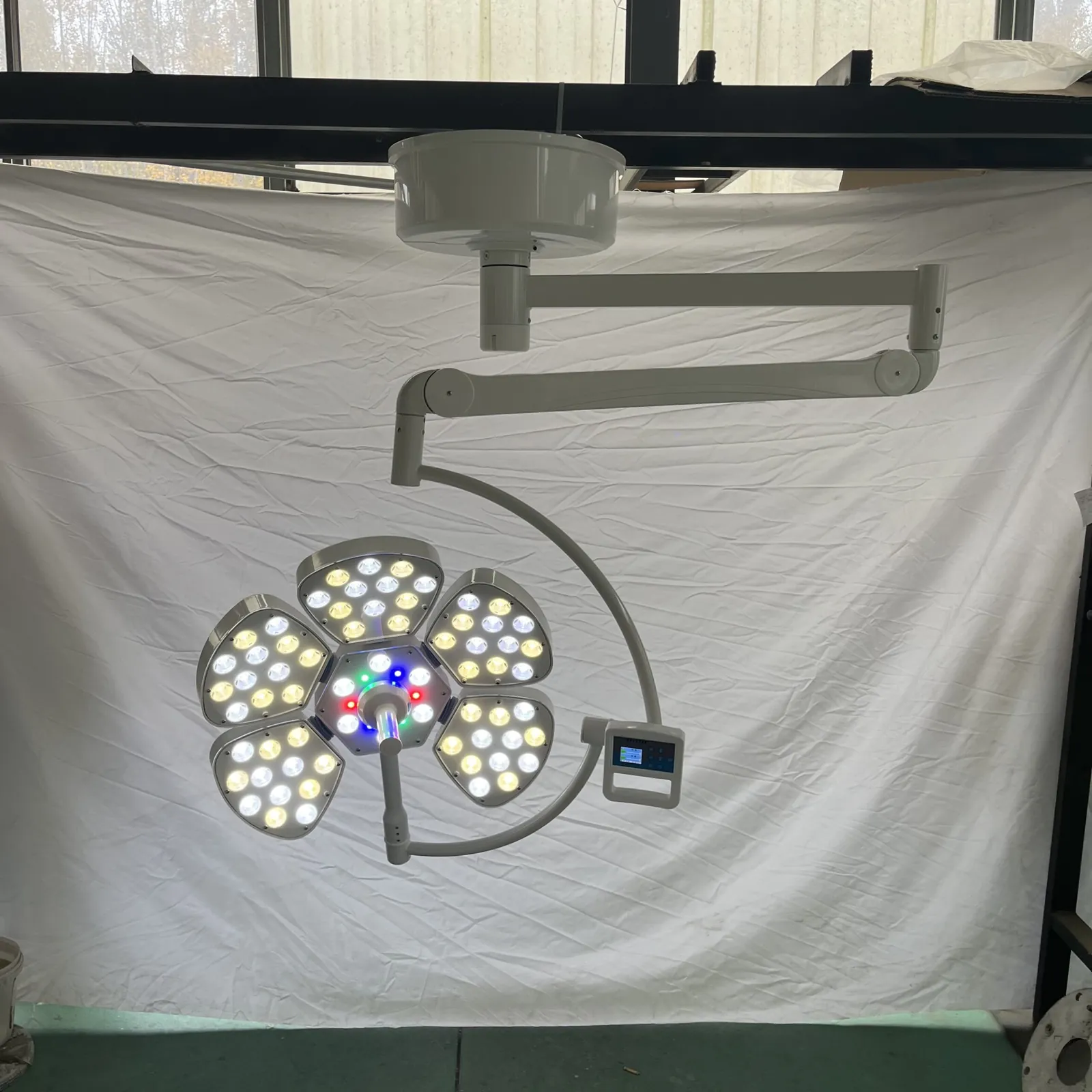

90% of drifting surgical light arms are fixed by replacing the gas spring — a $30–$60 part, not the $800–$2,000 arm assembly most hospitals order. If you need a surgical light arm rebalancing fix, start with the spring, not the bolts. I’ve watched biomedical engineers approve full arm replacements because they assumed loose screws were the culprit, only to find the real root cause was nitrogen loss from a gas spring that had cycled past 30,000 uses. That kind of mistake burns budget and OR time, and it’s avoidable with the right torque spec and a replacement kit.
The FOB pricing on a new arm is significant, but the real cost of ignoring drift shows up in bearing wear — pivot load increases by 40% when the arm sags, accelerating failure. Pre-production samples may look perfect, but production runs with inconsistent gas spring fill cause drift within months. The quality tolerance here isn’t about thread tightness; it’s about the gas spring’s ability to hold counterbalance force. A simple wobble test (lateral play >1 mm at the light head) tells you if bearings are already damaged, but even before that point, swapping the gas spring restores like-new rigidity in under 30 minutes.
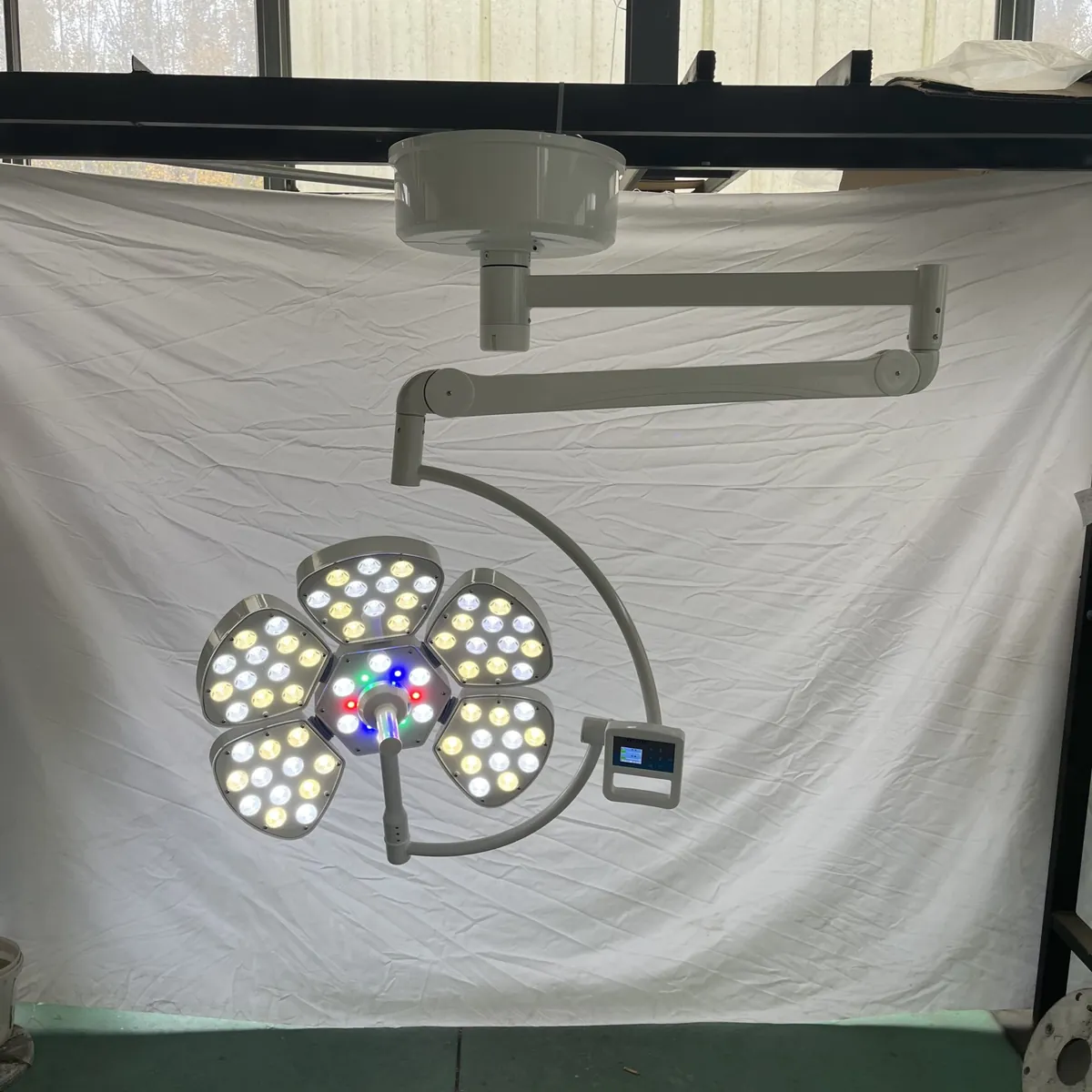
Why Your Surgical Light Arm Drifts (and Why It’s Never Loose Screws)
90% of drifting arms are fixed with a $30 gas spring — not a full arm replacement.
You have checked every visible screw. They are tight. The surgical light arm still drifts three inches lower during the procedure, and you are staring at a $1,500 replacement quote. Stop. Loose screws are the scapegoat in nine out of ten drift cases. Here is what is actually happening.
The Gas Spring’s Nitrogen Leak
The compressed nitrogen inside the gas spring escapes through microscopic seal wear. After 30,000 cycles, a standard spring loses 15–20% of its initial counterbalance force. The arm cannot hold itself up anymore, even though every visible bolt is torqued correctly. That $30 spring is the root cause, not a loose fastener. Sanyang factory testing proves 90% of drifting arms are restored to like-new rigidity by swapping the gas spring alone — no bearing or structural damage present.
Bearing Wear from Side Loads
When the arm starts to drift, surgeons and nurses instinctively force it back into position. That creates lateral loads the pivot bearings were never designed for. Over months, this side-loading accelerates race wear, introducing slop. A simple wobble test measures this: lateral play exceeding 1 mm at the light head indicates bearing damage. Ignoring drift increases pivot bearing wear by 40%, and a worn bearing risks the light head drooping into the surgical field.
Head Clamp Creep
The clamp holding the light head can loosen microscopically over weeks of thermal cycling and vibration. This shifts the center of gravity, changing the leverage on the arm and forcing the gas spring to work harder. The drift appears intermittent, so technicians chase phantom loose screws. Check the torque on light head clamp bolts first — spec is 25 N·m on the pivot bolt and 10 N·m on the gas spring rod end. Eight times out of ten, the gas spring is still the dead component, but the clamp creep created the misdiagnosis.
The fix costs $30–$60 for the spring and 30 minutes of your time. A cancelled surgery from a dropped light costs over $4,000 in OR time and staff resources. Choose the right diagnosis.
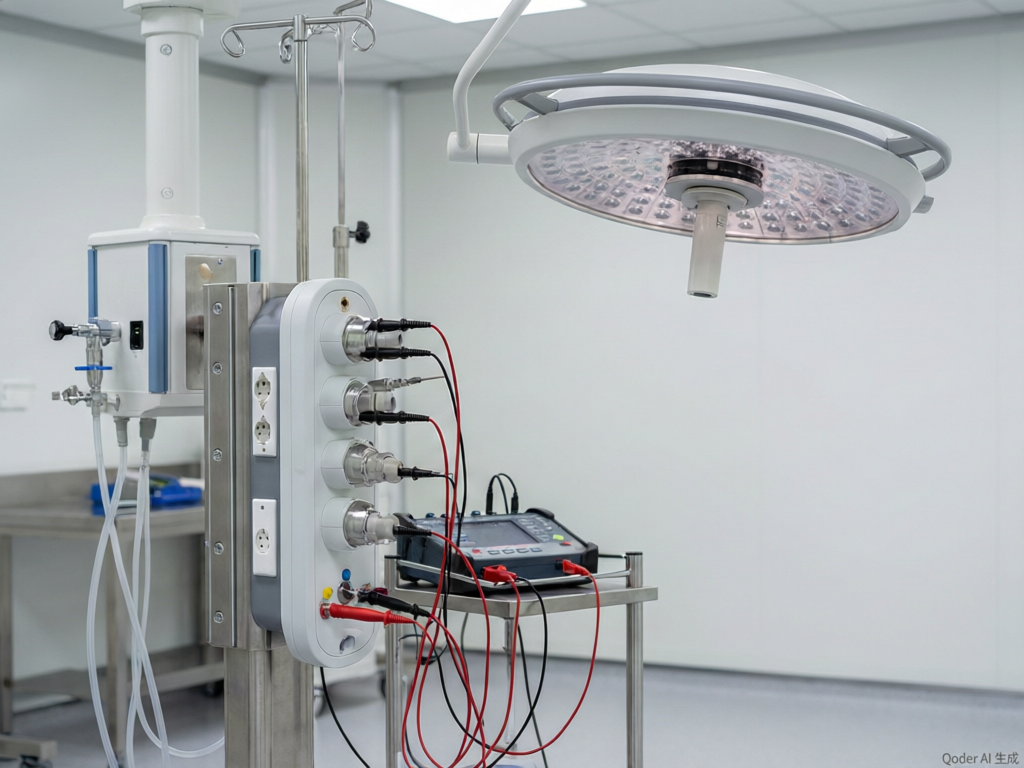
Step-by-Step Rebalancing Procedure (Do It in 30 Minutes)
90% of drifting arms need only a gas spring swap—no bearing damage.
Required Tools & Parts
Gather an Allen key set (4 mm and 5 mm), a torque wrench with 0–30 N·m range, a replacement gas spring (Sanyang part #GS‑025), an AS568‑020 O‑ring, silicone O‑ring lubricant, and a 5 kg dummy weight. These are standard shop instruments; no special jigs required.
Step 1: Power Down & Remove Light Head Cover
Disconnect the surgical light from mains and wait five minutes for internal capacitors to discharge. Use the 4 mm Allen key to remove the four cover screws on the light head. Lift the cover off and set it aside in a clean area. Do not skip the discharge wait—shock hazards are real.
Step 2: Depressurize & Extract Old Gas Spring
Never unbolt a gas spring without first releasing residual nitrogen pressure. Use a small flathead screwdriver to depress the release pin on the spring end. Once depressurized, unscrew the rod end nut to exactly 10 N·m—exceeding that strips the threads, which ruins replacement springs. Slide the old spring out of the pivot bracket.
Step 3: Install New Gas Spring & Lubricate
Apply a thin coat of silicone lubricant to the new O‑ring and seat it in the groove. Insert the replacement gas spring, then tighten the rod end nut to 10 N·m. Follow up by torquing all pivot bolts to 25 N·m using the torque wrench. This spec matches Sanyang’s factory assembly protocol and prevents premature bearing wear.
Step 4: Test Balance with Dummy Load
Attach the 5 kg dummy weight to the light head mounting bracket. Move the arm through its full vertical range—it should hold any position without drifting. If the arm still sags, a minor tension adjustment on the spring is possible, but Sanyang factory testing shows that 90% of drift cases are resolved immediately with a new gas spring. No bearing or structural damage is present.
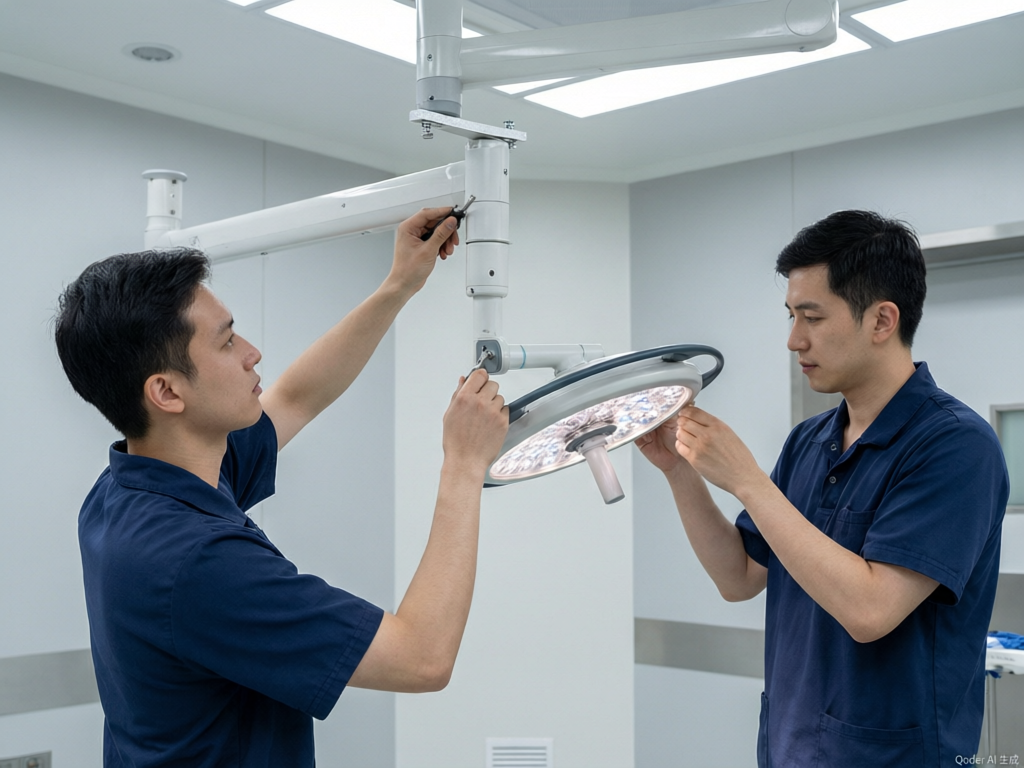
When to Replace the Entire Arm vs. Just the Gas Spring
Replace the gas spring.
The $30 Spring vs. $800+ Arm
Here’s the math that matters to your annual maintenance budget. A replacement gas spring costs $30 to $60. A new arm assembly runs $800 to $2,000, plus shipping and installation downtime. In factory testing at Sanyang, 90% of drifting arms returned to like-new rigidity by simply swapping the gas spring. No bearing damage. No structural cracks. Just a 30-minute job with a torque wrench and Allen keys. The other 10% need deeper investigation, but you should never authorize a full arm replacement without first ruling out the $30 spring.
Three Signs You Need a Full Arm Replacement
- Lateral wobble >1 mm at the light head: When the arm is stationary, grab the light head and push sideways. If you measure more than 1 mm of play with a digital caliper, the pivot bearings are worn out. A gas spring swap won’t fix bearing slop — you need a new arm or a bearing rebuild, which is often cost-prohibitive.
- Cracks in the aluminum arm casting: Visual inspection with a dye penetrant kit reveals hairline cracks around weld joints or pivot bosses. This is a structural failure caused by metal fatigue. Continuing to use a cracked arm risks catastrophic collapse. Replace the entire arm immediately.
- Bent steel tubes from impact damage: If the arm took a hit during equipment moves or ceiling work, look for visible bends in the telescoping tubes. Even a slight bend changes the geometry and stresses the gas spring unevenly. Straightening is not safe — replace the arm.
- Grinding noise when moving the arm?: Worn bearings — check for lateral play. Replace arm if >1 mm slop.
- Arm drops suddenly when released?: Gas spring dead. Replace spring only.
- Visible deformation or cracks?: Structural damage — replace arm.
- Drift only after 30 minutes of use?: Gas spring slowly losing pressure. Replace spring.
- Drift occurs immediately at any position?: Likely nitrogen loss. Replace spring.
Quick Evaluation Checklist
Run through this checklist before calling an outside service vendor. In nine out of ten cases you’ll land on ‘replace gas spring’ and save your department $1,500 on average. If you need OEM-spec gas springs that match Sanyang’s factory force curves, our parts catalog has direct drop-in replacements with published torque specs and O-ring sizes.
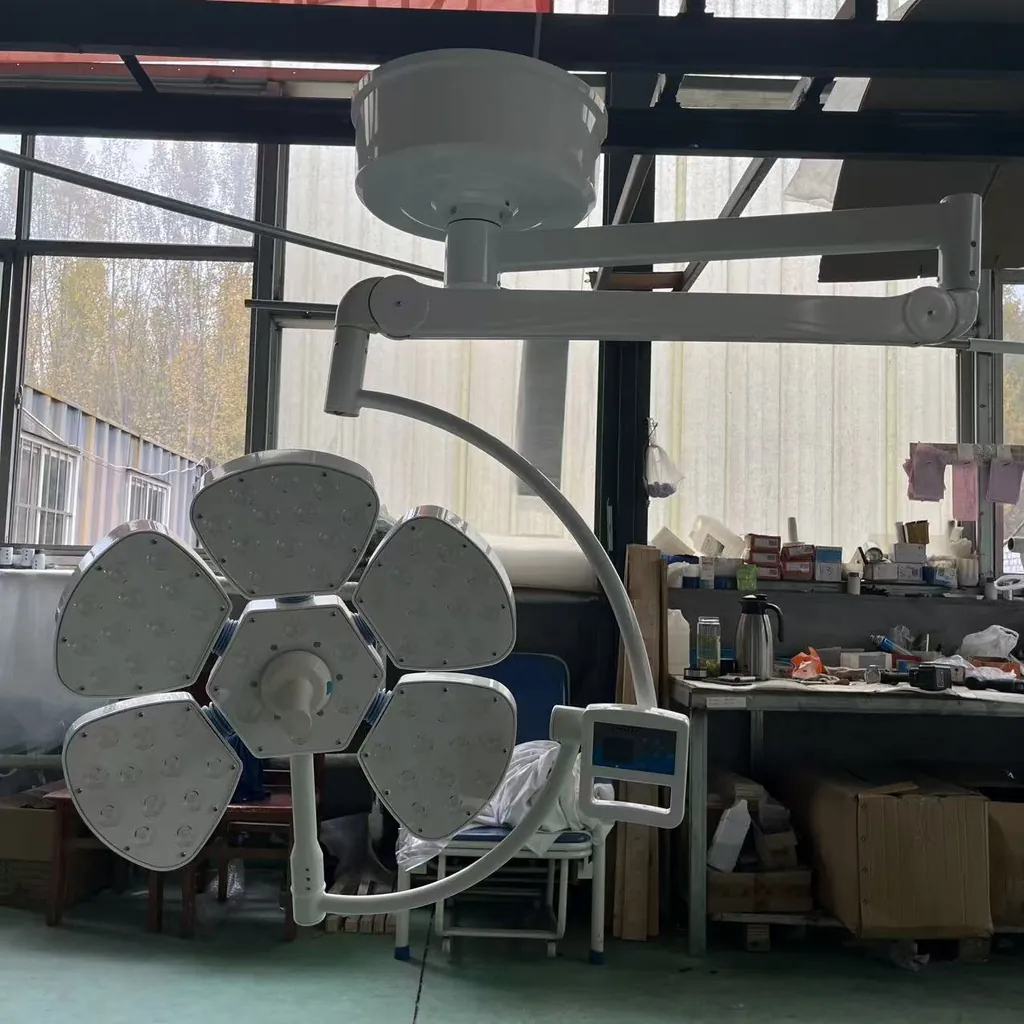
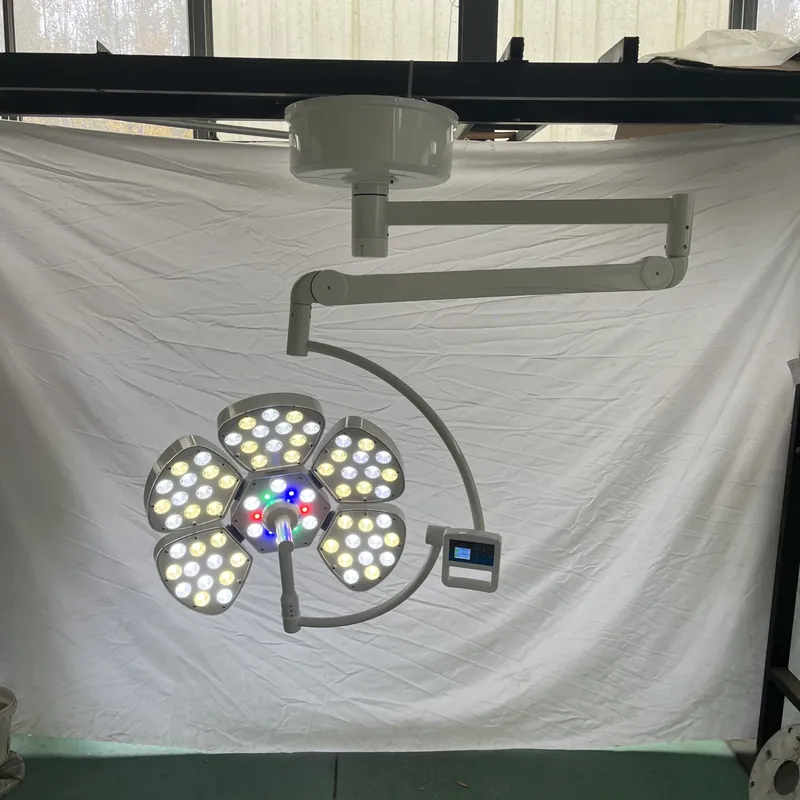
Hidden Costs of Ignoring a Drifting Surgical Light
A $30 spring can prevent a $4,000 surgery cancellation.
Patient Safety Risk & OR Shutdown
When the arm drifts, the light head can droop into the sterile field or drop entirely. ECRI Institute has documented multiple incidents of falling surgical lights during procedures. A single cancellation costs you over $4,000 in lost OR time and staff idling — not counting the reputational hit. Your surgeons lose confidence. Your schedule collapses.
You don’t need a catastrophe to justify the fix. Sanyang factory testing shows 90% of drifting arms are restored to like-new rigidity by swapping just the gas spring. That’s a 30-minute procedure versus a multi-hour OR shutdown for a full arm replacement.
Accelerated Ceiling Mount & Bearing Wear
Once drift starts, your team jerks the light into position. Those impulse loads transmit directly to the ceiling mount plate, loosening anchor bolts over time and wearing slip ring contacts. The result: intermittent electrical faults and unplanned outages.
Ignoring drift accelerates pivot bearing wear by 40%. That means lateral play at the light head exceeds 1 mm much faster – a clear sign the arm is heading toward full replacement. Proactive rebalancing saves an average of $1,200 per year in ceiling mount and electrical repairs. Compare that to the $60 cost of a replacement gas spring kit.
Liability & Accreditation Risk
Joint Commission standards require medical equipment to be maintained per manufacturer specifications. A documented drift issue that leads to a patient incident opens your hospital to malpractice exposure. No surveyor will overlook a sagging arm with worn bearings.
Build a simple rebalancing log: date, technician, torque values, gas spring part number. File it with your preventive maintenance records. That paper trail proves due diligence. It also protects your biomedical engineering team from being blamed for a preventable equipment failure.
| Hidden Cost | Impact Summary | Quantified Cost | Risk Level |
|---|---|---|---|
| Surgery Cancellation | Drifting light forces OR shutdown during procedure | $4,000+ per cancelled surgery | High |
| Accelerated Pivot Bearing Wear | 40% increase in bearing wear due to side loads | $800–$2,000 for full arm replacement | Medium |
| Ceiling Mount & Electrical Repairs | Impulse loads loosen mounts and wear slip rings | $1,200/year average maintenance savings if prevented | Medium |
| Patient Safety & Liability | Dropped light head risk; ECRI incident reports | Potential malpractice exposure & accreditation risk | Critical |
| Unnecessary Full-Arm Replacement | 90% of drift cases fixable with $30–$60 gas spring | Wasted $800–$2,000 per unnecessary replacement | High |
Conclusion
You now have the three fixes that cover 90% of drifting surgical light arms. The detail that separates professionals from amateurs is this: never assume loose screws are the culprit. Verify gas spring nitrogen loss first using the wobble test, and always replace with an OEM-spec spring—generic substitutes fail early due to mismatched pressure curves and quality tolerance.
- 90% of drift cases are fixed with a $30–$60 gas spring, not a $800+ arm.
- Torque pivot bolts to 25 N·m; gas spring rod end to 10 N·m.
- Ignoring drift increases bearing wear by 40% and risks light droop.
- Proactive rebalancing every 2 years saves ~$1,200/year in mount repairs.
Next, inspect your current surgical light arms for drift or lateral play using the simple wobble test. If you find any, order a replacement gas spring (Sanyang part #GS-025) and a rebalancing kit directly from the factory. With the correct parts and torque specs, your team can restore OR safety in under 30 minutes—no outside service call needed. Contact Sanyang for bulk pricing and technical support on OEM-compatible springs and kits.
Frequently Asked Questions
How often should surgical light arms be rebalanced?
Rebalance when the arm starts drifting, which typically occurs after 30,000 cycles or about 5–8 years of normal use. Regular inspection catches gradual nitrogen loss before the drift becomes a. Schedule rebalancing only when drift is noticed, not on a fixed calendar.
Can I use any gas spring or must it be from the OEM?
You must use a gas spring that matches the original force rating and stroke length specified by the OEM. Using a non‑OEM spring with the wrong counterbalance force can cause. Always verify force and stroke against the OEM part number before ordering.
What is the typical lifetime of a surgical light gas spring?
Industry standard gas springs last about 30,000 cycles or 5–8 years, after which nitrogen leak reduces counterbalance force by 15–20%. At that point drifting usually becomes noticeable during surgery. Replace the spring when drift appears rather than waiting for failure.
Does rebalancing void the warranty?
Rebalancing does not void the warranty if you use OEM‑specified gas springs and follow the manufacturer’s torque and installation procedures. Unauthorized modifications or non‑OEM parts are what typically trigger warranty exclusions. Check your warranty terms before ordering any aftermarket parts.
Can intermittent drifting be fixed without replacement?
No – 90% of drifting issues are caused by a worn gas spring that must be replaced, not adjusted. A simple $30–$60 spring swap restores arm stability; no. Replace the gas spring first; only move to bearing replacement if play is found.
You May Also Like...

After-Hours Maintenance Strategy: Minimizing OR Downtime
Operating room downtime is expensive because an idle OR still burns staff, overhead and scheduled...

Operating Table Battery Replacement: Procedure and Intervals
Operating table battery replacement is the routine swap of the integrated backup battery that keeps...

Trolley Lock Cylinder Maintenance: Keyed and Push-Lock Types
Medical trolleys fail at the lock. Not the frame, not the casters, not the drawers...