
Executive Summary
Confused about operating light vs examination light? This guide explains the IEC 60601-2-41 definition of a major surgical luminaire, the illuminance, color temperature, CRI, shadow dilution and depth-of-light differences that separate the two categories, where an examination light is the smarter buy, and the procurement pitfalls that catch hospital buyers every year.
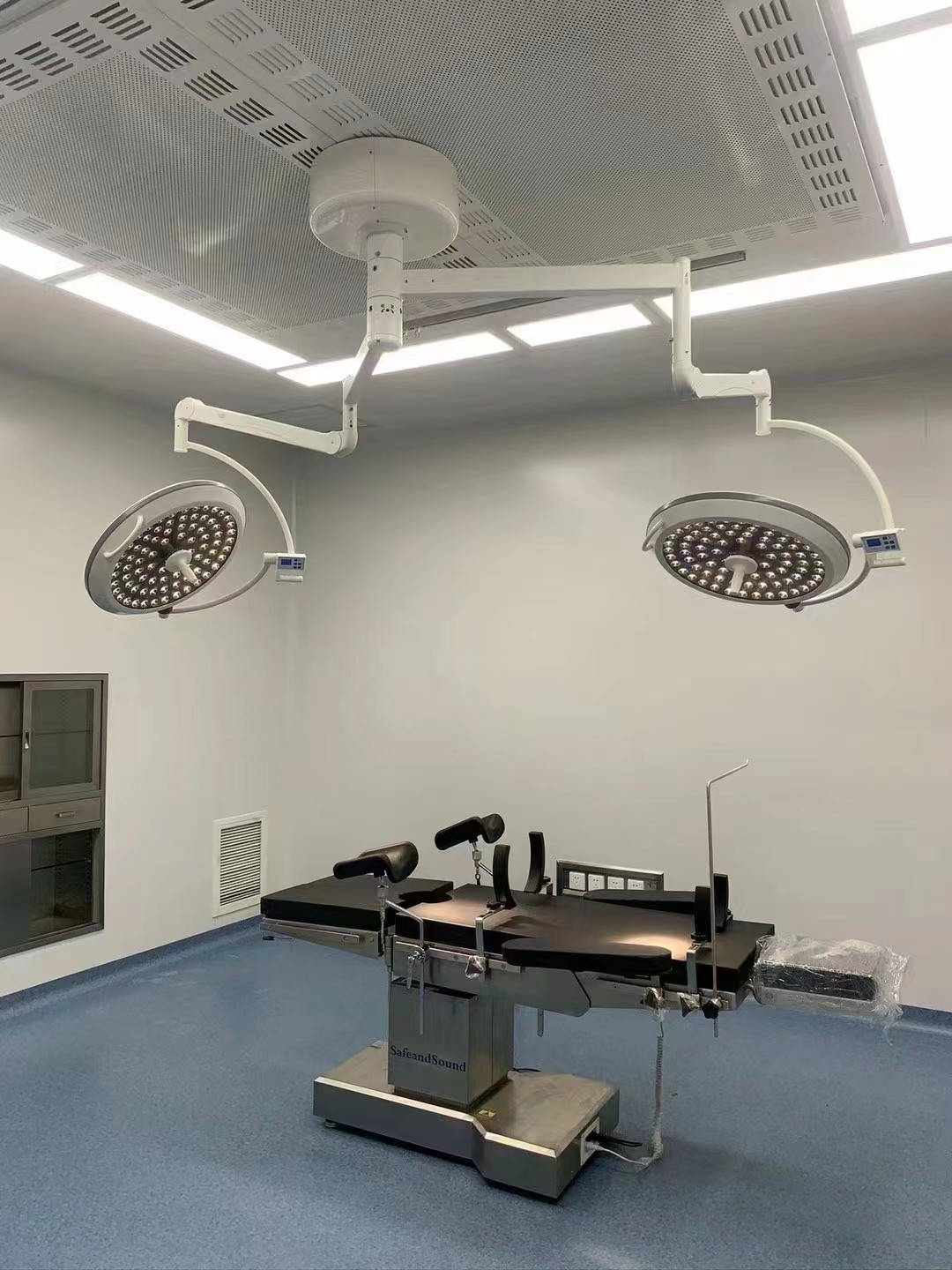
The most expensive lighting mistake I see in hospital procurement is not buying a cheap fixture — it is buying the wrong category of fixture. A purchasing manager once showed me two quotations that looked almost identical: both “LED medical lights,” both CE marked, both with impressive lux figures. One was a true surgical luminaire built to the major-surgery clauses of IEC 60601-2-41; the other was an examination light dressed up in surgical-looking language. His team nearly installed the examination unit over a cardiac operating table. The difference between operating light vs examination light is not a branding exercise — it is a clinical safety decision, and getting it wrong can stall accreditation or compromise a surgeon’s visibility.
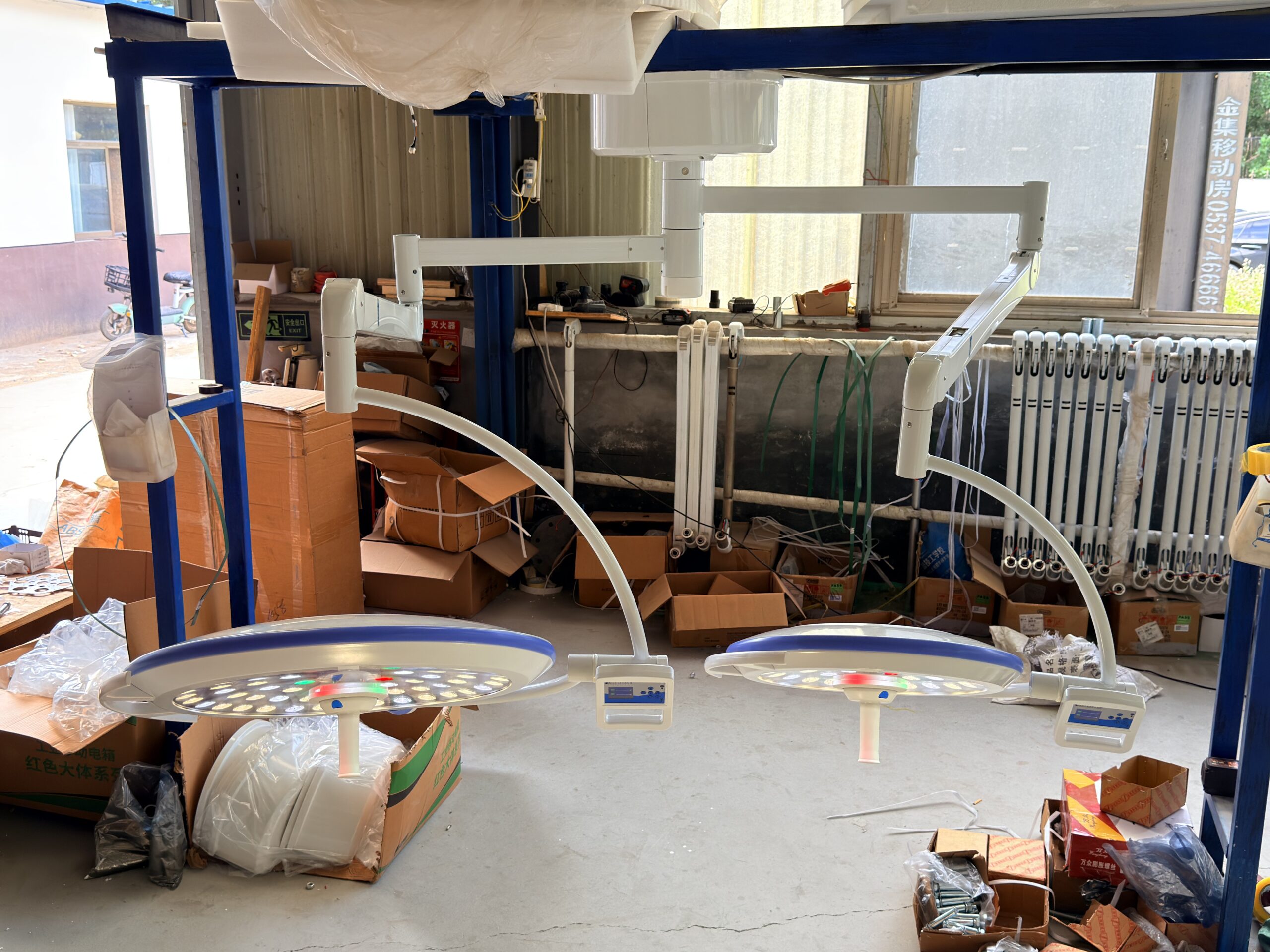
The confusion is understandable: from a distance, both products are bright white LED heads on an arm. But the engineering underneath — illuminance ceiling, color rendering, shadow dilution, depth of the light column, and behavior inside a laminar airflow field — is specified to very different levels. Browse Sanyang Medical’s surgical light range and you will see the two categories treated as distinct product families. This guide explains how the standard defines a major surgical luminaire, the optical numbers that separate the two categories, where an examination light is the smarter buy, and the procurement traps that catch buyers.
Why the Operating Light vs Examination Light Distinction Beats Price Every Time
Buyers naturally start with budget, but in medical lighting the category decision comes first and the price negotiation second, because the two fixture types are engineered for different clinical risk levels. A surgical luminaire keeps a deep, three-dimensional wound cavity evenly lit for hours, with hands and instruments constantly casting shadows into the field. An examination light illuminates a surface — skin, an ear canal, a dressing, a dental arch — for a shorter, lower-risk inspection.
When you buy an examination light expecting surgical performance, the failure is subtle: the cavity goes dark once the retractor is placed, the surgeon leans in and blocks the only light source, tissue planes look flat because red rendering is weak, and the team ends the day with eye strain. None of that shows up on a quotation. Conversely, buying a surgical luminaire for a routine consultation room means overspending on optics and ceiling work you will never use.
Match the fixture to the clinical risk of the procedure, not to the size of the room or the look of the brochure. The procedure decides the category; the category decides the spec.
There is also a regulatory dimension. An auditor reviewing an operating theatre will expect the luminaire over the table to meet major-surgical requirements; installing an examination unit there is a nonconformity waiting to be written. Getting the operating light vs examination light call right at specification is far cheaper than re-rigging a ceiling after commissioning.
How IEC 60601-2-41 Defines a Major Surgical Luminaire
The governing document is IEC 60601-2-41, the particular requirements for the basic safety and essential performance of surgical luminaires and luminaires for diagnosis. The current edition is IEC 60601-2-41:2021 (edition 3), read in the EU alongside the Medical Device Regulation (MDR 2017/745) when a fixture is CE marked as a medical device. The title is revealing: it groups “surgical luminaires” and “luminaires for diagnosis” together because they share a safety framework, then separates them by performance class.
The standard does not just say “be bright” — it defines a precise measurement geometry. Central illuminance is measured at a manufacturer-declared reference distance, and for surgical luminaires it is capped at the 160,000 lux ceiling to protect tissue from radiant exposure. It also defines the light field using two diameters: d10, where the field falls to 10 percent of the central value, and d50, where it falls to 50 percent. A key rule is that d50 must be at least half of d10; the closer d50 is to d10, the more homogeneous the field.
- Central illuminance (EC,Ref): the peak light level at the reference distance, measured with a luxmeter on the beam axis. Surgical luminaires are rated up to the 160,000 lux ceiling.
- Light field diameter d10 and d50: the usable width of the illuminated zone at the 10 percent and 50 percent fall-off points. The d50-to-d10 ratio tells you how even the field is.
- Depth of illumination (L1 + L2): measured above and below the focal point to where illuminance drops to 60 percent of center. This is the “column of light” that keeps a deep cavity lit.
- Shadow dilution: how well the fixture maintains illumination when part of the light source is blocked — the difference between a single-source lamp and a multi-source surgical head.
If a datasheet does not state d10, d50, and depth of illumination, you are probably not looking at a major surgical luminaire. Examination lights rarely publish those figures because they are not held to the same depth-of-light test.
This is the single most useful filter for a buyer. A genuine surgical luminaire datasheet reports central illuminance, light field diameter, and depth of illumination as a matched set; an examination light datasheet tends to lead with a single headline lux number and a color temperature, then stop. When comparing operating light vs examination light, ask for the full optical set: the supplier who can provide it is selling a surgical product, whatever the brochure says.
Illuminance, Color Temperature, and CRI: The Three Numbers That Separate the Two
Three optical parameters do most of the work: how much light there is (illuminance), what color it appears (correlated color temperature, or CCT), and how faithfully it renders tissue colors (the color rendering index, CRI or Ra). The values below are typical market ranges; always confirm the exact figures on a model’s datasheet, because a premium examination light can overlap an entry-level surgical unit on a single parameter.
Illuminance is measured in lux at the working distance, usually one meter. Surgical luminaires deliver a very high, adjustable central illuminance — commonly in the tens of thousands up to the 160,000 lux ceiling — because the surgeon must see fine vessels deep inside the body. Examination lights run far lower because they illuminate surfaces at shorter distances. More lux is not automatically better: the standard caps surgical illuminance to avoid heating and drying tissue.
| Parameter | Surgical Luminaire (Major Surgery) | Examination / Diagnostic Light | Why It Matters |
|---|---|---|---|
| Central illuminance | High and adjustable, up to the 160,000 lux ceiling at 1 m | Lower, typically a fraction of surgical levels | Deep cavities need more usable light at depth |
| Color temperature (CCT) | Often adjustable across roughly 3,500–5,000 K | Usually a fixed neutral white, around 3,500–4,500 K | Tunable white helps surgeons match tissue contrast |
| Color rendering (Ra / R9) | Ra typically 90 and above, with strong R9 (red) | Ra commonly in the 80s to low 90s | Accurate reds separate vessels from surrounding tissue |
| Light field (d10 / d50) | Larger, adjustable spot with tight d50-to-d10 ratio | Smaller, often fixed spot | A homogeneous field reduces repositioning |
| Depth of illumination (L1+L2) | Deep column of light for 3D cavities | Shallow, optimized for surfaces | Keeps the bottom of a wound lit without refocusing |
| Shadow dilution | Multi-source optics maintain light when partly blocked | Basic single-source or simple array | Surgeon’s head and hands constantly intrude |
| Typical mounting | Ceiling-mounted surgical arm, laminar-flow compatible | Wall, floor stand, or mobile base | Affects room structure and workflow |
Color temperature describes whether the white light looks warm or cool, measured in kelvin. Surgical luminaires frequently offer tunable white so a surgeon can shift toward a cooler tone for high-contrast vascular work or a warmer tone for general dissection. Examination lights usually ship with a single fixed CCT chosen to look neutral.
Color rendering is where the gap is most clinically meaningful. CRI (Ra) measures how faithfully a light reveals colors against a reference source, and the R9 value tracks deep red — the color of blood and perfused tissue. A surgical luminaire is engineered for high Ra and strong R9 so a surgeon can distinguish an artery from a vein and healthy tissue from compromised tissue; an examination light with a lower Ra renders those reds less distinctly. This is why color rendering degradation over a fixture’s life is taken so seriously in the theatre; read more in our guide to surgical light color rendering degradation.

Shadow Control, Depth of Light, and Heat: The Engineering You Cannot See
The optical numbers on a datasheet are only half the story; the other half is how the fixture behaves in a real, three-dimensional procedure. This is where surgical luminaires carry engineering that examination lights do not need — the part buyers most often overlook because it never appears as a headline figure.
Shadow dilution is the first. In an operating theatre, the surgeon’s head, shoulders, hands, and instruments are constantly moving between the light and the wound. A surgical luminaire uses multiple overlapping light sources and carefully aimed optics so that when one part of the head is blocked, the others still fill the field. An examination light, optimized for unobstructed surface inspection, does not invest in the same redundancy. The symptom of getting this wrong is a surgeon who keeps stopping to reposition the light.
Depth of illumination is the second. Surgery happens in a cavity, not on a flat surface. The standard’s L1 and L2 measurements describe how far above and below the focal point the light stays above 60 percent of its central value. A surgical luminaire throws a deep column of light so the bottom of a chest or abdominal cavity stays bright without constant refocusing, while an examination light is optimized for a shallow, surface-level field. A surgeon complaining that “the bottom is dark” is almost always facing a depth-of-light problem.
- Heat management: Surgical luminaires keep infrared radiant heat out of the beam so exposed tissue does not dry out and the surgeon’s head is not baked during a long case. Examination lights, working at lower levels, manage less thermal load.
- Laminar airflow compatibility: A ceiling-mounted surgical head sits inside the sterile field and must not disrupt the downward laminar airflow. Surgical housings are shaped and vented accordingly; examination fixtures are not designed for that environment.
- Spring-arm stability: Surgical arms must hold position precisely with one-handed adjustment and no drift, because the field cannot wander during dissection. Examination arms prioritize lighter, simpler positioning for frequent short moves.
- Cleanability and sealing: Surgical housings are built to withstand repeated aggressive cleaning and to shed contaminants, with sealed joints and smooth surfaces.
None of these features shows up as a single number you can compare in a brochure, which is why the operating light vs examination light decision rewards a conversation with the manufacturer rather than a spreadsheet evaluation. Ask how the fixture performs on shadow dilution, depth of light, and radiant heat. A surgical supplier will answer with test data; an examination supplier will pivot back to lux and price.
Where an Examination Light Is Actually the Right Choice
It would be a mistake to read this as “always buy the surgical light.” For many clinical spaces, an examination light is the correct, cost-effective, and more comfortable choice. The error is choosing one for a job that needs the other.
Examination lights excel wherever the task is surface-level, shorter, and lower in clinical risk: consultation and examination rooms, outpatient assessment, wound inspection and dressing changes, dermatology and general practice, dental and ENT examination, bedside procedures on wards, and minor procedure rooms that do not involve deep cavities. In these settings, a surgical luminaire would be overkill — too bright, too expensive, and demanding ceiling structure the room does not justify.

- Consultation and GP rooms: Surface examination of skin, throat, ears, and eyes. A neutral, comfortable white light is ideal.
- Wound care and dressing clinics: Inspection and dressing changes that do not require a deep column of light.
- Dental and ENT examination: Localized surface illumination, often on a mobile or wall arm for easy positioning.
- Bedside and ward procedures: Venous access, catheterization, and minor bedside tasks where a mobile examination light is wheeled in as needed.
- Minor procedure rooms: Suturing, incision and drainage, and biopsies that stay close to the surface. If the room occasionally handles deeper work, specify a higher-end procedure light rather than a full surgical head.
The grey zone is the minor procedure room and the emergency department’s resus bay, where procedures can start superficial and deepen. For those rooms, specify a high-performance procedure or “minor surgery” light with better depth of illumination and shadow dilution than a basic examination unit. When mapping a whole department, our overview of LED surgical light buying can help you place each fixture category in the right room.
Procurement Pitfalls: How Buyers Get Operating Light vs Examination Light Wrong
After years of watching lighting specifications cross my desk, the same mistakes recur. They are avoidable if you know to look for them. Here are the traps that most often lead a buyer to the wrong category.
- Trusting “surgical-style” marketing language. Words like “shadowless,” “OT,” and “operating” are not regulated claims. Verify the declared intended purpose and the standard clauses the fixture is tested to.
- Comparing only peak lux. Peak illuminance at one point says nothing about field homogeneity, depth of light, or shadow behavior. Ask for d10, d50, and L1+L2.
- Ignoring the intended-use statement. The manufacturer’s declared intended purpose determines the regulatory class and test levels. If the documentation says “for examination and diagnosis,” it is not a major surgical luminaire.
- Overlooking color rendering (R9). A fixture can post a respectable Ra while rendering reds poorly. For surgical use, insist on the R9 value, not just the average Ra.
- Forgetting the ceiling and the airflow. A surgical head needs structural support and must work inside laminar airflow. Buying the fixture without confirming the room’s mechanical and structural readiness causes costly retrofits.
- Skipping the certification scope. Confirm CE marking under MDR 2017/745 and an ISO 13485 quality system, and check that the certificate scope covers the luminaire model you are buying.
One scenario I see repeatedly is the distributor who buys on a low FOB price, only to discover at commissioning that the “operating light” was certified and tested as an examination unit. The room then fails accreditation, the ceiling must be reinforced or the fixture replaced, and the savings evaporate. The fix happens before the order: request the test report, the declared intended purpose, and the full optical datasheet, and have a biomedical engineer review them. An hour of document review prevents a five-figure retrofit.

A Practical Spec Checklist Before You Issue the Purchase Order
Here is the checklist I would run before signing for any medical lighting fixture. The point is to make the operating light vs examination light decision explicit and documented, so the fixture you receive matches the room it goes into.
- Step 1 — Classify the room by clinical risk. Decide whether the procedures are major surgery (deep cavities, higher risk if light fails) or examination and minor procedures (surface-level, lower risk). This single decision sets the category.
- Step 2 — Demand the full optical set. Central illuminance with the reference distance, d10 and d50, depth of illumination (L1+L2), CCT range, and Ra plus R9. A surgical luminaire supplier will provide all of these.
- Step 3 — Confirm the declared intended purpose. Read the manufacturer’s intended-use statement and the standard clauses cited in the test report. Match them to your room’s risk level.
- Step 4 — Verify certification scope. CE under MDR 2017/745, ISO 13485 quality system, and IEC 60601-2-41 test evidence covering the exact model. Cross-check the notified body and certificate validity.
- Step 5 — Check the room interface. Ceiling load capacity, laminar airflow compatibility, mounting type, and control integration. Confirm these before the fixture ships, not after.
- Step 6 — Plan for life-cycle performance. Ask how illuminance and color rendering hold up over the LED’s rated life, and what the maintenance and spare-parts plan looks like.
If you are fitting out an entire operating department rather than a single room, the same logic scales up: classify each room, then map a fixture category to each one. A turnkey partner can turn that classification into a complete lighting, pendant, and table layout. Sanyang Medical supports this department-level planning through our turnkey operating room solution, and you can review our manufacturing background and quality system on the about us page. When you are ready to validate a configuration, reach out through the contact page and our team will walk through your room classification and optical requirements.
Conclusion
The operating light vs examination light decision is not about which fixture is brighter on a brochure — it is about matching the fixture to the clinical risk of the procedure. IEC 60601-2-41 gives you the framework: a major surgical luminaire is held to demanding levels of central illuminance (capped at 160,000 lux), light field homogeneity (d10 and d50), depth of illumination (L1+L2), shadow dilution, color rendering, and thermal behavior, while an examination light meets a lighter set of obligations suited to surface-level inspection.
For buyers, the takeaway is to make the category decision explicit and verify it with documents, not adjectives. Demand the full optical set, read the declared intended purpose, confirm the certification scope, and check the room interface before you order. Do that, and you avoid the two costliest outcomes: installing an examination light where a surgical luminaire is required, or overspending on a surgical head in a room that only needs an examination unit. The right fixture fits the procedure — and a transparent manufacturer will help you prove it on paper.
Frequently Asked Questions
What is the main difference between an operating light and an examination light?
The main difference is the clinical risk level each is engineered for. An operating (surgical) light keeps a deep, three-dimensional wound cavity evenly lit for hours, with high adjustable illuminance, strong color rendering including deep red (R9), a deep column of light, and advanced shadow dilution. An examination light is designed for surface-level inspection and minor procedures at lower light levels. The category is set by the procedure, not by how bright the fixture looks.
How does IEC 60601-2-41 define a major surgical luminaire?
IEC 60601-2-41 is the particular safety and performance standard for surgical luminaires and luminaires for diagnosis. It reserves its strictest optical requirements for major-surgery use and defines measurable parameters such as central illuminance (capped at 160,000 lux), light field diameters d10 and d50, and depth of illumination L1+L2. A luminaire for diagnosis (examination light) is intended for examination and diagnosis and is held to lighter obligations.
Can I use an examination light for minor surgery?
For genuinely surface-level minor procedures such as suturing, biopsies, and dressing changes, a good examination or procedure light is appropriate and cost-effective. The grey zone is the room that occasionally handles deeper work; for those spaces, specify a higher-end procedure or minor-surgery light with better depth of illumination and shadow dilution than a basic examination unit. If the procedure involves a deep cavity or carries higher risk if lighting fails, you need a surgical luminaire.
Which specifications should I compare when buying?
Compare the full optical set rather than a single lux figure: central illuminance and its reference distance, light field diameters d10 and d50, depth of illumination (L1+L2), color temperature range, and color rendering (Ra and the deep-red R9 value). Then confirm the declared intended purpose, the IEC 60601-2-41 test evidence, CE marking under MDR 2017/745, ISO 13485 certification, and the room interface such as ceiling load and laminar airflow compatibility.
Why is color rendering (CRI) more important in a surgical light?
In surgery, distinguishing an artery from a vein and healthy tissue from compromised tissue depends on accurate color rendering, especially deep red, measured by the R9 value. Surgical luminaires are engineered for high Ra and strong R9 so tissue planes read clearly under bright illumination. Examination lights, used for surface inspection, typically run lower Ra because the task is less dependent on subtle red differentiation. Always check R9, not just the average Ra, for any fixture going over an operating table.
You May Also Like...

Bariatric OR Package: Table, Bed and Trolley Coordination
A bariatric OR package coordinates the operating table, the patient bed and the trolley for...

Lumen vs Lux: What These Surgical Light Units Mean
Lumen and lux are not the same thing. Lumen measures the total light a fixture...

Emergency Department Equipment for Trauma, Resuscitation and Triage
An emergency department is built around speed, and its equipment has to be ready the...