
The standard advice for OEM operating table customization is to lock down a pre-production sample before signing off. That advice is incomplete. I’ve seen too many distributors approve a flawless sample, only to find the mass production run has a completely different quality tolerance on the tabletop joints. The sample wasn’t the problem — the process control after sample approval was. When you’re buying FOB from a custom surgical table manufacturer in China, the gap between sample and production can eat your margin faster than any mold fabrication cost.
The real answer is to design the entire OEM operating table process steps from concept through first article inspection, not just the sample. In my team’s experience across 60+ projects in 15 countries, the average OEM electric OT table lead time from concept to first shipment is 90 to 120 days, depending on complexity. We can produce CE/IEC 60601 test samples within 45 days of design lock. That’s the timeline to work toward when you’re asking how to customize operating table for your market. The key is building a quality plan that checks batch consistency from day one — not after the first article inspection.

Step 1: Define Your Specification and Target Market
Over 60 OEM projects across 15 countries taught us one thing: features must match your market’s surgical mix.
Start by mapping your customer base. A distributor in West Africa servicing general hospitals will need a different table than one supplying orthopedic centers in Southeast Asia. The first mistake distributors make is asking for ‘everything included’ — a table with all possible accessories, universal backrest, and 500 kg capacity. That table exists, but it costs 30% more and weighs 420 kg. Your margin disappears if you ship a premium table to a market that only does laparoscopy and hernia repairs.
Break down your target hospitals by surgical volume: general surgery (70% of cases), orthopedic (15%), bariatric, and C-arm procedures. If your buyers do minimal orthopedics, you don’t need a table with a 350 kg lift capacity and full carbon fiber top. Instead, prioritize a standard electric operating table with a 200 kg load, removable head section, and good Trendelenburg range. That configuration costs roughly 15–20% less in mold fabrication and per-unit BOM. For a CE certified OEM operating table supplier, the key is to lock the feature set early — after design freeze, changes add 2–4 weeks and $1,500–$3,000 in engineering rework.
- Tabletop configuration: Four-section or five-section top? Five-section allows better positioning for lithotomy and orthopedics but adds 10–15% to mold cost. For a general hospital, four-section with a detachable head section covers 90% of procedures.
- Power type: Electric vs. hydraulic. Electric offers smoother positioning and remote control, critical for high-volume ORs. Hydraulic is cheaper and works without reliable power backup. If your market has frequent brownouts, hydraulic is safer — but margins are thinner.
- C-arm compatibility: If your buyers do trauma or spinal surgery, the table must have a radiolucent top (carbon fiber or similar). Standard steel tops block X-ray. Verify whether the supplier offers a full carbon fiber tabletop option — it’s a different mold and adds 45–60 days to the OEM cycle.
- Accessory bundle: Common accessories (anesthesia screen, arm boards, lateral supports) are often quoted separately. Agree on a standard accessory kit per unit during the pre-production phase. Otherwise, you’ll pay FOB pricing for individual items later, inflating the final landed cost by 8–12%.
Once you define the feature set, document it in a ‘product specification sheet’ that includes exactly what is included and excluded. Share this with your OEM partner before any mold work begins. Our engineering team has completed over 60 OEM projects for operating tables across 15 countries. The average OEM cycle from concept to first shipment is 90–120 days, depending on complexity. We can produce samples for CE/IEC 60601 testing within 45 days of design lock — but only if the feature list is frozen. If you change your mind after the mold is cut, that’s a $8,000–$15,000 rework fee and a 4-week delay. Lock the spec, lock the price, then move to the next step.
| Target Market Segment | Key Specifications to Define | Critical Features for This Buyer | Typical Project Scope | Sanyang Medical Advantage |
|---|---|---|---|---|
| Regional Distributor (e.g., Alex Otieno) | Electric vs. hydraulic, CE/ISO certification, bulk MOQ (50+ units), per-unit margin target | Price competitiveness, certification support, lead-time reliability, after-sales spares | Private-label brand launch, multi-country distribution | Factory-direct pricing, 60+ OEM projects completed, 90–120 day cycle |
| Hospital Biomedical Engineer (e.g., Dr. Maria Santos) | IEC 60601 compliance, tabletop material (carbon fiber vs. stainless), weight capacity (≥250 kg), imaging compatibility | Technical datasheets, international norms adherence, CAD file sharing | Single hospital OR upgrade or new facility build | Samples for CE/IEC testing within 45 days of design lock |
| International Project Contractor (e.g., Jean-Luc Moreau) | Room-by-room BOQ integration, milestone-based delivery schedule, turnkey solution scope | Project management support, installation manuals in multiple languages | Multi-room OR suite for large hospital project | Turnkey OR solution provider with proven project logistics |
| Private Clinic Director (e.g., Dr. Rajesh Kumar) | Ease of use (electric vs. hydraulic), compact footprint, budget-friendly options with basic certifications | |||
Step 2: Collaborative Design and Technical Drawing Review
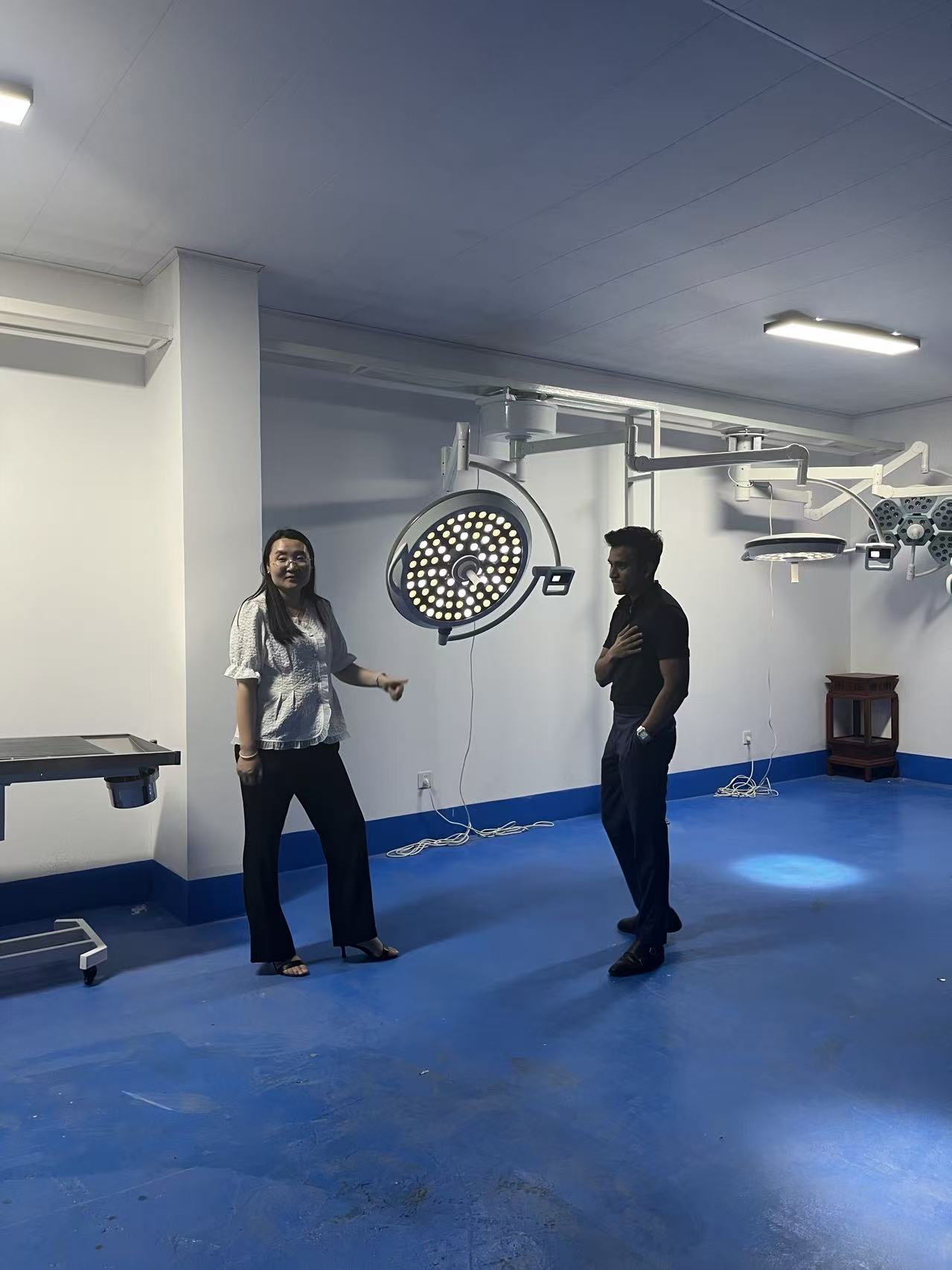
CAD files are the blueprint of your OEM operating table—errors here cost months.
Once you’ve locked your feature set, the next step is turning your requirements into technical drawings. This is where the OEM operating table process steps begin to separate professional suppliers from amateurs. A custom surgical table manufacturer China will ask for your CAD files or baseline specs, then produce a 2D/3D model for your review. Projects have derailed at this stage because a buyer assumed the factory would handle the load distribution—only to discover the top frame couldn’t support an 80th percentile patient plus a C-arm. The engineering feedback loop exists to catch those mismatches before steel is cut.
When you share your CAD files, you’re not just handing over dimensions. You’re communicating articulation points, motor placement, tabletop thickness, and cable routing. A qualified CE certified OEM operating table supplier will respond with a marked-up drawing noting tolerance limits, material grades, and potential interference with the hydraulic column. Expect to go through 2–3 revision cycles. In industry experience, the average OEM electric OT table lead time from design lock to first sample is 45 days—but only if the drawing review is closed within the first 10 days of the project. Delays here compound into the mold fabrication phase.
- Critical dimensions to verify: Tabletop length, torso and leg section angulation ranges, column height, and backrest pivot point. Discrepancies of ±2 mm in the pivot location can cause a 5-degree error in Trendelenburg tilt.
- Material specification: Stainless steel grade (304 vs 316) for the tabletop, aluminum alloy for the base cover, and zinc-plated steel for internal brackets. Each affects weight, corrosion resistance, and FOB shipping cost.
- Certification readiness: Your drawing must include mounting points for grounding straps and cable entry grommets to pass IEC 60601-1. An ISO 13485 OEM surgical table factory will flag these automatically.
- Sample approval timeline: After design freeze, you can get a sample for CE/IEC 60601 testing within 45 days. If you need to know how to customize operating table for my market, this is the window where you decide on a 4-section or 5-section top.
One scenario that haunts distributors: the buyer approved a drawing via email but never compared the rendered image to the actual mechanical drawing. The result—a table that looked right on screen but had a 12 mm gap between the leg section and the main body when fully articulated. Avoid that by insisting on a cross-section view of every joint and a simulated load test in the CAD environment. An experienced supplier will provide a revision history log and a sign-off template. If you’re still unsure how to customize operating table for my market, treat this step as your last chance to make changes without paying for new molds.

Step 3: Prototype and Mold Fabrication
Most delays happen between design lock and sample sign-off, not during production.
The prototype and mold fabrication phase is where OEM operating table customization separates serious suppliers from the rest. A typical timeline for an electric OT table runs 45 days from design lock to first sample – but only if the engineering team has existing mold libraries for common components like tabletop columns and base frames. If your supplier is cutting new tooling from scratch, add 15–25 days for mold fabrication and first-shot adjustments.
The most common delay observed? Design changes after the mold is cut. A distributor once requested a 5 cm height reduction on a hydraulic table after the steel mold was already machined. That single change cost 3 weeks and $2,400 in recutting. The fix is simple: freeze your specification before the mold order. That includes tabletop dimensions, Trendelenburg angle range, and accessory rail positions. Any change after mold fabrication triggers a new cycle.
- Material sourcing: 304-grade stainless steel for tabletops and frame covers is standard. If you specify 316L for coastal or sterilization-heavy environments, the supplier may need to order from a specialty mill – adds 10–14 days. Always confirm lead time for your chosen grade before the mold is cut.
- First article inspection: The first sample off the mold must be measured against the CAD model. Tolerances on operating table frames are typically ±0.5 mm. If the mold is off by 1.2 mm on the rail mounting holes, the entire assembly fails. Reputable suppliers will run a coordinate measuring machine (CMM) report and send photos. Ask for that report before approving the sample.
- CE/IEC 60601 sample prep:If the sample is needed for certification testing, the supplier should build it with production-intent materials and components. Avoid using substitute motors or actuators just to rush the sample – the test house will flag it. The team produces samples for CE testing within 45 days of design lock, and pre-runs basic electrical safety checks before shipping.
- Common hidden cost: Mold fabrication cost for an electric operating table ranges from $3,800 to $9,200 depending on complexity (hydraulic vs. electric, number of sections, accessory mounts). Some suppliers quote a low mold fee and then charge for every revision. Get a clear agreement: how many sample iterations are included in the mold price?
The bottom line: a well-managed prototype phase takes 30–45 days. If your supplier quotes 60+ days without a clear reason, ask for a breakdown of mold fabrication, sample molding, and inspection time. That transparency is the first sign of a reliable OEM partner for operating table projects.
| Phase | Duration | Key Actions | Quality Check | Cost / Risk Notes |
|---|---|---|---|---|
| Design Lock to Mold Start | 5–10 days | Finalize engineering drawings; confirm material specs | CAD review sign-off by client | No cost if design is frozen; delays incur rework fees |
| Mold Fabrication | 25–35 days | CNC machining of steel/aluminum molds; surface treatment | In-process dimensional inspection | Mold tooling cost ($8K–$25K) depends on complexity; includes first sample |
| First Sample Injection / Assembly | 3–5 days | Mold trial; produce first prototype unit | Fit, function, and finish check | Included in mold fee; material cost minor |
| Prototype Functional Testing | 5–7 days | Load test, electrical safety, movement cycles | IEC 60601 preliminary scan | Lab time included; CE sample prep begins |
| Client Approval & Revision | 3–10 days | Submit photos/video; remote or on-site review | Client sign-off on form, fit, function | Minor revisions free; major changes trigger new mold cycle |
| Mold Tuning for Production | 5–7 days | Optimize cycle time; adjust cooling lines | Run 20–50 pieces for Cpk analysis | One-time tuning cost ~$1,000–$3,000 |
| CE/IEC 60601 Sample Delivery | Within 45 days of design lock | Ship 2 units for certification testing | Full compliance report | Samples free; shipping & testing fee by buyer |

Step 4: First Article Inspection and Compliance Testing
A remote sign-off saves travel cost but never catches weld quality like a hands-on check.
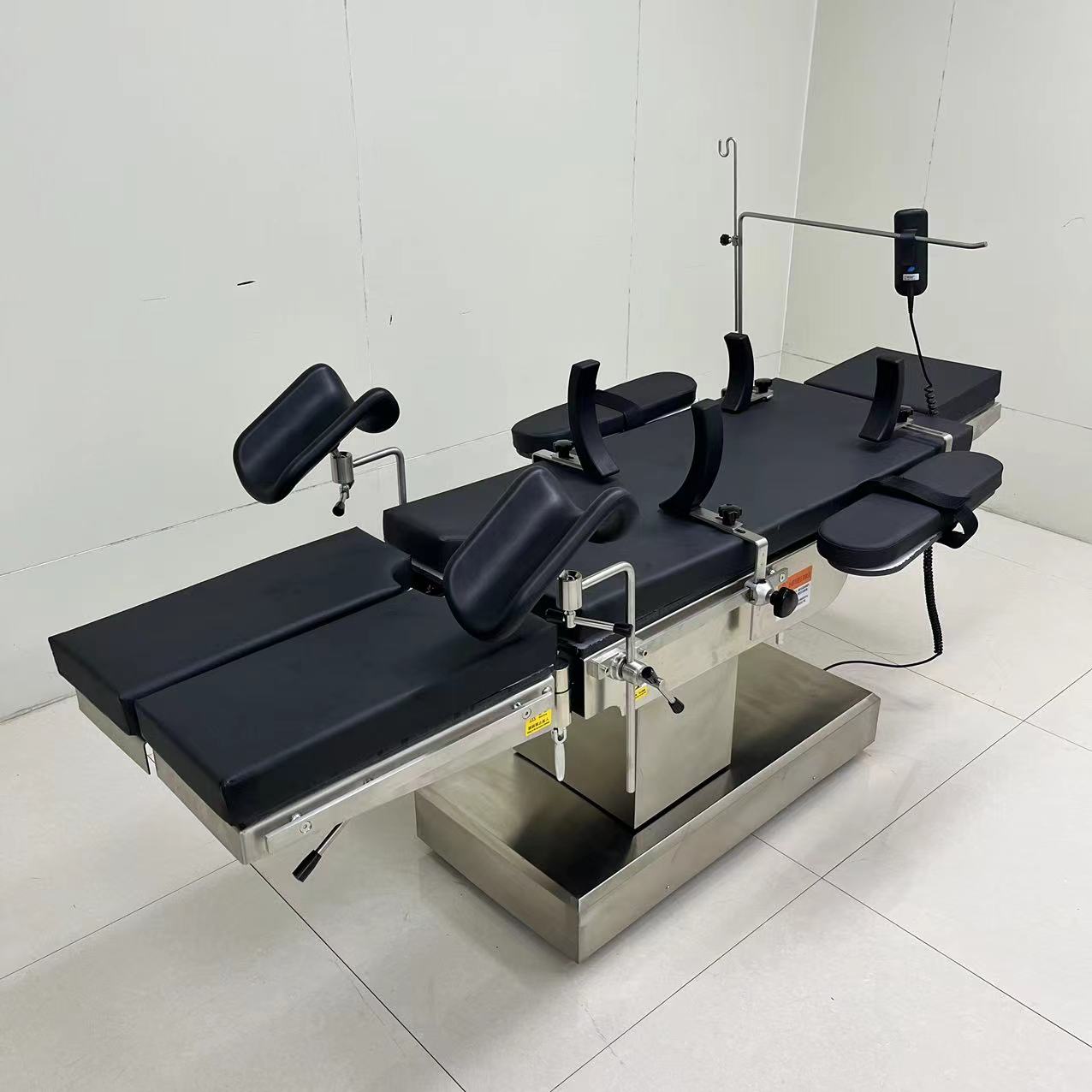
By the time you reach first article inspection, your operating table design is locked, the mold is cut, and the prototype is assembled. This is the final gate before production tooling is committed. I’ve seen distributors skip this step on a $50K order and later discover that the column weld had a 3mm gap that caused hydraulic fluid seepage at month six. The cost of a fix after tooling is locked runs 10x the cost of a repair during prototype stage.
- On-Site Inspection:You or your agent physically checks the table: weld seams, actuator alignment, tabletop thickness (caliper verification), paint adhesion, and load distribution under 250kg. Travel cost is $1,500–$3,000 for a 2-day visit, but it eliminates the guesswork. For a first-time OEM project with a new custom surgical table manufacturer China, on-site inspection is recommended if the order value is above $80K.
- Remote Sign-Off: Live video walkthrough, high-resolution photos of critical areas, and a third-party testing report (e.g., SGS or TÜV). This works if you have a long relationship with the factory and already validated their quality system. However, remote inspection cannot verify weld penetration depth, hydraulic cylinder seal integrity, or the feel of the control panel. If you choose remote, insist on a 5-point checklist: 1) column weld X-ray report, 2) actuator leak test video, 3) tabletop flatness measurement with a straightedge, 4) color temperature consistency of the LED control panel, 5) weight distribution test with sandbags at 90-degree tilt.
Our engineering team has completed over 60 OEM projects for operating tables across 15 countries. We can produce samples for CE/IEC 60601 testing within 45 days of design lock. That sample is the same unit you inspect—whether remotely or on-site. My advice: for your first OEM operating table process steps, fly in for the first article inspection. The relationship you build and the issues you catch face-to-face are worth the ticket. After two successful projects, remote sign-off with a documented checklist is a reasonable risk.
Step 5: Mass Production and Quality Assurance Plan
A single batch failure can cost you three months of market trust.
Once the first article passes inspection, mass production moves fast. But without structured batch consistency checks, the first shipment can drift from the approved sample. Over 60 OEM operating table projects taught us that the biggest risk is component substitution without notice — a motor swapped for a cheaper model, a steel grade changed to save cost. The average OEM cycle from concept to first shipment is 90–120 days, and we can produce CE/IEC 60601 test samples within 45 days of design lock. That timeline is meaningless if the production run doesn’t match the pre-production sample. Here’s how we lock consistency across every batch.
- First Piece Inspection (FPI): Every batch begins with a full dimensional check on the first unit off the line. Critical joint tolerances must stay within 0.5mm of the approved drawing. Any deviation stops the line until engineering confirms the cause.
- In-Process Quality Control (IPQC): Weld integrity, actuator alignment, and surface finish are checked at three assembly stations. Operators record pass/fail per station on a batch card. If one station reports >2% failure, the entire batch is paused for root cause analysis.
- Final Acceptance Test (FAT): Each operating table undergoes a 4-hour continuous load cycle at 250 kg before packaging. Load is applied in both Trendelenburg and reverse Trendelenburg positions. Tables that fail drop below 248 kg load capacity are reworked and retested.
- Milestone 1 – Raw Material Lot Release: Production does not start until mill certificates for steel and certificates of conformity for electronics are verified against the BOM. Any substitute material must be pre-approved by the distributor’s engineer.
- Milestone 2 – Mid-Production Random Sampling: At 50% completion, 10% of units are pulled from the line for a full functional test. This includes noise level (<45 dB), backup battery runtime, and foot pedal responsiveness. If more than 1 unit fails, the batch is put on hold for full inspection.
- Milestone 3 – Pre-Shipment Inspection (PSI): At 80% production, the client’s representative or a third-party inspector (e.g., SGS) can witness the final tests. Freight release is only granted after PSI sign-off. This step is mandatory for any first-time OEM order.
Conclusion
Each step in this process—from design freeze to first article inspection—locks in quality, compliance, and delivery timing. Skip the prototype sign-off, and you risk a $50,000 shipment that fails sample approval. The average OEM cycle runs 90 to 120 days, but a failed first article can add 30 to 60 days of rework and retesting. That delay costs you market share, not just tooling fees.
If you are ready to launch your own brand of operating tables, sit down with your engineering team and map each step against your target market’s requirements. Then compare supplier capabilities—focus on their track record with CE certification and batch consistency. Browse Sanyang Medical’s product page to see the base platforms we offer and how they can be adapted to your specs.
Frequently Asked Questions
What is the typical lead time for OEM operating table customization?
Lead time varies by complexity, but a full OEM program from spec to mass production typically takes 12 to 16 weeks. The prototype and mold phase is the longest stage, often 4. Get a timeline estimate only after locking down your specifications.
How do I verify certifications for a Chinese OEM operating table?
Request scanned copies of CE (Medical Device Regulation) and ISO 13485 certificates from the factory, and cross-check the manufacturer’s name against the notified body number. Do not rely on logo badges alone—ask. Always verify certification scope and validity before signing a contract.
What customization options are available for operating tables?
You can customize tabletop dimensions, radiolucent material, motor type (electric vs. hydraulic), color, and accessory attachments. Define your market’s clinical needs first, then match customization options accordingly.
Can I perform the first article inspection remotely?
Yes, most Chinese OEMs now offer live video inspection and provide a detailed inspection report with photos and measurements. Remote sign-off is common for standard functions, but for critical. Prepare a checklist and share it with the factory before the remote inspection.
What is the minimum order quantity for a customized operating table?
MOQ for full OEM customization with new molds typically starts at 20 to 50 units per model. If you use the factory’s existing tooling and only change color or labeling, MOQ can. Confirm MOQ only after the engineering feasibility assessment is done.
For a closer look, see our guide on how to build a medical supplier shortlist.
Related reading: OEM Surgical Light Program: From Samples to Private Label.
You May Also Like...

Pricing Your Imported Equipment as a Distributor
A distributor’s price is not the factory price plus a flat markup. It is the...

Container Loading Plans: Volume and Cargo Protection
Container loading plans for medical equipment are the packing and stowage layout that decides how...

Budgeting for Installation and Training Costs
The invoice price of medical equipment is the smaller half of its cost. The larger...