
Executive Summary
A practical guide to medical trolley lock security covering central locks, electronic access control, crash cart seal management, and controlled drug storage compliance for hospitals.
Every year, hospitals lose thousands of dollars in controlled substances to internal diversion — and the weakest link is rarely the pharmacy vault. It is the unlocked drawer on a ward trolley at 2 a.m. I have walked into facilities where the emergency crash cart sat in a corridor with a broken central lock, its narcotics compartment accessible to anyone passing by. The medical trolley lock security problem is not theoretical; it is the single most common finding in controlled drug audits across the UK, Middle East, and Southeast Asia. When a trolley’s locking mechanism fails, the entire chain of custody collapses.
The consequences go beyond financial loss. A compromised lock means unrecorded access to Schedule 2 drugs, failed regulatory inspections, and — in the worst cases — patient harm from tampered medications. The Dubai Health Authority’s 2025 crash cart standards now explicitly require monitoring and security protocols for every emergency trolley in licensed hospitals. NICE guideline NG46 in the UK mandates that organisations establish robust governance for controlled drug storage, including secure cupboard keys and documented access. If your facility still relies on a padlock and a paper sign-out sheet, you are operating below the standard that regulators now enforce.
This guide draws on our experience manufacturing medical trolleys with integrated locking systems for hospitals in over 30 countries. We will walk through every layer of trolley security — from central locking mechanisms and drawer-level locks to electronic access control, crash cart seal management, and procurement acceptance criteria. Whether you are a biomedical engineer specifying your next fleet purchase or a pharmacy lead tightening controlled drug governance, this is the practical reference you need.

Central Locking vs. Individual Drawer Locks: Choosing the Right Architecture
The first decision in medical trolley lock security is architectural: do you secure the entire trolley with a single central lock, or do you equip each drawer with its own independent lock? The answer depends on what you are storing and who needs access during an emergency.
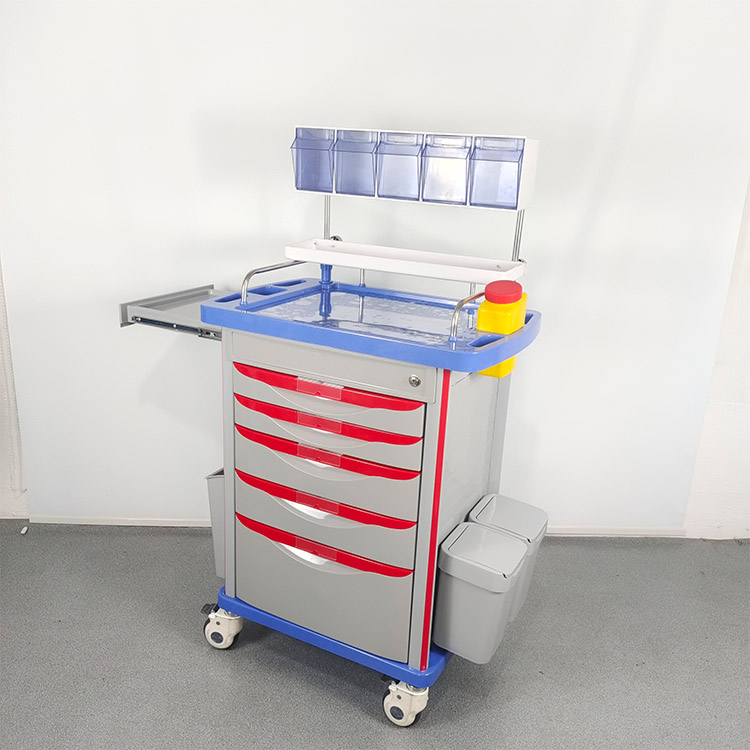
A central locking system uses one key or code to secure all drawers simultaneously. This is the standard configuration for emergency crash carts, where speed matters more than granular access control. When the central lock is engaged, no drawer can be opened. When disengaged, all drawers are accessible. The advantage is simplicity — one key, one action, full access. The disadvantage is that you cannot restrict access to a single narcotics drawer while leaving supply drawers open.
Individual drawer locks solve that problem. Anesthesia trolleys and medication dispensing carts often use a hybrid approach: a central lock for general supplies plus a separate keyed or electronic lock on the controlled drug compartment. This allows nursing staff to access syringes, gauze, and IV supplies without exposing the fentanyl and morphine stored in the locked section.
- Central lock (single-point): Best for crash carts and emergency trolleys where rapid full access is critical. One key controls all drawers. Typical in ABS emergency trolleys with 5 drawers.
- Individual drawer locks: Best for anesthesia trolleys and medication carts where only specific drawers contain controlled substances. Each drawer has its own cylinder or electronic latch.
- Hybrid system: Central lock for general compartments plus a dedicated narcotics lock (keyed or electronic) on one or two drawers. This is the most common configuration we manufacture for hospitals handling Schedule 2 drugs.
- Breakaway or emergency override: A tamper-evident seal or breakable lock that allows immediate access during a code blue while recording that the seal was broken. Essential for crash carts.
In our factory experience, the number one specification error buyers make is ordering a central-lock trolley for a ward that needs per-drawer narcotics security. The result: either the entire trolley stays locked (slowing routine supply access) or the narcotics drawer is left unlocked for convenience. Specify the access pattern before choosing the lock architecture.
Controlled Drug Cabinet Integration: Trolley as a Mobile CD Store
In many hospitals, the controlled drug cupboard is a fixed cabinet bolted to the pharmacy wall. But clinical reality demands mobility. Anesthesia teams need controlled drugs at the point of care. Emergency departments need immediate access to naloxone, midazolam, and morphine without a trip to the pharmacy. This is where the medical trolley becomes a mobile controlled drug store — and where lock security becomes a regulatory obligation, not just a convenience feature.
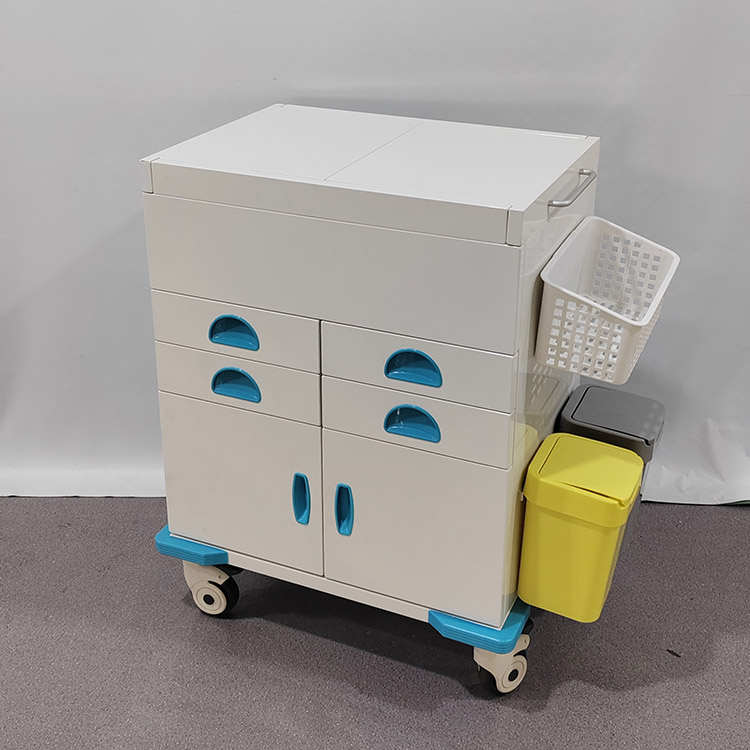
NICE guideline NG46 requires that controlled drugs be stored in a locked receptacle that meets specific security standards. The UK Misuse of Drugs (Safe Custody) Regulations specify that CD cupboards must be constructed of metal or other robust material, fixed to a wall or floor, and secured with a lock that cannot be easily forced. When a trolley serves as the CD storage point, it must meet equivalent standards: steel or reinforced ABS construction, a lock resistant to casual forced entry, and a system for tracking who accessed the drugs and when.
The Care Quality Commission’s annual controlled drugs reports consistently flag inadequate storage security as a recurring finding. Common issues include: keys left in locks, shared access codes, no audit trail for after-hours access, and trolleys parked in unlocked corridors. Each of these represents a failure point that a properly specified locking system can address.
- Construction material: Steel-bodied trolleys offer superior forced-entry resistance compared to ABS plastic. For high-security narcotics storage, specify powder-coated steel with reinforced door panels.
- Lock grade: Use locks rated to at least 1,000 key differs (unique key combinations). Avoid generic cam locks that can be opened with a universal key. Best Core removable lock systems allow re-keying without replacing the entire cylinder.
- Key management: Implement a key register. CD cupboard keys should be signed in and out per shift. Never leave keys in the lock — this is the most common CQC finding.
- Anchor points: If the trolley serves as a semi-permanent CD store, it should have floor or wall anchor points to prevent removal from the ward.
Electronic Locks and Audit Trails: The Digital Upgrade
Mechanical locks are reliable, but they cannot tell you who opened the drawer, when, or how many times. Electronic locking systems solve this by combining access control with automatic audit logging. For hospitals managing high volumes of controlled drugs — or those preparing for regulatory inspection — electronic locks transform the trolley from a passive storage box into an active compliance tool.
Modern electronic access systems for medical carts comprise four elements: an access control device (keypad, RFID reader, or biometric scanner), an electronic lock or latch, a monitoring system for remote status checks, and a manual override for emergencies. When a user authenticates, the system creates a digital signature — user ID, timestamp, drawer accessed — and archives it for audit purposes. Some systems store over 2,000 access events locally before requiring a data download.
The practical benefits are significant. Auto-relock features secure a motionless cart after a user-defined delay (typically 1 to 99 minutes), eliminating the “forgot to lock it” problem. Keyless entry with individual PIN codes removes the shared-key risk. And when an audit occurs, you export a spreadsheet rather than reconstructing events from memory.
| Lock Type | Security Level | Audit Capability | Best Use Case | Cost Factor |
|---|---|---|---|---|
| Mechanical key lock (central) | Medium | None (manual log required) | Crash carts, general supply trolleys | Low |
| Mechanical key lock (per-drawer) | Medium-High | None (manual log required) | Anesthesia trolleys, ward CD storage | Low-Medium |
| Electronic keypad (PIN code) | High | User + timestamp (2,000+ events) | Medication carts, narcotics trolleys | Medium-High |
| RFID / proximity card | High | User ID + timestamp + drawer ID | High-security CD carts, pharmacy dispensing | High |
| Biometric (fingerprint) | Very High | Unique user + timestamp + non-transferable | Maximum-security narcotics storage | Very High |
Electronic locks do not replace good governance — they enforce it. A keypad lock with auto-relock eliminates the most common audit failure: an unlocked CD cupboard. But if all staff share the same PIN code, you have simply digitized the shared-key problem. Issue individual codes and review the access log monthly.
Crash Cart Seal Management: Tamper Evidence Without Delaying Resuscitation
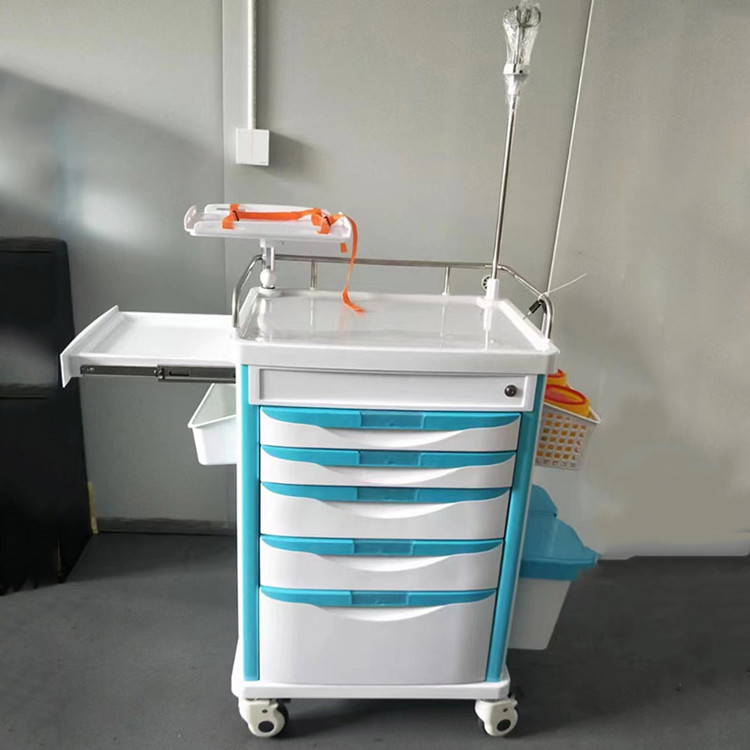
Emergency crash carts present a unique security paradox: they must be instantly accessible during a cardiac arrest, yet secured against unauthorized access at all other times. The solution adopted by leading hospitals worldwide is the numbered tamper-evident seal — a single-use plastic or wire seal that locks the cart’s drawers and provides visual proof of integrity between checks.
A quality improvement project at Kauvery Hospital in Bangalore demonstrated the power of this approach. Before implementing numbered seals, staff checked the crash cart contents every shift — a process taking 16 minutes per check. After introducing seals, the per-shift check dropped to 2.5 minutes (staff only verified the seal was intact and external items were present). Compliance rose from 74-87% to 100% over the study period. The seal number is recorded in the crash cart integrity log; if the seal is broken, the reason must be documented — either a clinical emergency or a scheduled expiry check.
The Dubai Health Authority’s 2025 crash cart standards formalize this approach, requiring hospitals to maintain a crash cart integrity record that documents seal numbers, check dates, and the name of the responsible clinician. The standard specifies that crash carts should be sealed until opened for a valid reason: an actual resuscitation event, a scheduled expiry and count check (typically fortnightly), or a maintenance inspection.
- Seal selection: Use single-use, sequentially numbered seals that are easy to break by hand (no tools needed in an emergency) but impossible to reattach. Avoid reusable padlocks — they defeat the tamper-evidence purpose.
- Documentation: Record the seal number on the crash cart checklist at the start and end of each shift. If the number does not match, investigate immediately.
- Post-use protocol: After a code blue, the cart must be restocked and resealed within 30 minutes. The new seal number is logged along with the drugs used.
- Scheduled checks: Open the cart only for fortnightly expiry and count verification. The person performing the check cannot take on any other task during the verification — this prevents distraction-related errors.
- Accountability: Assign a crash cart champion with overall responsibility for seal integrity, stock levels, and compliance documentation.
Procurement and Acceptance: Specifying Lock Security in Your Purchase Order
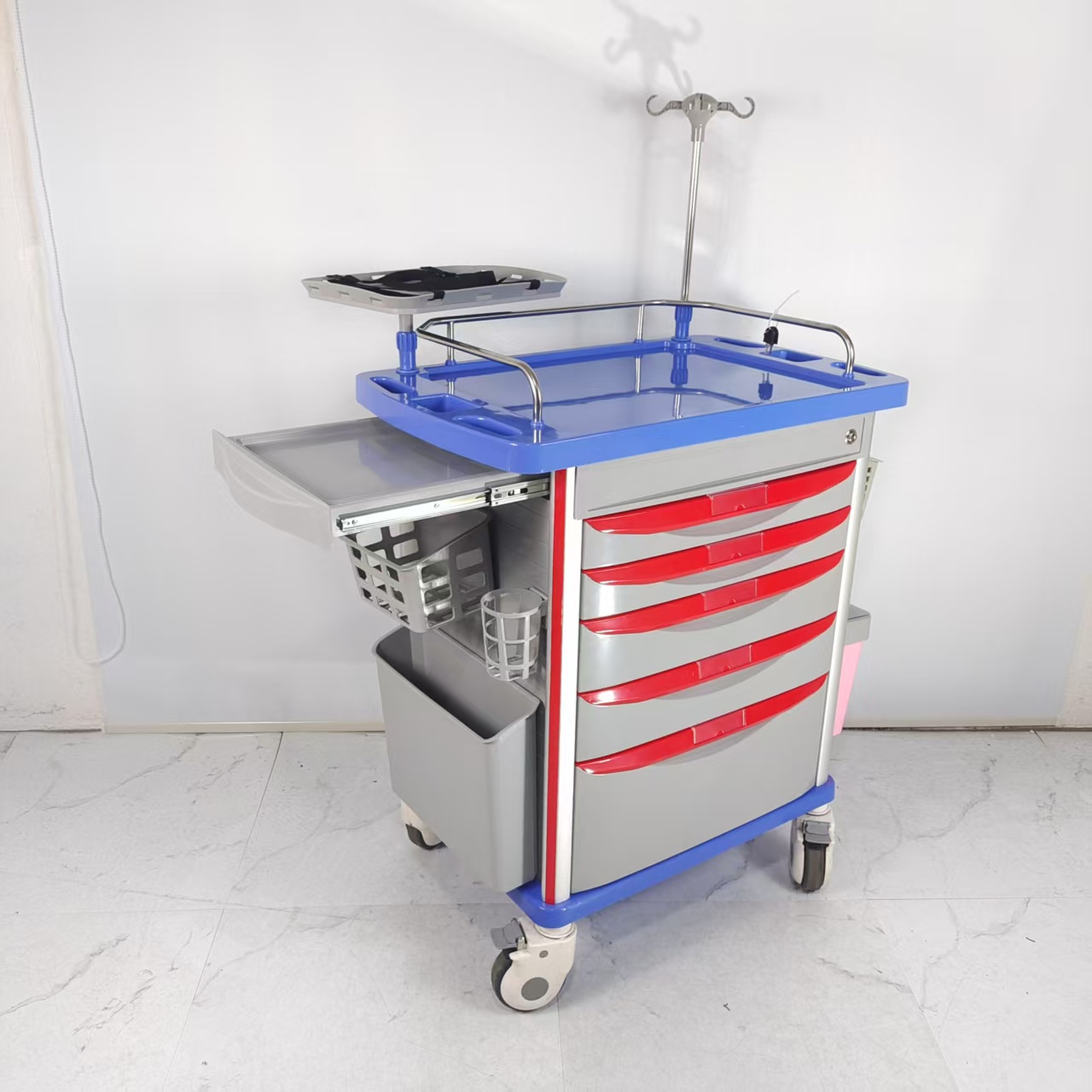
Lock security is not an afterthought — it is a specification requirement that must be defined before you issue a purchase order. Too often, hospitals buy trolleys based on drawer count, dimensions, and price, then discover the lock is a generic cam lock with 50 key differs that can be opened with a paperclip. By then, the trolleys are deployed across 12 wards and the cost of retrofitting electronic locks exceeds the original savings.
When you request a quotation from a medical trolley manufacturer, include the following lock specifications in your technical requirements document. This ensures the factory builds the correct locking system from the first production run, rather than offering a “standard” lock that does not meet your security needs.
- Lock type and grade: Specify central lock, per-drawer lock, or hybrid. State the minimum key differs (we recommend 1,000+ for mechanical locks). If electronic, specify the access method (PIN, RFID, biometric) and minimum audit log capacity.
- Material and construction: For controlled drug compartments, specify steel reinforcement or full steel construction. ABS is acceptable for general supply drawers but insufficient for high-security narcotics storage.
- Seal compatibility: If using tamper-evident seals, verify that the trolley has dedicated seal anchor points (holes or loops) that allow a seal to pass through without obstructing drawer operation.
- Key management provisions: Request a key register template, spare keys (minimum 2 per lock), and a master key system if your facility uses a hierarchical access model.
- Acceptance testing: On delivery, test every lock 50 cycles (open/close) to verify smooth operation. Check that drawers cannot be forced open when locked. Verify electronic lock audit logging by performing 10 test accesses and downloading the log.
- Certification: Request documentation confirming the trolley meets relevant standards — IEC 60601-1 for medical electrical equipment (if electronic locks are fitted), and ISO 13485 for the manufacturer’s quality management system.
Maintenance, Inspection, and Ongoing Compliance
A lock is only as good as its maintenance schedule. Mechanical locks wear out. Electronic locks run out of battery. Seals degrade in humid environments. Without a structured inspection program, your medical trolley lock security degrades silently until the day an auditor — or an unauthorized person — discovers the weakness.
We recommend a three-tier inspection schedule aligned with the DHA crash cart maintenance standards and NICE controlled drug governance requirements:
- Daily (per shift): Visual check that the lock is engaged, the seal is intact (if applicable), and the key is not left in the lock. Takes less than 30 seconds per trolley.
- Monthly: Functional test of all locks — open and close each lock 5 times. For electronic locks, verify battery level and download the audit log. Check for physical damage to lock housings, strike plates, and drawer runners.
- Annually: Full security audit. Test forced-entry resistance on a sample of trolleys. Review access logs for anomalies (repeated after-hours access, access by departed staff). Replace worn mechanical locks. Update electronic lock firmware and user codes.
Document every inspection in a maintenance log attached to the trolley or stored in your biomedical engineering system. When a regulator asks “how do you ensure your controlled drug storage remains secure?”, a completed 12-month inspection log is your strongest evidence. For facilities that need ongoing technical support and replacement parts, our spare parts service provides lock cylinders, electronic lock modules, and seal anchor components with documented traceability.
Conclusion
Medical trolley lock security is not a single product feature — it is a system that spans lock architecture, controlled drug governance, electronic audit trails, tamper-evident seals, procurement specifications, and ongoing maintenance. Each layer addresses a different failure mode: unauthorized access, diversion, regulatory non-compliance, and operational delay during emergencies.
The hospitals that get this right share common practices: they specify lock requirements before purchasing, they match the lock type to the clinical workflow (central lock for crash carts, per-drawer locks for anesthesia trolleys, electronic locks for high-volume CD storage), they implement numbered seals with documented accountability, and they inspect locks on a structured schedule. The cost of doing this properly is a fraction of the cost of a single regulatory finding, a diversion incident, or a patient safety event traced back to an unlocked drawer.
If you are specifying your next trolley fleet or upgrading existing units, start with a security risk assessment of each clinical area. Then match the lock architecture to the risk level. And remember: the best lock in the world is useless if the key is taped to the side of the trolley. Governance and hardware work together — neither alone is sufficient.
Frequently Asked Questions
What type of lock is best for a hospital crash cart?
Crash carts require instant access during emergencies, so a central locking mechanism combined with a tamper-evident numbered seal is the gold standard. The seal provides visual proof that the cart has not been opened since the last check, while the central lock secures all drawers with a single action. Electronic locks with auto-relock are an upgrade for facilities that need audit trails, but the seal system remains essential for rapid visual verification between shifts.
How do electronic locks improve controlled drug security on trolleys?
Electronic locks provide individual user authentication (PIN, RFID card, or biometric), automatic audit logging with timestamps, and auto-relock features that eliminate human forgetfulness. Each access event is recorded — who opened the drawer, when, and which drawer was accessed. This creates a digital chain of custody that satisfies regulatory requirements for controlled drug access tracking. Systems can store thousands of events and export data for audit review.
What regulations govern controlled drug storage on medical trolleys?
In the UK, NICE guideline NG46 and the Misuse of Drugs (Safe Custody) Regulations require controlled drugs to be stored in a locked metal receptacle with restricted key access. The CQC monitors compliance through inspections. In the UAE, the DHA 2025 crash cart standards mandate security and monitoring protocols. Internationally, facilities should align with their national controlled substances legislation and ensure trolley locks meet equivalent security standards to fixed CD cupboards.
How often should trolley locks be inspected and maintained?
We recommend a three-tier schedule: daily visual checks per shift (lock engaged, seal intact, no key in lock), monthly functional testing (operate each lock 5 times, check electronic lock battery and audit log), and annual security audits (forced-entry resistance testing, access log review, lock replacement if worn). Document all inspections for regulatory evidence.
Can existing trolleys be retrofitted with electronic locks?
Yes, most steel and reinforced ABS trolleys can be retrofitted with electronic lock modules, provided there is space for the lock mechanism and a battery compartment. The retrofit typically involves replacing the existing cam lock cylinder with an electronic latch and mounting a keypad or RFID reader on the trolley frame. However, retrofitting costs can exceed the price difference between a standard and an electronically-locked trolley, so it is more cost-effective to specify electronic locks at the procurement stage.
You May Also Like...

Bariatric OR Package: Table, Bed and Trolley Coordination
A bariatric OR package coordinates the operating table, the patient bed and the trolley for...

Lumen vs Lux: What These Surgical Light Units Mean
Lumen and lux are not the same thing. Lumen measures the total light a fixture...

Emergency Department Equipment for Trauma, Resuscitation and Triage
An emergency department is built around speed, and its equipment has to be ready the...