

Executive Summary
A practical guide to cross-border medical equipment warranty claims: coverage scope, response timelines, spare parts logistics, customs clearance, dispute resolution, and negotiation strategies with Chinese manufacturers.
A hospital in Lagos installs a batch of LED surgical lights from a Chinese manufacturer. Fourteen months later, three units flicker during procedures. The procurement officer files a claim, only to discover the warranty excludes “damage caused by voltage instability” — a condition endemic to the local grid. The manufacturer’s response takes six weeks. By then, the hospital has already purchased replacements from a competitor. This scenario plays out hundreds of times each year across emerging markets, and it exposes a fundamental gap in how cross-border medical equipment warranty claims are structured, communicated, and enforced.
The problem is not that Chinese manufacturers refuse to honor warranties. In our experience supplying surgical lights, operating tables, and hospital beds to over 40 countries, the root cause is almost always contractual ambiguity. Warranty clauses written for domestic Chinese transactions get copy-pasted into export contracts without adapting to the logistical, regulatory, and electrical realities of the destination market. The result: buyers misunderstand coverage, sellers dispute claims on technicalities, and both sides lose money and trust.
This guide breaks down every layer of cross-border medical equipment warranty claims — from scope definitions and response timelines to spare parts logistics, customs clearance for replacement components, and dispute resolution mechanisms. Whether you are a hospital biomedical engineer, a regional distributor, or a procurement officer managing a fleet of imported devices, these are the terms and enforcement strategies that protect your investment.

Warranty Scope and Exclusions: What Actually Gets Covered
The single most contested element in any medical equipment warranty claim is scope. A well-drafted warranty for cross-border medical device transactions must explicitly define three layers: covered components, covered failure modes, and excluded conditions. Vague language like “manufacturing defects” without enumeration invites disputes.
Under IEC 60601-1 (the international safety standard for medical electrical equipment), manufacturers bear responsibility for ensuring devices remain safe throughout their expected service life. However, IEC 60601 does not mandate a specific warranty duration or scope — that is left to commercial contracts. ISO 13485, the quality management standard for medical devices, requires manufacturers to document post-market surveillance and corrective action procedures, but again, the commercial warranty terms are negotiable.
Never accept a warranty clause that says “standard manufacturer warranty applies.” Insist on an annex that lists every covered component, the warranty period for each, and the specific exclusion conditions with definitions. If the supplier cannot provide this, their after-sales system is not mature enough for cross-border trade.
Common exclusions that trip up international buyers include:
- Power supply anomalies: Voltage spikes, frequency deviation, or grounding faults at the installation site. In markets with unstable grids (much of Sub-Saharan Africa, South Asia), this exclusion can void most electrical claims unless the buyer installs voltage stabilizers as specified.
- Unauthorized repair or modification: Any intervention by non-certified technicians voids the warranty. This is reasonable, but problematic in regions where the manufacturer has no local service partner.
- Consumable and wear parts: LED modules, hydraulic seals, casters, mattress covers, and batteries are typically excluded or carry a shorter warranty (6–12 months vs. 24–36 months for structural components).
- Improper installation: If the buyer’s team installs the device without following the manufacturer’s manual or without the manufacturer’s remote guidance, resulting failures are excluded.
- Environmental damage: Corrosion from humidity, dust ingress beyond the device’s IP rating, or physical damage from transport after delivery.
The fix is a component-level warranty matrix negotiated before purchase. This table should be an annex to the sales contract, not an afterthought.
| Component Category | Typical Warranty Period | Common Exclusions | Negotiation Tip |
|---|---|---|---|
| Structural frame (table top, bed frame, pendant arm) | 36–60 months | Overload beyond rated capacity, physical impact | Request weld integrity guarantee and corrosion resistance clause for humid climates |
| Electrical systems (motors, control boards, wiring) | 24–36 months | Voltage instability, water ingress, unauthorized repair | Require supplier to specify voltage tolerance range; add surge protector requirement |
| LED light modules (surgical lights) | 24 months or 50,000 hours | Color shift within tolerance, physical damage | Define acceptable lux degradation threshold (e.g., no more than 10% at 25,000 hrs) |
| Hydraulic/pneumatic systems | 24 months | Seal wear from contamination, improper fluid | Include free seal kit replacement at month 18 as preventive maintenance |
| Consumables (casters, batteries, mattress covers) | 6–12 months | Normal wear, improper cleaning agents | Negotiate a spare parts bundle included with initial purchase at discounted rate |
Response Time Limits and Communication Protocols
A warranty is worthless if the claim process takes longer than the equipment downtime. In cross-border transactions, time zone differences, language barriers, and bureaucratic approval chains inside the manufacturer’s organization can stretch response times to unacceptable levels. A contract that simply says “seller shall respond within a reasonable time” gives you no enforceable leverage.
Based on our experience handling warranty claims across 40+ countries, here are the response benchmarks that should appear in your contract:
- Acknowledgment: Written confirmation of claim receipt within 48 hours (business days). This should be an automated email plus a named case handler.
- Technical assessment: Remote diagnosis or request for evidence (photos, videos, error codes) within 5 business days. If the manufacturer needs the device shipped back, they must state this within the 5-day window.
- Resolution decision: Approval or denial of the claim with written justification within 10 business days of receiving complete evidence.
- Remedy execution: Shipment of replacement parts or unit within 15 business days of claim approval. For critical care equipment (ventilators, anesthesia machines), this should be 7 days.

Equally important is the communication channel. Do not rely on a sales representative’s WeChat or WhatsApp for warranty claims. These messages get buried. Your contract should designate an official after-sales email address and, ideally, a ticketing system. At Sanyang Medical, we assign a dedicated after-sales engineer to each international account and provide a spare parts service portal where claims are tracked with case numbers.
Add a penalty clause for late response: if the manufacturer fails to meet the agreed timeline, the warranty period extends by the number of delayed days. This creates financial incentive for the supplier to act promptly and compensates the buyer for extended equipment downtime.
Spare Parts Supply Obligations and Availability Windows
A warranty that covers repair but cannot deliver parts is a promise without substance. Under EU MDR 2017/745, manufacturers must ensure availability of spare parts and accessories for a period that is appropriate to the device’s expected lifetime — typically interpreted as 10 years for capital equipment like operating tables and surgical lights. Chinese manufacturers exporting to Europe must comply with this requirement through their EU Authorized Representative.
For markets outside the EU, there is no universal legal mandate, so the obligation must be contractual. Key clauses to negotiate:
- Minimum availability period: The manufacturer guarantees spare parts supply for at least 10 years after the last unit of the model is produced. If the model is discontinued, the manufacturer must provide 12 months’ advance notice and offer a last-time-buy opportunity.
- Parts pricing: Lock in a spare parts price list (or a discount percentage off list price) at the time of the original purchase. Without this, manufacturers can inflate parts pricing to recoup margins lost on the initial sale.
- Critical parts inventory: For high-volume installations (e.g., 50+ beds across a hospital network), negotiate a consignment stock or regional buffer inventory held by the distributor.
- Technical documentation: The manufacturer must provide exploded-view diagrams, part numbers, and maintenance manuals in English (or the destination language) to enable local technicians to identify and order correct parts.
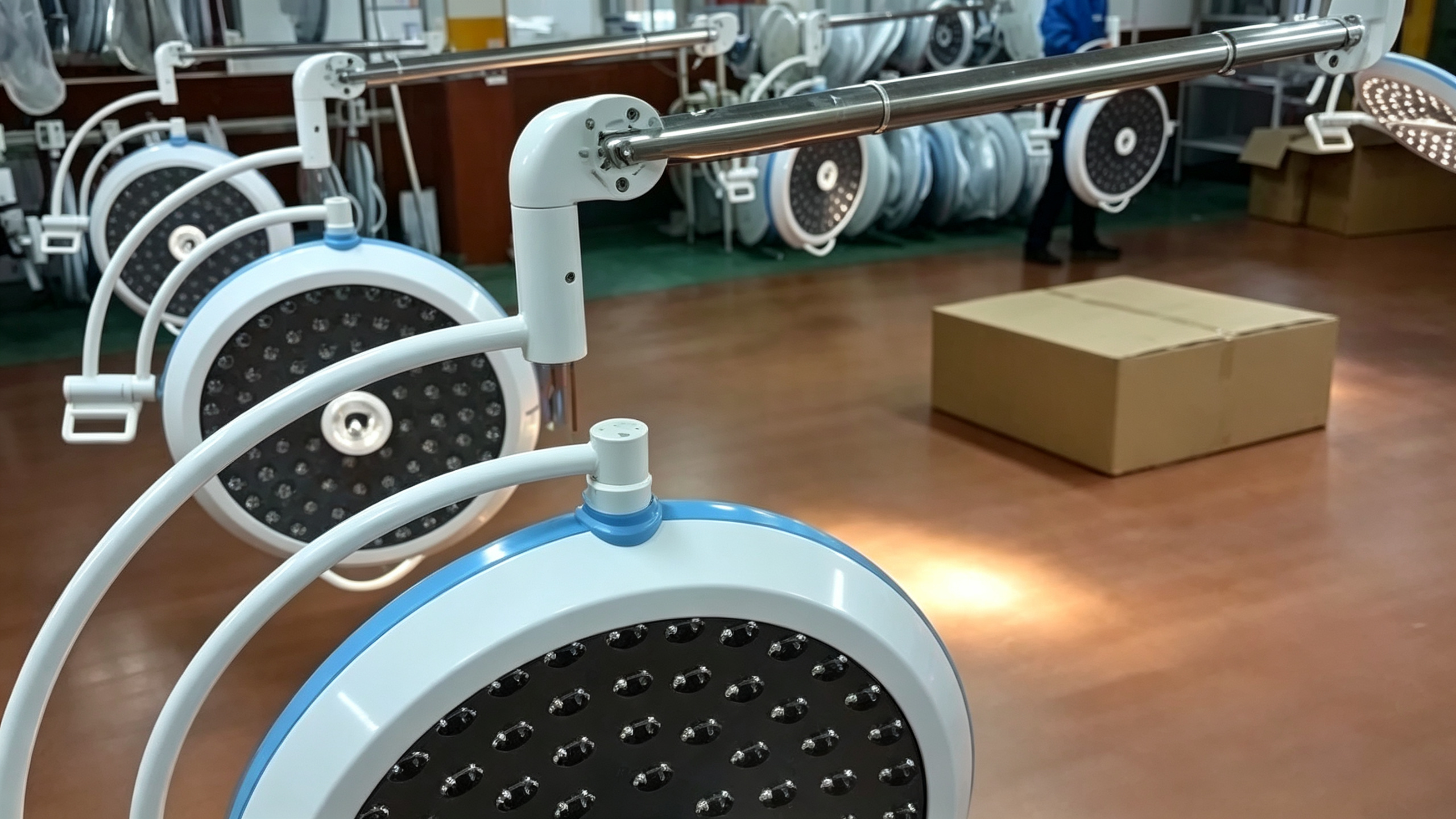
Cross-Border Logistics and Customs Clearance for Warranty Replacements
Even when a warranty claim is approved, getting the replacement part from a factory in Shandong Province to a hospital in Nairobi or Manila involves a logistics chain that can add 3–6 weeks to the resolution timeline. Customs clearance is the most common bottleneck, and it is an area most manufacturers handle poorly because they treat warranty shipments as an afterthought.
Key logistical challenges and solutions:
- HS code classification: Replacement parts shipped under warranty may be classified differently from the original device. A control board for an operating table might fall under HS 8537 (electrical control panels) rather than HS 9018 (medical instruments). Misclassification triggers wrong duty rates or inspection holds. The manufacturer should pre-declare the correct HS code on the warranty shipment documentation.
- Duty and tax treatment: In many countries, warranty replacements are duty-free if properly documented as “no-value warranty shipments.” The commercial invoice must state “Warranty Replacement — No Commercial Value — Original Invoice #[number]” and reference the original import entry. Without this, customs assesses duty on the declared value.
- Regulatory re-clearance: Some markets (notably Brazil’s ANVISA, India’s CDSCO) require re-registration or import permits even for warranty parts. The buyer should clarify at purchase time who bears responsibility and cost for regulatory clearance of warranty shipments.
- Shipping method: For critical parts (control boards, motors), air freight is essential. Sea freight adds 4–8 weeks. The contract should specify who pays for expedited shipping on warranty claims — ideally the manufacturer for claims resolved within the first 12 months, shared cost thereafter.
China’s NMPA issued new medical device export certificate regulations effective May 2026, streamlining the documentation process for exported devices. This helps warranty logistics because manufacturers can now more easily provide the export sales certificates that some destination-country customs authorities require, even for replacement parts shipped under an existing device registration.

Dispute Resolution Mechanisms for Cross-Border Warranty Claims
When a warranty claim is denied or the manufacturer fails to respond, the buyer needs an enforceable path to resolution. Litigating in Chinese courts is impractical for most foreign buyers — the process is conducted in Mandarin, takes 12–24 months, and enforcement against a factory in a tier-3 city is uncertain. The alternative mechanisms, negotiated into the contract at signing, are far more effective.
The hierarchy of dispute resolution for cross-border medical equipment warranty claims should follow this escalation ladder:
- Step 1 — Negotiation (30 days): Named representatives from both sides meet (virtually or in person) to resolve the dispute. Document all communications in writing.
- Step 2 — Mediation (30 days): A neutral third party (e.g., through the China Council for the Promotion of International Trade, CCPIT) facilitates a non-binding resolution. Cost is low, typically $2,000–$5,000.
- Step 3 — Arbitration (binding): If mediation fails, the dispute goes to binding arbitration. The preferred venues for China-related commercial disputes are CIETAC (China International Economic and Trade Arbitration Commission), SIAC (Singapore), or HKIAC (Hong Kong). Arbitration awards are enforceable in 170+ countries under the New York Convention.
Under the CISG (United Nations Convention on Contracts for the International Sale of Goods), which both China and most major trading nations have ratified, a buyer has the right to require the seller to remedy a lack of conformity unless this is unreasonable. Article 46 gives the buyer the right to demand repair or replacement; Article 50 allows price reduction. These provisions apply automatically unless the contract explicitly excludes them — another reason to read every clause carefully.
A 2026 ruling by a US federal court compelled arbitration in a medical device supply dispute, reinforcing that well-drafted arbitration clauses are enforceable even when one party prefers litigation. Always specify the arbitration seat, language, and governing law in your contract. Vague clauses like “disputes shall be settled amicably” are unenforceable.
Negotiating Warranty Terms with Chinese Manufacturers: Practical Tips
Chinese medical device manufacturers range from sophisticated exporters with dedicated international after-sales teams to small workshops that have never handled a cross-border warranty claim. Your negotiation approach must adapt to the supplier’s maturity level. Here are practical strategies drawn from years of OEM/ODM collaboration with factories across China:
- Negotiate warranty before price: Suppliers expect buyers to haggle on unit price. If you lock warranty terms first, the supplier cannot later dilute coverage to protect margin. Present your warranty requirements as non-negotiable specifications, like voltage or dimensions.
- Use the factory’s ISO 13485 system against them: Any manufacturer holding ISO 13485 certification must have documented procedures for complaint handling and corrective action (Clause 8.5). Reference their own quality manual in negotiations: “Your ISO 13485 system requires a 30-day corrective action cycle. Let’s put that timeline in our contract.”
- Request a warranty bond or retention: For large orders (above $100,000), negotiate a 5–10% retention held in escrow for 12–24 months post-delivery. If warranty claims are unresolved, the buyer draws from the bond. This is common in construction and increasingly accepted in medical device procurement.
- Insist on a local service partner or training: If the manufacturer has no agent in your country, require them to train your biomedical team on first-line repairs and provide a diagnostic toolkit. This reduces claim volume and builds goodwill.
- Document everything in bilingual format: The warranty annex should be in English and Chinese, with a clause stating which language prevails in case of discrepancy (choose English or a neutral third language). This prevents “lost in translation” defenses during disputes.
- Visit the factory’s after-sales department: During your factory visit, ask to see the after-sales workflow: how claims are logged, who approves replacements, what the average resolution time is. A mature operation will show you their CRM or ERP system. A workshop will show you a spreadsheet.
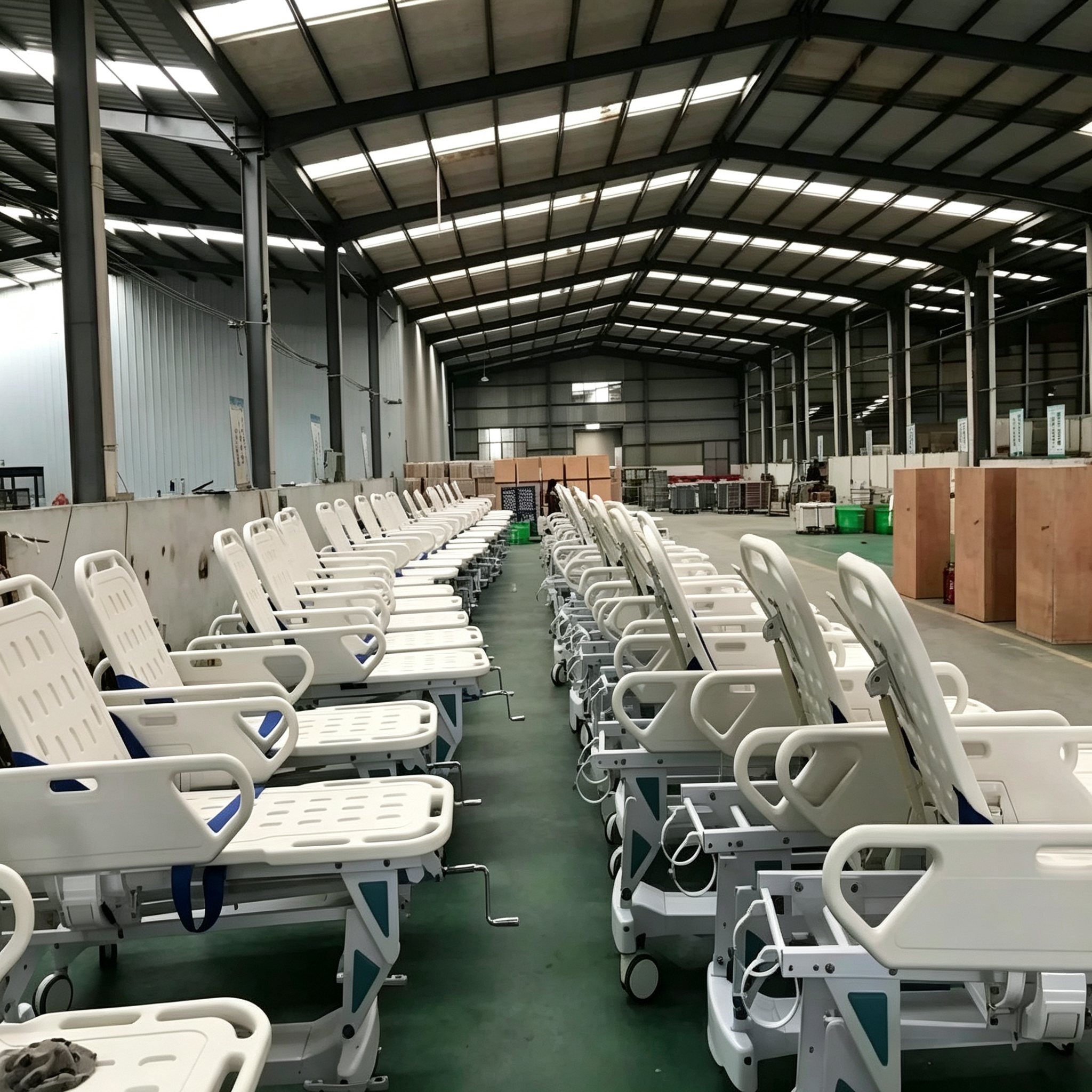
Building a Warranty Management System for Your Facility
For hospitals and distributors managing dozens or hundreds of imported devices, individual warranty claims become unmanageable without a systematic approach. A warranty management system reduces claim frequency, accelerates resolution, and provides data for future procurement decisions.
Essential elements of a facility-level warranty management system:
- Asset registry: Every device logged with model, serial number, purchase date, warranty expiry, and contract reference. Digital (CMMS software) is essential for fleets above 20 units.
- Claim tracking log: Date filed, evidence submitted, manufacturer response, resolution date, and outcome. This data reveals patterns — if 30% of claims are denied for “voltage instability,” invest in stabilizers rather than fighting each claim.
- Preventive maintenance schedule: Many warranty exclusions trigger because the buyer failed to perform routine maintenance (cleaning filters, checking seals, calibrating sensors). A PM schedule aligned with the manufacturer’s manual keeps warranty coverage intact.
- Supplier scorecard: Rate each manufacturer on claim acceptance rate, average resolution time, and parts availability. Use this scorecard in the next procurement cycle to reward reliable suppliers and phase out problematic ones.
At Sanyang Medical, we support our international partners with comprehensive documentation packages — installation manuals, maintenance schedules, exploded parts diagrams, and a dedicated after-sales contact channel — specifically designed to minimize claim friction and maximize equipment uptime across the device lifecycle.
Conclusion
Cross-border medical equipment warranty claims do not have to be adversarial. The majority of disputes we observe stem from contracts that were never designed for international trade — domestic Chinese warranty language transplanted into export agreements without adaptation. The fix is structural: negotiate component-level coverage matrices, enforceable response timelines, spare parts availability guarantees, clear logistics responsibilities, and a binding arbitration clause before the purchase order is signed.
For buyers, the investment in contract negotiation pays for itself the first time a claim arises. A well-drafted warranty annex turns a potential six-month dispute into a two-week parts shipment. For manufacturers, a transparent warranty system is a competitive differentiator in a market where buyers increasingly evaluate total cost of ownership — not just the FOB price on the quotation.
If you are procuring surgical lights, operating tables, hospital beds, or medical pendants from China, start the warranty conversation before you start the price conversation. Your future self — standing in a darkened OR waiting for a replacement LED module — will thank you.
Frequently Asked Questions
What is the typical warranty period for medical equipment imported from China?
Most Chinese manufacturers offer 12–24 months for the complete device and 24–60 months for structural components. However, these periods are negotiable. For capital equipment like operating tables and surgical lights, buyers should push for 36 months on structural and electrical systems, with a separate 12-month term for consumable parts. Always confirm the warranty start date — it should be the installation date or delivery date, not the manufacturing date.
Can I claim warranty if the equipment was damaged by unstable power supply?
In most standard contracts, power supply damage is excluded. However, if the manufacturer specified a voltage tolerance range (e.g., 220V +/-10%) and the damage occurred within that range, the claim should be valid. To protect yourself, negotiate a clause requiring the manufacturer to define exact electrical operating parameters and include built-in surge protection. Installing an external voltage stabilizer as specified in the installation manual also strengthens your position.
Who pays for shipping warranty replacement parts internationally?
This must be specified in the contract. Common arrangements include: manufacturer pays all shipping for claims within the first 12 months; costs shared 50/50 for claims in months 13–24; buyer pays shipping for claims after month 24. For critical care equipment, negotiate manufacturer-paid air freight regardless of warranty stage. Always clarify whether “free replacement” includes customs duties and import taxes or only the part cost.
How long must a manufacturer supply spare parts after discontinuing a model?
Under EU MDR 2017/745, manufacturers must ensure spare parts availability for a period appropriate to the device’s expected lifetime — generally interpreted as 10 years for capital medical equipment. For non-EU markets, this obligation must be contractual. Negotiate a minimum 10-year parts availability guarantee with 12 months’ advance notice of discontinuation and a last-time-buy option. This is especially critical for proprietary components like custom control boards.
What should I do if a Chinese manufacturer refuses to honor a valid warranty claim?
First, escalate through the contractual chain: written formal notice referencing the specific contract clause, then mediation through CCPIT or a mutually agreed mediator. If unresolved, invoke the arbitration clause (CIETAC, SIAC, or HKIAC). Arbitration awards are enforceable in China under the New York Convention. As a practical step, also notify the manufacturer’s certification body (e.g., their ISO 13485 notified body) — unresolved complaints can trigger audit findings that pressure the manufacturer to comply.
You May Also Like...

Hospital Equipment Procurement Checklist: 28-Point Scorecard
A hospital equipment procurement checklist is only as reliable as the acceptance testing criteria you...

FDA Establishment Registration for Foreign Manufacturers: Device Listing, US Agents, and Annual Renewal
A practical guide for foreign medical device manufacturers on FDA establishment registration, device listing, US...

Medical Device Vigilance Reporting: A Practical Guide for Manufacturers, Importers, and Distributors
A practical guide to medical device vigilance reporting under EU MDR 2017/745: serious-incident deadlines, FSCA...