
When a humanitarian emergency breaks, the equipment list for a field hospital lands on suppliers with a date attached: beds, operating tables, surgical lights, recovery trolleys, packed and shipped before the rainy season or the disease curve decides otherwise. NGO procurement teams run these programs under conditions that ordinary hospital sales never see, and factories that treat them like standard orders fail them in predictable ways. This guide describes how an NGO field hospital program actually runs, from tender award to commissioning, and what buyers should require from a factory partner before the deadline is on the wall.
What an NGO Field Hospital Package Contains
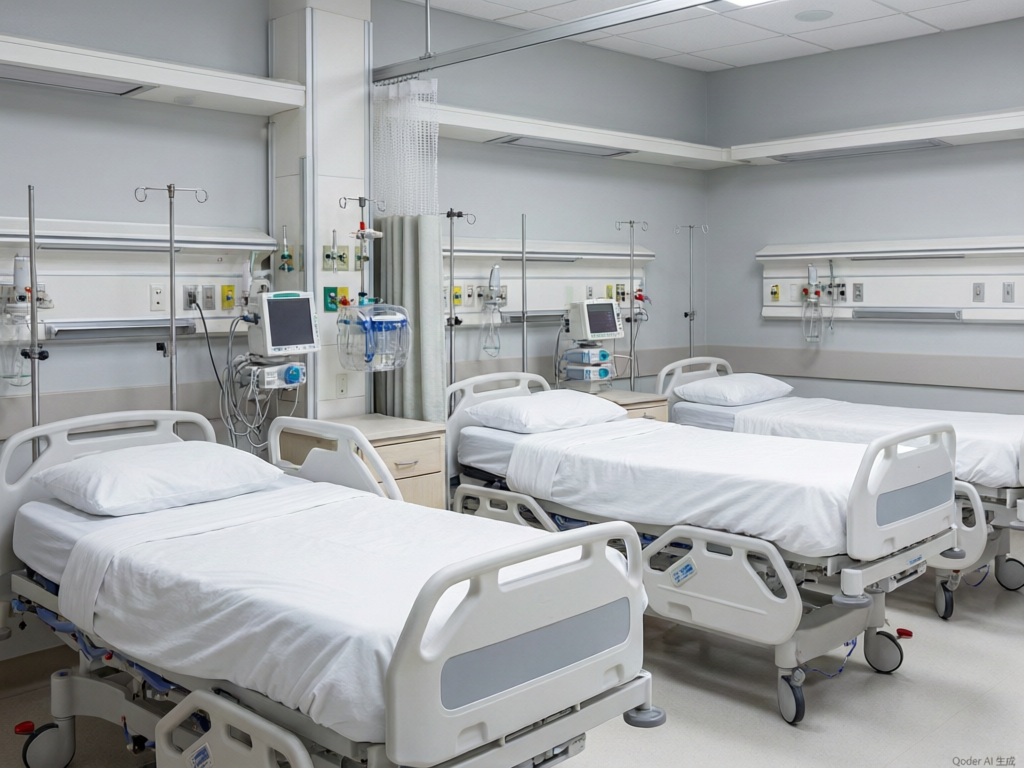
A field hospital program divides into clinical zones with distinct equipment logic. The ward zone: hospital beds, manual crank or basic electric, with mattresses rated for disinfection and rails that survive real handling. The surgical zone: at least one electric operating table with radiolucent options where imaging is planned, a LED surgical light with battery backup for grid instability, and instrument trolleys sized to the OR workflow. Recovery and support zones: recovery beds, medication trolleys, and the spares package that keeps the program running between supply runs. Organizations with field experience, MSF among the most documented, have published extensively on how these packages behave in displacement settings; the MSF explainer on building field hospitals records the operational realities, difficult terrain, power limits, water constraints, that drive the equipment list more than any catalog does.
The Timeline Is the Product
Field hospital programs compress schedules: tender to delivery in weeks, not quarters, because the clinical need is running while paperwork moves. The factory-side disciplines that make such timelines real: stocked platforms rather than build-from-scratch configurations (bed frames and table bases with proven production runs ship in days; bespoke variants do not), export packaging completed in-house (drop-tested export cartons with container plans, because repacking wastes the week), and documentation prepared for humanitarian customs, certificates of origin, free-sale certificates with apostille where the destination requires them, packed with the shipment rather than emailed after. Our factory runs NGO and ministry programs on exactly this model, and the hospital bed line holds platform stock precisely so ward packages ship against deadlines that marketing never sees coming.
Commissioning and Training Close the Program
Equipment that arrives assembled but uncommissioned is cargo, not a hospital. Field programs end with installation and commissioning: operating tables leveled and function-tested, lights balanced and battery-backed up, beds cycled, and the clinical and technical staff trained on the controls they will hold at 2 a.m. Remote commissioning support has become standard in the NGO context, video-guided installation with local technicians, backed by documentation designed for staff whose first language is not the manual’s, which is why our multilingual UI and documentation support exists as a product feature rather than a favor. The program ruang operasi turnkey bundles this sequence, 3D layout through commissioning, for buyers who need the OR zone to function on a date, not eventually.

What NGO Buyers Should Put in the Tender
Four tender lines separate working programs from stranded containers. One: platform-based equipment lists, naming existing factory models rather than unique configurations, because unique equals slow. Two: spares and consumables shipped with the main package, bulbs, fuses, hand controls, casters, sized for the deployment period. Three: commissioning scope defined, who installs, who trains, in what language, with what documentation. Four: after-sales response commitments with realistic channels, remote video support and parts courier timelines rather than promises of local service networks that do not exist. Programs structured this way survive their second year, which is the real test of a field hospital, and buyers comparing factories can check the certification layer, CE marking and ISO 13485 quality systems, on our halaman tentang alongside the references.
Pertanyaan yang Sering Diajukan
How fast can a field hospital equipment package ship?
Platform-based packages, beds, tables, lights from existing production lines, ship in days to weeks depending on quantity; bespoke configurations add tooling and validation time that NGO timelines rarely carry.
What documentation does NGO equipment need at customs?
Certificates of origin, free-sale certificates (apostilled where required), packing lists tied to the tender, and product certificates (CE, ISO 13485 factory system) packed with the shipment.
Who commissions the equipment on site?
Local technicians supported by remote video commissioning from the factory, with multilingual documentation; on-site engineer deployment is quoted for larger programs.
What spares should ship with the program?
Hand controls, bulbs, fuses, casters, and mattress covers sized to the deployment period, because a missing spare grounds an operating table faster than any major failure.
Running a tender or emergency program? Contact our project desk at sanyang10086@gmail.com or WhatsApp +86 195 0862 5836, and see the platform options on our solutions page. More about the factory behind these programs: SANYANG Medical.
Bacaan terkait: Prefabricated and Modular OR Suites: Equipment Implications
Anda Mungkin Juga Menyukai...

Pembangunan ICU Grup Rumah Sakit Swasta: Paket 36 Tempat Tidur
A private hospital group expanding into intensive care faces an equipment question that looks like...

Live Hospital OR Retrofit: The Phased Playbook for Upgrading While Operating
Retrofitting an operating room inside a hospital that keeps operating is the hardest project in...

Case Study: Equipping a 40-Bed District Hospital in One Quarter
A 40-bed district hospital is the volume sweet spot for turnkey medical equipment supply: big...