
Ask for three things before the balance is built: a configuration drawing with the outlet set frozen on it, the variant code that will be stamped on the units and written on the crate label, and a pressure and leak test record per serial with the gas used for the test. The drawing should state, outlet by outlet, which gas each position carries, what type of probe or terminal it accepts for your market, and where the position sits on the pendant. A catalogue page is not a configuration, and a general certificate is not a test record. The unit in your theatre was built to something; the question is whether that something was written down and signed before production.
One model, several configurations
A medical pendant is a platform, and the outlets, sockets and shelves are configured on top of it. The same model number can be ordered with different gas positions, different electrical socket standards for different markets, and different accessory rails, and a factory building a batch from a generic drawing will produce whatever the last order used. That is how a pendant arrives with the right arm and the wrong outlets, and it is why the configuration belongs on the order rather than in a conversation.
So write a configuration page and have both sides initial it: each outlet position with its gas, the electrical socket type and count per market, the position of the shelves, the brake or gas spring arrangement and the accessories included. Ask for the pendant’s own label to carry the drawing number and the variant code, and for the same reference to appear on the crate label. When a unit arrives in a hospital, the facilities team can then compare the physical unit against the drawing in the file rather than against a memory of what was agreed. The planning side of where these services land in the room, including power and gas zones on the ceiling, is the subject of the pendant zone planning notes, and the configuration page is the document that makes those plans concrete.
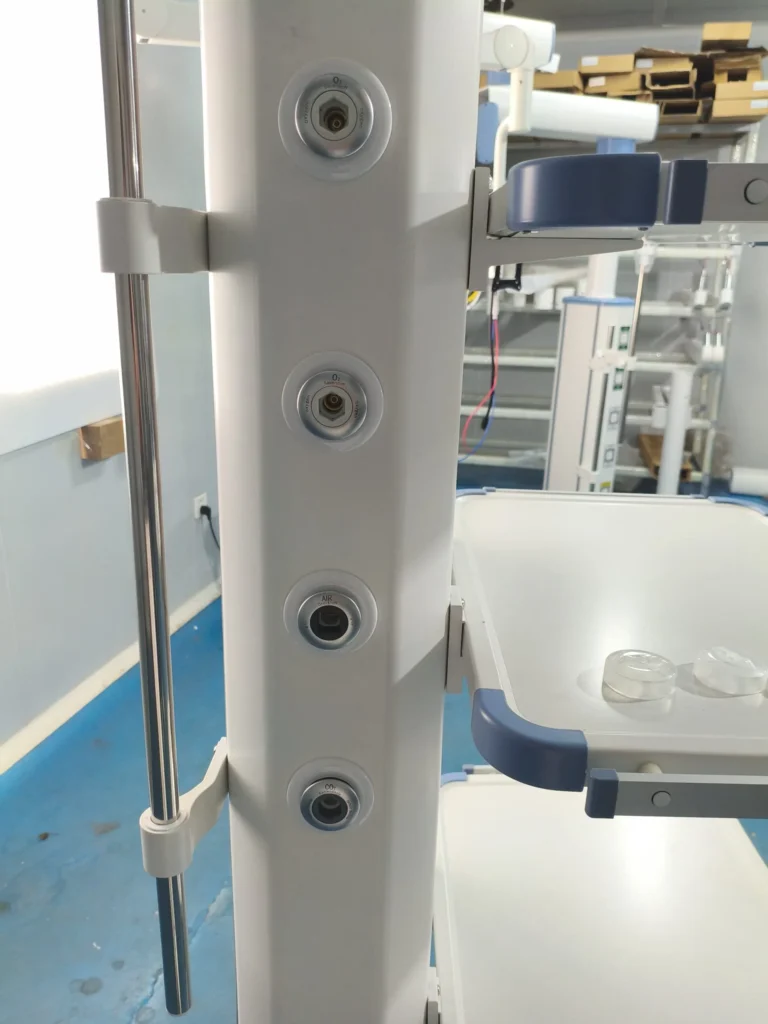
Per-serial testing, not per-batch assurance
A pendant is not a passive part; it carries gas, and the assembly that carries it has to be proven for each unit. Ask for a test record that names the serial, the date, the gas used for the pressure and leak test, the value held and the duration, and the person who signed it. Ask to see one completed record before the balance is built, so you know what the document looks like when it is filled in properly. A batch statement that all units were tested is a sentence; a record per serial is evidence, and it is the record your maintenance team will photograph and file in the room’s folder.
Where the outlets ship with plugs or covers, ask for that to be visible in the pre-shipment photographs, and for the packing to keep them in place. A pendant that arrives with an open outlet has a component that has been exposed to site dust for a month, and the first thing the medical gas contractor does is inspect it. The commissioning checklist on this site, at the crate-to-first-surgery checklist, is where the test record and the outlet inspection are recorded at handover, and the factory’s record is what the handover compares against.
Do not change gas outlets on site
The outlet on a pendant connects equipment to the hospital’s medical gas pipeline; the reference on medical gas supply describes these terminal units and station outlets as the interface between equipment and the pipeline, and the interface is exactly where mistakes become dangerous. A gas-specific outlet of the wrong type in the wrong place, or one changed on site without the correct parts, is a hazard that no amount of documentation repairs afterwards. So agree the rule before the balance ships: the factory supplies the outlet assembly as ordered, and any change is made by the hospital’s medical gas contractor, to the local rules, with the parts the factory supplies for that specific variant.
That rule is also the fastest route out of the problem you have now. Instead of a general complaint about configuration, you make two practical requests: the correct outlet assembly for each affected pendant, with fitting instructions and the part numbers, and a statement of which local standard the assembly meets. The contractor then works with parts that match the pendant, and the factory’s documentation is about the part rather than about the whole machine.
The record that keeps the next order clean
Once the configuration is correct on paper, keep the page with the room drawings and the commissioning file. The next pendant order references the drawing number instead of rebuilding the configuration from a conversation, and a new theatre can be specified by copying the page and changing only what differs. Ask the factory to confirm that the drawing number will be quoted on future orders for the site, and to notify you in writing if any component in the configuration is substituted, since a substituted socket or outlet can change what the room can use without changing what the drawing shows.
Keep the per-serial test records with it, one copy in your own file and one in each room’s folder. When the medical gas contractor or the hospital’s safety officer asks for evidence that the pendant was tested, the answer is a document with a serial number on it rather than a request to the factory. That difference is worth the ten minutes it takes to ask for the file at the ordering stage.
What to do with the unit you have
Do not let the contractor improvise a fix while the question of the correct configuration is open. Photograph the outlet panel on the delivered pendant, mark each position on the photograph with what it currently carries and what it should carry, and send that picture with the configuration drawing. Two annotated photographs, the current state and the intended state, make the change unambiguous and let the factory quote the right parts.
Then decide the sequence with the hospital: the affected pendant stays out of service until the outlets match the drawing, and the theatre’s opening plan is adjusted around that rather than around a promise. Where the pendant services a theatre that is already running, the medical gas contractor schedules the change with the hospital’s engineering team, and the factory ships the parts ahead of the balance so the two orders do not arrive as one problem.
Ask who checks the configuration before the crate closes
A configuration page only works if someone is accountable for it at the moment of packing. Ask the factory to name the person who checks the finished unit against the drawing and to have that check recorded with the serial: outlet positions verified one by one, socket types verified against the market, accessories verified against the list. That check takes a few minutes per unit and it is the last opportunity to catch a mixed batch, where units for two different customers were built on the same line in the same week. On a multi-market order, the risk is not the design; it is two similar units going into the wrong crates.
Ask for the crate label to carry the variant code and the destination market for the same reason. It lets the hospital see at a glance which configuration the unit was built to, before the crate is opened and before the medical gas contractor plans their visit. Where a unit has to be returned to the factory for a change, the label is also what tells the warehouse which units are affected, without opening every crate.
Write the hold the same day
Send one message to the person who controls the order and the drawings. Name the order and the model. Say the delivered pendant’s gas outlets do not match the theatre’s configuration and no per-serial pressure test record was in the crate, and state the hold in one sentence: no further pendants built until the configuration is signed and the test record exists. Name what you need. First, the configuration drawing with each outlet position, its gas, its terminal type for your market and the socket set, initialled by both sides. Second, the variant code as it will appear on the pendant label and the crate label. Third, a sample per-serial pressure and leak test record showing the gas used, the values held and the signature. Fourth, the correct outlet assembly and part numbers for the delivered unit, for the medical gas contractor to fit.
A release is your note that the drawing matches the theatre, that the balance will be built to it, and that the test records travel with each serial. A catalogue page, a general certificate for the model, and a promise to check the outlets before packing do not release the hold.
Keep the annotated photographs, the signed drawing and one test record in the order folder with the room drawings. Configuration mistakes on medical equipment are cheap to prevent and expensive to discover in a theatre, and the file from this order is what makes the next one a comparison rather than an investigation.
Bacaan terkait: Infant Bassinets and Baby Trolleys: Specifying for Maternity Units
Bacaan terkait: Surgical Suite Floors and Equipment Anchoring: The Loads the Building Must Take
Anda Mungkin Juga Menyukai...

Dull Patches and Crazed Covers: Freeze the Wipe List, Then Fix the Units
The showroom table was wiped when someone remembered to dust it. Your theatre wipes every...

Calibration Records for OR Equipment: What to Keep, How Often and Who Signs
Calibration is one of those words that survives in procurement documents long after everyone has...

The Demo Rail Took Your Clamps. The Delivered Rail Does Not.
Ask for four things before the rest of the tables are built. First, the identity...