
A clinic chain in East Africa signed a contract for 12 sites in one season: 2 hub hospitals with operating theaters and 10 spoke clinics running consultations, minor procedures and recovery. The equipment had to arrive in the right order, or the openings would slip.
This case study walks through the 3-stage rollout we planned with the group’s procurement office: package design, consolidated shipping with customs staging, and rolling commissioning.
The numbers below come from the actual project file, with client names withheld.
Stage 1: Assessment and package design
We broke the same topic down in iso 10993 biocompatibility
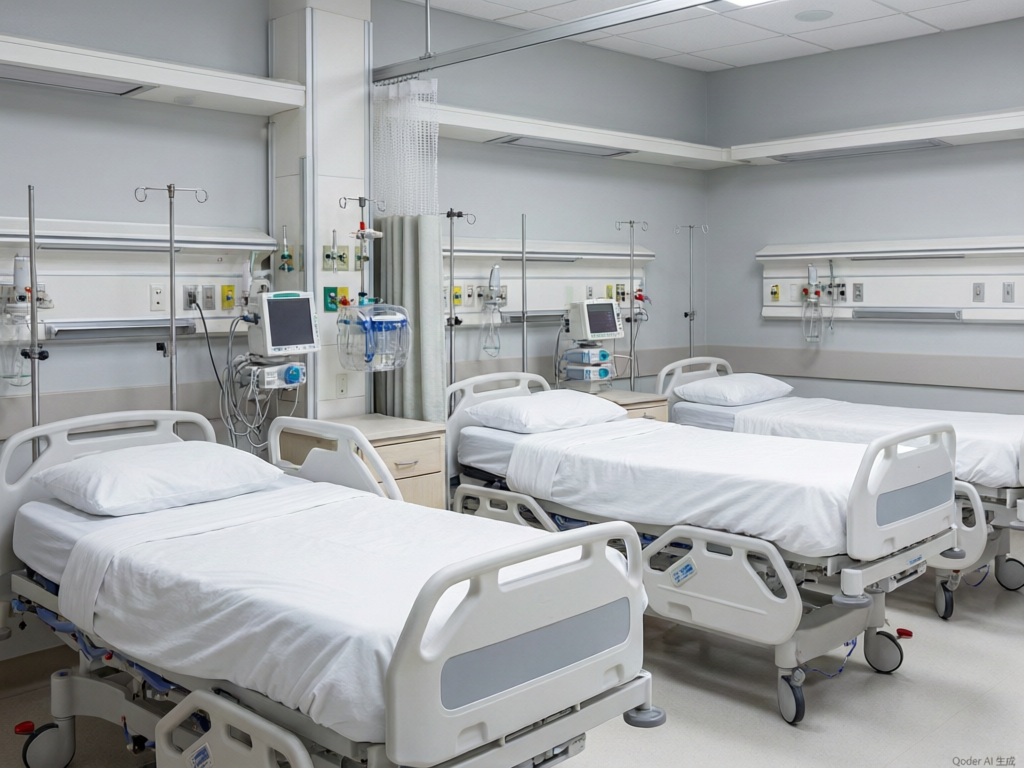
Everything started with a two-week survey of all 12 sites, run by the chain’s clinical lead and our application engineer. The survey captured room dimensions, door widths, power capacity, oxygen supply type and floor condition at every location, because a 620 mm wide operating table that cannot pass a 580 mm clinic door is not a bargain at any price. The findings sorted the sites into 2 hub theaters needing full OR suites and 10 spokes needing consultation, treatment and recovery equipment only. From that survey we built one master package list: 2 complete surgical light and operating table suites for the hubs, 12 examination couches per spoke cluster, 46 recovery and ward beds across the network, and 30 medication and instrument trolleys distributed by workload. Each line item carried a delivery stage tag, so the factory knew exactly which container each item belonged to. Buyers running similar multi-site programs should budget the survey first; our NGO field hospital program guide shows the same sequencing logic at a smaller scale, and the room-by-room details follow our programme de salle d'opération clé en main used for the two hubs.
Stage 2: Consolidated shipping and customs staging
Shipping decided the calendar. Instead of 12 partial shipments, the full order moved in 3 consolidated 40-foot containers: hub OR equipment first, ward and recovery furniture second, trolleys and spares third. Consolidation cut freight cost per site by roughly 30 percent compared with parcel-level shipping, and it moved the customs battle to one place. Import duties on medical equipment in the destination country ran 0 to 25 percent depending on classification and exemption certificates, so we pre-filed the exemption paperwork for registered hospital equipment 6 weeks before the first vessel sailed. The containers landed at a single bonded warehouse, where a 5-person team unboxed, verified and re-sorted equipment into 12 site-labeled pallet lots over 4 days. Every pallet carried a packing list matched to the survey file from Stage 1. The re-sort matters more than it sounds: equipment that arrives unsorted at 12 sites puts assembly decisions on local staff who have never seen the units before. Global health procurement programs described by PATH and surgical capacity work tracked by the World Health Organization both document how logistics planning, not clinical skill, is the usual bottleneck in multi-site African health rollouts.

Stage 3: Rolling commissioning and training
Commissioning ran as a 6-week rolling circuit, two engineers in one van, 2 to 3 days per spoke site and 5 days per hub. At every site the sequence was fixed: unpack and inspect against the packing list, assemble and anchor, run electrical safety checks on every powered unit, then a clinical handover with the actual staff on shift, not a classroom session. Training covered bed and table controls, trolley brake care, light intensity settings and the daily checklist we laminated in English and the local language. Each site signed a commissioning certificate with measured values recorded, earth continuity, light output at working distance, table articulation cycles, which became the baseline for the 24-month warranty period. The hub theaters additionally received airflow and equipment-positioning verification before the first case, following the placement principles in our guide de conception de salle d'opération à flux laminaire. Spoke clinics that lacked full theater buildouts still received minor-procedure lighting and compact tables, the configuration reviewed in our compact operating tables guide for day-surgery workloads.
What the phasing bought: cost and risk numbers
The staged plan was compared against the alternative the chain originally requested: everything shipped direct to each clinic. Freight: 3 consolidated containers at roughly 3,100 USD each versus 12 door-to-door shipments that quoted 900 to 1,400 USD per site. Customs: one exemption filing and one inspection event versus 12 separate clearance sessions, each a chance for storage fees at 35 to 60 USD per day. Damage and loss: with single-point staging, 2 items needed replacement across the whole program, both resolved from the spare lot in container 3. Schedule: the first hub opened 7 weeks after contract, all 12 sites were live inside 19 weeks, and the original direct-ship plan had no credible path under 24 weeks because customs clearance at each site ran 10 to 15 working days. Risk: the biggest saving was invisible, no site ever held equipment it could not yet install, which is where capital sits dead and warranty clocks quietly run. Financing phased deliveries also let the chain match payments to openings, the cash-flow structure explained in our price and terms negotiation guide, and the multi-site service commitments followed the framework in our distributor agreement guide.
Equipment list logic: beds and trolleys come first
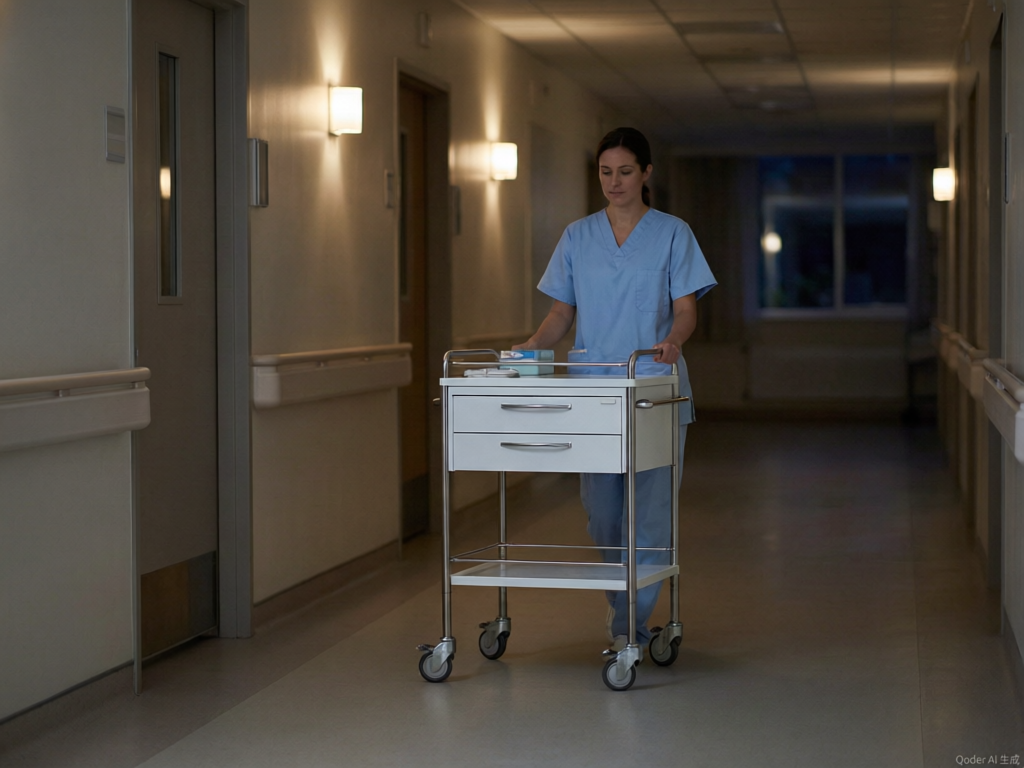
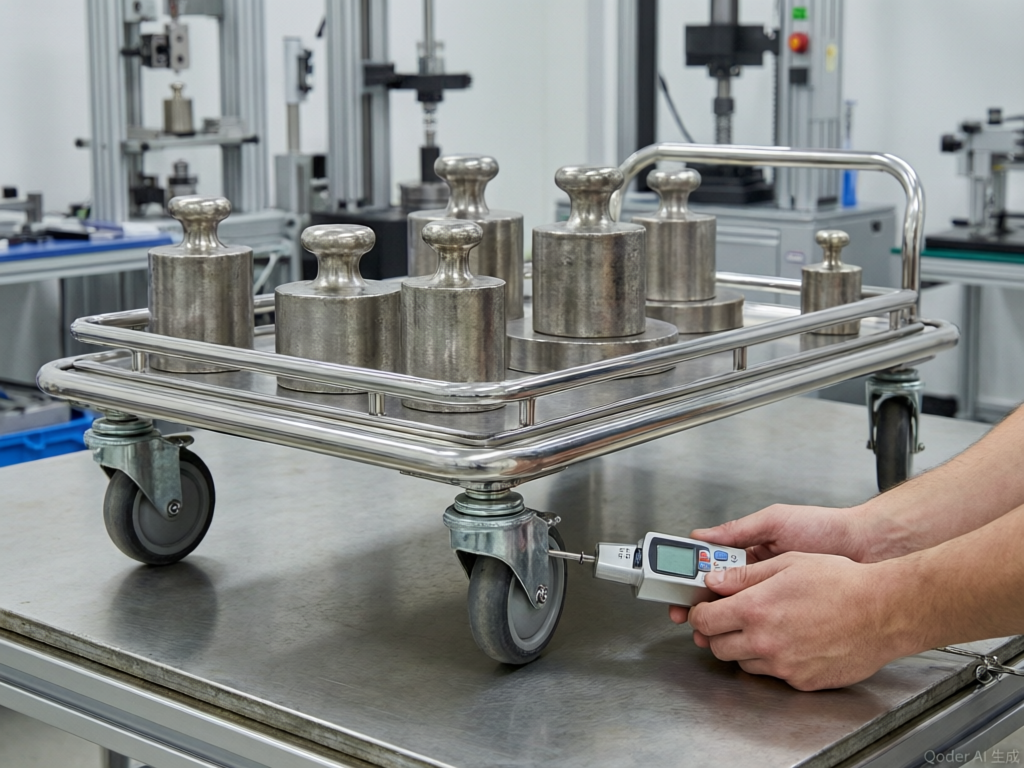
A counterintuitive result of the rollout: the lowest-cost items produced the largest early impact. The 46 beds and 30 trolleys across the network cost under 20 percent of the program total but opened 8 of the 12 sites to revenue-generating consultations within week 10. Ward beds and quiet-running medication trolleys do not need theater infrastructure, specialized power or dedicated rooms, and staff reach competence on them in a single shift. That is why the package design tagged them for container 2 while OR suites waited for container 1 slots only after hub structural work passed inspection. Load safety was verified at the factory before shipment, with trolleys load-tested well beyond rated capacity as shown below, so the only site-level variable was floor condition. The bedside fleet also anchors the maintenance plan: battery and caster wear items across beds, tables and lights are budgeted together in our replacement cycles guide, and the ward side of the catalog is covered under lits d'hôpital et chariots médicaux.
Frequently asked questions
Combien de temps prend le déploiement progressif des équipements sur 12 sites ?
Ce programme s'est déroulé sur 19 semaines, du contrat à la mise en service de tous les sites : 2 semaines d'étude, 6 semaines de production et d'expédition, puis un circuit de mise en service roulant de 6 semaines.
Pourquoi consolider les conteneurs plutôt que d'expédier à chaque clinique ?
Un événement de dédouanement unique au lieu de 12, environ 30 % de fret en moins par site, inspection centralisée et palettes étiquetées par site qui laissent les décisions d'assemblage au personnel formé.
What equipment should a clinic chain install first?
Beds, examination couches and trolleys: they need no special infrastructure, staff learn them in one shift, and they open consultation revenue while theater work continues.
How is staff training handled across many small sites?
A rolling engineer circuit trains the actual shift staff on site, 2 to 3 days per spoke, using a laminated daily checklist in English and the local language.
For the full semi-electric versus full electric comparison and acceptance checks, see our semi-electric hospital bed guide.
For how district maternity and pediatric ward programs are scoped and phased, see district maternity and pediatric ward program.
Lecture connexe : normalisation des équipements hospitaliers sur tous les sites.
Vous pourriez aussi aimer...

Construction d'USI pour un groupe hospitalier privé : un forfait de 36 lits
A private hospital group expanding into intensive care faces an equipment question that looks like...

NGO Field Hospital Program: Beds, ORs and Tight Timelines
When a humanitarian emergency breaks, the equipment list for a field hospital lands on suppliers...

Live Hospital OR Retrofit: The Phased Playbook for Upgrading While Operating
Retrofitting an operating room inside a hospital that keeps operating is the hardest project in...