
Résumé analytique
Ce qu'un lit d'hôpital à hauteur réduite doit offrir pour les services de gériatrie et de réadaptation : hauteurs de plancher d'environ 25 à 30 cm, amplitude de réglage complète, contrôle de l'écart des barrières et alarmes de sortie de lit.
Lits à hauteur réduite pour services gériatriques et de réadaptation
When a patient can no longer safely step down from a standard-height bed, the answer is not a lower mattress; it is a bed built to bring the sleeping surface close to the floor. Low-height hospital beds reduce the distance in a fall, make transfer easier for a patient who has lost leg strength, and give a caregiver a safer reach. This guide covers what a low-height bed has to provide, the floor heights that matter, and the safety features a ward should specify.
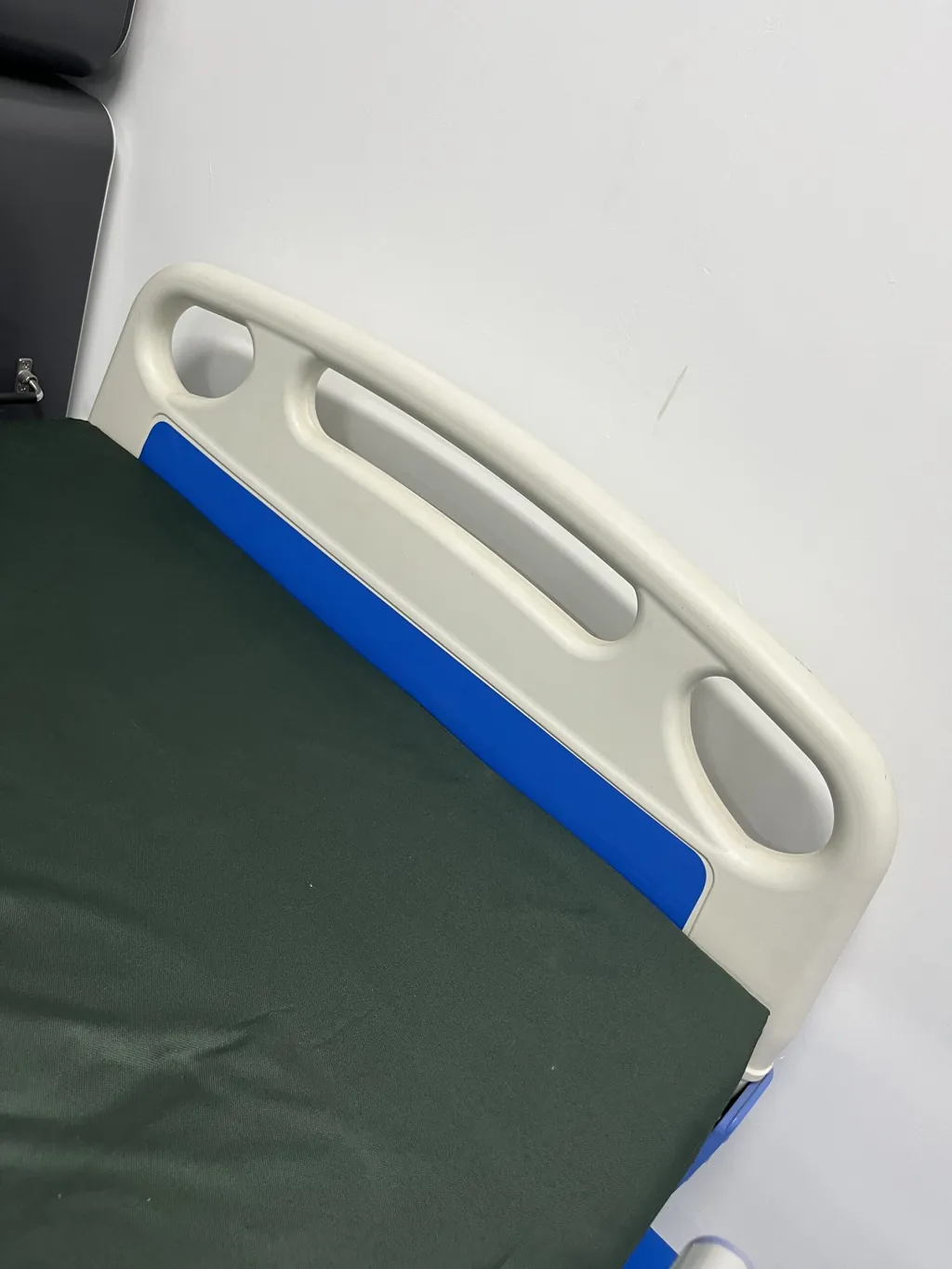
Match the bed to an ageing population on the lits d'hôpital range, with the low deck and the full adjustment range specified for a falls-risk ward.
What low-height means in practice
Low-height is not a single number; it is a range that usually starts at roughly 25 to 30 cm to the deck at its lowest point, against a standard bed that sits much higher. The lower the deck, the shorter the fall if a patient rolls out, and the easier it is for a patient to slide their feet to the floor and stand. But the bed still has to rise high enough for a caregiver to work safely, so a low-height bed typically keeps the full range of adjustment rather than trading the low position for a fixed short height. The result is a bed that is low when the patient is sleeping and higher when the care task needs it.
Who it is for and what it changes
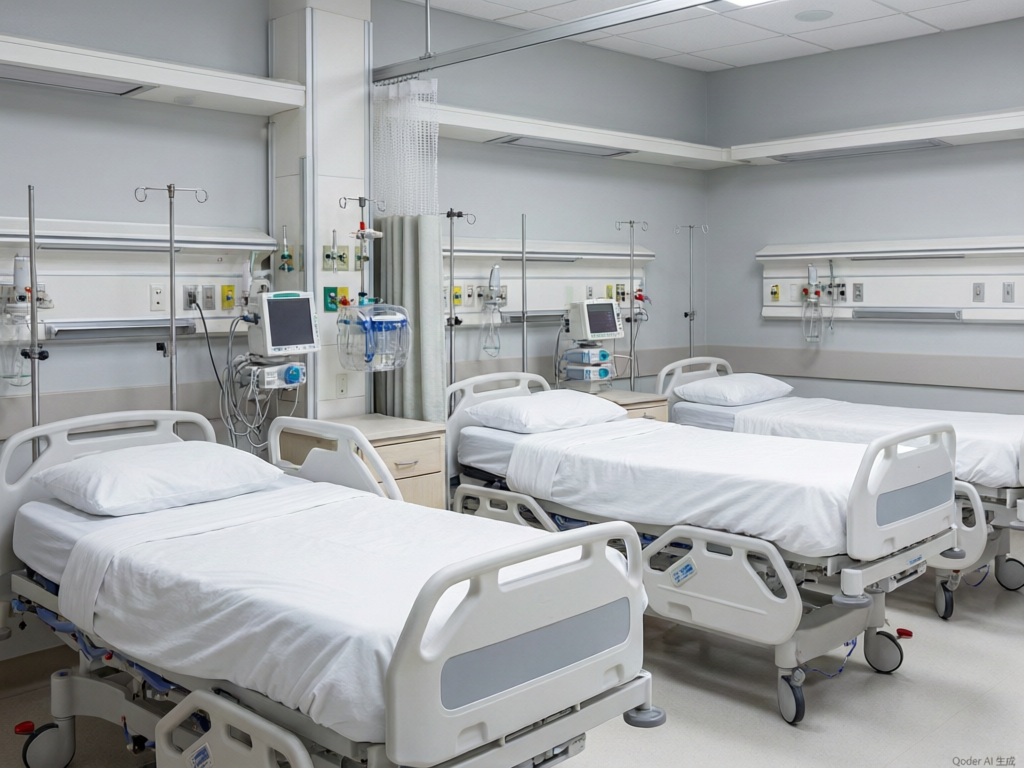
Low-height beds belong in elderly care, rehabilitation, and any ward where falls are a reported risk. For a patient recovering a gait, a bed that lets them plant both feet on the floor and push up with both hands is genuinely different from one that leaves them dangling at a height they cannot control. For a caregiver, the benefit is reach and back protection; they can raise the bed for a dressing change and lower it for a transfer without lifting. The bed also changes the incident rate, because the most serious injuries in a fall come from the height and the floor condition, and reducing the height reduces the severity even when a fall still happens.
Safety features to specify
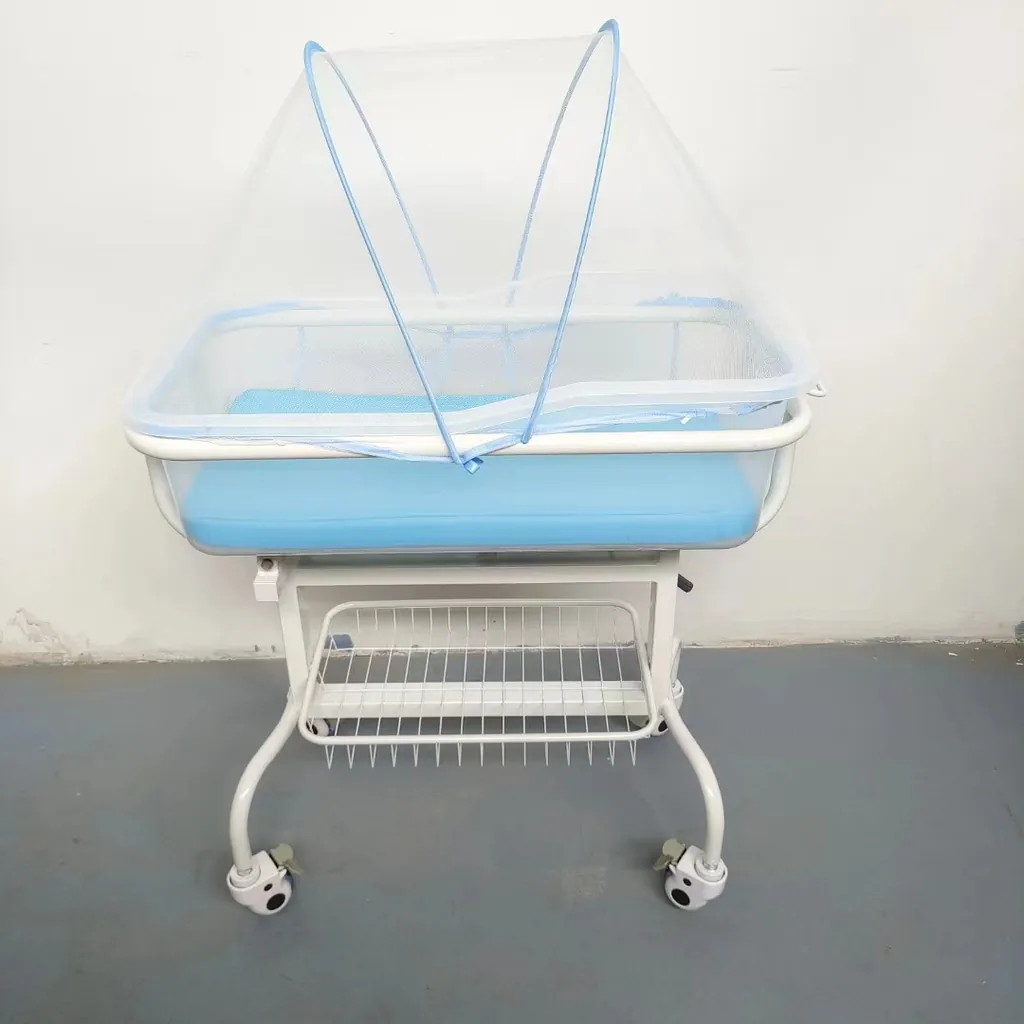
A low-height bed is only useful if the surrounding safety is right. Specify a full-length side rail or a split rail with a controlled gap that stops a patient from being trapped between the rail and the board, and a mattress that fits the deck without a gap at the sides. Add a bed-exit alarm or a floor mat for the highest-risk patients, because a low bed cuts the severity of a fall, not the frequency. The casters should lock securely, and the height adjustment should be smooth enough that the bed does not jolt when it moves. The design guidance for healthcare facilities sets the expectation for room and equipment dimensions, and the FGI guidelines are the reference for how the built environment supports patient safety.
Planning a rehabilitation or elderly-care ward? Send Sanyang your target deck height and patient mix for a low-height bed spec.
Lecture connexe
See the bed range on lits d'hôpital and the ward program on OEM / ODM.
FAQ
Jusqu'à quelle hauteur un lit d'hôpital à hauteur basse peut-il descendre ?
La plupart commencent à environ 25 à 30 cm du sol au réglage le plus bas, contre un lit standard qui se situe nettement plus haut, tout en conservant toute la plage de réglage pour l'accès des soignants.
Qui bénéficie d'un lit à faible hauteur ?
Patients âgés, patients en rééducation et toute personne présentant un risque de chute, car une surface de sommeil plus basse réduit la distance de chute et facilite la mise des pieds au sol.
Un lit bas réduit-il le risque de chute ?
Cela réduit la gravité, pas la fréquence. Un lit bas raccourcit la distance de chute, mais les alarmes de sortie de lit, le contrôle de l'espace entre les barrières et un bon ajustement du matelas restent nécessaires pour prévenir la chute elle-même.
Pour plus de détails, voir notre Batterie de secours et abaissement d'urgence du lit d'hôpital.
Pour plus de détails, voir notre Brancard ou lit d'hôpital.
Vous pourriez aussi aimer...

Bariatric OR Package: Table, Bed and Trolley Coordination
A bariatric OR package coordinates the operating table, the patient bed and the trolley for...

Lumen vs Lux: What These Surgical Light Units Mean
Lumen and lux are not the same thing. Lumen measures the total light a fixture...

Emergency Department Equipment for Trauma, Resuscitation and Triage
An emergency department is built around speed, and its equipment has to be ready the...