
Executive Summary
Copper alloys, silver-ion coatings, or just better cleanability? A manufacturer's honest guide to antimicrobial surfaces on operating room equipment — what the evidence supports and what to specify.
Every procurement spec I’ve reviewed in the last three years has a line in it somewhere about “antimicrobial surfaces.” Sometimes it’s a genuine requirement backed by the hospital’s infection control committee. Sometimes it’s a marketing phrase the last vendor dropped into the tender template and nobody questioned. The problem is that the phrase covers everything from EPA-registered copper alloys with real clinical trial data to a silver-ion logo silk-screened onto a plastic handle with zero third-party verification behind it. If you’re specifying antimicrobial surfaces operating room equipment must carry, you need to know which claims hold up — and which ones quietly evaporate the first time the environmental services team hits the surface with a quaternary ammonium wipe.
We manufacture operating tables, surgical lights, pendants, trolleys, and hospital beds, and I’ve sat on both sides of this conversation: as the factory being asked to add “antimicrobial coating” to a powder coat, and as the advisor telling a distributor which requests are worth paying for. What follows is the honest version — what the evidence actually supports, what the standards actually require, and how to write antimicrobial surface requirements into a tender without paying a premium for paint that does nothing. If you’re outfitting a full room, our turnkey operating room solutions already bake these material decisions into the equipment schedule, but this guide will help you evaluate any vendor’s claims.
One framing note before we start: no surface technology replaces cleaning. The CDC’s Guidelines for Environmental Infection Control in Health-Care Facilities and every serious review in the infection prevention literature are unambiguous on this point — antimicrobial surfaces are, at best, an adjunct to a disciplined cleaning and disinfection protocol. Anything a salesperson tells you beyond that is a red flag.
Step 1: Understand What “Antimicrobial” Actually Means on a Spec Sheet
The word covers at least five distinct technologies, and they are not interchangeable:
- Solid copper and copper alloys — registered with the US EPA as antimicrobial materials that continuously kill bacteria on contact. The strongest evidence base of any option.
- Silver-ion additives — embedded in plastics, powder coats, and textiles. Effective in laboratory tests; the real-world clinical benefit is far less proven.
- Photocatalytic coatings (titanium dioxide) — activated by UV light to break down organic material. Interesting in theory; performance depends on light exposure and coating durability.
- Residual-effect disinfectant coatings — continuously active quaternary ammonium products applied after installation, not a manufacturing feature.
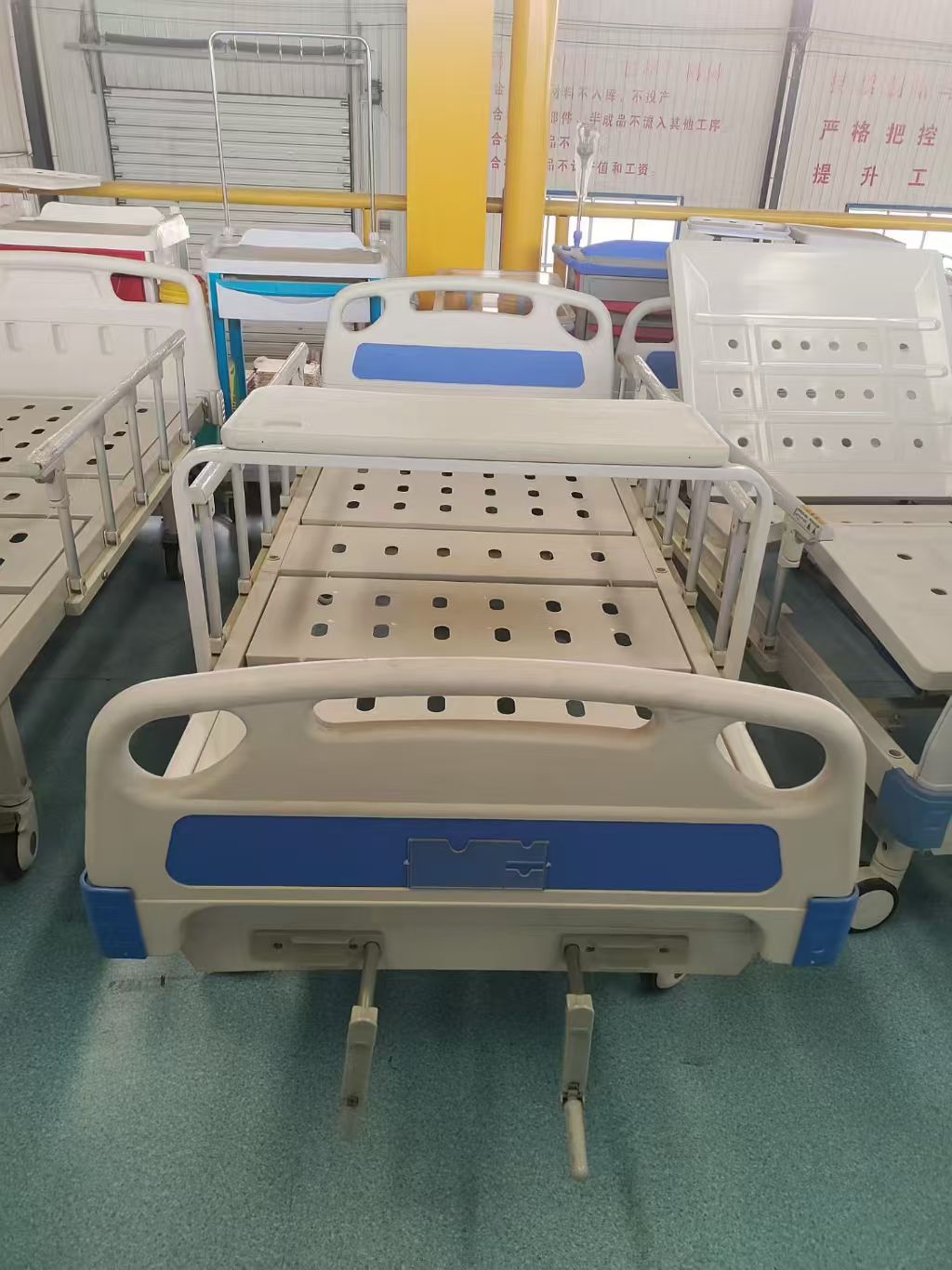
- Cleanable surface engineering — seamless welds, closed-cell powder coat, rounded corners, IP-rated enclosures. Not “antimicrobial” at all, but often the highest-impact choice you can make.
That last category matters more than buyers expect. A 2023 review in the American Journal of Infection Control by Curtis Donskey — one of the most cited researchers in environmental hygiene — concluded that continuous decontamination technologies are a “useful adjunct” at best, and flagged ongoing controversy about how much of the laboratory benefit survives contact with real-world cleaning chemicals, organic soil, and surface wear. Translation: a surface you can actually disinfect, quickly and completely, beats a surface that claims to disinfect itself but can’t be scrubbed.
Rule of thumb from the factory floor: if a vendor can’t tell you the exact test standard behind an antimicrobial claim (EPA registration number, ISO 22196, JIS Z 2801), assume there isn’t one.
Step 2: Weigh the Copper Evidence Honestly
Copper is the one technology with genuine regulatory and clinical weight. The US EPA has registered hundreds of copper alloy compositions as antimicrobial materials, with label claims that they continuously reduce bacterial contamination — killing greater than 99.9% of specified bacteria within two hours of contact under laboratory conditions. That registration is based on a defined EPA test protocol for hard, non-porous copper surfaces, not on a manufacturer’s internal brochure study.
The clinical evidence is real but narrower than the marketing suggests. A systematic review and meta-analysis published via PubMed Central examined whether copper treatment of commonly touched surfaces reduces healthcare-acquired infections. The pooled result favored copper — but the authors were explicit about the limitations: relatively few randomized trials, small sample sizes, heterogeneity in which surfaces were covered, and the confounding effect of concurrent cleaning improvements in the intervention wards. Copper works in the lab and probably helps in the ward. It is not a substitute for a terminal clean, and nobody credible claims otherwise.
Practical implications for OR equipment:
- Copper makes most sense on high-touch, non-critical surfaces: door handles, push plates, grab rails, trolley handles, bed rails in patient rooms.
- It makes less sense on OR equipment surfaces that are disinfected between every case anyway — the incremental kill adds little over a proper wipe-down.
- Copper tarnishes and is chemically attacked by some disinfectants. Verify compatibility with your facility’s approved disinfectant list before specifying it.
- Cost is real. Full copper alloy bed rails or pendant handles add meaningful cost per unit; target them where hand traffic justifies it.
A detail most specifiers miss: “antimicrobial copper” is a family of alloys, not a single material. The EPA registrations span copper content roughly from 60% upward — brasses, bronzes, copper-nickels, nickel silvers — and the kill rate scales with copper content. A 60% brass door handle is registered; it just works more slowly than a 99.9% copper push plate. Finishes matter too: lacquered copper keeps its shine but the lacquer layer blocks the antimicrobial effect, so registered products for healthcare use are typically unlacquered and will tarnish to a brown patina. Some infection control teams hate the look; others use the patina as a visible reminder that the surface is “live.” Either way, align the facilities team before the order lands, not after.
Step 3: Evaluate Silver-Ion Coatings with Skepticism
Silver-ion technology is where the spec-sheet inflation lives. The mechanism is legitimate — silver ions disrupt bacterial cell membranes and metabolism, and ISO 22196 / JIS Z 2801 lab tests routinely show log reductions on treated plastics and coatings. The gap is between “kills bacteria on a pristine test coupon in a petri dish” and “reduces infections in a working OR.”
Three questions expose weak silver-ion claims fast:
- Which test standard, and what’s the report number? Ask for the ISO 22196 report from an accredited third-party lab, tested on the actual finished material, not the raw additive.
- Does the effect survive wear? A powder coat that’s 60–80 microns thick will be abraded at contact points within a year. If the active ingredient is only in the top few microns, the claim dies with the coating.
- Is it compatible with hospital disinfectants? The Healthcare Surfaces Institute has documented cases where disinfection–material incompatibility damaged medical devices and created patient risk. A coating that degrades under quats or hydrogen peroxide wipes is a liability, not a feature.
I’ve watched tenders award a 15% price premium for “antimicrobial powder coating” where the only documentation was a one-page marketing PDF. The same supplier’s ISO 13485 certificate was expired. Check the paperwork before the price.
None of this means silver-ion coatings are worthless. On polymers that are hard to disinfect thoroughly — keyboard membranes, control panel overlays, castor wheel housings — a legitimately tested additive is a reasonable secondary defense. Just don’t pay clinical-grade prices for laboratory-grade evidence.
Watch the language vendors use. “Antibacterial,” “hygienic finish,” “inhibits the growth of odor-causing microbes” — these are marketing-grade claims that often trace back to tests on the raw additive powder rather than the finished coated product, or to tests measuring odor bacteria rather than clinically relevant pathogens like Staphylococcus aureus, MRSA, or Pseudomonas aeruginosa. A claim that only covers odor control is legally safer for the vendor and clinically meaningless for you. The other common gap is test condition: ISO 22196 runs at 35°C and 90% relative humidity for 24 hours under a film that holds the inoculum in contact with the surface. That is a generous environment that no dry OR surface ever sees, which is exactly why the real-world effect is always smaller than the brochure number.
Step 4: Prioritize Cleanability — the Unsexy Feature That Actually Works
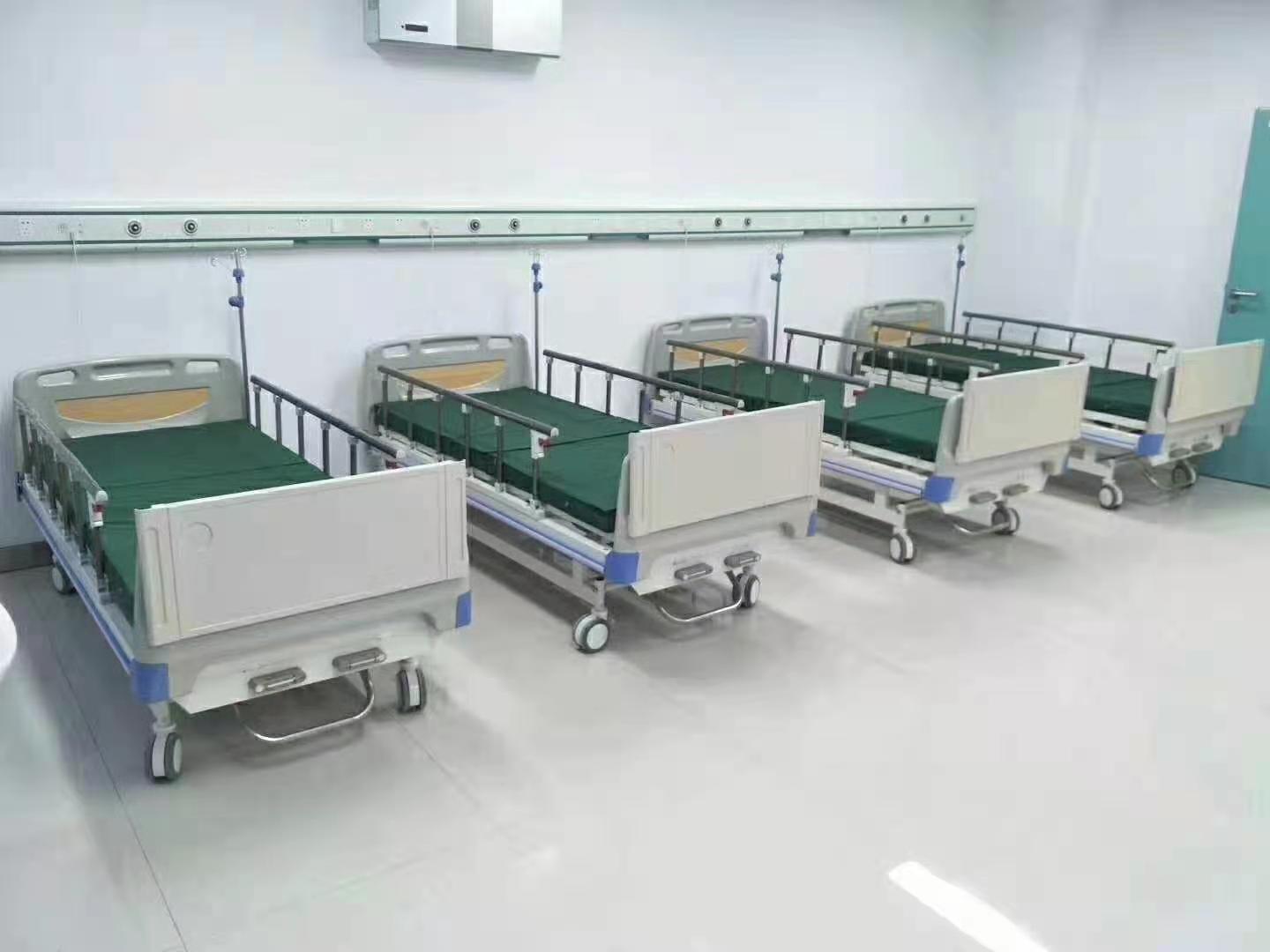
Here’s the part equipment manufacturers don’t lead with, because it’s engineering discipline rather than a marketable additive: the single biggest determinant of whether a surface stays hygienic in service is whether your environmental services team can clean it completely, quickly, and without damaging it. When we design our hospital beds and OR equipment ranges, the cleanability checklist runs longer than the feature list:
- Sealed seams and welds — no crevices where organic soil accumulates and biofilm establishes.
- Rounded internal corners — a wipe reaches into a radius; it doesn’t reach into a 90-degree joint.
- Disinfectant-compatible powder coat — tested against alcohols, quats, and chlorine-based agents at real contact times.
- IP-rated electrical enclosures and controls — a pendant or control panel that can’t tolerate liquid cleaning agents will be cleaned less, guaranteed.
- Removable, dishwasher-safe or wipeable accessories — mattress pads, table cushions, IV pole grips, keyboard trays.
- Minimal horizontal ledges and cable clutter — every ledge is a dust shelf; every exposed cable loop is a cleaning obstacle.
This connects directly to standards compliance. IEC 60601-1 requires that equipment intended for clinical environments withstand the cleaning and disinfection processes specified in its accompanying documents — a reputable manufacturer declares which agents the enclosure tolerates, and risk management under ISO 14971 must consider contamination hazards. Under EU MDR 2017/745, cleaning and disinfection instructions are part of the technical documentation for any reusable device or equipment surface. If a supplier’s IFU says “wipe with a damp cloth only,” that’s a warning about both their materials and their regulatory maturity. Our own experience with harsh cleaning agents — documented in this piece on surgical light cleaning protocols — shows what happens when the wrong chemical meets the wrong housing material.
The Dwell-Time Problem Nobody Designs For
Most disinfectants require a wet contact time of one to ten minutes to achieve their labeled kill. Watch a real turnover clean in a busy OR and you will see surfaces wiped and dried in thirty seconds. The disinfectant chemistry never completes its job — which means the physical removal done by the wipe, and the surface’s ability to release soil, carry most of the actual load. This is why soil-release properties, smoothness, and geometry outperform additives in practice: a surface that cleans completely in one fast pass beats a “self-sanitizing” surface that nobody can scrub. When you audit a supplier, ask to see cleaning validation data or at least a cleanability rationale in their risk file, not just an antimicrobial certificate.
Step 5: Match Surface Strategy to the Equipment Category
Different equipment, different exposure, different answer. This is the matrix I use when advising distributors on what to specify:
| Equipment Category | Surface Exposure Profile | What Actually Works | What to Skip |
|---|---|---|---|
| Operating tables & accessories | Blood/fluid contact, disinfected between every case | Seamless stainless rails, sealed upholstery, disinfectant-rated base shroud | Antimicrobial additives on surfaces already cleaned per-case — negligible incremental value |
| Surgical lights | Handle touched constantly; dome rarely touched | Sterilizable (autoclavable) central handle, smooth sealed dome | Coating claims on the dome itself — hands aren’t the vector there |
| Medical pendants | Handles and shelves touched all day by multiple staff | Rounded shelf profiles, closed cable management, tested silver-ion handle option | Photocatalytic coatings inside a low-light equipment stack |
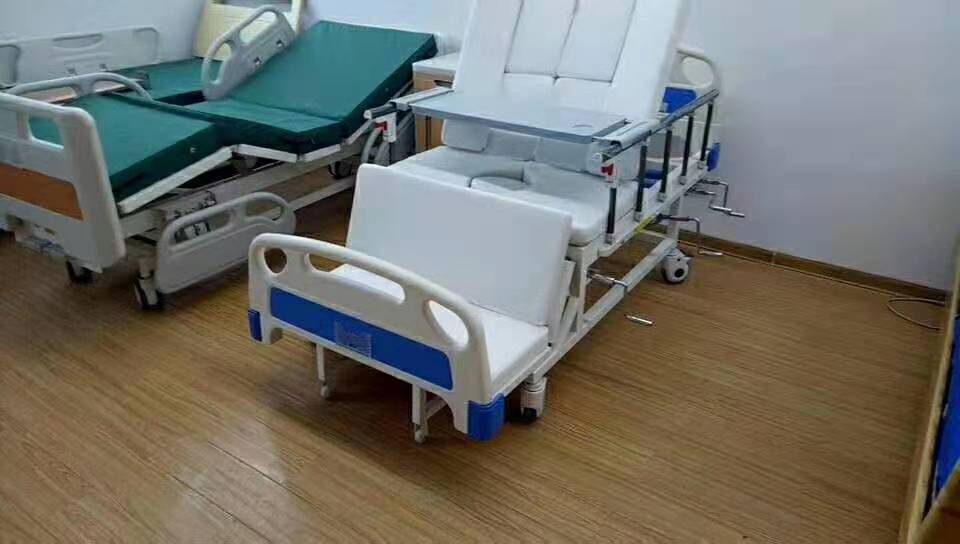
| Hospital beds (ward/ICU) | Highest hand-traffic item in the facility; bed rails touched by staff, patient, visitors | Copper alloy rails where budget allows; otherwise seamless polymer rails with tested additive | Untested “antimicrobial” stickers or painted logos |
| Medical trolleys & carts | Pushed between rooms; handles are the contamination highway | Copper or tested-coated push handles, smooth drawer fronts, sealed castors | Deep-ribbed surfaces that look hygienic in renders and trap soil in service |

A practical budget split I give distributors: spend 80% of your “hygiene premium” on cleanability features across the whole equipment schedule, and the remaining 20% on genuine antimicrobial materials for the top ten touch points per room — handles, rails, push plates. In a 20-bed ward refit, that usually means copper or tested-additive rails on ICU and isolation-room beds first, standard cleanable spec everywhere else. You get a defensible infection-control story for the tender evaluation committee without paying a coating surcharge on 300 square meters of powder coat that hands never touch.
Browse our full OR and ward equipment product range and you’ll see this philosophy applied: smooth powder-coated steel, sealed joints, removable cleanable components — the hygiene is in the geometry, not the sticker.
Step 6: Write Enforceable Antimicrobial Requirements into Your Tender
If antimicrobial surfaces belong in your procurement spec, write them so they’re verifiable. Vague language (“surfaces shall be antimicrobial”) is unenforceable and invites the cheapest interpretation. Specify instead:
- Named test standard + evidence: “Copper alloy surfaces shall be EPA-registered antimicrobial copper alloys, registration number supplied” or “Polymer touch surfaces shall demonstrate ≥2 log reduction per ISO 22196, tested by an ISO/IEC 17025 accredited lab on the finished material.”
- Disinfectant compatibility: “All external surfaces shall tolerate [your facility’s approved agents] at manufacturer-specified contact times without discoloration, cracking, or loss of function; compatibility statement required in the IFU per IEC 60601-1.”
- Durability: “Antimicrobial properties shall be integral to the material or coating for the stated service life; wear-through at contact points shall not void the claim.”
- Quality system: supplier certified to ISO 13485; declaration of conformity available for the specific configuration quoted.
This language does two things. It filters out vendors whose antimicrobial claim is a marketing badge, and it gives your biomedical engineering team something testable at acceptance inspection. If you need a second set of eyes on a spec or a factory’s documentation before award, talk to our engineering team — we review tender language for distributor partners regularly.

Conclusion
Antimicrobial surfaces in OR equipment are a spectrum, not a checkbox. At one end: EPA-registered copper alloys with real (if bounded) clinical evidence, best deployed on the highest-touch surfaces in the ward and corridor. In the middle: silver-ion additives that are legitimate when backed by ISO 22196 test reports on finished materials and worthless when backed by a brochure. And underneath all of it: the unglamorous engineering — sealed seams, cleanable geometry, disinfectant-compatible finishes, IEC 60601-compliant IFUs — that determines whether your cleaning protocol can actually do its job. Specify for evidence, not adjectives, and spend the antimicrobial budget where hands actually go.
Frequently Asked Questions
Do antimicrobial surfaces replace manual cleaning in the operating room?
No. Every major guideline, including CDC environmental infection control guidance, treats antimicrobial surfaces as an adjunct at most. Between-case and terminal cleaning and disinfection remain mandatory regardless of any surface technology installed.
Is copper really proven to reduce healthcare-acquired infections?
The laboratory evidence is strong — EPA-registered copper alloys kill >99.9% of test bacteria within two hours under protocol conditions. Clinical meta-analyses show a favorable trend toward fewer infections in copper-fitted wards, but authors caution that the trial base is still limited. Treat copper as a worthwhile enhancement for high-touch surfaces, not a guaranteed outcome.
Are silver-ion coatings on hospital equipment worth paying for?
Sometimes — specifically on hard-to-clean polymer components and high-touch handles, when the supplier provides an ISO 22196 or JIS Z 2801 report from an accredited lab on the finished product, plus disinfectant compatibility data. Without that documentation, the premium isn’t justified.
What standards should a tender reference for antimicrobial surfaces?
Use ISO 22196 (or JIS Z 2801) for treated plastics and coatings, EPA antimicrobial copper alloy registration for copper surfaces, IEC 60601-1 for cleaning/disinfection tolerance of medical electrical equipment, and ISO 13485 as the supplier quality baseline. Require test reports on the finished material, not the raw additive.
Which surfaces should get the antimicrobial budget first?
Rank by touch frequency and cleaning difficulty: door hardware and push plates, bed rails, trolley and pendant handles, then control panels and keyboard surfaces. Surfaces already disinfected between every patient contact — like the operating table top — get the least incremental benefit from antimicrobial additives.
You May Also Like...

Bariatric OR Package: Table, Bed and Trolley Coordination
A bariatric OR package coordinates the operating table, the patient bed and the trolley for...

Lumen vs Lux: What These Surgical Light Units Mean
Lumen and lux are not the same thing. Lumen measures the total light a fixture...

Emergency Department Equipment for Trauma, Resuscitation and Triage
An emergency department is built around speed, and its equipment has to be ready the...