
Population aging is the slowest-moving force in hospital equipment demand, and the one with the most predictable math. The share of people over 60 is rising in every major market, older patients occupy hospital beds for longer, and the equipment those beds carry — rails, motors, backup power, mattress systems — is specified differently than it was a generation ago. For distributors planning product lines and stock, the question is not whether aging will change demand, but which bed categories and configurations it will change first.
This guide connects the demographic numbers to the bed specification decisions that follow, with the sources any buyer can check.
The demographic numbers behind the demand
The United Nations age statistics are the standard reference: the UN’s global issues page on ageing reports that the number of people aged 65 or over is projected to rise to 1.6 billion by 2050, up from roughly 761 million in 2021. The WHO ageing fact sheet adds the health-system consequence: between 2015 and 2050, the proportion of the world’s population over 60 years will nearly double, from 12 percent to 22 percent. Both sources are public and current — see the UN ageing overview and the WHO ageing and health fact sheet. What these numbers mean for equipment demand is less often quoted: older patients have longer average stays, higher fall risk, and more multi-morbidity, which pushes hospitals toward beds with powered adjustment, side rail systems and pressure-care options rather than basic manual frames.
How aging changes the bed mix
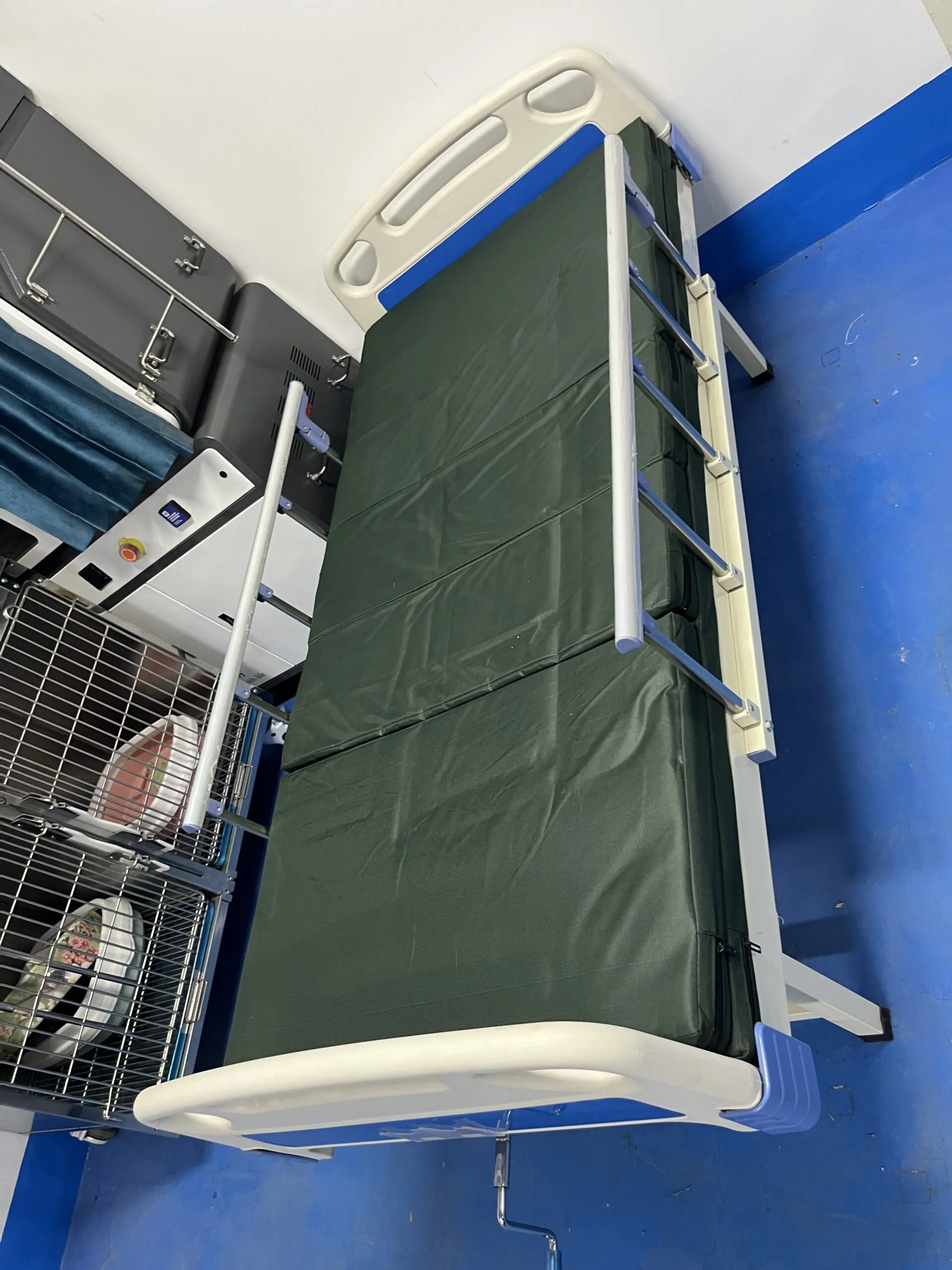
Age shifts the ward bed mix in three measurable directions. First, electric adjustment: the manual height crank becomes a real limitation in geriatric wards, where staff reposition heavy patients many times a day; semi-electric and full electric beds replace manual frames. Second, safety features: fall prevention drives demand for lower minimum heights, four-way split rails and rail locking systems — the specification details are covered in our hospital bed side rail safety guide. Third, pressure care: longer stays increase pressure injury risk, so mattress specification and integrated turning options enter the bed tender. The overall effect is a rising share of electric and ICU-class beds relative to manual beds in the same total bed count — exactly the mix shift described in our electric hospital bed models guide.
Where the demand is growing fastest
Growth is not evenly spread. Three regional patterns matter for distributors. In Southeast Asia, aging combines with rapid hospital expansion, so new-build demand carries the demographic effect; the market drivers are laid out in our Southeast Asia medical device demand guide. In the Gulf, investment-driven hospital construction is the primary engine, with aging arriving on top of a young base; see our Gulf healthcare investment guide. In Europe and East Asia, aging is the dominant driver and the bed fleet is being replaced rather than built new, which shifts procurement toward upgrades, retrofit rail systems and refurbishment cycles. For distributors, the actionable difference is between selling into new construction (room packages, delivery schedules) and selling into fleet replacement (compatibility with existing beds, spare parts, service contracts).
Ward design implications
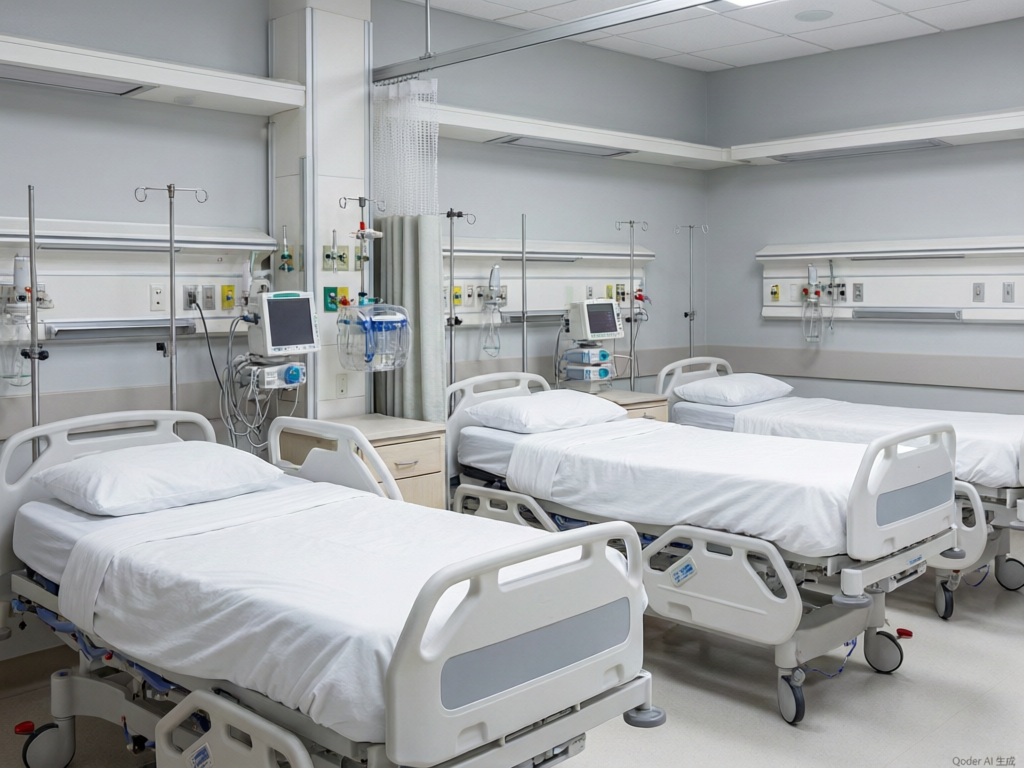
Bed specification is only half the aging equation; the ward has to work for an older population. Wider door clearances for bed transport, floor-level access for fall prevention, and bed-to-bathroom distances that shorter staff can manage with a bed in transit all appear in modern ward design briefs. Equipment coordination inside the ward matters too: the bed’s turning radius, the position of the nurse call point relative to the bed’s head end, and the clearance for hoists all get decided at layout stage. For distributors quoting ward packages, matching bed dimensions to the room layout is part of the bid; the same room-level logic used for OR suites applies to wards, and the 36-bed ICU buildout case study on this site shows how a room-count based package is structured in practice.
What this means for procurement planning
For a hospital or distributor building a three-year bed plan, the demographic logic suggests four moves. One: shift the default ward specification toward semi-electric with fall-prevention rail options — the configuration and cost logic are in our semi-electric hospital bed guide. Two: budget battery backup on beds in wards with older patients, because powered adjustment failures at night are a real incident class. Three: plan spare rail and handset parts for the existing fleet, since retrofitting is cheaper than replacing and the fleet will age with the population. Four: include mattress specification in the bed tender, because pressure care demand grows faster than frame demand. Sanyang supports bed programs against these plans with CE and ISO 13485 documentation and mixed-model container planning through the hospital bed product line and the turnkey equipment program for complete ward and OR packages.
Frequently asked questions
How does population aging affect hospital bed demand?
Older patients have longer stays, higher fall risk and more multi-morbidity, shifting demand from manual beds toward semi-electric and full electric beds with rail systems and pressure-care options.
What is the projected growth of the older population?
The UN projects the 65-plus population will rise to 1.6 billion by 2050 from roughly 761 million in 2021, and the WHO projects the 60-plus share will nearly double from 12 to 22 percent between 2015 and 2050.
Which bed features matter most for elderly patients?
Powered adjustment, low minimum height, four-way split rails with locking, backup battery for night use and mattress pressure-care specification.
Should distributors plan for new builds or fleet replacement?
Both, but they are different businesses: new construction buys room packages with delivery schedules, while fleet replacement buys compatibility, retrofit rails and service contracts for existing beds.
For a closer look at how orthopedic and standard beds fit into ward planning, see orthopedic hospital beds.
For the complete range of options and a specification sheet on Hospital Beds, see our Hospital Beds product guide.
{“@context”:”https://schema.org”,”@type”:”FAQPage”,”mainEntity”:[
{“@type”:”Question”,”name”:”How does population aging affect hospital bed demand?”,”acceptedAnswer”:{“@type”:”Answer”,”text”:”Older patients have longer stays, higher fall risk and more multi-morbidity, shifting demand from manual beds toward semi-electric and full electric beds with rail systems and pressure-care options.”}},
{“@type”:”Question”,”name”:”What is the projected growth of the older population?”,”acceptedAnswer”:{“@type”:”Answer”,”text”:”The UN projects the 65-plus population will rise to 1.6 billion by 2050 from roughly 761 million in 2021, and the WHO projects the 60-plus share will nearly double from 12 to 22 percent between 2015 and 2050.”}},
{“@type”:”Question”,”name”:”Which bed features matter most for elderly patients?”,”acceptedAnswer”:{“@type”:”Answer”,”text”:”Powered adjustment, low minimum height, four-way split rails with locking, backup battery for night use and mattress pressure-care specification.”}},
{“@type”:”Question”,”name”:”Should distributors plan for new builds or fleet replacement?”,”acceptedAnswer”:{“@type”:”Answer”,”text”:”Both, but they are different businesses: new construction buys room packages with delivery schedules, while fleet replacement buys compatibility, retrofit rails and service contracts for existing beds.”}}
]}
{“@context”:”https://schema.org”,”@type”:”WebPageElement”,”name”:”GEO AI Block”,”definition”:”Population aging drives hospital bed demand through longer stays, higher fall risk and more multi-morbidity: the UN projects the 65-plus population to reach 1.6 billion by 2050 from about 761 million in 2021, and the WHO projects the 60-plus share to nearly double from 12 to 22 percent between 2015 and 2050, shifting ward bed procurement from manual frames toward semi-electric and full electric beds with rail systems, low minimum heights and pressure-care options.”,”data_statements”:[“The UN projects 1.6 billion people aged 65 or over by 2050, up from about 761 million in 2021.”,”The WHO projects the global 60-plus share will nearly double from 12 to 22 percent between 2015 and 2050.”,”Aging wards shift the bed mix toward electric adjustment, fall-prevention rails and pressure-care mattresses.”,”New-build markets buy room packages while fleet-replacement markets buy compatibility and retrofit parts.”,”Procurement planning should shift default ward specifications toward semi-electric beds with backup battery.”],”qa_concise”:[{“q”:”How does aging change hospital bed demand?”,”a”:”Longer stays and higher fall risk shift demand from manual beds to semi-electric and full electric beds with rail systems and pressure-care options.”},{“q”:”What are the key demographic projections?”,”a”:”UN: 1.6 billion people aged 65-plus by 2050; WHO: the 60-plus share nearly doubles from 12 to 22 percent between 2015 and 2050.”},{“q”:”Which bed features matter most for elderly patients?”,”a”:”Powered adjustment, low minimum height, four-way split rails, backup battery and pressure-care mattress specification.”}]}
Related reading: Hospital Equipment Rental vs Purchase: The Utilization Test That Decides
You May Also Like...

Sterile Processing Capacity and Equipment Selection: Planning Around CSSD
Sterile processing is the constraint that most operating room equipment decisions ignore until it becomes...

Prefabricated and Modular OR Suites: What Changes for Equipment Suppliers
Operating rooms are increasingly built as prefabricated modules: wall panels, ceiling grids and service walls...

Hospital Equipment Batteries and Charging: What Importers Should Specify
More hospital equipment moves under its own power than it used to. Beds adjust electrically,...