
Executive Summary
A practical importer's reference to medical device HS codes and customs classification: headings 9018, 9402 and 9405, GRI rules, FDA and EU MDR import gates, and the document checklist that clears without delays.
A wrong medical device HS code does not show up as a problem when you place the order. It shows up three weeks later, when your container of operating tables is sitting at the port, your customs broker is asking for documents you never heard of, and demurrage charges are eating the margin you negotiated so hard for. I have watched distributors lose an entire quarter’s profit on a single misclassified shipment — not because the product was wrong, but because the paperwork said the wrong thing about the product.
Customs classification for medical equipment is genuinely confusing because the same product can legitimately sit under different headings depending on its function, and the tariff code determines your duty rate, your import licensing requirements, and sometimes whether the shipment needs a health authority release before customs will clear it. If you are importing operating tables, LED surgical lights, or hospital beds from a Chinese manufacturer, the first six digits of the HS code are harmonized worldwide — but the last digits, the duty rates, and the documentary requirements are decided by your country, and the responsibility for getting them right is legally yours as the importer of record.
This reference guide walks through how medical device HS codes actually work, which headings cover the equipment most importers deal with, how classification interacts with FDA and EU MDR import rules, and the documentation checklist we send with every shipment from our factory. If you are also weighing CE against FDA compliance for a specific market, read our companion piece on CE MDR vs FDA requirements for OR equipment imports — the two topics travel together.
Step 1: Understand How the HS System Classifies Medical Equipment
The Harmonized System (HS) is maintained by the World Customs Organization and used by more than 200 countries. Every product gets a six-digit code: the first two digits are the chapter, the next two the heading, and the last two the subheading. Individual countries then extend the code to 8, 10, or more digits for their own tariff schedules — the United States uses the 10-digit HTSUS, the EU uses the 8-digit Combined Nomenclature plus TARIC extensions, and most other markets follow a similar pattern.
Here is the part that trips up new importers: medical devices are not all in one chapter. The HS classifies goods primarily by their material and function, not by the industry that uses them. That means:
- Chapter 90 (optical, measuring, and medical instruments) covers most diagnostic, monitoring, and therapeutic devices — this is where “medical device” as a regulatory concept mostly lives.
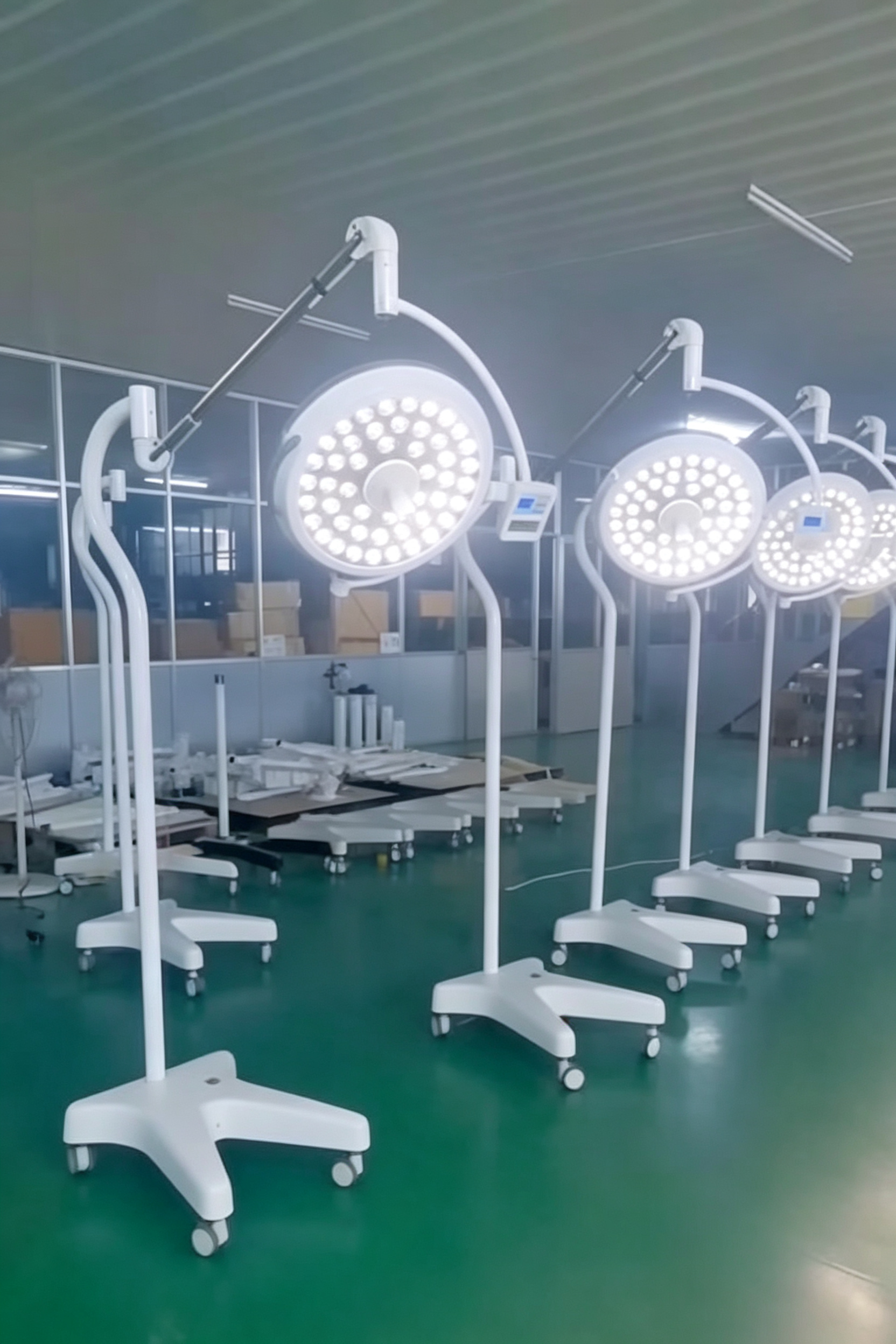
- Chapter 94 (furniture and lighting) captures operating tables, hospital beds, examination tables, and surgical lights — even though they are regulated as medical devices, customs sees them as furniture and luminaires.
- Chapter 84 and Chapter 85 can apply to pumps, sterilizers, and electrical machinery with medical applications.
- Chapters 30, 38, and 39 cover medical consumables, reagents, and plastic articles.
This split is the single most important concept in this guide. A distributor importing a full operating room package will typically clear goods under three or four different chapters on the same bill of lading, each with its own duty rate and documentary trail.
Field note: When we prepare a commercial invoice for a turnkey operating room shipment, we list every line item with its own HS code, never a single blanket code for the whole container. Mixed classification under one code is one of the most common triggers for a customs exam.

Step 2: Map the Core Headings for OR and Hospital Equipment
For the equipment categories most importers of operating room and ward equipment deal with, four headings do most of the work. The table below summarizes them with typical contents and the classification traps to watch for.
| HS Heading | Covers | Typical Subheading Examples | Common Trap |
|---|---|---|---|
| 9018 | Instruments and appliances used in medical, surgical, dental or veterinary sciences; electro-medical apparatus | 9018.19 (electro-diagnostic), 9018.90 (other instruments and appliances) | Assuming an electric operating table goes here — it does not; it is furniture under 9402 |
| 9019 | Mechano-therapy, massage, respiratory therapy, oxygen/aerosol therapy apparatus | 9019.20 (respiratory therapy equipment) | Confusing therapy apparatus with the 9018 instrument headings |
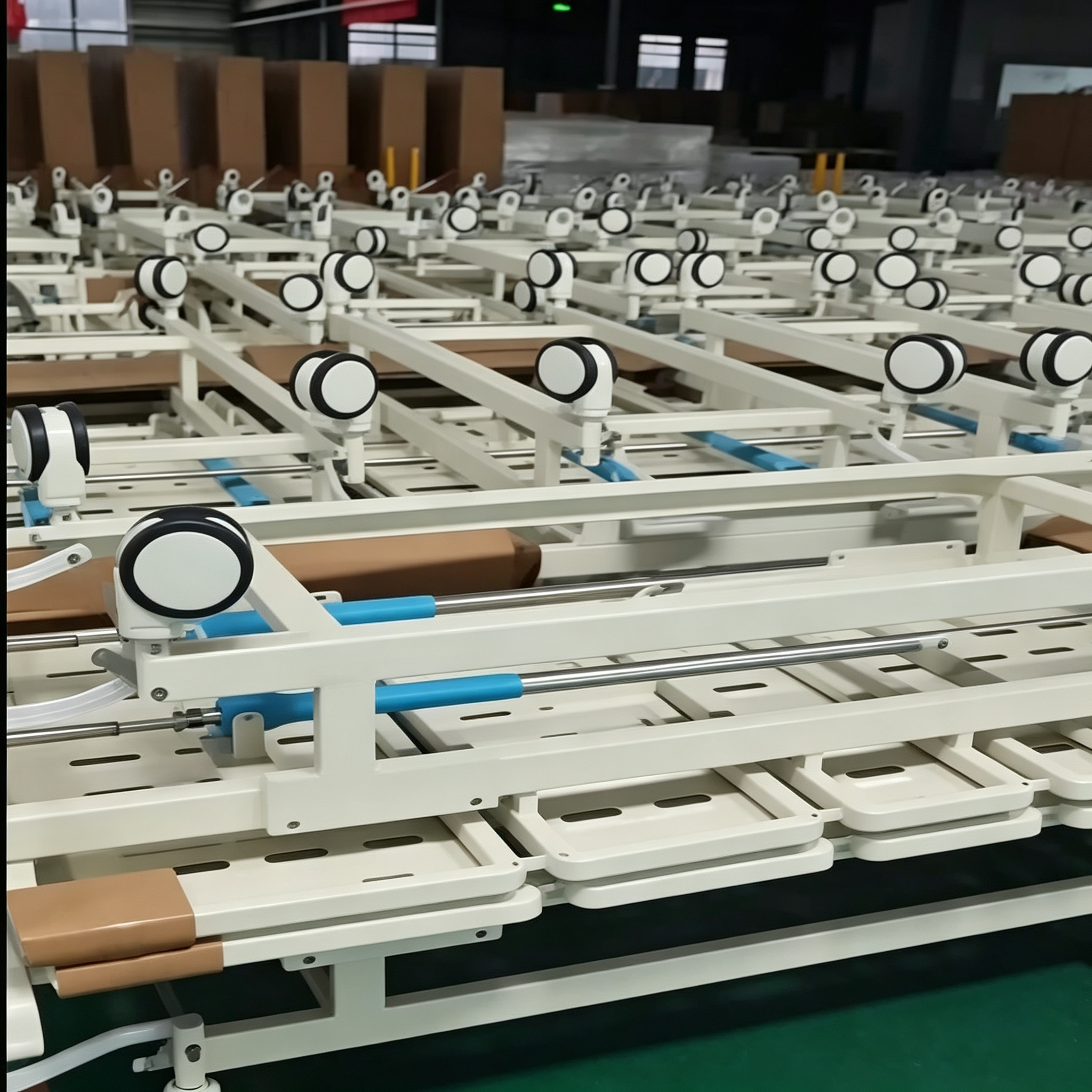
| 9402 | Medical, surgical, dental or veterinary furniture: operating tables, examination tables, hospital beds with mechanical fittings, stretchers | 9402.90 (US: hospital beds at 9402.90.0010, other furniture at 9402.90.0020) | Parts and accessories of medical furniture belong here too — not with general machine parts |
| 9405 | Luminaires and lighting fittings, including LED surgical and examination lights | 9405.11 / 9405.42 (LED luminaires, current HS 2022 structure) | Surgical lights look “medical” but are classified as lighting — confirmed by US CBP ruling HQ 967159 |
Heading 9018 is the workhorse for anything that is an “instrument or appliance” in the clinical sense. Heading 9402 is where the furniture rule applies: the US tariff schedule defines it explicitly as operating tables, examination tables, hospital beds with mechanical fittings, and similar furniture, and under the US HTS the general column-1 duty rate for 9402.90.00 is free — which is one reason OR furniture imports into the US are commercially attractive even after logistics costs.
Surgical lights are the classic surprise. Importers routinely assume an LED operating light belongs in Chapter 90 with the other surgical equipment. US Customs and Border Protection settled this in ruling HQ 967159, classifying components of a surgical lighting and visualization system under heading 9405 as lighting fittings — the reasoning being that the essential character of the product is illumination, however specialized. Under the HS 2022 revision, LED luminaires moved into dedicated subheadings (9405.11 for ceiling/wall-mounted electric luminaires designed for LED sources, 9405.42 for other electric luminaires designed for LED sources), so the exact national subheading for a ceiling-mounted LED surgical light depends on your market’s tariff schedule.
Step 3: Apply the Classification Rules (GRI) Like a Customs Officer
When a product could arguably fit two headings, customs authorities resolve it using the General Rules of Interpretation (GRI 1–6). You do not need to memorize them, but you do need to understand the three that decide most medical equipment disputes:
- GRI 1 — the text wins. Classification is determined first by the terms of the headings and the section/chapter notes. The Chapter 90 notes explicitly exclude medical furniture of heading 9402, which is why no amount of arguing will move an operating table into 9018.
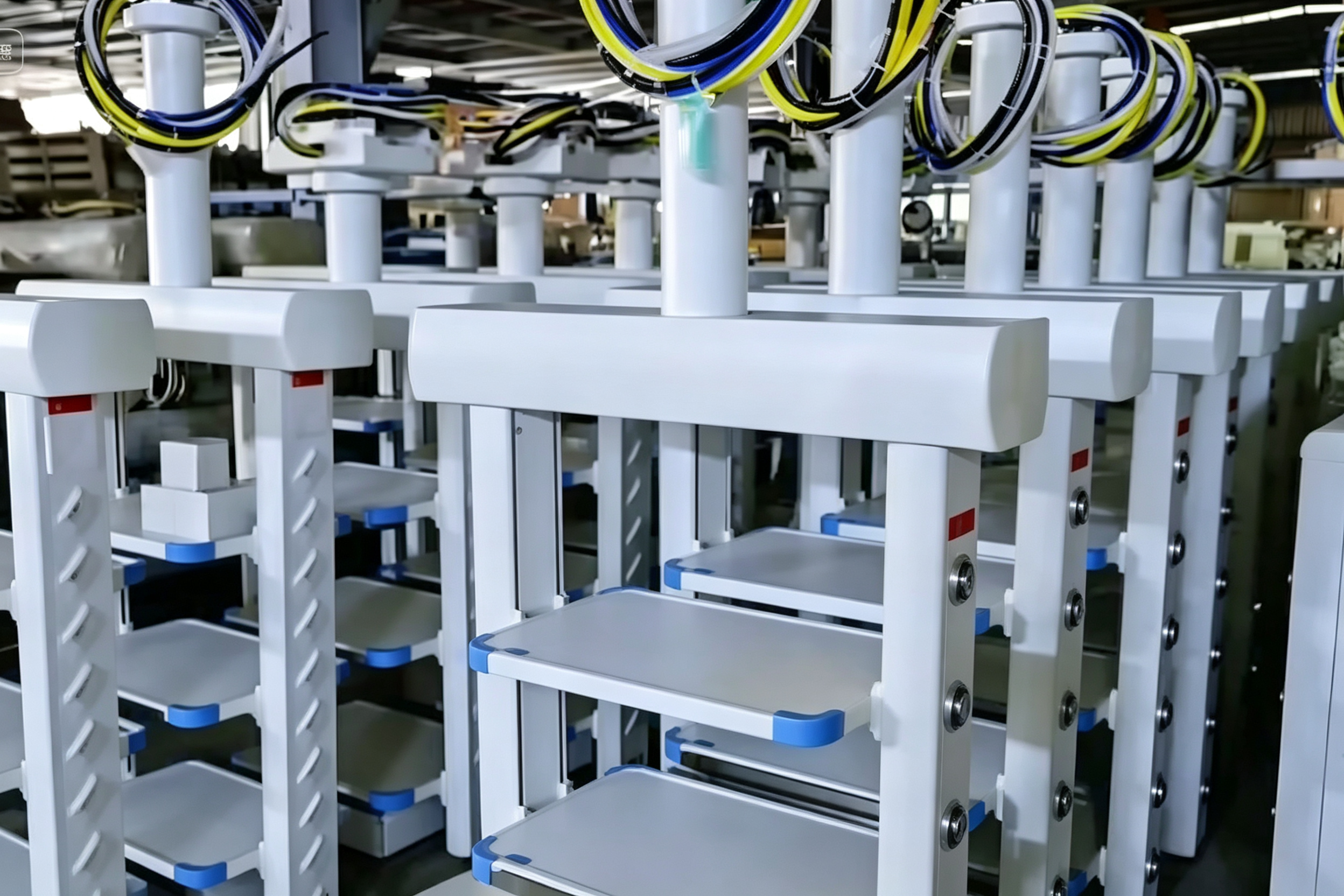
- GRI 3 — essential character. Composite or multifunction machines are classified by the component that gives them their essential character. A medical pendant with integrated gas outlets, electrical sockets, and equipment shelves is judged on its principal function as a supply and support unit.
- GRI 6 — extend the logic to subheadings. The same rules apply when you drill from the 4-digit heading down to the 6-digit subheading.
Parts and accessories follow their own logic. A replacement hydraulic actuator for an operating table, an LED module for a surgical light, or a set of bed rails generally follows the classification of the host equipment when the part is specifically designed for it — for example, parts of medical furniture stay within heading 9402. This matters when you order spare parts: they should carry their own correct code on the invoice, not the finished product’s code and not a generic “machine parts” code. Our spare parts service ships with classification data sheets for exactly this reason.
Warning: If you cannot defend your classification with the heading text and chapter notes, you do not have a classification — you have a guess. When in doubt, request a binding tariff information (BTI) decision in the EU or a binding ruling from CBP in the US. It takes weeks, but it is cheaper than a retroactive duty assessment on two years of shipments.
Step 4: Separate Customs Classification from Regulatory Clearance
The HS code tells customs what the product is for tariff purposes. It says nothing about whether the product is legally allowed to be sold as a medical device in your market. Those are two separate gates, and your shipment has to pass both.
United States. When an entry for an FDA-regulated product is filed with US Customs and Border Protection, the entry data is also transmitted electronically to the FDA through the Automated Commercial Environment (ACE). The initial importer of a medical device — defined under 21 CFR 807.3(g) — has its own obligations: establishment registration, device listing, Medical Device Reporting under 21 CFR 821 where applicable, and forwarding complaints to the manufacturer. Most of the equipment in this guide (operating tables, surgical lights, hospital beds) sits in FDA Class I or II; Class II devices generally require a 510(k) premarket notification held by the manufacturer before import. The entry also needs the correct FDA product code and affirmation of compliance codes — which your broker builds from documents the manufacturer supplies.
European Union. Under Regulation (EU) 2017/745 (MDR), the importer is a defined economic operator with legal duties: verify the device bears CE marking, that the manufacturer has drawn up the EU declaration of conformity, that labeling and instructions for use meet MDR language requirements, and that a UDI has been assigned. The importer’s name and address must appear on the device, its packaging, or an accompanying document. Customs will ask for the CE certificate and declaration of conformity on risk-based checks — and since the MDR fully applied, member-state authorities have been checking importer identification far more actively than under the old MDD regime.
Other markets. Many Gulf, African, and Southeast Asian countries require pre-import registration of the device with the national health authority, a Certificate of Free Sale from the country of manufacture, or both. The HS code on your paperwork often determines which health authority workflow gets triggered, which is another reason the code must match the product description exactly. For a detailed comparison of the two biggest regulatory tracks, see our guide on CE MDR vs FDA for OR equipment importers.
Step 5: Build the Document Set That Clears Without Questions
A clean medical equipment entry is a document set where every paper tells the same story. The commercial invoice, packing list, HS codes, product descriptions, and regulatory certificates must match word-for-word at the line-item level. Here is the checklist we use when preparing export documentation for distributors:
- Commercial invoice — line items with model number, function-based description (not just a brand name), HS code per line, unit value, total value, currency, Incoterm, and country of origin.
- Packing list — carton counts, gross/net weights, and dimensions that reconcile exactly with the invoice and the bill of lading.
- Regulatory file — CE certificate and declaration of conformity (EU), 510(k) number and establishment registration (US), Certificate of Free Sale, ISO 13485 certificate of the manufacturer, and product test reports (e.g., IEC 60601-1 and applicable particular standards for electrical medical equipment).
- Origin documents — certificate of origin, and where a preferential trade agreement applies, the correct origin declaration to claim reduced duty.
- Classification support — a one-page classification rationale per product family: heading, subheading, the chapter note or GRI rule relied on, and any binding ruling references. This turns a customs query from a two-week exam into a one-day email exchange.
When you source through an OEM/ODM localization program, agree on HS classification at the quotation stage, not at the shipping stage. Private-label rebranding does not change the code — but a function change (adding a motorized height adjustment to a trolley, or a scale to a bed) can, and your documentation has to reflect the final configuration. For a turnkey project where one container holds furniture, lights, pendants, and instruments, ask the manufacturer for a consolidated HS schedule covering every line before the goods ship.

Step 6: Avoid the Five Classification Mistakes We See Most
After years of supporting distributors through customs queries, these are the recurring errors — all avoidable:
- Using the supplier’s code blindly. The China export code and your country’s import code share the first six digits but can diverge after that. Verify the full national tariff line with your broker in the destination country.
- Classifying by what the product is called instead of what it does. “Surgical light” sounds like 9018; it is 9405. “Operating table” sounds like a surgical instrument; it is 9402 furniture.
- One code for a mixed container. Every distinct product family gets its own line and its own code. A blanket code is an exam magnet.
- Ignoring spare parts. A shipment of replacement motors and control boards declared as “electrical parts” instead of parts of medical furniture invites reclassification and delay.
- Assuming duty-free means document-free. A 0% duty rate under heading 9402 does not waive FDA, MDR, or national registration requirements. The regulatory gate operates independently.
The cost of an error is asymmetric. If you over-classify, you pay a little extra duty and never know. If you under-classify, the exposure is back-duty plus penalties across every shipment customs can reach within the look-back period — typically five years in the US. Keep your classification rationale, your broker correspondence, and the manufacturer’s product specifications on file for at least that long.

Conclusion
Medical device HS codes are not bureaucracy for its own sake — they are the common language between your supplier’s export declaration, your broker’s entry, and your customs authority’s risk engine. Get the language right and clearance is a formality; get it wrong and it becomes the most expensive line item on your shipment. The practical routine is simple: classify by function and heading text (not by product name), separate the tariff question from the regulatory question, document a written rationale for every product family, and lock the codes with your manufacturer at quotation stage. Do those four things and your OR equipment imports will clear on schedule, every time.
If you are building an import program for operating room equipment and want a supplier whose export paperwork is as disciplined as its production line, contact our export team — we provide full HS schedules, CE/FDA documentation packages, and certificates of free sale with every quotation.
Frequently Asked Questions
What is the HS code for an operating table?
Operating tables are classified under heading 9402 (medical, surgical, dental or veterinary furniture), not under Chapter 90 with surgical instruments. In the US HTS, the relevant line is 9402.90.00, which carries a free general duty rate. Your national tariff may subdivide further — confirm the full national code with your customs broker at destination.
Are surgical lights classified as medical devices for customs?
For regulatory purposes, yes — an LED surgical light is a regulated medical device. For customs tariff purposes, it is classified as a lighting fitting under heading 9405, as confirmed by US CBP ruling HQ 967159. Under HS 2022, LED luminaires fall into dedicated subheadings such as 9405.11 or 9405.42 depending on mounting and market. You must satisfy both the tariff classification and the medical device regulatory requirements.
Does a 0% duty rate mean my medical equipment import needs no documents?
No. Duty rate and regulatory clearance are independent gates. Even at a free duty rate, US imports of medical devices require FDA entry data through ACE, and EU imports require MDR-compliant CE documentation with the importer identified as an economic operator. Many markets additionally require device registration or a Certificate of Free Sale before the goods can be legally placed on the market.
How do I classify spare parts for medical equipment?
Parts specifically designed for the host equipment generally follow the host’s classification — parts of medical furniture stay within heading 9402, for example. Declare parts on their own invoice lines with accurate descriptions (“hydraulic actuator for electric operating table,” not “machine parts”), and keep the manufacturer’s specification sheets on file to support the classification if customs queries it.
What happens if my shipment is misclassified?
At best: a customs exam, storage and demurrage charges, and a delayed delivery. At worst: reclassification with back-duty plus penalties applied retroactively across the look-back period (five years in the US). If you are genuinely uncertain about a classification, obtain a binding decision — BTI in the EU or a binding ruling from CBP in the US — before you ship, not after customs asks.
What is the HS code for “materiel medical” or “alat kesehatan”?
Both terms mean medical equipment — “materiel medical” in French and “alat kesehatan” in Indonesian — and both follow the same international Harmonized System regardless of the language on your commercial invoice: operating tables under heading 9402, surgical lights under 9405, and surgical instruments under 9018. French importers should verify the full EU TARIC subdivision, and Indonesian importers the INSW portal, since national tariff lines and local registration requirements are layered on top of the same base codes.
You May Also Like...

Pricing Your Imported Equipment as a Distributor
A distributor’s price is not the factory price plus a flat markup. It is the...

Container Loading Plans: Volume and Cargo Protection
Container loading plans for medical equipment are the packing and stowage layout that decides how...

Budgeting for Installation and Training Costs
The invoice price of medical equipment is the smaller half of its cost. The larger...