
An electric hospital bed that arrives with the wrong plug is a comic delay; one that arrives wired for the wrong voltage is a hazard. Voltage and plug compatibility is the least glamorous line on a medical equipment order and the one that most reliably embarrasses first-time importers, because factories in China default to 220-240V and a plug catalog of national standards, while destinations vary by wall, by facility and sometimes by room. This guide covers how mains voltage and plug standards distribute across export markets, what factory documentation should confirm, and how to specify the electrical package so equipment powers up the day it is installed.
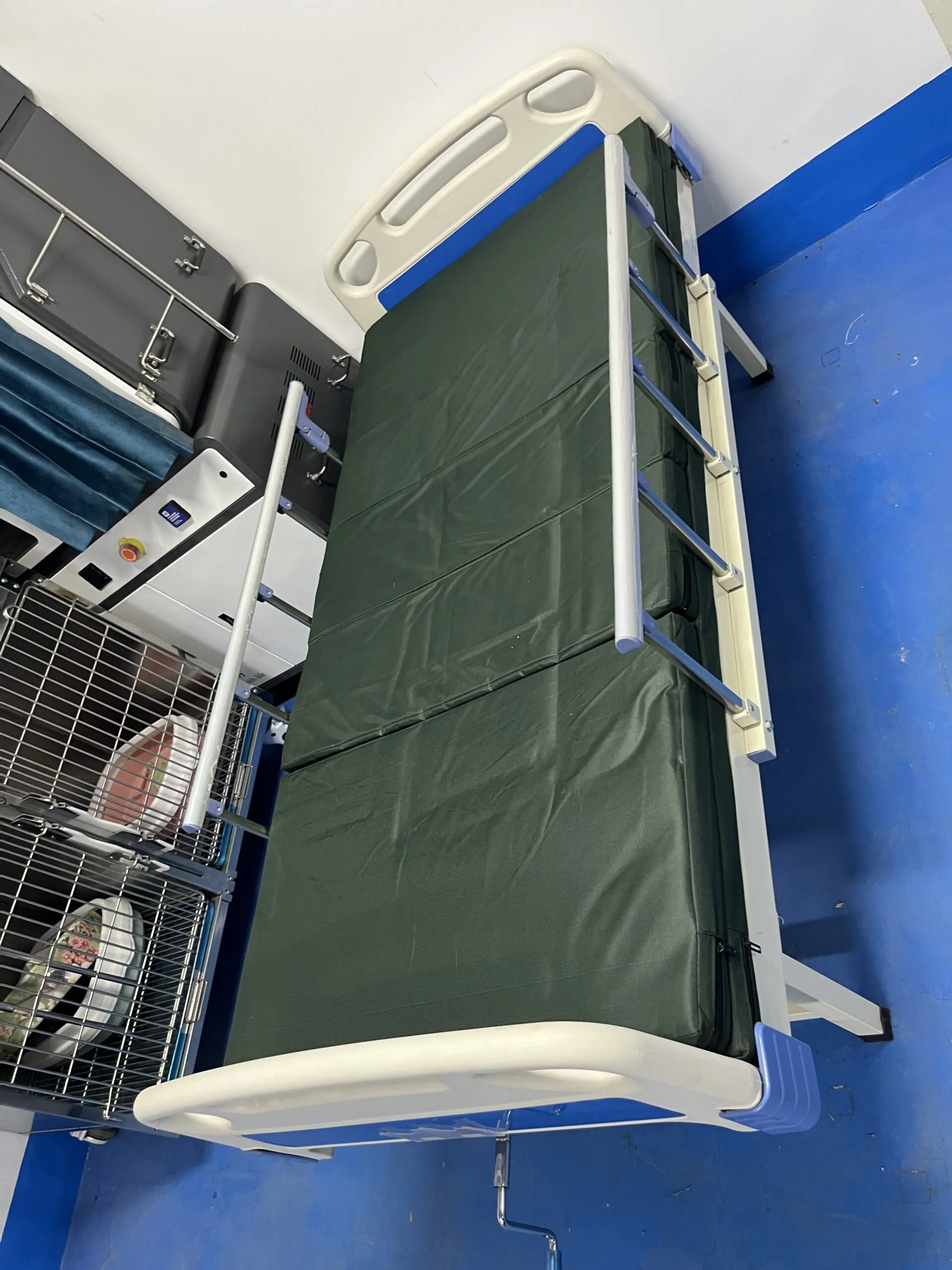
The Voltage and Plug Map Buyers Should Know
Mains electricity splits the export map into two broad territories. The 220-240V world covers Europe, most of Africa, the Middle East, Asia and Australia, with plug standards varying by country: Type G in the UK, UAE, Singapore and several Gulf states, Type C and F across continental Europe and much of Africa, Type I in Australia and China itself. The 100-127V world covers North America and parts of Central and South America and Japan, with Type A and B plugs. For equipment buyers the trap is not the map but the exceptions: facilities wired to older standards, generators with unstable output, and hospital-grade receptacle requirements that differ from household plugs. Each market’s medical electrical equipment also answers to its safety standard for mains-powered devices, and the IEC 60601 family’s electrical safety requirements published by the International Electrotechnical Commission, covered in our IEC 60601 explainer, govern the equipment side independently of which plug enters the wall.
What to Confirm in the Factory Electrical Package
Four confirmations turn voltage from a gamble into a line item. Rated input: the equipment nameplate and datasheet must state the input voltage range the unit accepts, and modern medical equipment commonly accepts wide ranges, but “commonly” is not documentation. Plug and cord: specify the destination plug type on the purchase order, and require the factory to fit it at production rather than adapting on arrival, because field-swapped cords void certifications. Fusing and protection: the mains entry module’s fuse values and internal protection belong to the destination’s supply characteristics, confirmed in writing. And battery-equipped products, beds, tables and trolleys with backup power, need charger configurations matched to local mains, since the battery is only as compatible as its charger. The electrical configuration belongs in the same contract annex as certification documents, as structured in our purchase order terms checklist.

Special Cases: Hospital-Grade Receptacles and Multi-Market Fleets
Two situations go beyond the plug map. Hospital-grade receptacles: several markets, the US most strictly, require plugs and receptacles rated for medical use, with greater retention force and grounding reliability, and ordinary household plugs do not satisfy those facility rules even at correct voltage. Multi-market fleets: distributors serving several countries often order one electrical build per market rather than adapters, because adapter cords become the missing piece exactly when equipment is needed, and certification bodies test the configuration as sold. Voltage conversion at destination, transformers and travel adapters, is a consumer habit, not a medical equipment strategy; facility biomedical teams routinely reject equipment whose mains entry does not match the installation standard. The registration and import rules that sit alongside these electrical requirements are outlined in our import license basics guide.
Writing the Electrical Specification Line
The specification line that prevents all of this is short: destination country and facility type, mains voltage and frequency, plug type per destination standard, hospital-grade requirement if applicable, and charger configuration for battery products. Add one documentation requirement, that the factory’s datasheet and test report reflect the ordered configuration, and the electrical risk disappears from the project. Buyers standardizing equipment packages across a hospital or clinic network can see how electrical configurations integrate with the wider delivery through our equipment catalog, and the installation-and-training budget line that electrical commissioning feeds is quantified in our installation and training cost guide.
Video: Medical Equipment Production
الأسئلة الشائعة
Can I just use travel adapters for hospital equipment?
No. Adapters defeat grounding integrity and are not permitted by facility biomedical standards for medical devices. Order the equipment with the destination plug fitted at the factory.
Does wide-input voltage mean any plug works?
The electronics may accept 100-240V, but the plug and cord must still match the destination standard and facility rules. Wide input removes the transformer problem, not the plug problem.
What is a hospital-grade plug?
A plug and receptacle rated for medical use, with stronger retention and more reliable grounding than household types. Some markets require them for patient-adjacent equipment; confirm with the facility’s biomedical team.
How should battery-powered equipment be specified?
By its charger: state destination mains so the charger matches, and confirm the configuration appears on the datasheet and test report, because batteries charged on mismatched mains fail silently.
قد يعجبك أيضًا...

Service Contracts and SLAs for OR Equipment: What Buyers Should Negotiate
A service contract looks like a maintenance formality until a light fails at 02:00 before...

Import Document Pack: What Customs Asks for Medical Devices
A medical equipment shipment stops at customs for one reason more than any other: the...

برنامج ضوء الجراحة OEM: من العينات إلى العلامة الخاصة
Private-label surgical lights are how distributors and hospital groups put their own brand on a...