
Ask the ESU supplier and the table supplier for one combined EMC file built around your rooms, and let the purchase order carry the compatibility argument instead of the final room layout. In practical terms that means four things: a current test report to IEC 60601-1-2 for each device with the tested configuration written down, a separation and cable-routing drawing where every distance comes with the test result that establishes it and the point it is measured from, an agreed list of pass criteria covering unintended table movement, control resets, output changes and alarm behaviour, and a commissioning test in the finished theatre run against a protocol agreed before delivery. A certificate says a product passed a standard on a bench somewhere. Evidence tied to your exact models, software versions, accessories and distances, plus a named remedy when the combination fails, is what keeps the room from being rearranged after handover.
One Room, Two Suppliers: Decide Who Owns the Interface
Every certificate in the folder will be issued for one product by one manufacturer, while the question in front of you is about a pair. That gap is where interference arguments start, because both supplier documents can be genuine and still leave the interaction untested. Before the order, ask both factories the same question in writing: does the quotation include a compatibility statement for the specific ESU and table combination in our rooms, and if it does not, what would it take to produce one?
A supplier is entitled to answer that its own unit complies with the standard it was tested against and that the combination belongs to whoever integrates the room. If both answer that way, the hospital owns the interface, and it is better to learn that from the procurement file than from a commissioning week. Three mechanisms close the gap. The first is a joint statement in which the two factories compare the emission data of the ESU with the immunity data of the table and say in one document whether the planned distances and cable routes stay inside the tested margins. The second is a witnessed test at one factory with the other supplier’s unit present, and a report that names both units by model and serial number. The third is a short responsibility map: which supplier investigates a suspected interference event, which one supplies mitigation, which one repeats testing after a change, and how cost is handled if an acceptance criterion is not met.
Mitigating EMI between electrosurgical units and surgical tables is therefore a documentation problem before it is an engineering problem. If you buy the table from one factory and the generators from another, put the interface question into the request for quotation and let each supplier price the answer. A refusal is information too, and it is cheaper to receive it before the deposit than after the crates are open.
Read the EMC Report as an Auditor, Not as a Buyer
Ask for the full test report, not only the declaration of conformity, and read the scope page first. The list of questions to ask a medical device manufacturer about IEC 60601-1-2 compliance is shorter than it looks, and most of it is about scope rather than results. Which edition of the collateral standard was applied? Which model and variant does the report cover, and is the variant you are ordering inside that family or outside it? Which hardware revision and which software or firmware version were on the unit when it was tested? Reports are written around a tested configuration, and a later control board, handset or firmware release can sit outside it. Ask for the test reports for operating table EMC as a numbered set rather than as one loose file, so that the scope page of each report can be matched to the unit you are actually buying.
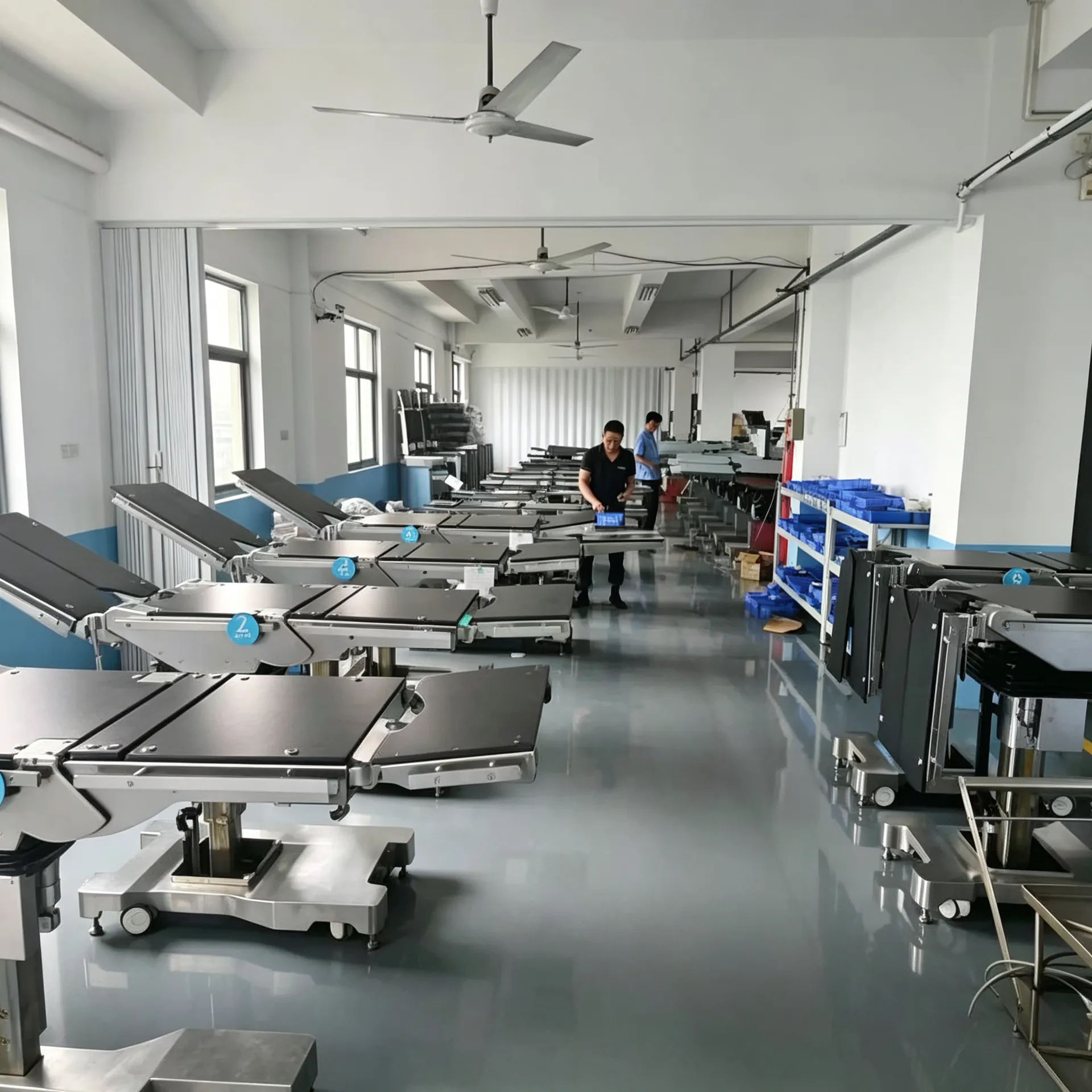
Then read what was connected. A table tested with its own handset and nothing else tells you little about the same table with a footswitch, a battery and charger, a second control panel and a set of accessories attached. Ask for the list of cables, patient-return accessories, monitors and other devices that were present, and if the table was tested alone, ask the factory to say so plainly in writing. Do the same on the ESU side: an ESU immunity test report request should name the generator model, the modes exercised, the active accessories and the return electrode arrangement used, because a generator that passed with one electrode family has not been shown to pass with another.
Look next for the parts that are usually buried at the back. Deviations, exclusions and tests that were not performed are normal in real reports and are the most informative pages you will read, since they mark the boundary of what the evidence actually covers. Check the intended environment the manufacturer declared, because equipment intended for a professional healthcare facility is judged against different disturbance levels than equipment for a home or a clinic. Check whether the document is a test report from a laboratory or a summary letter from the factory, and note the laboratory name. For the table, ask which edition of IEC 60601-2-46 was applied, since operating table electromagnetic compatibility sits in that particular standard alongside the collateral one, and ask how the factory defines essential performance, because the answer tells you what the table must keep doing while a disturbance is present.
One more document belongs in the same request. The risk management file has a section on electromagnetic disturbances, and it explains the story behind the numbers: which components the factory identified as interference-sensitive, such as drives, encoders, load cells, control boards and any wireless link, and which mitigations were designed in, such as filtering, shielding, grounding arrangements and minimum distances. Questions about the design of operating tables to minimize electromagnetic interference get concrete answers there, while a datasheet sentence does not.
Turn Immunity and Emission Claims Into Distances
An ESU is not an ordinary emitter that happens to sit nearby. It is built to push radio-frequency energy into tissue, and the active cable and the return electrode cable carry that current around the room, so they behave as antennas rather than as harmless wiring. Harmonics run well above the working frequency. In a small theatre the whole room sits close enough that the distance between the generator and the table electronics is short by any laboratory standard, which is exactly why the comparison has to be made on paper.
So ask for the two numbers and the comparison between them. On the ESU side, ask for measured emission data expressed against distance, taken with the accessories and the modes you intend to use, so you can see the field the generator produces at the spacing your room allows. On the table side, ask which immunity levels were applied and which test established them. Then ask the question that turns a claim into evidence: which test result establishes the recommended separation distance, and at what operating condition was it taken? A distance with no test behind it is a preference, and preferences get overturned by whoever is loudest after installation.
Ask also what the distance is measured between, because a number without a reference point cannot be checked on site. Is it from the generator enclosure, from its mains lead, from the active cable, from the return electrode cable, from the table control box, or from all of them? Small theatres rarely offer generous space, so the reference point decides whether the requirement is achievable. If the answer is that the distance is measured from the enclosure while your return cable is what actually radiates, the room can look compliant and behave badly.
Cable rules deserve their own page of the drawing. Electromagnetic compatibility testing for operating tables normally happens in a laboratory at a fixed set of distances, and those distances are the ones your room either meets or does not. Ask whether cables may be coiled or bundled, whether extension leads, adapters and power strips are prohibited, whether mains and signal cables need to be separated or crossed at an angle, and whether the generator and the table must sit on separate circuits or separate socket outlets. Ask for the protective earth and equipotential bonding requirements as well, together with the location and specification of the table’s bonding terminal, since bonding paperwork is easy to verify during the electrical installation and awkward to revisit later.
Baseline the Room Before the Crates Arrive
Before the new equipment is unpacked, record what the room already contains and what it already emits. Baseline the existing environment with the current theatre in use: the old generator, electromechanical beds and hoists, monitors, chargers, wireless access points, and any induction or diathermy equipment that stays. A baseline measurement taken with the equipment running separates a pre-existing disturbance from one the new kit introduces, and it is the only clean way to attribute a complaint later, when the room has changed and memories have not.
The same visit should capture the facts that constrain the design. Photograph the socket positions, note which circuit each outlet belongs to, record the equipotential bonding bar, and measure the space the room actually offers between the table’s usual position and the place where the generator will stand. That measurement is the ground truth for any separation requirement, and it belongs in the file with a date and the name of the person who took it. EMC testing for medical devices in operating rooms has to answer a different question than bench testing does, and the answer starts with the room you have rather than the room in the brochure.
If the room cannot provide the distance the evidence demands, that is a design problem with several possible answers, among them a different generator placement, a routed cable path, a partition of the electrical installation, or a change to the equipment selection. All of those are decisions for the period before the order. None of them is a decision for the week the theatre is supposed to reopen.
Make the Theatre Test a Payment Condition
The site test needs its protocol agreed before delivery. Ask the factory to provide an example EMC test plan for an operating table with an ESU, adapted to your room, and to state the pass criteria in advance rather than describing them afterwards. Criteria should match the essential-performance list used in the laboratory work: no unintended table motion, no loss of position hold or braking, no control reset that needs operator intervention, no change of generator output, no suppressed alarm, and no misleading display during the disturbance.
Agree who witnesses the test, and treat instrument calibration as part of the evidence. A signed record should carry the instruments used with their calibration references, the serial numbers of the units under test, the measured distances with photographs or an as-built drawing, the modes and settings exercised, and a result against each criterion. Test the table while it moves, stops and changes direction, operate the table controls while the generator is active at clinically representative settings, place the table at its closest foreseeable position to the generator and its cables, and leave the monitors, lights and wireless equipment in the room powered while you do it.
When a criterion fails, the record should show what was changed and what the retest produced, because a corrective action without a retest is a promise. Two phrases are worth refusing: no interference observed, when it is not attached to a protocol and a criterion, and no permanent damage, which describes a component rather than a requirement. Tie acceptance, and the final payment, to closure of all findings, and require the record to be signed by a named person with a role, so that a room tested this year can still be explained three years later when the engineer who witnessed it has moved on.
Write the Re-Test Triggers Into the Equipment File
A tested room stays tested only until something changes, and the largest source of change is usually inside the hospital rather than at the factory. Define in the same document which events send the compatibility work back to the suppliers: a firmware or software update on either unit, a replacement control board, handset or footswitch, a new accessory, mattress, pad or cable, a different type of return electrode, a new wireless access point or monitor, a rented device arriving for a fortnight, the generator moved to another socket or another wall, and the table relocated to a second theatre. Each entry needs an owner, so that a change does not quietly invalidate the file.
Name the route for a problem reported during a case. Whoever takes the call should capture what was running, which mode was in use, where the table was standing, what the table or the monitor did, and when it happened, because an interference report without those details cannot be investigated by either factory and will be closed as unrepeatable. A short form with those five fields, kept with the room file, turns a corridor conversation into something a supplier can act on.
Keep the whole set together as the room’s EMC file: the baseline survey, the test reports with their scope pages, the separation and cable-routing drawing, the site protocol with its acceptance record, the responsibility map and the trigger list. It travels with the table when the theatre is re-equipped, and it answers the question a new biomedical engineer will ask first. Anyone who later needs to know how close the generator may stand, which cables may be used, or who to call when something resets mid-case can find the answer without reconstructing it from memory.
The point of all this is not a thicker folder. When today’s electromagnetic compatibility claims are tied to the tested configuration, the installed configuration and a named signer, an interference question has an address: the test that establishes the distance, the supplier who owns the interface, the criterion that defines failure, and the person responsible for the next step. Rooms are rearranged after installation when none of those four has a name, and that is the outcome the paperwork is meant to prevent.
Two related checks keep the same discipline around the rest of the purchase. On the generator side, the practical groundwork is covered in this guide to generator modes, grounding pads and safety checks, which is where the accessories and the return path get fixed. On the acceptance side, the signature that closes the commissioning week should sit on the unit acceptance record the hospital signs rather than on a delivery note, since that record is what carries the EMC findings into the asset file.
قد يعجبك أيضًا...

Importer of Record: Name the Role Before Shipment One
Importer of record is the party named to customs as bringing the devices into the...

Side Rail Gaps: Drawings That Answer Entrapment
A patient safety committee that checks bed side-rail gaps needs factory drawings that dimension entrapment...

Blind Yard Loading: The Photo Pack Before the Seal
A factory-yard loading that seals before the buyer arrives is a blind load, and the...