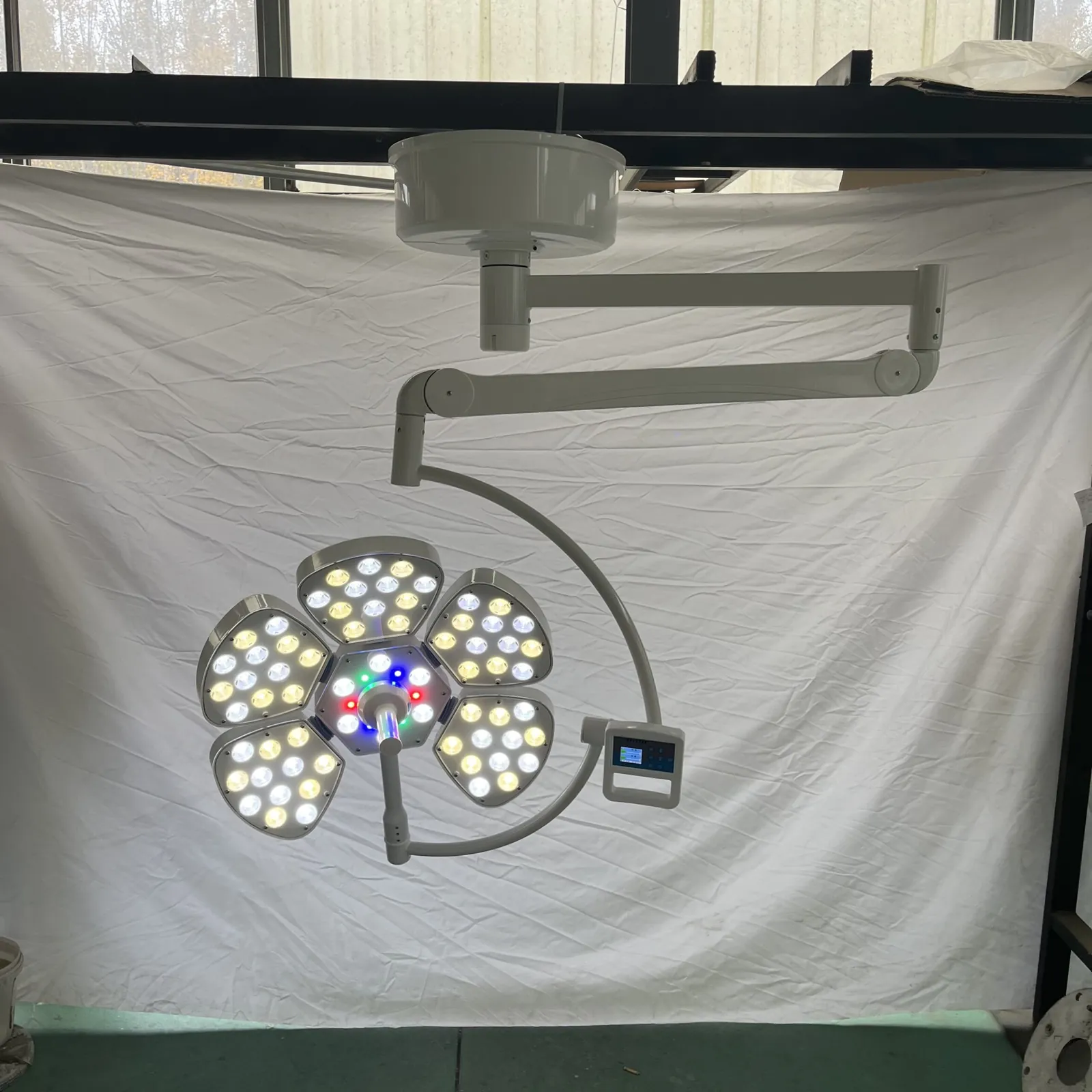

The sample put an even patch on the table. Heads from this container do not do that. The middle of the patch is dark, and a brighter ring sits around it. That is not a tint you can settle on a call. It is a different patch from the one you approved.
Stop packing the rest of the heads. Take one head out of this container, not a head from the sample room and not a head that never went into a carton. Put it over a flat surface the same way the sample was shown, and photograph the patch so the dark center is in the frame. Then photograph that same head switched on, close enough to see whether the center of the lamp face is lit. Those two pictures are the hold. A datasheet, a typed brightness figure, and the checklist you run after the crate reaches the hospital do not release the rest.
The catalog does not show this patch
أضواء الجراحة on the product page are the range: ceiling, wall, and mobile heads, and the shapes a project can order. The page is where you confirm what you bought. It does not stand over a table with a head from this container, and it does not show a dark center next to the even sample. Use it to name the model. Use the two photos to decide whether the remaining cartons close.
Reading photometric specs is a different job. That page is about how to read a datasheet before you buy, including what a patch diameter means. It does not photograph the head already in your container. If the factory answers a dark center by pasting a datasheet line, they have changed the subject. The carton has a light you can see. That is the record.
A dark center is not a shadow from a hand
A surgical light is built so the team can see into a small area without a hard shadow from a hand, a head, or an instrument. A general description of surgical lighting says operating room lights are meant to suppress shadow so the surgeon has light to work by. That sentence is the idea of the product. It is not a packing step, and it does not tell anyone what to photograph when a shipped head leaves a dark middle on an empty table.
Keep the two problems apart. A shadow from a hand moves when the hand moves. A dark center on an empty table does not move. Nothing is blocking the beam. Calling that a shadow lets the factory talk about handles and where a surgeon should stand. None of that is in the frame. If the middle is dark with nothing in the way, the head is the question.
A color shift is a different complaint. This hold is the hole in the brightness. A white-balance card with no picture of the patch answers a question you did not ask.
Photograph the patch from a head in this container
Open a carton from the shipment that has the dark center. Do not open the carton they offer if you have already seen the fault in a different carton. Take the head you choose. Set it the way the sample was set: the same kind of flat surface, the same aim, the same working position you used when the sample looked even. Do not let them raise, lower, or tilt the head until the dark spot softens and then shoot that. A different position is a different test. Write the carton number on a card in the frame, and write which head it is if the order is a pair, main or satellite.
The photo has to include the whole patch, not a close crop of the bright ring. You are showing the hole. If the sample head is still in the room, put the two patches in one picture, or shoot them back to back at the same position and send both. The reader should be able to see even versus dark without a caption doing the work. A caption that says “slight difference” on a photo where the middle is plainly dim is not a record. The photo is the record.
If several heads in the container show the same hole, one head is enough to stop packing, and it is not enough to pretend the others are fine. Mark the cartons you have not opened as unreleased. Do not average one bad head with a promise about the rest. The rest stay closed until a head from this lot shows an even patch in the same setup.
Photograph that same head switched on

The second photo is the lamp face of that same head, switched on, close enough to see the center of the face. You are answering one question: are the lamps in the middle lit, or is the middle of the face dark while the ring is bright? A dead center is visible without a meter. If the center of the face is dark, say so on the picture, and do not pack another head from this lot until that head, or a reworked head from this lot, shows a lit center and an even patch.
If the center of the face is lit and the patch on the table is still dark in the middle, the face photo is not a release. Lit lamps that do not land together still leave a hole. In that case the patch photo is the one that matters, and a close-up of a glowing face does not cancel it. Send both, and write on the note which of the two you saw: dark lamps in the center, or lit lamps with a dark patch. The factory will “fix” the story you leave vague. Name the one that is in the pictures.
Do not accept a video that pans across the room, or a photo of a head in a showroom with the patch off the edge of the frame. The showroom picture above is only the kind of head this check is about. It is not your patch, and it is not your carton. Your two photos have to show your head, your card with the carton number, and your patch.
A typed brightness figure does not release the cartons
Someone will offer a number. They will say the head still “meets spec,” or they will read a figure off the datasheet you already accepted when you approved the sample. A figure typed into chat can be the sample, another lot, or a meter aimed at the bright ring while the middle is left out of the sentence. You cannot see any of that in a number. You can see it in the patch photo.
The photometric page is for reading a datasheet before the order, when two suppliers are being compared. It is not a picture of this head. Do not turn the hold into a debate about which line on the old datasheet applies. The sample already set the patch you accepted. The container has to look like that sample in the same setup. If they argue the sample was a special piece and the datasheet allows a hole, that is a reason to stop, not a reason to pack.
Refuse a meter photo that shows only the display. Digits with no patch in the frame are not attached to this head. If they use a meter, the patch and the head still have to be in the sample position. The release is the even patch, not the digits.
Commissioning starts after the crate, not before it is packed
The commissioning checklist begins when the equipment reaches the hospital: receipt, installation, and the checks before the first case. That is the right work for a room that is about to open. It is the wrong work to quote while the remaining heads are still at the factory. A checklist that runs after delivery cannot flatten a patch that is already dark in the carton. If you ship the hole, the hospital finds it on commissioning day, with the ceiling waiting and the old light already taken down.
Keep the two clocks separate in the message you send. Packing is now. Commissioning is after the crate arrives. A factory that says “the engineer will confirm it on site” is asking you to pay freight on a head you have already seen fail. Site confirmation is for heads that matched the sample. It is not a repair plan for a dark center you can photograph today.
A tender file decides what was ordered. It does not open this carton. If the dark center becomes a paperwork question, the cartons close while the file is still being discussed. Put the hold on packing first.
A module swap on a show head is not the lot
If the center of the face is dark, the useful next step is a repair on heads from this lot, then the same two photos again. A later article on LED module replacement is about exchanging a module after a light is in service, and about the time a room loses while that is done. It is not a packing release, and it does not price this shipment. Do not copy a repair bill into this decision. The decision is whether the remaining heads are the same as the sample.
Watch the show-head trick. A team can swap the center of one head, shoot a pretty face, and keep packing heads that were never opened. The reworked head has to be identifiable, and the patch photo has to be that head, in the sample position. If they rework a batch, you pick the carton, they do not. One repaired demo head does not speak for a container.
If the face is already lit and the patch is still dark, swapping a part that is already lit does not aim the beams. Ask what they changed, then repeat both photos. A new part number with the same hole is not a fix. You are looking at the patch, not at a parts list.
Write the hold the same day
Write to the person who can stop the line. Name the order. Say the sample put an even patch on the table, and heads from this container have a dark center. State the hold in one sentence: no more heads packed until you have the two photos from a head taken out of this shipment. Name the photos. First, the patch on a flat surface in the same setup as the sample, with the carton number in the frame, so the dark center is visible. Second, that same head switched on, close enough to see whether the center of the face is lit. A release is your note that this patch matches the sample and the center of the face agrees with what the patch shows. A datasheet line, a meter with no patch, a showroom video, or a promise to check it at the hospital does not release the hold.
Mark cartons already closed. Do not mix them with cartons packed after the patch is confirmed. A hospital that hangs one even head and one dark head will blame the room, the installer, and you. Opening one carton now is cheaper than opening a ceiling later. If the order is a pair, write which head failed, and do not let a good satellite excuse a bad main, or the other way around.
Keep the sample patch and these two photos in the order folder. The next lot will drift. You will only see the drift if the even patch and the dark patch are in the same place when someone asks whether to keep packing. A verbal “it was fine last time” is how the hole ships twice.
قد يعجبك أيضًا...

Infant Bassinets and Baby Trolleys: Specifying for Maternity Units
A maternity unit buys infant bassinets in small numbers and uses them continuously. The cot...

Gas Outlet Colour Coding and Pin Index: What Medical Equipment Importers Must Check
Medical gas systems are built on a simple principle: it must be impossible to connect...

Blood Donation Chairs: Specifying Seating for Donor Safety and Compliance
Blood establishments face a seating problem that ordinary furniture cannot solve: donors sit for 15...