
The surgical light handle is the only part of the OR ceiling equipment that every member of the team touches mid-procedure, which makes its sterility practice an infection-control topic rather than a comfort topic. Facilities Standardize differently: disposable covers, dedicated sterilizable handles, or hands-off drift adjustment with a sterile wand. This guide compares the 3 practices, explains what handle construction allows, and gives the spec lines for a light purchase that will still satisfy infection control in year 3.
What the handle has to survive
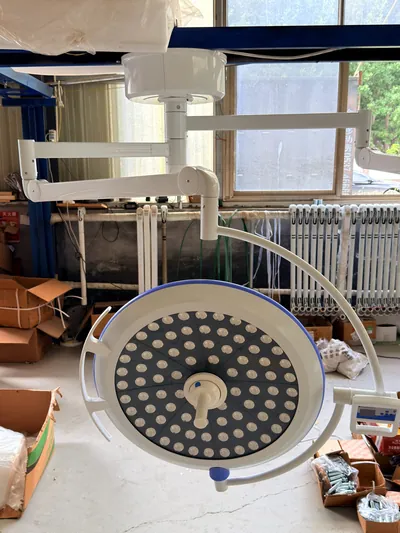
A surgical light handle lives through repeated disinfection cycles, sterilization in some facilities, glove contact with drapes and skin prep agents, and mechanical load from repositioning the light head. Construction determines which practice is available: detachable handles designed for autoclave cycles tolerate repeated steam processing; fixed handles rely on chemical surface disinfection between cases; and cover-based systems put a sterile barrier between team and handle, shifting the cost to consumables. Which practice a facility can sustain depends on its sterile processing capacity, and the handle question belongs in the light purchase for that reason, since the WHO medical devices framework treats reusable instrument reprocessing capacity as part of device selection, not an afterthought.
The 3 practices compared
Practice 1: disposable handle covers. Lowest capital, guaranteed sterile barrier per case, ongoing consumable cost and waste volume, and a dependency on cover supply. Practice 2: sterilizable detachable handles. Capital in spare handle sets and autoclave capacity, highest touch confidence, and a turnover workflow the sterile processing department must sustain. Practice 3: disinfected fixed handles with hands-free positioning. Zero consumables, but it asks surgeons to position lights through sterile drape or wand, which changes intraoperative workflow and training. Facilities with reliable sterile processing tend toward practice 2; consumable-backed practices fit practice 1; and workflow-driven teams standardize practice 3. Mixing practices across ORs in one facility is the pattern infection-control audits flag first.
What to specify in the light purchase
Four lines keep the handle question answerable for years. Line 1: handle type, detachable sterilizable versus fixed, per OR. Line 2: spare count, handle sets and covers budgeted per OR per month, agreed with infection control rather than assumed. Line 3: material and cycle rating, the handle’s validated autoclave cycles or chemical compatibility list. Line 4: replacement availability, handles as catalog spare parts with lead times stated. Spare-parts availability is where lighting purchases age badly when ignored, a planning gap covered in our spare parts kits guide ونحن pendant maintenance and spare parts guide.
Installation and training notes
Handle practice is a training artifact as much as a product feature. Installers should demonstrate handle removal and refit, cover change technique and the balance-brake check that keeps the light head where the team positions it; brake drift that makes a light sink mid-case pushes staff toward grabbing handles by drapes, the exact behavior the practice tries to avoid. Facilities commissioning new ORs can coordinate handle practice with the wider installation scope described in our surgical light installation guide, and Sanyang Medical ships handle sets and documentation with each light so the practice chosen at purchase is the one the team can run from day one, with configurations listed on our products page.

Video: operating room equipment overview
The overview shows the light, table and pendant system the handle practice plugs into.
Frequently asked questions
Are disposable covers better than sterilizable handles?
Neither is universally better. Covers remove reprocessing dependency at the cost of consumables and supply; sterilizable handles remove consumables at the cost of autoclave capacity and turnaround. The right choice follows the facility’s sterile processing reality.
How many spare handles should an OR hold?
Enough for the turnover cycle: typically a minimum of 2 to 3 sets per OR so one is in use, one in reprocessing and one available, sized with infection control.
Do all surgical lights accept detachable handles?
Most modern heads accept a detachable center handle, but the mounting interface, sterilization rating and availability as a spare part vary by model, so they belong in the purchase specification.
Who decides the practice, procurement or infection control?
Jointly: procurement owns the capital and consumable budget, infection control owns the barrier and reprocessing standard, and the light spec should record the agreed practice.
قد يعجبك أيضًا...

Dull Patches and Crazed Covers: Freeze the Wipe List, Then Fix the Units
The showroom table was wiped when someone remembered to dust it. Your theatre wipes every...

The Right Pendant, the Wrong Outlets: Freeze the Configuration First
Ask for three things before the balance is built: a configuration drawing with the outlet...

Calibration Records for OR Equipment: What to Keep, How Often and Who Signs
Calibration is one of those words that survives in procurement documents long after everyone has...