
الملخص التنفيذي
شرح ضوء الفحص مقابل ضوء الجراحة: الاستضاءة، تجسيد الألوان، التحكم في الظل، التعقيم، وتصنيف اللائحة الأوروبية للأجهزة الطبية (MDR) مقارنةً لاختيار وحدة الإضاءة السريرية المناسبة.
ادخل إلى أي اجتماع لشراء المستلزمات في مستشفى تقريبًا وستسمع نفس الارتباك معبأً بكلمات مختلفة. يسأل مدير عيادة عن “ضوء عمليات” لغرفة تضميد. يحدد موزع “مصباحًا جراحيًا” لعنبر فحص للمرضى الخارجيين. يتساءل مهندس لماذا عاد عرض السعر لغرفة إجراءات أعلى بعشر مرات من المتوقع. في معظم هذه الحالات، السؤال الحقيقي المختبئ تحت السطح هو الفرق بين ضوء الفحص مقابل الضوء الجراحي — منتجان يشبهان بعضهما ظاهريًا في ورقة البيانات لكنهما مُهندسان لمهام سريرية مختلفة تمامًا.
نرى هذا الخلط باستمرار على أرض المصنع. يقارن المشترون وحدة إضاءة فحص مدمجة برأس جراحي معلق بالسقف ويفترضون أن فارق السعر مجرد علامة تجارية. ليس الأمر كذلك. يعكس الفارق الفيزياء: مقدار الضوء الذي يجب أن يصل إلى قاع تجويف الجسم، ومدى الدقة التي يجب أن تُعرض بها الألوان عندما يميز الجراح شريانًا عن وريد، وكيف يجب أن يتصرف الجهاز داخل مجال معقم. إذا أخطأت الاختيار في أي من الاتجاهين، فإما أن تدفع مبالغ زائدة مقابل قدرة لن تستخدمها أبدًا، أو تنقص إضاءة إجراء بطريقة تعرض سلامة المريض للخطر فعليًا.
يرسم هذا الدليل خطًا فاصلًا واضحًا بين الفئتين. سنعرّف كل واحدة منهما، ونقارنهما عبر كل مواصفة تهم فعليًا — شدة الإضاءة، تجسيد الألوان، التحكم في الظل، التعقيم، طريقة التركيب، والتصنيف التنظيمي — ثم نقدم لك إطارًا عمليًا للقرار لتحدد التركيبة الصحيحة من المرة الأولى. إذا كنت واضحًا بالفعل أنك تحتاج إلى وحدة إضاءة جراحية حقيقية، فابدأ بنظرة عامة لدينا على أضواء جراحية LED وعُد إلى هنا لتتأكد من أنك لا تشتري في الحقيقة ضوء فحص متنكرًا.
ما هو ضوء الفحص في الحقيقة؟

ضوء الفحص — ويسمى أيضًا ضوء الفحص الطبي أو وحدة الإضاءة التشخيصية أو أحيانًا ضوء الإجراءات — صُمم ليلقي ضوءًا نظيفًا ومتساويًا خاليًا من الوهج على منطقة صغيرة من الجسم ليتمكن الطبيب السريري من النظر إليها. الفعل السريري هنا هو الفحص. طبيب يفحص حلقًا، وطبيب جلدية يقيّم آفة، وممرض يغسل جرحًا، وقابلة تتحقق من إصلاح عجان: كل هذه المهام تحتاج إلى بقعة ضوء مركّزة تكشف التفاصيل السطحية دون إجهاد العينين. لا تحتاج إلى إلقاء الضوء عميقًا في تجويف مفتوح، ولا تحتاج إلى التغلب على الظلال التي يلقيها رأس الجراح ويداه.
لأن المهمة تقييم بصري وليست عملًا اجتياحيًا، فإن الأهداف الهندسية متواضعة. تُقاس شدة الإضاءة بمئات إلى بضعة آلاف من اللوكس عند مسافة العمل، وليس بعشرات الآلاف. الجهاز عادة ما يكون صغيرًا وخفيفًا ومثبتًا على ذراع مرن متوازن بنابض أو حامل حائطي أو حامل أرضي متحرك أو سكة — أي شيء يسمح للطبيب بسحب الضوء إلى الموضع بيد واحدة ومسحه بين المرضى. تجسيد الألوان لا يزال مهمًا، ووحدة الفحص الجيدة تتجاوز بسهولة مؤشر تجسيد الألوان 90، لكن المتطلب الأساسي هو الراحة والمرونة وليس الشدة الخام.
تجدر الإشارة إلى أن المعيار الحاكم لا يتعامل مع أضواء الفحص كعالم منفصل. المعيار IEC 60601-2-41 معنون رسميًا ليشمل كلًا من “وحدات الإضاءة الجراحية ووحدات الإضاءة للتشخيص”، مما يعني أن ضوء الفحص يقع ضمن نفس عائلة المعايير التي ينتمي إليها رأس غرفة العمليات — إذ يتعين عليه ببساطة تلبية مجموعة فرعية أخف بكثير من المتطلبات. بالنسبة لفحص الأجنحة الروتيني والمرضى الخارجيين، غالبًا ما يأتي معيار شدة الإضاءة ذو الصلة من معيار إضاءة أماكن العمل EN 12464-1، الذي يستهدف حوالي 1000 لوكس لمناطق الفحص مع حد أدنى لمؤشر تجسيد الألوان يبلغ 90. هذا الرقم الواحد — حوالي 1000 لوكس — هو أسهل طريقة لاستيعاب الفرق في الحجم بين الفئتين.
في تجربتنا، أغلى خطأ يرتكبه المشتري هو تحديد ضوء جراحي لغرفة لا تستضيف سوى الفحص وتغيير الضمادات. أنت تدفع مقابل بصريات تخفيف الظل وإضاءة التجاويف العميقة وسير عمل بمقابض معقمة لن تستخدمه الغرفة أبدًا — وتظل في النهاية تحصل على جهاز يصعب توجيهه لفحص سريع بجانب السرير مقارنة بمصباح فحص بسيط.
ما الذي صُمم الضوء الجراحي ليفعله؟
يتميّز الضوء الجراحي بمهمة أصعب جوهريًا. فهو يجب أن يوفّر إضاءة شديدة وموحّدة تصل إلى قاع جرح ثلاثي الأبعاد — غالبًا بعمق يتراوح بين 200 و300 ملليمتر — بينما يمر رأس الجرّاح ويداه وأدواته مرارًا وتكرارًا بين المصباح ومجال العمل. الفعل السريري هنا ليس الفحص بل التدخّل: القطع، والتشريح، والخياطة، وضبط النزيف في نسيجٍ قد يعني فيه الخطأ في قراءة لونٍ ما أو فقدان ظلٍّ ما إصابةَ وعاءٍ دموي. كل خيار تصميمي في وحدة الإضاءة الجراحية ينبع من هذا المطلب.
السمة البصرية المحدِّدة هي التحكم في الظل. رأس الضوء الجراحي مزدحم بالعديد من وحدات LED المستقلة المرتبة في حلقة أو مصفوفة، وكل وحدة موجّهة بحيث يتداخل شعاعها مع غيرها على مجال العمل. عندما يُحجب جزء من المصفوفة، تعوّض الوحدات غير المحجوبة ويخفَّف الظل بدلًا من إلقائه كاملًا. هذه السلوكية “اللابظلية” — والمصطلح مشتق من اليونانية سكيا بمعنى الظل، وتُسمّى هذه التركيبات أحيانًا مصابيح scialytic — تُختبر وفقًا للمعيار IEC 60601-2-41 باستخدام أقنعة اختبار معيارية تحاكي رأس الجرّاح وتجويفًا محاكى قطره 50 ملليمترًا وعمقه 75 ملليمترًا. لا يوجد مطلب مماثل لضوء الفحص، لأنه لا أحد يُجري عملية جراحية تحته.

الشدة هي المؤشر الآخر الواضح. بموجب المعيار IEC 60601-2-41، يجب أن يُنتج الضوء الجراحي إضاءة مركزية بين 40,000 و160,000 لوكس عند مسافة مرجعية، ويشترط المعيار أيضًا أن يعيد ضوء آمن من الأعطال المفردة ما لا يقل عن 40,000 لوكس خلال ثانية واحدة إذا تعطّل جزء من النظام أثناء الإجراء. لمقارنة هذا النطاق بمعيار الفحص البالغ نحو 1,000 لوكس، يمكن لرأس الضوء الجراحي أن يوفّر على مجال العمل ضوءًا أكثر بأربعين إلى مئة وستين مرة. ذلك ليس خطأ تقريبًا؛ بل هو مرتبة مختلفة من حيث الحجم، وهو السبب في أن الضوء الجراحي يحتاج إلى إدارة حرارية جادة، وذراع سقف متين، وتحكمًا دقيقًا في الحرارة المشعّة في موقع الجراحة.
الإضاءة، واللون، والظل: فجوة المواصفات
عندما تصطفّ الفئتان أمام المعايير نفسها، تتوقف الاختلافات عن كونها مجردة وتتحول إلى أرقام يمكنك وضعها في عطاء. يلخّص الجدول أدناه فجوة المواصفات كما تُعرَّف عادةً بموجب المعايير ذات الصلة والبيانات النموذجية للمنتجات. اعتبر عمود ضوء الفحص نطاقًا نموذجيًا — إذ تتباين مصابيح الفحص على نطاق واسع — وعمود الضوء الجراحي هو النطاق الذي يفرضه المعيار فعليًا.
| المعلمة | ضوء الفحص / التشخيص | ضوء جراحي | المرجع الحاكم |
|---|---|---|---|
| المهمة السريرية الأساسية | الفحص البصري، والإجراءات البسيطة بجانب السرير | الجراحة التوغلية في التجاويف العميقة | الغرض المقصود (الملحق الثامن من اللائحة الأوروبية للأجهزة الطبية MDR) |
| الإضاءة المركزية | من مئات إلى ~1000 لوكس (المنطقة المستهدفة للفحص) | 40,000–160,000 لوكس | EN 12464-1 (الفحص)؛ IEC 60601-2-41 (الجراحة) |
| تجسيد اللون (CRI / Ra) | عادةً ≥ 90 | ≥ 85 مطلوب؛ رؤوس الإضاءة الممتازة تحدد قيماً أعلى بكثير | EN 12464-1؛ IEC 60601-2-41 |
| درجة حرارة اللون | غالباً ثابت أو قابل للتحديد دافئ/بارد | نطاق 3,000–6,700 كلفن مطلوب | آي إي سي 60601-2-41 |
| التحكم في الظل | غير مطلوب؛ إضاءة متساوية وخالية من الوهج | تخفيف الظل إلزامي ومُختبر بالقناع | آي إي سي 60601-2-41 |
| عمق الإضاءة | على مستوى السطح | حجم ضوء محدد L1 + L2 داخل التجويف | آي إي سي 60601-2-41 |
| التعامل مع المجال المعقّم | نادرًا؛ مسح بين المرضى | مقابض معقّمة قابلة للتعقيم بالأوتوكلاف كمعيار قياسي | سير عمل غرفة العمليات / تعليمات الاستخدام من الشركة المصنعة |
| التركيب النموذجي | حائطي، حامل متنقّل، سكّة، ذراع صغير | ذراع مفرد/مزدوج/ثلاثي مثبت بالسقف | تصميم المنشأة |
| سلوك الأعطال | السلامة العامة للأجهزة الطبية | استعادة ≥ 40,000 لوكس خلال ثانية واحدة | آي إي سي 60601-2-41 |
صفان في هذا الجدول يستحقان نظرة فاحصة لأن المشترين يسيئون قراءتهما بشكل روتيني. أولهما هو تجسيد الألوان. من المغري أن نستنتج أن أضواء الفحص “تكسب” لأن وحدة الإضاءة التشخيصية الجيدة غالبًا ما تعلن عن مؤشر تجسيد الألوان (CRI) فوق 90 بينما المعيار الجراحي يطلب 85 فقط. تلك المقارنة مضللة. الحد الأدنى الجراحي هو أرضية وليس هدفًا، ورؤوس العمليات الحديثة تحدد عادةً مؤشر تجسيد ألوان في التسعينيات العالية مع قيمة R9 قوية (قيمة الأحمر المشبع المهمة للدم والأنسجة الوعائية). السبب في أن المعيار يضع الأرضية عند 85 ليس أن دقة الألوان أقل أهمية في الجراحة - بل هي أكثر أهمية - ولكن فيزياء إنتاج 160,000 لوكس من الضوء النقي البارد منخفض الحرارة تجعل تحقيق مؤشر تجسيد ألوان مثالي أمرًا صعبًا حقًا. نغطي كيف تتآكل تلك الدقة على مدى عمر التركيبة في مقالنا حول تدهور تجسيد اللون للضوء الجراحي, ، وهو المنظور الصحيح لتقييم القيمة طويلة الأجل بدلاً من الرقم الموجود في ورقة بيانات الإطلاق.
الصف الثاني الذي يُساء قراءته بشكل شائع هو الاستضاءة. يمكن لضوء الإجراءات عالي الإخراج أن يطمس الحدود: فبعض التركيبات المسوقة للفحوصات والإجراءات البسيطة تصل إلى عشرات الآلاف من اللوكس عند متر واحد. هذا التداخل هو بالضبط سبب وجوب التحديد وفقًا لـ المهمة السريرية والمعيار, ، وليس برقم لوكس واحد. ضوء الفحص الساطع ليس ضوءًا جراحيًا إذا افتقر إلى تخفيف الظل، وعمق إضاءة محدد، وسلوك تحمل الأعطال الذي يتطلبه المعيار من وحدة الإضاءة الجراحية.
التعقيم، والتركيب، والواقع المادي للغرفة
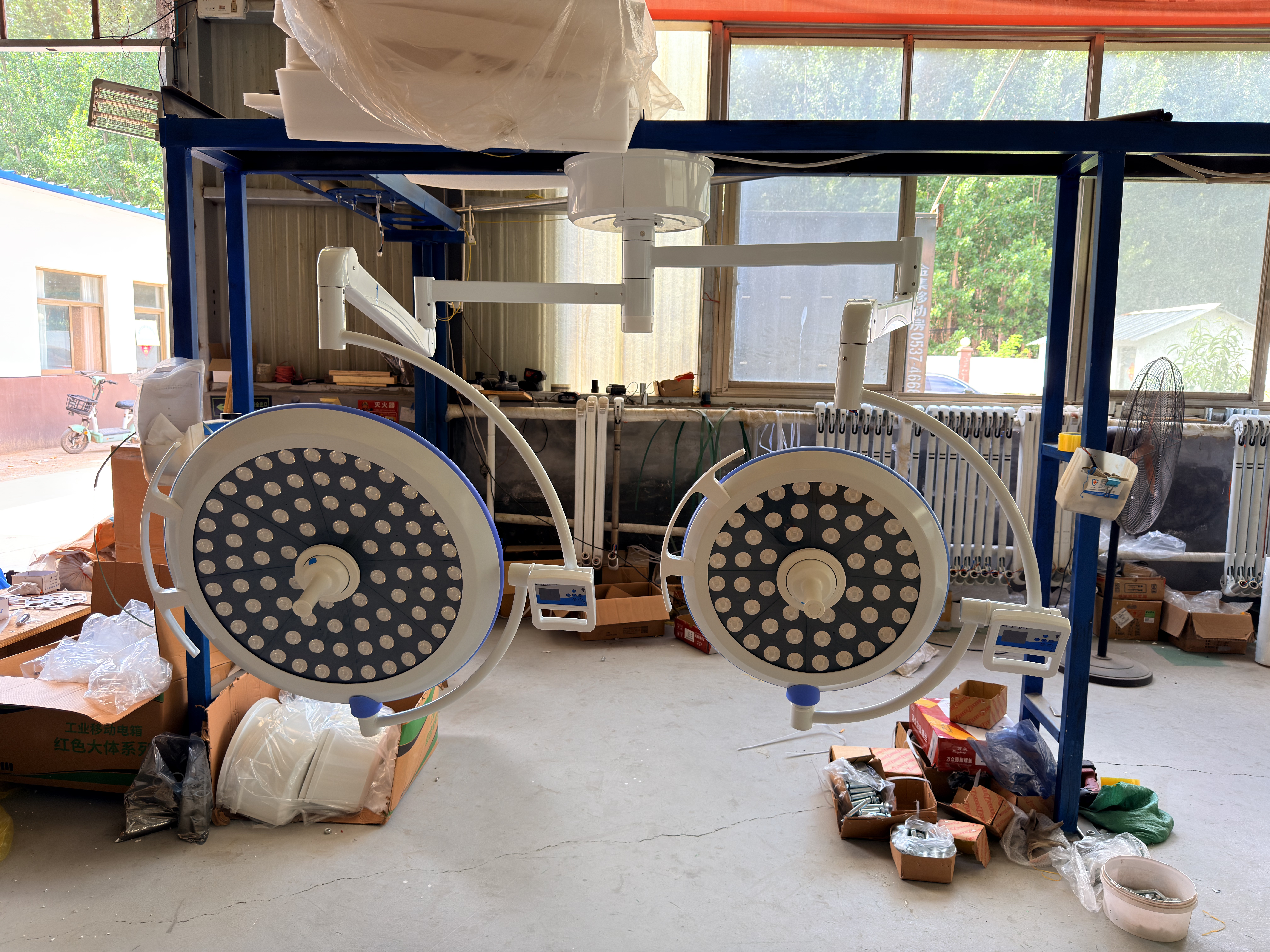
المواصفات على الورق لا تُظهر كيف تعيش هذه التركيبات فعليًا في المبنى، وغالبًا ما تكون اختلافات التركيب هي ما يحسم القرار. ضوء الجراحة هو جزء من عمارة الغرفة. فهو يُعلَّق من عمود سقفي أو ذراع سقفي ثابت، غالبًا كجزء من تكوين متعدد الرؤوس مع شاشات، ويجب أن يتعايش مع تدفق الهواء الصفحي. في غرفة العمليات ذات تدفق الهواء أحادي الاتجاه، تكون المعدات المثبتة على السقف مقيدة بالمعيار DIN 1946-4، الذي يحد من الاضطراب المقبول لتدفق الهواء الصفحي بنسبة 37.5 بالمائة — وهو اعتبار ببساطة غير موجود لمصباح فحص متنقل متوقف في زاوية غرفة استشارات.
التعقيم يتبع نفس المنطق. في المجال الجراحي، يعيد الجراح تموضع الضوء باستخدام مقبض معقم قابل للتعقيم بالبخار يمكن إزالته وإعادة تعقيمه بين الحالات، لأن رأس المصباح يقع مباشرة فوق جرح مكشوف داخل المنطقة المعقمة. على النقيض من ذلك، يعيش ضوء الفحص خارج المجال المعقم. فهو يُوضع يدويًا على ذراع متوازنة بنابض ويُمسح بمنظف المستشفى بين المرضى. هذا الاختلاف يتسلسل إلى التكلفة والتعقيد: المقابض المعقمة، والأغلفة المغلقة القابلة للتنظيف، والمتانة الميكانيكية لتحمل سنوات من إعادة التموضع — كلها تضاف إلى تركيبات الجراحة بطرق لا يضطر مصباح الفحص أبدًا لاستيعابها.
قاعدة مفيدة نستخدمها عند تقديم المشورة للمستشفيات: إذا كان الإجراء يخترق الجلد ويعمل الطبيب داخل جرح لأكثر من نظرة عابرة، فأنت في منطقة أضواء الجراحة. إذا كانت وظيفة الضوء هي مساعدة شخص ما على رؤية سطح — طفح جلدي، أو حلق، أو شق يلتئم، أو ولادة — فإن وحدة إضاءة الفحص هي دائمًا تقريبًا الأداة الصحيحة والأقل تكلفة بكثير.
مرونة التركيب هي حيث يفوز ضوء الفحص بهدوء للتطبيق الصحيح. ولأنه صغير وخفيف، يمكن وضعه على حامل جداري بجانب سرير الفحص، أو على حامل أرضي متحرك ينتقل بين الغرف، أو على سكة في جناح خارجي مزدحم. قابلية النقل هذه هي ميزة سريرية حقيقية في منشأة تدير العديد من اللقاءات القصيرة منخفضة الخطورة يوميًا. لا يمكن ارتجال ضوء الجراحة أو نقله؛ فهو يُركَّب في غرفة محددة، ويُحاذى مع طاولة العمليات، ويُخدَم وفق جدول صيانة طويل الأجل. موقعنا دليل شراء ضوء الجراحة LED يستعرض هذا القرار طويل الأمد، بما في ذلك عمر الخدمة والتكلفة الإجمالية للملكية، والتي تهم كثيرًا لتركيبة ستثبتها في السقف للسنوات الخمس عشرة القادمة.

التصنيف التنظيمي: نفس العائلة، مسار مختلف
كل من أضواء الفحص وأضواء الجراحة هي أجهزة طبية، وفي الاتحاد الأوروبي يخضع كلاهما للائحة (EU) 2017/745 — لائحة الأجهزة الطبية (MDR) — وعائلة معايير السلامة IEC 60601. العمود الفقري للسلامة العامة هو IEC 60601-1، مع تغطية التوافق الكهرومغناطيسي بواسطة IEC 60601-1-2؛ عادةً ما يتم الموافقة على وحدة إضاءة الفحص وفقًا لهذه المعايير تحديدًا. المعيار الخاص بالجانب البصري والأدائي هو IEC 60601-2-41، والذي، كما ذُكر، يحكم كلا من تركيبات الإضاءة الجراحية وتركيبات الإضاءة للتشخيص.
حيث تتباعد المسارات هو التصنيف. بموجب المادة 51 من لائحة الأجهزة الطبية (MDR) والقواعد الاثنتين والعشرين الواردة في الملحق الثامن، فإن فئة الجهاز — الأولى أو الثانية (أ) أو الثانية (ب) أو الثالثة — تتحدد حسب الغرض المقصود منه، ودرجة اختراقه للجسم، ومدة استخدامه، وما إذا كان نشطًا. كلا الضوءين جهازان نشطان، لكن مسار المطابقة، وعمق الوثائق الفنية، ومشاركة الهيئة المُبلَّغة، كلها تتدرج مع الخطر الذي يقتضيه الاستخدام المقصود. تقع على عاتق الشركة المصنعة مسؤولية تطبيق قواعد التصنيف بشكل صحيح، وتحدد الفئة بعد ذلك تكلفة الشهادة والجدول الزمني للحصول عليها. والخلاصة العملية للمشتري ليست حفظ رقم الفئة، بل الإصرار على أن يحمل أي جهاز إنارة تشتريه علامة CE حالية بموجب اللائحة MDR مع غرض مقصود معلن يطابق طريقة استخدامك الفعلية له. فالمصباح المعتمد لـ“التشخيص والفحص” ليس له نفس قصة المطابقة التي يمتلكها المصباح المصرح باستخدامه أثناء الجراحة التوغلية، ويجب أن تجعل المستندات ذلك التمييز صريحًا.
وهذا أيضًا هو السبب في أن مقولة “إنه مجرد ضوء” افتراض خطير في منشأة خاضعة للتنظيم. فاستخدام مصباح فحص كبديل لضوء جراحي لا يقدم أداءً بصريًا أدنى فحسب — بل يمكن أن يضعك على الجانب الخطأ من الغرض المقصود المعلن للجهاز، وهو الأمر الذي صُمم نظام التصنيف بأكمله حوله.

كيفية الاختيار: إطار عمل عملي لاتخاذ القرار
جرّد الأمر من التسويق وسيتلخص القرار في سلسلة قصيرة من الأسئلة. تعامل معها بالترتيب وعادةً ما تعلن الفئة الصحيحة عن نفسها.
- ما هي المهمة الإكلينيكية؟ فحص سطح أو إجراء بسيط بجانب السرير يشير إلى ضوء فحص. أما قطع الأنسجة والعمل داخل الجرح فيشير إلى ضوء جراحي.
- ما مدى عمق المجال؟ إذا كنت بحاجة إلى ضوء قابل للاستخدام في قاع تجويف وليس على الجلد، فأنت بحاجة إلى عمق الإضاءة المحدد الذي يوفره رأس جراحي فقط.
- هل ستحجب الرؤوس والأيدي شعاع الضوء؟ إذا انحنى الطبيب فوق المجال الجراحي وألقى ظلالًا، يصبح تخفيف الظل أمرًا أساسيًا — وهي ميزة من ميزات الضوء الجراحي.
- هل يوجد مجال معقّم؟ الجراحة المفتوحة داخل منطقة معقّمة تتطلب مقابض معقّمة ورأسًا مغلقًا قابلًا للتنظيف موضعًا فوق الطاولة.
- كيف يبدو شكل الغرفة؟ وحدة العيادات الخارجية متعددة الاستخدامات تستفيد من مصباح فحص محمول أو مثبّت على الحائط؛ أما غرفة العمليات المخصّصة فتُبنى حول جهاز إضاءة جراحي مثبّت في السقف ومحاذاة مع الطاولة وتدفق الهواء.
هناك حل وسط حقيقي يستحق الذكر. فغرف إجراءات المرضى المتنقلين، وأقسام الصدمات، وأجنحة الجراحات البسيطة تحتاج أحيانًا إلى ضوء إجراءات عالي الإخراج يكون أكثر سطوعًا من مصباح الفحص الأساسي لكنه لا يتطلب الحزمة الكاملة لتخفيف الظل وتحمل الأخطاء الموجودة في رأس غرفة العمليات. هذه التركيبات موجودة وقد تكون الخيار الصحيح — لكن يجب تحديدها بعناية بناءً على الإجراءات التي تجريها فعليًا، مع توثيق الاستضاءة وتجسيد الألوان والغرض المقصود بما يتناسب مع ذلك. إذا تصاعدت إجراءاتك إلى جراحة حقيقية، فإن الإجابة الصحيحة هي ضوء جراحي يتناسب مع التخصص، وتختلف أهداف الاستضاءة بشكل كبير حسب نوع الإجراء، كما نوضح في تفصيلنا لـ متطلبات استضاءة الضوء الجراحي حسب نوع الجراحة.
الخاتمة
إن مسألة مصباح الفحص مقابل الضوء الجراحي لا تتعلق حقًا بأي منتج “أفضل”. بل تتعلق بمواءمة التركيب الإضاءي مع المهمة السريرية. فجهاز إضاءة الفحص يمنحك ضوءًا مريحًا ومرنًا وخاليًا من الوهج للنظر إلى سطح الجسم، بجزء بسيط من التكلفة والتعقيد. أما الضوء الجراحي فيمنحك الإضاءة الشديدة، الخالية من الظلال، العميقة، المخلصة للألوان، والمتسامحة مع الأخطاء التي تتطلبها الجراحة التداخلية، وهو مُصمَّم ومنظَّم وفقًا لذلك. شراء النوع الخاطئ في أي من الاتجاهين يهدر المال أو، الأسوأ، يترك الإجراء دون إضاءة كافية.
النقاط الرئيسية:
- الاستضاءة هي الفاصل الرئيسي: مناطق الفحص تستهدف حوالي 1000 لوكس وفقًا لمعيار EN 12464-1، بينما يجب أن توفر الأضواء الجراحية 40,000–160,000 لوكس وفقًا لمعيار IEC 60601-2-41.
- تخفيف الظل، وعمق الإضاءة المحدد، والتعافي من الأعطال خلال ثانية واحدة هي متطلبات للضوء الجراحي لم يُصمَّم مصباح الفحص أبدًا لتحقيقها.
- كلاهما جهازان طبيان بموجب لائحة MDR 2017/745 وعائلة IEC 60601، لكن التصنيف والمطابقة يعتمدان على الغرض المقصود المُعلن — لذا طابق الوثائق مع استخدامك الفعلي.
- حدد بناءً على المهمة السريرية، وليس برقم لوكس واحد: ألمع ضوء إجراءات لا يزال ليس ضوءًا جراحيًا إذا كان يفتقر إلى التحكم في الظل والتعامل مع مجال العمليات.
إذا كانت منشأتك تجهز غرفة عمليات حقيقية، فإن الخطوة التالية هي النظر في وحدات الإضاءة الجراحية المصممة خصيصًا وتأكيد التوافق الضوئي والتنظيمي مع تخصصاتك. تصفح مجموعتنا الكاملة من أضواء جراحية وتحدث مع فريقنا حول مطابقة وحدة إضاءة لإجراءاتك وتخطيط غرفتك ومتطلبات الاعتماد الخاصة بك.
الأسئلة المتكررة
هل يمكنني استخدام ضوء الفحص للجراحة البسيطة؟
بالنسبة للجراحات البسيطة التي تخترق الجلد، عادةً ما يكون ضوء الفحص غير كافٍ لأنه يفتقر إلى مستوى الإضاءة الجراحي والعمق والتحكم في الظل. يمكن لضوء الإجراءات عالي الإخراج أن يناسب بعض الإجراءات البسيطة، ولكن يجب تحديده وفقًا للمهمة الفعلية.
لماذا تعتبر أضواء العمليات الجراحية أكثر تكلفة بكثير؟
تعكس التكلفة بصريات تخفيف الظلال، وإضاءة عالية جدًا مع إدارة حرارية، ومقابض معقمة قابلة للتعقيم، وهندسة الأذرع السقفية، وتحمل الأخطاء، ومسار مطابقة تنظيمية أكثر صرامة. أنت تدفع مقابل قدرة لم يُصمم ضوء الفحص أبدًا لتوفيرها.
هل يجب أن تكون أضواء الفحص بدون ظل؟
لا. تخفيف الظل هو متطلب خاص بأضواء الجراحة يُختبر وفقًا للمعيار IEC 60601-2-41. أضواء الفحص تحتاج فقط إلى توفير إضاءة متساوية وخالية من الوهج لفحص الأسطح، لذلك لا تُصمم أو تُختبر للتحكم في الظل.
ما هو مستوى اللوكس الذي أحتاجه لغرفة الفحص؟
يستهدف معيار إضاءة أماكن العمل EN 12464-1 حوالي 1000 لوكس لمناطق الفحص في المستشفيات والمراكز الطبية، مع حد أدنى لمؤشر تجسيد اللون (CRI) يبلغ 90. قد تعدل المهام الفردية والإرشادات المحلية هذا الرقم، لكنه أقل بكثير من مستوى الإضاءة في المجال الجراحي.
هل أضواء الفحص وأضواء الجراحة في نفس الفئة التنظيمية؟
كلاهما جهازان طبيان بموجب لائحة الاتحاد الأوروبي MDR 2017/745 وعائلة IEC 60601، لكن التصنيف بموجب الملحق الثامن يعتمد على الغرض المقصود. تحقق دائمًا من أن وثائق CE تطابق الطريقة التي ستستخدم بها الجهاز فعليًا.
قد يعجبك أيضًا...

Infant Bassinets and Baby Trolleys: Specifying for Maternity Units
A maternity unit buys infant bassinets in small numbers and uses them continuously. The cot...

Gas Outlet Colour Coding and Pin Index: What Medical Equipment Importers Must Check
Medical gas systems are built on a simple principle: it must be impossible to connect...

Blood Donation Chairs: Specifying Seating for Donor Safety and Compliance
Blood establishments face a seating problem that ordinary furniture cannot solve: donors sit for 15...