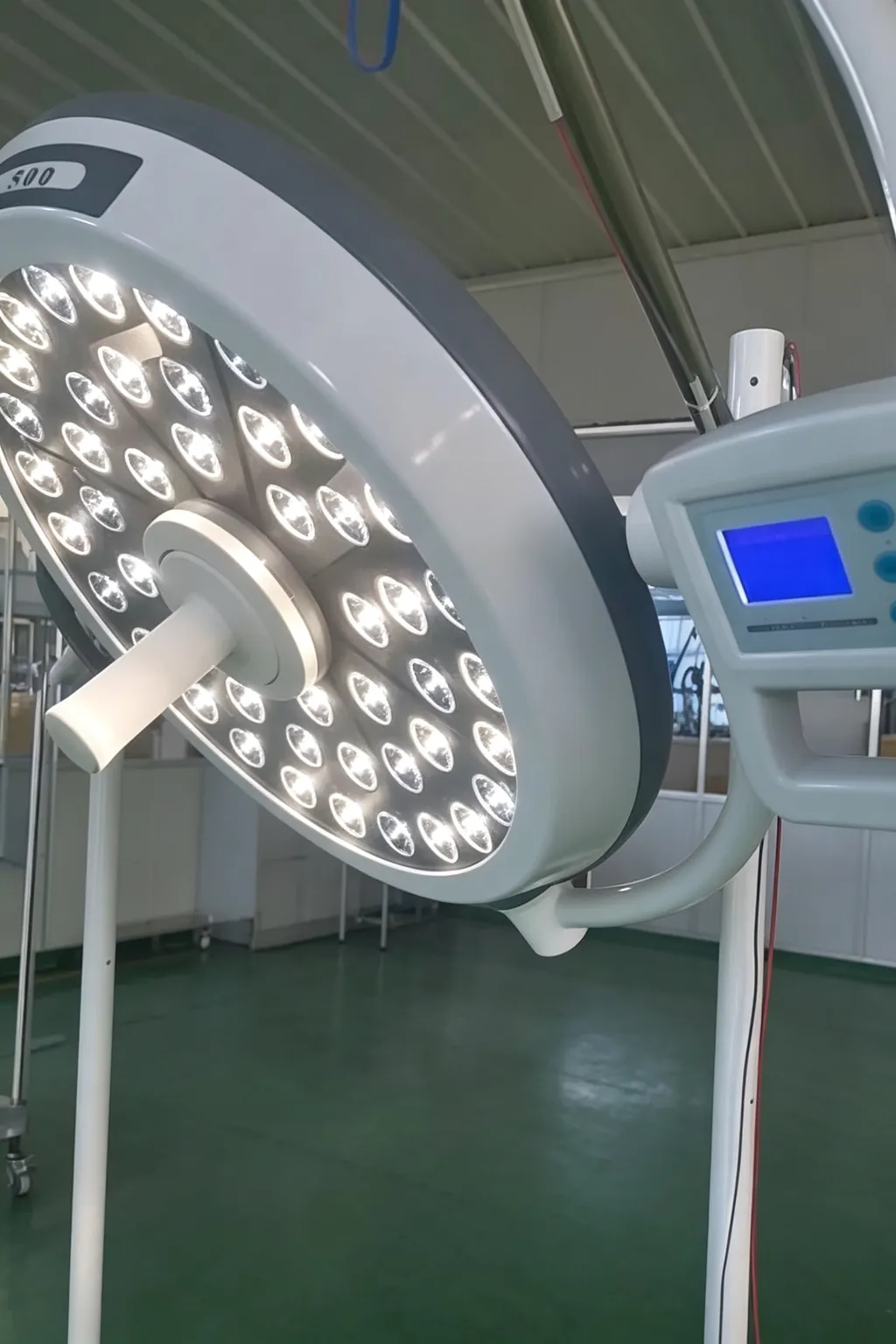

An operating table that leaves a theatre should leave with a file, and the file should exist before the replacement is ordered. What the supplier and the factory owe you for a decommissioning is three things: the removal method for each unit, including weights, lifting points and any fluid that has to be drained; the documents that must travel with the unit if it is sold or scrapped, including its history and any safety-critical marking; and the sequence that keeps the theatre usable while the old equipment comes out and the new equipment goes in.
Why decommissioning is a project, not a removal
A theatre’s equipment is installed as a system: tables anchored to the floor, lights and pendants hung from the ceiling structure and connected to services, beds and trolleys that move but are counted as assets. Removing one part affects the others, and the work happens in a department that cannot close for a week. Decommissioning in a hospital is therefore planned like an installation, with a method statement, a sequence, a temporary arrangement for the services that stay live, and a record of what was removed and where it went.
The planning documents the supplier should provide are specific and short. For each unit: its weight and centre of gravity, the lifting points and the method, the tools and the personnel required, the consumables needed for disconnection, and any step that must not be reversed later, such as a ceiling anchor that has to be cut rather than unbolted. Without those, a contractor improvises at two in the morning, which is how ceilings and floors get damaged on the way out.
The asset history that gives the unit a second life or a safe end
Equipment that is replaced is not waste; it is a unit with a history, and the history decides its next destination. The useful record per item has six parts: the serial number and model, the installation date, the maintenance and calibration history, the fault history with what was replaced, the software version, and any incident or recall notice that applied to it. That file is what a refurbisher or a secondary buyer will ask for, and it is also what a hospital needs if the unit is scrapped, because the disposal of a medical device involves removing or accounting for its data and for any components that carry a hazard.
Two components deserve their own line in the plan. The battery, which for a table or a light means a lithium pack that has disposal requirements and a transport classification, and which should be removed and disposed of through a defined route rather than left in a skip. And any part of the device that stored patient data, which in a modern theatre might be a control unit, a camera or a networked module, and which needs a documented data sanitisation step before the unit leaves the building.

The handover documents that travel with the unit
When the unit moves, the papers move with it, and the list is the same one the installation produced. The manual and its revision, so the next owner can operate and service it. The maintenance and calibration records, so its condition is documented rather than asserted. The electrical and gas configuration record, since a unit built for one market’s supply may not suit another. The accessory list, because a table’s side rails and an anaesthetic screen are part of what the buyer is buying. And the disposal or transfer note, which states where the unit went and who took it, for the hospital’s own asset register.
Where the unit is being sold or traded in, the same documents support the valuation, and their absence is the reason a trade-in offer is low. Where the unit is being scrapped, the note is the evidence that a device with a serial number was disposed of rather than left in a corridor, which matters during an audit.
Keeping the theatre working through the change
The sequence that keeps a theatre usable is worth planning with the same care as the installation. Decommission over a defined period, with the services isolated at the right point and the ceiling and floor openings protected. Install the new units in an order that restores function as quickly as possible, which usually means the table first, then the lights, then the pendant. Commission each unit against its acceptance record before the room is returned to use. And keep the removed units in a designated area with their documents, rather than letting them drift into a store room where nobody can identify them.
Where the new equipment needs the services moved or the ceiling structure modified, that work belongs in the plan as a separate item with its own responsibility line. The contracts for the replacement units rarely cover the removal of their predecessors, and assuming that the installer will deal with it is how projects end up with two tables in a corridor and a supplier who is not answering the phone, which is why the document pack that supports a big equipment handover described in operating room documentation handover should be written to cover both directions.
What to write into the replacement contract
Six lines. The decommissioning method, per unit, with weights, lifting points and the personnel required. The asset history pack per unit, complete before the removal date. The disposal route for the battery and any data-bearing component, with the documentation that proves it happened. The removal and installation sequence, with the theatre’s downtime stated. The handover documents that travel with the removed units. And the responsibility line for any building work that the change requires, named rather than implied.
Buyers who plan this side of the replacement find that it is the difference between a project that finishes over a weekend and one that leaves a corridor full of unidentifiable equipment. It is also a useful test of a supplier: a factory that can produce a removal method and an asset history is a factory that understands the life cycle of what it sells, which is a better indication of support than a price list, and which belongs in the same evaluation as the checklist used for hospital equipment procurement.
The question to ask before the removal date
One question decides how much of this is painful: who is responsible for removing the old unit? In some projects the replacement supplier includes removal in the quotation, in others the hospital’s own contractor does the work, and in a few nobody has agreed and the equipment sits in the theatre while the new units arrive. The answer belongs in the purchase order as a named party with a scope, and the scope should say whether it includes the disconnection of services, the patching of the floor and ceiling, the transport, and the disposal paperwork.
Where the answer is the hospital’s own facilities team, the equipment supplier’s contribution is the method statement and the lifting data, and that should be requested as a deliverable rather than as a favour. Where the answer is the supplier, the same documents are what the price is based on, and the hospital should see them before accepting the quotation, because a removal priced off a photograph is a removal that will produce a variation.
Where the sale of the old units fits
Units that are working and documented have a market, and the sale should be a planned part of the replacement rather than a favour to a dealer who turns up with a truck. Three conditions make it a transaction: the asset history, which establishes condition and remaining life; photographs of each unit, taken before it is dismantled; and a sales note that records the buyer and the destination, so the hospital’s register shows where the device went. Where the unit includes data-bearing electronics, the sanitisation step happens before the handover, not after.
Where a trade-in is offered against the new purchase, the same documents are what the offer is based on, so producing them early tends to improve the price. The alternative, a warehouse full of equipment with no paperwork, is a situation in which nothing can be sold and nothing can be scrapped cleanly, and it is a surprisingly common state for a hospital’s back corridor to be in.
The file that closes the loop
The last piece is administrative: a decommissioning note for the asset register, stating what left, when, to whom and with which documents, signed by the hospital’s engineering department and the contractor. That note is what makes the replacement complete from the equipment record’s point of view, and it is what an auditor looks for when asking why a room’s asset list changed.
None of the work described here is technical surgery; it is planning, and it is the kind of planning that a supplier can be asked to provide without insulting anybody. Asking for the removal method and the history pack at the quotation stage costs one clause in the order and it converts a demolition into a documented change of equipment.
You May Also Like...

Importer of Record: Name the Role Before Shipment One
Importer of record is the party named to customs as bringing the devices into the...

Crate Envelope vs. a Working Hospital Route
A crate envelope is the volume a packed unit sweeps while turning, tilting and rolling,...

Transit Fixings: The Removal Record to Demand
A transit fixing is any bolt, bracket, pin, chock or strap fitted to keep a...