
Hospital trolleys live on their castors, and castor complaints, squeaks, flat spots, broken brakes and floor marks, are among the most common avoidable service calls in ward equipment. The castor is chosen against the floor it will run on and the braking behavior the ward needs, not against a catalog photo. This guide explains castor selection for hospital trolleys and beds by floor type, load and braking, and the 3 maintenance habits that keep a fleet rolling quietly.
Start with the floor, not the trolley
The floor dictates wheel material. Vinyl and resilient sheet flooring, common in modern wards, mar under hard treads and under debris trapped in tread patterns, so polyurethane wheels are the default: they roll with moderate effort and leave floors intact. Terrazzo and tiled corridors tolerate polyurethane equally well but punish thin, hard wheels with noise. Older concrete or epoxy surfaces with expansion joints reward larger diameters, because wheel diameter decides how joints, thresholds and elevator gaps translate into shake for the payload. The 5-inch polyurethane castors fitted as standard on our patient trolleys and beds exist because they balance effort, floor protection and joint tolerance across the widest range of hospital floors.
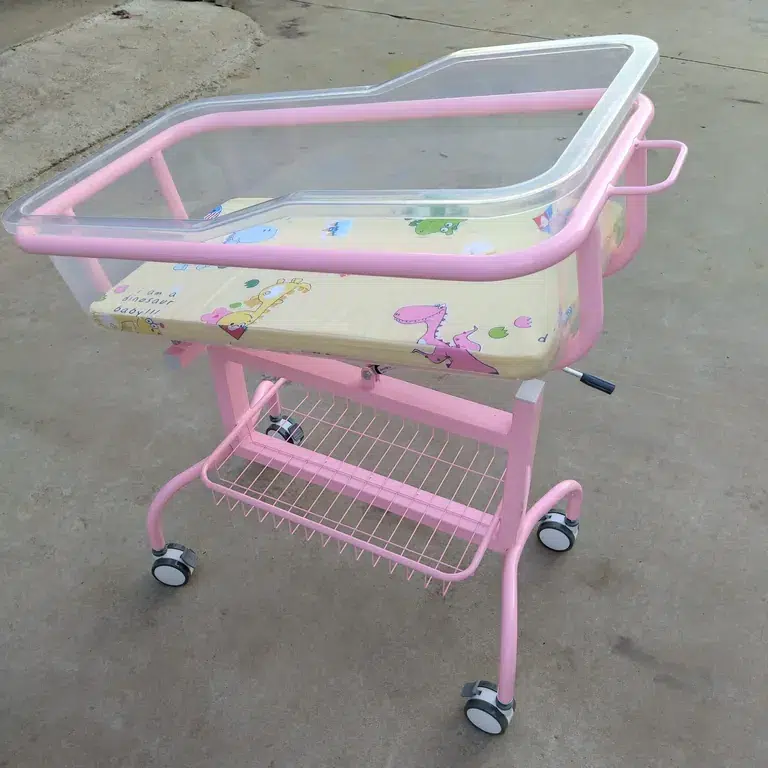
Load and swivel: matching castors to payload
Castor capacity is rated per castor, and third-party load verification is available through labs such as Intertek when a tender requires it. The arithmetic divides the trolley’s maximum loaded weight across the castors with a margin, because real floors are not flat and real staff do not distribute load evenly. Swivel versus fixed positioning changes steering: all-swivel configurations turn in tight ward bays but can wander on long corridors, while directional locks or a fixed pair stabilize straight runs between wards. Total-lock castors, which lock both wheel and swivel, are the right choice at bedsides and procedure positions where the trolley must not creep during use, and central locking systems on patient trolleys exist precisely because four individual brakes get missed.
Braking behavior in clinical use
Brake choice is a workflow decision with 3 states. Total-lock for stationary clinical use, wheel-only brake where the trolley must stay steerable at a workstation, and no brake for transit models that live moving. 2 failure modes deserve attention at inspection: brakes that lock the swivel ring but not the wheel, which lets the trolley rotate in place, and brake pedals that no longer return, which staff compensate for by parking the trolley against a wall. Both are visible in minutes on a ward round and both belong in the maintenance walk described in our trolley lock cylinder maintenance guide.

3 habits that keep a fleet quiet
Habit 1: monthly debris checks, thread and hair wrapped around axles is the leading cause of squeaks and stiff swivel. Habit 2: brake function tests during ward rounds, cycling every total-lock on the trolleys in use. Habit 3: rotation of high-mileage trolleys across wards so a single emergency trolley does not accumulate years of corridor miles. Fleet replacement economics follow the accessory and parts logic in our trolley accessories and configurations guide, and castor sets are standard spare parts, which is why our trolley program lists them on the medical trolleys page rather than selling them as a surprise.
Video: operating room equipment overview
The overview shows trolleys and beds as part of one equipment fleet, the context the castor program above serves.
Frequently asked questions
Why do castors mark vinyl floors?
Hard treads and trapped debris concentrate load on small contact areas. Polyurethane wheels on the right diameter, with monthly axle cleaning, prevent most marking.
Are bigger castors always better?
Bigger diameters roll over joints and thresholds more smoothly and take less effort, but they raise the trolley deck height and cost. Choose diameter for the floor’s worst obstacle, not the catalog maximum.
What is the difference between wheel brake and total lock?
A wheel brake stops rotation only; total lock also immobilizes the swivel, so the trolley cannot slew. Bedsides and procedure positions need total lock.
How often should castors be inspected?
Monthly debris and wear checks per trolley, brake function tests on ward rounds, and replacement when tread wear, wobble or stiff swivel appears.
See also our IEC 60601 buyer’s guide.
You May Also Like...

Marketing Translations That Stay Inside the Product File
Marketing translation approvals are a factory-controlled path that keeps translated headlines and claims inside the...

Importer of Record: Name the Role Before Shipment One
Importer of record is the party named to customs as bringing the devices into the...

Crate Envelope vs. a Working Hospital Route
A crate envelope is the volume a packed unit sweeps while turning, tilting and rolling,...