
A medical trolley takes more punishment per square meter than almost anything else on a ward. It gets pushed down a corridor, loaded until the wheels complain, parked in a corner, and wiped down with disinfectant several times a day. The predictable failures are not dramatic: a caster that stops swivelling, a drawer slide that jams, a lock that will not hold. Those small faults are exactly what a short preventive routine catches before a trolley is pulled out of service in the middle of a shift.
Why scheduled maintenance beats on-call fixes
The case for planned maintenance is the same for a crash cart as for a surgical light. A trolley that fails at the moment it is needed, a code blue on a corridor, is a failure that costs far more than an hour of scheduled upkeep. The World Health Organization’s overview of medical equipment maintenance programmes makes the argument at fleet level: planned maintenance, documented and repeated on a schedule, is what keeps a mixed equipment inventory usable over its working life.
For a hospital or a distributor that imports a large batch of trolleys, the preventive routine also creates the paper trail that a warranty claim or a reorder depends on. If you cannot show that wheels and locks were checked on a cycle, the claim conversation starts from a weaker place.
The routine, over three zones
Wheels and casters
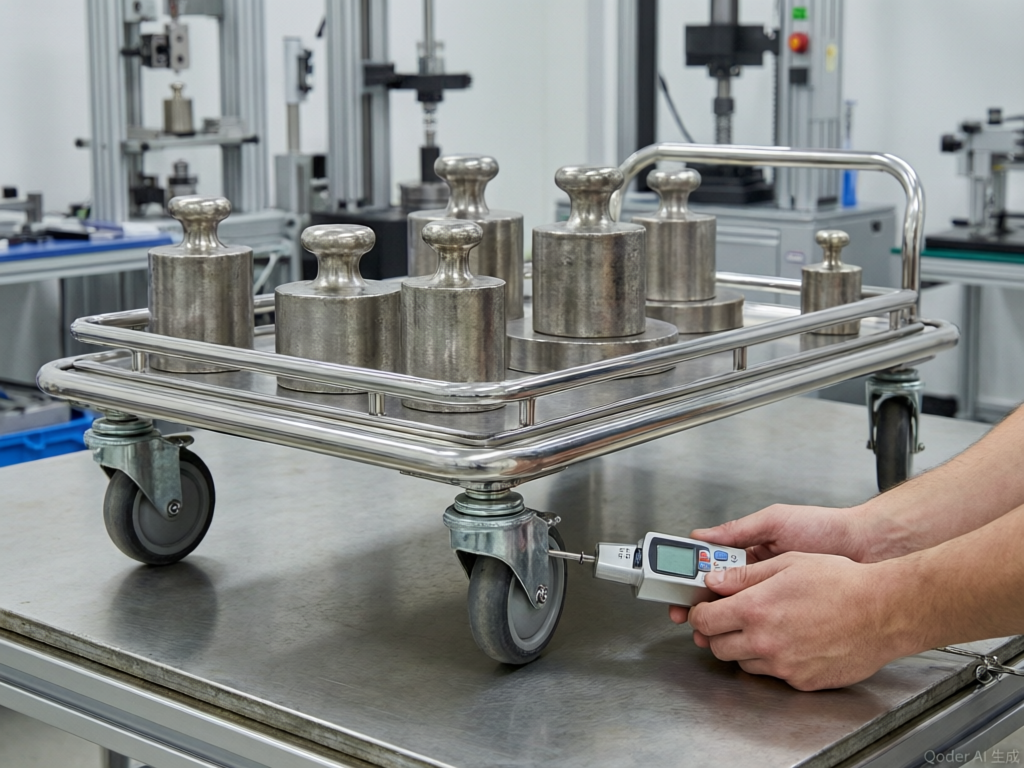
Start with the casters, because they carry the load and they are the first thing to fail. Check the swivel action by turning each wheel by hand, then clean hair and thread from the stems before it binds. Look at the tread for flat spots, which usually means the bearing is dry, and inspect for cracks around the hub. A caster with a dry bearing makes the whole trolley feel heavy and noisy, and on a quiet ward that noise matters.
Drawer slides
Drawer slides fail through grit and overloading. Open each drawer fully and check that the slide moves smoothly with no catch; a sticking slide usually means accumulated debris on the bearing track. Wipe the track, and check the stops that keep the drawer from pulling all the way out. On a treatment or anaesthesia trolley, the slides also carry the weight of a heavy stock of ampoules and instruments, so a loose slide is a safety fault, not an inconvenience.
Locks and brakes
The lock and brake checks are the ones that directly protect against a runaway trolley. Engage the total-lock brake and try to move the trolley; it should not roll at all, and the pedal should return to neutral without sticking. Then test the drawer lock, which on a medication trolley keeps controlled stock secure. A drawer lock that will not engage is a compliance problem on a ward that carries narcotics or regulated drugs.

Materials and the cleaning cycle
The surface material drives the cleaning recipe and the wear pattern. A powder-coated steel trolley holds up well in a general ward but needs a coating that withstands the disinfectant in use. A stainless steel or ABS surface is more forgiving of aggressive cleaning, and the ABS on our trolleys is chosen to survive repeated disinfection cycles without marking. The tread material is another choice: polyurethane and rubber roll quietly and grip well, while a conductive version is worth a look in environments with static-sensitive equipment. Keep the material choice in front of the maintenance team, because the wrong cleaner on the wrong surface shortens the working life faster than any failure mode here.

How to record the rounds and stock spares
Keep the record to one line per trolley: serial number, date, initials, and a pass or fail per zone. Aggregate the fails at the end of the month, because the pattern points to the spares you should hold. If the same brake fails on three trolleys from one batch, that is a batch issue to raise with the factory, not three separate random faults. The spare parts that cover most round findings are caster wheels, brake pedal assemblies, and drawer slide sets, which is the core of a spare parts startup kit.
Our medical trolley product range covers crash, treatment and nursing carts in ABS and powder-coated steel, and the after-sales team provides 7×24 video diagnosis, so a technician on site can be walked through a fix with the actual unit in front of them. The range is produced in our 15,000 m2 facility by a team of over 100 people, and standard-configuration trolleys ship in 3 to 7 days, so the parts that come out of your rounds are usually in stock rather than built to order.

Trolley maintenance video
Standardizing the routine is easier when the team has watched the same method. The video below shows a practical way to clean and grease caster wheel bearings, which is the most common preventive task on a trolley fleet.

Common questions about medical trolley maintenance
How often should a medical trolley be checked?
A quick weekly check on wheels, slides and brakes works for most wards, with a fuller service twice a year. The frequency scales with how heavily the trolley is used and how clean the environment is.
Which caster material is best for a corridor?
Polyurethane and rubber roll quietly and grip well on a typical hospital floor, while a conductive version suits areas with static-sensitive equipment. The right choice depends on the floor type and how quiet the ward needs to be.
Can a drawer lock be repaired on site?
Often yes, if the slide or catch has just come loose. If a locking mechanism is broken, the reliable fix is to replace the lock assembly, which is a part to keep in a spares kit.
Does maintenance affect the trolley warranty?
It can. Records showing wheel and brake checks, and prompt reporting of a fault, give the factory a clear picture of how the trolley was used when a warranty claim is filed.
For the full assembly side of casters, slides and brakes, see our guide on medical trolley assembly: casters, brakes and drawer adjustment. To keep the cleaning routine safe for the surface, read about medical trolley disinfection protocols for steel and polymer surfaces. The WHO medical equipment maintenance programme is a useful reference when you set the maintenance policy for an entire fleet.
For more detail, see our First-Year Failure Patterns in OR Equipment.
Related reading: Calibration Records for OR Equipment
You May Also Like...

Transit Fixings: The Removal Record to Demand
A transit fixing is any bolt, bracket, pin, chock or strap fitted to keep a...

OR Table Controls: Redundancy Worth Ordering
The hand control that hit the floor yesterday cost you an afternoon of theatre time,...

Rehearsed, Not Discovered: The Emergency Conversion File
An emergency section starts with a call, and the table has to move from a...