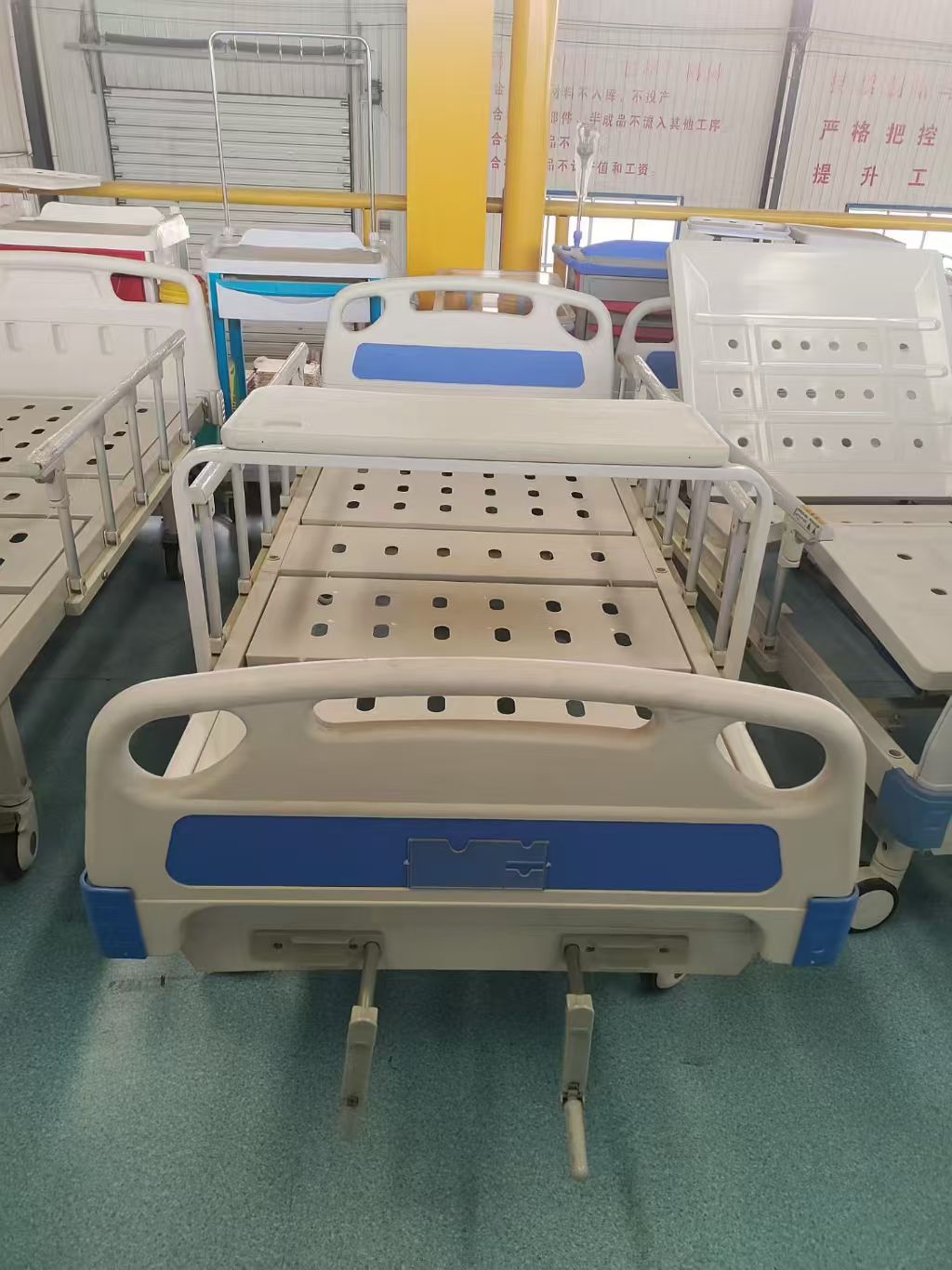

Executive Summary
A detailed breakdown of hospital bed positioning features including Trendelenburg, reverse Trendelenburg, CPR release, backrest and leg adjustment, and chair position. Learn how positioning functions affect patient outcomes and what to verify during procurement.
Every year, hospitals lose thousands of nursing hours to a problem nobody budgets for: beds that cannot hold the positions clinicians actually need. A nurse in a 40-bed ICU told me she manually wedges pillows under the mattress frame because the Trendelenburg mechanism on three of her beds drifts two degrees within an hour. That is not a comfort complaint. It is a patient safety failure hiding in plain sight. When you are responsible for specifying hospital bed positioning features for a new ward or an equipment refresh, the gap between the datasheet angle and the real-world sustained angle is where risk lives.
The second problem is specification overload. Procurement teams receive datasheets listing twelve different positions, three CPR mechanisms, and four control panel options, then default to checking boxes without understanding which features actually drive clinical outcomes. I have watched a hospital in Lagos pay a 22% premium for beds with electric chair position, only to discover their ward layout made the chair function unusable because the bedside cabinet blocked the footboard swing arc. The feature was real. The need was not.
This guide breaks down every major hospital bed positioning function, explains the clinical rationale behind each one, and gives you a procurement acceptance checklist you can hand to your biomedical engineering team. Whether you are outfitting a 200-bed general hospital or upgrading a 12-bed ICU, the positioning features you specify today will shape nursing workflow and patient outcomes for the next eight to twelve years.
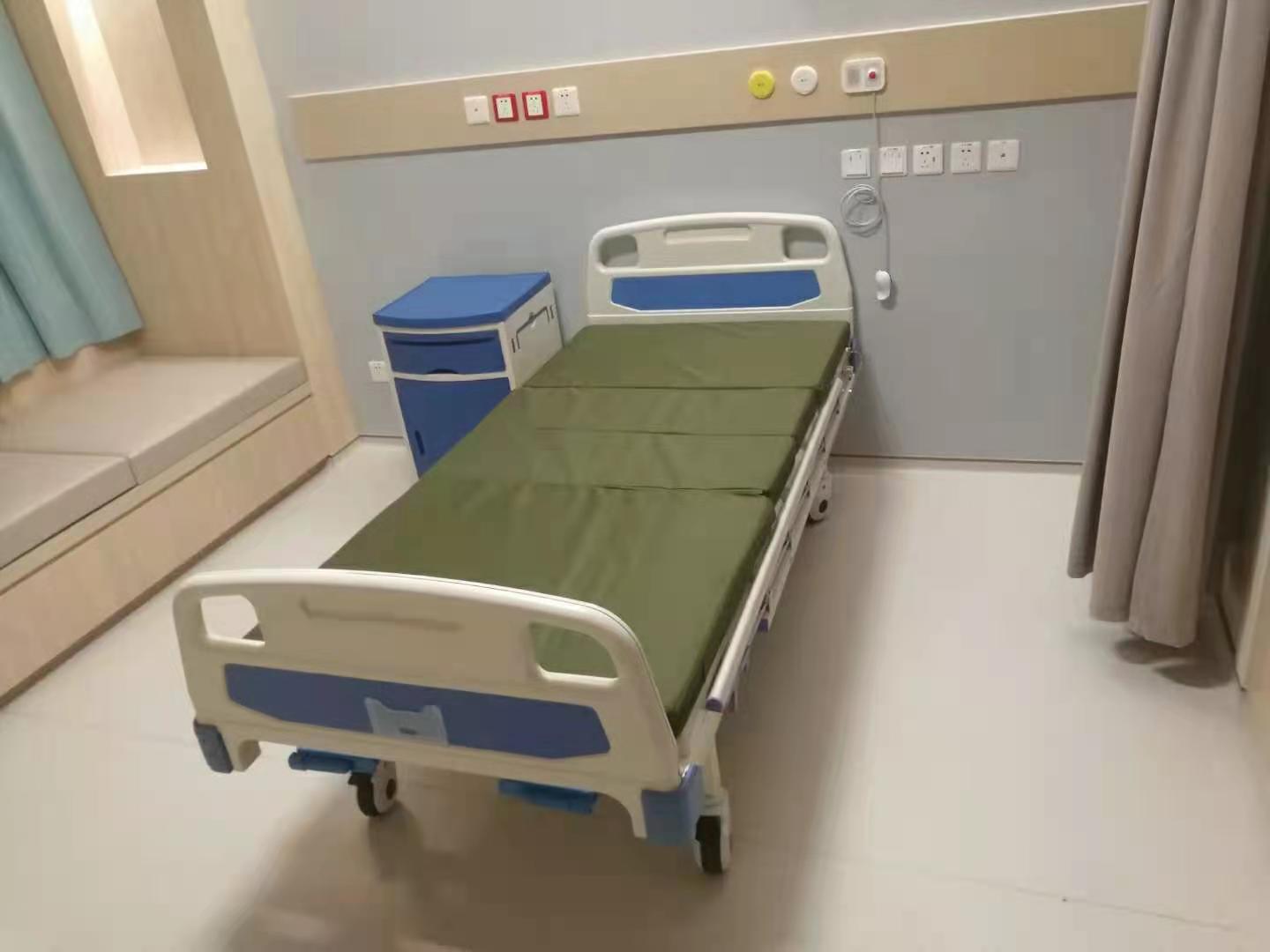
Trendelenburg and Reverse Trendelenburg: Why the Angle Tolerance Matters
Trendelenburg position tilts the entire bed so the patient’s head is lower than the feet, typically at 12 degrees plus or minus 3 degrees per IEC 80601-2-52:2026 (the new edition published May 2026, which supersedes IEC 60601-2-52:2009). Clinicians use it to improve venous return during hypotensive episodes, to facilitate central line insertion in the internal jugular vein, and to shift abdominal contents away from the pelvic surgical field. Reverse Trendelenburg does the opposite: head up, feet down. It reduces intracranial pressure, aids respiratory mechanics in obese patients, and helps prevent aspiration during feeding.
The critical specification most buyers miss is sustained angle accuracy. A bed that reaches 12 degrees on the showroom floor but drifts to 9 degrees after thirty minutes under a 90 kg patient load is failing its essential performance requirement. During factory acceptance testing, insist on a sustained-load tilt test: apply the maximum rated patient weight, tilt to maximum Trendelenburg, hold for sixty minutes, and measure the final angle. Any drift greater than 1 degree indicates actuator creep or structural flex that will worsen over the product lifecycle.
In my experience across 60+ equipment projects, the single most common positioning complaint from ICU nurses is Trendelenburg drift. Specify actuator self-locking torque and verify it under full load before you sign the acceptance certificate.
- Typical angle range: 12 degrees plus or minus 3 degrees for both Trendelenburg and reverse Trendelenburg on ICU-grade beds. General ward beds may offer 8 to 10 degrees.
- Drive mechanism: Electric linear actuators with self-locking worm gears are standard. Hydraulic tilt is found on older or budget models but lacks the precision of electric systems.
- Safety interlock: The bed should not allow simultaneous Trendelenburg tilt and backrest elevation beyond a safe combined angle. IEC 80601-2-52 requires the manufacturer to declare maximum combined configuration limits.
- Angle indicator: Side-rail-mounted mechanical or digital angle displays let nurses verify position without a protractor. This is a low-cost feature that prevents over-tilting incidents.

CPR Position: The One-Button Feature That Saves Minutes
When a patient codes, every second spent flattening the bed is a second not spent on compressions. CPR position (also called cardiac arrest position or flat position) instantly returns the entire bed surface to horizontal, dropping the backrest from any elevated angle to zero degrees in under three seconds. Modern ICU beds offer both electric CPR release (a single button on the side rail or footboard control panel) and a manual CPR handle (a mechanical release lever that works without power).
The electric CPR function uses the bed’s actuators to rapidly retract the backrest and leg sections simultaneously. The manual CPR is a spring-loaded or gravity-assisted mechanism that physically disengages the backrest actuator, allowing it to drop flat. Both systems must comply with the essential performance requirements of IEC 80601-2-52:2026, which specifies that the CPR function must be achievable within a defined time regardless of the bed’s starting position or electrical supply status.
During procurement acceptance, test the CPR function from maximum backrest elevation (typically 75 to 80 degrees) with a 75 kg distributed load on the mattress platform. Time the flattening sequence. If electric CPR takes longer than four seconds or the manual release requires more than one hand to operate, the design does not meet clinical reality. Also verify that the CPR function works when the bed is at maximum height and in Trendelenburg tilt simultaneously, because cardiac arrests do not wait for the nurse to level the bed first.
Always specify both electric AND manual CPR release. If the power fails during a code, the manual mechanism is your only option. Test it quarterly as part of your preventive maintenance schedule.
Backrest and Leg Section Adjustment: The Workhorses of Daily Care
Backrest elevation (0 to 75 or 80 degrees) and leg section adjustment (0 to 35 or 40 degrees) are the most frequently used positioning functions in any hospital bed. Nurses adjust these dozens of times per shift for feeding, respiratory therapy, wound care, patient comfort, and pressure redistribution. The backrest actuator bears the highest cycle count of any bed motor, so its rated duty cycle and IP protection rating directly affect long-term maintenance costs.
A feature that separates basic beds from clinical-grade beds is auto-contour (also called synchronized articulation or knee-break). When the backrest elevates, the leg section automatically adjusts to prevent the patient from sliding toward the foot of the bed. Without auto-contour, a 60-degree backrest elevation pushes the patient’s torso upward while the legs remain flat, creating shear force on the sacrum. Over an eight-hour shift, that shear contributes to pressure injury formation. Auto-contour reduces sacral shear by distributing the angle change across both sections.
- Backrest range: 0 to 75 degrees minimum for general ward; 0 to 80 degrees preferred for ICU and respiratory care units.
- Leg section range: 0 to 35 degrees for knee flexion; some ICU beds offer 0 to 45 degrees for enhanced venous drainage.
- Auto-contour: Verify the synchronization ratio. A well-designed system moves the leg section approximately 20 to 25 degrees for every 70 degrees of backrest travel.
- Actuator rating: Look for IP66 or higher ingress protection on backrest and leg actuators. Hospital-grade disinfectants and fluid exposure will destroy IP44-rated motors within two years.
- Noise level: Under 45 dB during adjustment is the benchmark for ICU and night-shift environments. Request a sound-level test report from the manufacturer.

Chair Position and Height Adjustment: Ergonomics for Patients and Staff
Chair position transforms the bed into a seated configuration: the backrest elevates to approximately 70 to 80 degrees while the leg section drops below horizontal, creating a chair-like posture. This position supports early mobilization protocols, reduces the risk of deconditioning in long-stay patients, and allows patients to eat, read, or interact with visitors in a dignified upright posture. For rehabilitation wards and step-down units, chair position is not a luxury. It is a clinical tool that accelerates recovery.
Height adjustment (typically 400 to 750 mm or 470 to 795 mm depending on the model) serves two populations. For patients, the lowest setting allows safe egress for ambulatory patients, reducing fall risk during transfers. For nursing staff, the highest setting brings the patient to an ergonomic working height, reducing the lumbar flexion that causes occupational back injuries. Studies consistently show that nurses who work at beds set too low experience significantly higher rates of musculoskeletal disorders over their careers.
When evaluating height adjustment, check the travel speed. A bed that takes 25 seconds to move from minimum to maximum height wastes nursing time across hundreds of adjustments per week. Target a full-travel time of 15 seconds or less. Also verify that the height mechanism maintains stability at maximum elevation with an off-center load, because nurses frequently lean on the bed rail while performing procedures at full height.
| Positioning Feature | Typical Range | Clinical Application | Key Acceptance Test |
|---|---|---|---|
| Trendelenburg | 12 degrees +/- 3 degrees | Hypotension management, central line insertion, pelvic surgery | 60-min sustained load drift test (less than 1 degree) |
| Reverse Trendelenburg | 12 degrees +/- 3 degrees | ICP reduction, aspiration prevention, respiratory support | Same sustained load test; verify interlock with backrest |
| CPR Release | Flat (0 degrees) in under 3 seconds | Cardiac arrest resuscitation | Timed test from max backrest with 75 kg load; test manual backup |
| Backrest Elevation | 0 to 75-80 degrees | Feeding, respiratory therapy, wound care, comfort | Cycle test 500 repetitions; measure final angle accuracy |
| Leg Section | 0 to 35-45 degrees | Venous drainage, edema reduction, pressure relief | Verify auto-contour sync ratio with backrest |
| Chair Position | Backrest 70-80 degrees, leg below horizontal | Early mobilization, rehabilitation, patient dignity | Stability test at chair position with off-center 100 kg load |
| Height Adjustment | 400-750 mm or 470-795 mm | Fall prevention (low), staff ergonomics (high) | Full-travel time under 15 s; lateral stability at max height |
Positioning and Therapy: How Bed Functions Drive Clinical Outcomes
Hospital bed positioning is not a convenience feature. It is a therapeutic intervention. The relationship between bed position and patient outcomes is well documented in clinical literature. Elevating the head of bed to 30 to 45 degrees reduces ventilator-associated pneumonia (VAP) incidence in intubated patients. Reverse Trendelenburg at 15 to 20 degrees decreases intracranial pressure in traumatic brain injury patients without compromising cerebral perfusion. Lateral tilt (available on advanced ICU beds with a tilt function beyond standard Trendelenburg) helps prevent pressure injuries in immobile patients by redistributing interface pressure across alternating body surfaces.
For procurement teams, the implication is clear: the positioning features you specify must match the clinical acuity of the ward. A general medical-surgical ward needs reliable backrest, leg, and height adjustment with basic Trendelenburg. An ICU needs the full suite: precise Trendelenburg and reverse Trendelenburg with angle indicators, electric and manual CPR, auto-contour, chair position, and ideally a lateral tilt or rotation function. A rehabilitation unit prioritizes chair position, low-height egress, and smooth height transitions for standing-frame transfers.
One often-overlooked interaction is between positioning and mattress therapy. A pressure-redistribution mattress only performs as designed when the bed platform supports the intended angles. If the leg section does not articulate smoothly, the mattress buckles at the knee break, creating a pressure ridge. During acceptance testing, run the bed through its full range of motion with the actual mattress installed and check for bridging, bunching, or gap formation at every articulation point.

Procurement Acceptance Checklist: Verifying Positioning Features Before Sign-Off
The gap between what a datasheet promises and what the delivered bed actually does is where procurement risk concentrates. Based on experience across equipment projects in 15 countries, I recommend a structured acceptance protocol that tests every positioning function under realistic conditions before you release final payment. This protocol should be written into the purchase contract as a condition of acceptance.
- Sustained tilt test: Load the bed to maximum rated patient weight. Tilt to maximum Trendelenburg and reverse Trendelenburg. Hold for 60 minutes. Measure angle drift. Acceptance criterion: less than 1 degree drift.
- CPR timing test: From maximum backrest elevation with 75 kg distributed load, activate electric CPR. Time to flat must be under 3 seconds. Repeat with manual CPR release. Both must pass independently.
- Backrest cycle test: Run 500 full-range backrest cycles (0 to max and back). Measure final position accuracy. Any deviation greater than 2 degrees from the target angle indicates premature actuator wear.
- Auto-contour verification: Elevate backrest to 70 degrees. Measure the simultaneous leg section angle. Confirm the ratio matches the manufacturer’s stated specification within 3 degrees.
- Height travel speed: Time the full height range (minimum to maximum) under 100 kg load. Target: under 15 seconds full travel.
- Stability at extremes: At maximum height with maximum Trendelenburg, apply a 100 N lateral force at the mattress platform edge. The bed must not tip or slide. Repeat at maximum height in chair position.
- Noise measurement: Operate all positioning functions under load. Record sound level at 1 meter. Acceptance criterion: under 45 dB(A) for ICU beds, under 50 dB(A) for general ward beds.
- Control panel function check: Test every button on both the nurse panel and patient handset. Verify that the CPR button is physically distinct (different shape, color, or guard) to prevent accidental activation.
Document every test result on a standardized form signed by both the supplier’s representative and your biomedical engineer. Any unit that fails a single criterion should be tagged and segregated. Do not accept partial compliance. For bulk orders (50+ units), test a statistically significant sample: at minimum 10% of the shipment, with full testing on the first five units off the production line. If you need support building a technical specification for your tender, our team provides OEM/ODM specification consulting to align bed features with your clinical requirements.

Regulatory and Standards Landscape: IEC 80601-2-52:2026
The regulatory framework for hospital bed positioning features changed significantly in 2026. The new IEC 80601-2-52:2026 (Edition 1.0, published May 2026) replaces the older IEC 60601-2-52:2009 and its 2015 amendment. The new standard applies to both electrical and non-electrical (manual) medical beds for adults and introduces updated requirements for mechanical hazards, side-rail entrapment testing, and stability under dynamic loading.
For positioning features specifically, the standard requires manufacturers to declare the safe working load for each configurable position, to provide angle indicators or markings for Trendelenburg and reverse Trendelenburg, and to ensure that the CPR function (where provided) operates reliably under fault conditions including single-failure scenarios. The standard also introduces Annex BB with additional design requirements and Annex DD with guidance for periodic inspection, which directly affects your preventive maintenance program.
If you are importing beds into the European Union, the MDR 2017/745 requires that your supplier’s technical documentation references the applicable harmonized standards. For the US market, the FDA recognizes IEC 60601-2-52 Edition 1.1 (2015 consolidated version) until July 2026, after which the transition to the new edition will apply. Always request the manufacturer’s test reports from an accredited laboratory (TUV, SGS, or equivalent) and verify that the report scope covers the specific model and configuration you are purchasing, not just a base platform.
For hospitals in the Middle East, Africa, and Southeast Asia, national registration authorities increasingly reference IEC 80601-2-52 in their technical review. Even where not yet mandated, specifying compliance with the 2026 edition future-proofs your investment and simplifies re-registration if you expand to new markets. Our manufacturing facility maintains ISO 13485 certification and produces beds tested to the latest IEC requirements.
Conclusion
Hospital bed positioning features are not a spec-sheet exercise. They are clinical interventions that affect hemodynamics, respiratory mechanics, pressure injury risk, and resuscitation speed. The difference between a bed that holds 12 degrees of Trendelenburg under full load for an hour and one that drifts to 9 degrees is the difference between effective therapy and a slow patient safety failure. The difference between a 3-second CPR release and a 6-second fumble is measured in brain cells.
When you write your next tender specification or evaluate a supplier’s quotation, test every positioning function under realistic load conditions. Verify sustained angle accuracy, CPR timing, auto-contour synchronization, and stability at mechanical extremes. Match the feature set to your ward’s clinical acuity, not to the most expensive option on the price list. And insist on IEC 80601-2-52:2026 compliance documentation from an accredited test house, not a self-declaration.
If you are planning a ward upgrade or a new-build project and need a manufacturing partner who understands positioning engineering at the actuator level, reach out to our engineering team. We will walk you through the specification, provide test data for every positioning function, and support your acceptance protocol from factory floor to bedside.
Frequently Asked Questions
What is the standard Trendelenburg angle for ICU hospital beds?
The standard Trendelenburg and reverse Trendelenburg angle for ICU-grade hospital beds is 12 degrees plus or minus 3 degrees, as specified in IEC 80601-2-52. General ward beds may offer a reduced range of 8 to 10 degrees. The critical factor is not just the maximum angle but the sustained accuracy under full patient load over time.
Do hospital beds need both electric and manual CPR release?
Yes. Best practice and most national guidelines require both. Electric CPR provides rapid one-button flattening under normal power conditions. Manual CPR is the backup when power is unavailable or the electric system fails. During procurement, test both mechanisms independently under load to confirm they meet the under-3-second flattening requirement.
What is auto-contour and why does it matter for pressure injury prevention?
Auto-contour (synchronized articulation) automatically adjusts the leg section when the backrest elevates, preventing the patient from sliding toward the foot of the bed. Without it, backrest elevation creates shear force on the sacrum, a primary contributor to pressure injuries in bed-bound patients. Verify the synchronization ratio during acceptance testing.
Which standard governs hospital bed positioning safety in 2026?
IEC 80601-2-52:2026 (Edition 1.0, published May 2026) is the current international standard for medical bed safety. It supersedes IEC 60601-2-52:2009 and its 2015 amendment. The new edition covers both electric and manual beds, introduces updated entrapment testing, dynamic stability requirements, and a new annex for periodic inspection guidance.
How should I test positioning features during factory acceptance?
Load the bed to its maximum rated patient weight and test each function: sustained tilt for 60 minutes (drift less than 1 degree), CPR timing from maximum backrest (under 3 seconds), 500 backrest cycles for accuracy, auto-contour ratio verification, height travel speed (under 15 seconds), and lateral stability at maximum height. Document all results and require the supplier to countersign the acceptance form.
You May Also Like...

Bariatric OR Package: Table, Bed and Trolley Coordination
A bariatric OR package coordinates the operating table, the patient bed and the trolley for...

Lumen vs Lux: What These Surgical Light Units Mean
Lumen and lux are not the same thing. Lumen measures the total light a fixture...

Emergency Department Equipment for Trauma, Resuscitation and Triage
An emergency department is built around speed, and its equipment has to be ready the...