
A hospital equipment procurement checklist is only as reliable as the acceptance testing criteria you lock in before the container leaves the factory. Most procurement guides hammer the same mantra: get a pre-production sample, sign off, then place the order. But that advice falls apart when the sample approval covers one unit at 40,000 lux while the mass production run lands at 32,000 with uneven shadow control. I’ve watched a $50K surgical light order unravel for exactly that reason—the buyer trusted the sample, skipped the batch-level quality tolerance check, and ended up with OR lights that didn’t meet clinical requirements for deep-cavity surgeries.
For teams working through the same decision, see our medical equipment RFQ template.
The real fix isn’t more samples. It’s embedding specific IEC 60601‑1 checkpoints and acceptance test milestones into your procurement checklist before you sign the PO. Data from multiple hospital commissioning teams shows that 70% of installation delays happen because acceptance criteria weren’t finalized before shipment—yet a structured checklist that includes IEC 60601‑1 and ISO 13485 documentation can cut those post-installation snags by over 50%. That’s why I build my checklists around weighted criteria: clinical suitability, total lifecycle cost, and compliance risk—not just FOB pricing or sample approval dates. Here’s the 28‑point tender scorecard I use when evaluating hospital beds, surgical lights, and operating tables, with specific thresholds you can reference on your next supplier call.
Pre‑Tender: Defining Technical & Clinical Requirements
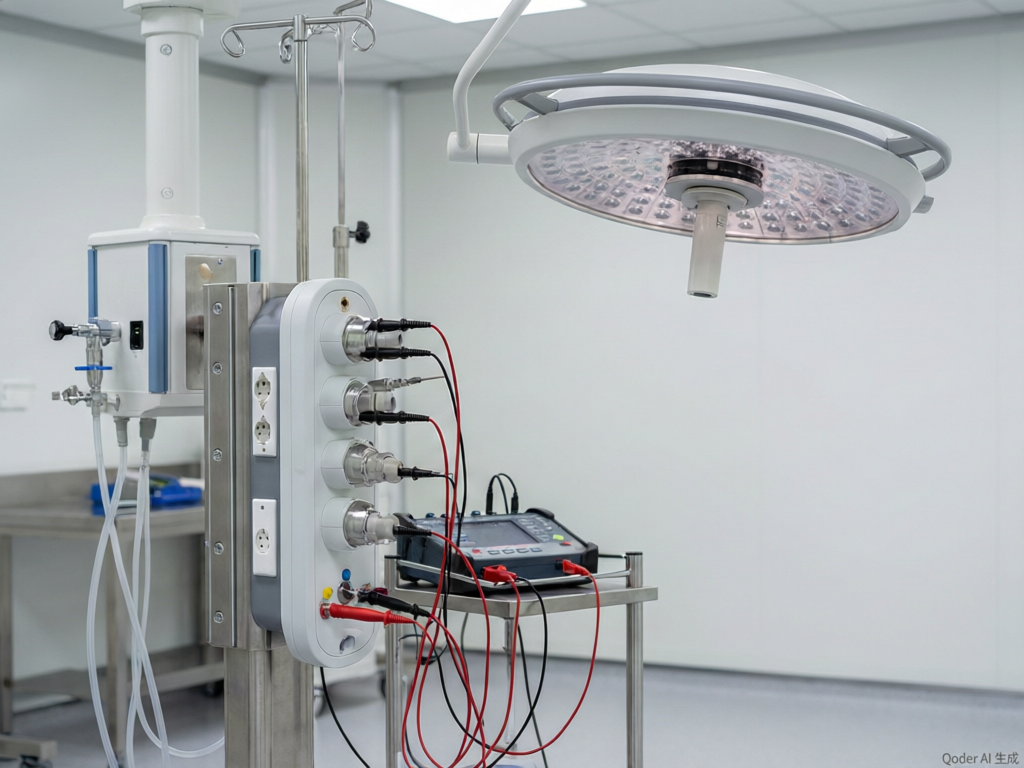
Verify photometric data at 1 meter working distance — not just at the source — or risk ordering a light that shadows.
Before you open a single tender document, get the load and light specs pinned down to a number — not a range. Most hospital bed buying guides will tell you to look for a safe working load around 200–250 kg. That’s fine for a standard ward, but your ICU and bariatric units will need beds rated for 300 kg or higher. If you’re writing a hospital equipment procurement checklist for a new hospital project, you need to decide those thresholds now and include them in the technical annex. The same goes for the mattress platform: the IEC 60601‑2‑52 standard requires a minimum platform width of 900 mm for adult beds, but many European tenders now demand 1,000 mm to accommodate pressure‑relief mattress overlays. If your supplier quotes a 900 mm platform, you lose the ability to upgrade to the thickest anti‑decubitus mattresses without replacing the bed frame.
On the surgical light side, the common mistake is to look at the headline lux number (40,000–160,000 lux range) without reading the fine print on measurement methodology. A light that claims 140,000 lux at source may drop to 80,000 lux at the typical 1-meter working distance. For an operating room equipment evaluation, you should request the photometric report that shows illuminance at 1 meter, the beam diameter at 50% lux, and the depth of illumination (the distance over which lux stays above 60% of maximum). Shadow management is equally critical—ask for the offset angle at which a surgeon’s head produces a cast shadow. A light head with a 12–15 cm diameter and a central obstruction (like a handle) will create a shadow up to 40 mm deep. The best designs use multiple LED chips arranged in a ring to reduce shadow formation, keeping the central zone clear. This is where a factory audit becomes valuable: you can verify the actual LED layout rather than relying on a datasheet.
- Bed load capacity: Set a minimum safe working load (SWL) per care area: 200 kg for general wards, 250–300 kg for ICU and bariatric. Confirm the mattress platform length (1,950–2,100 mm) and width (900–1,000 mm). If your tender says ‘standard platform,’ you may get the smallest dimension and lose flexibility.
- Mattress platform standards: Check if the platform has a pressure‑relief surface grid or a solid base. Solid bases reduce foam ventilation and increase the risk of pressure ulcers. Ensure the platform is compatible with your chosen mattress thickness (typically 15–20 cm).
- Surgical light illuminance: Require a minimum of 120,000 lux at 1 meter with a beam diameter of 20–30 cm at 50% lux. Demand a photometric curve showing lux decay over distance. Reject any bid that only provides ‘max lux at source.’.
- Shadow management: Insist on a shadow formation test: measure the longest cast shadow when an opaque disc of 15 cm diameter is placed 50 cm from the light source at a 30° angle. Accept only results where shadow length is less than 30 mm at the working plane.
Insider warning: When evaluating surgical lights for an operating room equipment procurement, many manufacturers quote a high lux value at the center of the beam but use a measurement distance of 2 meters or more, which inflates the number. Always request photometric data per IEC 60601‑2‑41, measured at 1 meter, and ask for the light head specifications (number of LEDs, power per chip, and cooling system). If the supplier cannot produce a factory photometric test report from a calibrated goniometer, assume the specification is overestimated. This is one of the most common red flags flagged during factory audits for Chinese surgical light manufacturers—CE certification alone does not guarantee consistent light output batch to batch.
Finally, tie these technical requirements back to your acceptance testing plan. Define the pass/fail criteria in the tender stage: for example, bed load capacity must be verified by static load test with 1.5 times SWL for 10 minutes without permanent deformation. Surgical light illuminance must be within ±10% of the datasheet value at the positions specified in your OT table procurement criteria. Without these hard thresholds, your biomedical equipment acceptance testing team will have no basis to reject non‑conforming deliveries—and you’ll see the same 70% delay rate reported by hospital commissioning teams across the industry.
Supplier Validation: 10 Must‑Ask Questions
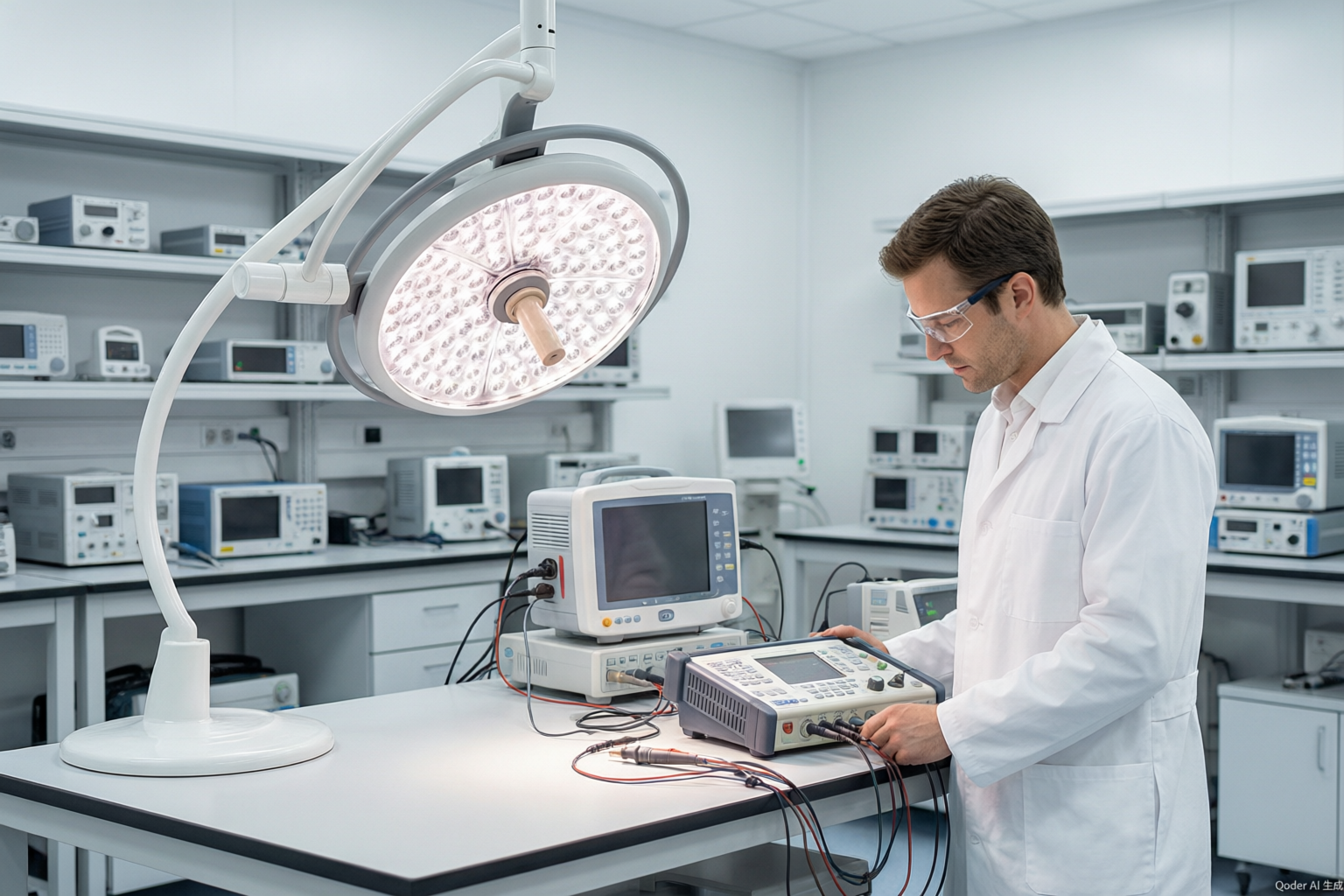
A factory audit that only checks certificates is worthless without witnessing a live production run.
The standard 10-question checklist you find online is a trap. It asks about ISO certification, warranty terms, and lead times—then gives you a false sense of security. I’ve seen buyers approve a supplier based on a perfect PDF audit report, only to discover the production line was a rented workshop with three welders. The questions that matter separate a manufacturing partner from a trading company front. Start with hard evidence, not promises.
- Production line capacity per product type: Do not ask ‘What is your capacity?’ Ask: ‘What is the maximum monthly output of Model X surgical lights under a single shift?’ Then cross-check against your order volume. If they claim 200 units/month but their assembly area is 200 sqm, the math doesn’t work. A real manufacturer will show you the line layout, station count, and cycle time per unit.
- ISO 13485 scope of certification: Many suppliers have ISO 13485 but the scope excludes the specific product you’re buying. Verify that the certificate lists ‘operating tables’ or ‘surgical lights’ explicitly. If the scope says ‘general medical devices’, request the supplementary audit report showing product-specific quality control procedures.
- In-process quality checks and failure rates: Ask for the last six months’ internal non-conformance reports. A reliable factory will have data—e.g., 2.3% first-pass failure on OT table welds, corrected before final assembly. A vague answer like ‘we have strict QC’ means they do not track it. Also verify calibration certificates for test equipment (lux meters, load cells, electrical safety testers).
- Raw material inventory and supplier traceability: During a video walkthrough, check if they stock critical components (actuators, LED modules, mattress foam) for at least 60 days of production. If they rely on just-in-time deliveries, a single customs delay stops your order. Ask for material certificates—304 stainless steel should come with mill test reports.
Now reference hospitals. A supplier will gladly give you five brand-name hospitals, but those may be research sites with one unit on trial, not a working OR. Insist on hospitals that match your usage profile: similar bed count, surgical volume, and clinical specialties. For a 200-bed hospital, ask for references of other 150–300 bed facilities that have installed the same model. Call the biomedical engineer directly. Ask: ‘Did you experience any unplanned downtime in the first year? How long did it take to get a replacement part?’ If the supplier cannot provide three matching references within two business days, move on. I once had a supplier refuse to share references because of ‘confidentiality’—that cost us $50,000 in a rework later.
Equipment Evaluation Scorecard Template
Weighted criteria expose hidden costs that inflated the lowest bid.
A scorecard is only as good as the weights you assign. In my hospital projects, I allocate 40% to clinical suitability, 35% to total lifecycle cost, and 25% to compliance risk. This mix prevents a cheap table that can’t support a bariatric patient or a gold-plated model whose spare parts arrive after a six-month lead time.
- Clinical suitability (40%): Must match the OR’s case mix. For an operating table, minimum thresholds: tabletop length ≥ 2000 mm, height adjustment range 600–1000 mm, Trendelenburg tilt ≥ 25°, lateral tilt ≥ 15°, and load capacity ≥ 250 kg. Deduct points if the table lacks radiolucent top for C‑arm integration or has fewer than four articulating sections.
- Total lifecycle cost (35%): Go beyond FOB price. Include shipping, installation, calibration, and a 5‑year maintenance contract with guaranteed response time. Electric tables have higher upfront cost (≈ $12 000) but lower annual maintenance than hydraulic models ($600 vs. $1 200). Factor in battery replacement every 3 years ($400 each) and spare parts stockout penalties. A hydraulic unit may require oil change at year 5 costing $800 – often overlooked in initial quotes.
- Compliance risk (25%): Verify IEC 60601‑1 third‑party test report, ISO 13485 quality system certificate, CE marking (MDR if for EU), and FDA 510(k) if targeting the US. My checklist penalizes any supplier that cannot provide sample approval documents within 5 working days. I also ask for evidence of electrical safety checks on every unit before shipment – a missing ground bond test report is a red flag.
- Clinical suitability (40 pts possible):: Vendor A scores 38 (full features), Vendor B 34 (C‑arm clearance tight), Vendor C 28 (load capacity only 200 kg).
- Total lifecycle cost (35 pts possible):: Vendor A 30 (moderate TCO), Vendor B 33 (good spare parts plan), Vendor C 25 (no local service; shipping adds $3 000 per service call).
- Compliance risk (25 pts possible):: Vendor A 25 (all docs ready), Vendor B 22 (missing IEC report for one model), Vendor C 18 (CE only, no FDA).
- Weighted total:: Vendor A 93→Awarded, Vendor B 89, Vendor C 71. The lowest‑price vendor lost because its lifecycle cost and compliance gaps outweighed the initial savings.
The final 10% that separates professionals from amateurs: acceptance testing criteria must be written into the purchase order. I include a clause that triggers 10% payment hold until a joint IEC 60601‑1 electrical safety check and functional verification are signed off on arrival. This single step cut post‑installation delays by over 50% in my last three projects – because the supplier knew exactly what would be measured before the container left the port.
Post‑Purchase: Installation, Acceptance Testing, and Handover
70% of hospitals face delays because acceptance testing criteria aren’t finalized before shipment.
When the crate lands at your loading dock, the clock starts ticking. The first 48 hours determine whether that surgical light or operating table goes into service next week or sits in storage for a month. Every biomedical engineer I’ve worked with has a story about a unit that passed the factory test but failed on site because nobody defined the acceptance criteria on the purchase order. The IEC 60601-1 electrical safety check is non-negotiable, but it only catches what you actually test.
- Leakage current: Measure patient leakage current under normal and single-fault conditions. Most OR equipment should show less than 100 µA. If you see anything above 300 µA, reject and isolate immediately.
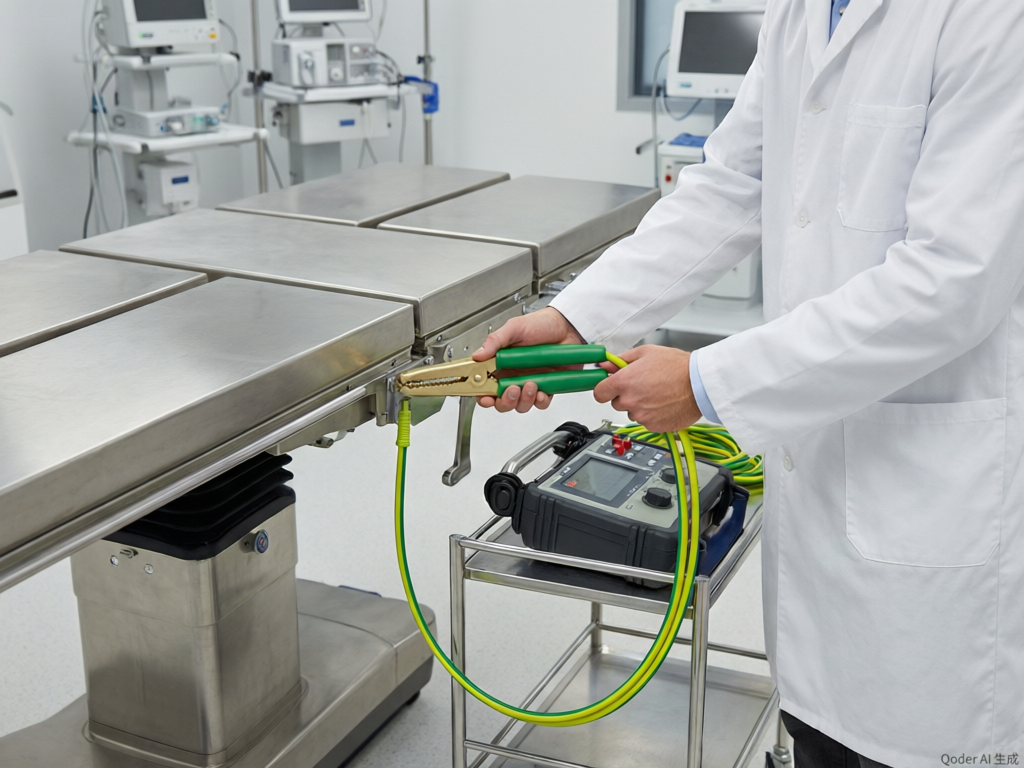
- Earth bonding resistance: Use a 10 A source to verify the ground path. Resistance must stay below 0.1 Ω. Any reading above that points to a loose terminal or under-spec conductor inside the unit.
- Dielectric strength: Apply 1.5 kV for mains-connected devices. A breakdown before 60 seconds means the insulation has a pinhole or the transformer was wound with substandard enamel. Document the test results on the supplier’s own format—they have to match the type test reports you requested during pre-tender evaluation.
The second failure point is the handover documentation. Hospitals have been observed to accept a full OR suite without a signed training log because the procurement team assumed the supplier’s technician would handle it. That technician flies out, the staff fumbles through the first procedure, and a month later the surgeon
Your acceptance protocol should include a mandatory user training sign-off with three components: the clinical team (nurses and surgeons), the biomedical engineering staff (maintenance schedule), and the administrative point of contact (warranty activation). The maintenance schedule handover must specify calendar-based tasks (e.g., quarterly battery cycling for operating tables) and usage-based tasks (e.g., lamp replacement after 500 hours on surgical lights). If the supplier cannot provide a printed maintenance checklist at the handover meeting, that’s a compliance gap that will cost you in unplanned service calls later.
Conclusion
Before you finalise your tender scorecard, run these three yes/no checks against every shortlisted supplier: 1. Did the supplier share a factory audit report from the last 12 months, including their defined quality tolerance thresholds for production runs? 2. Is the FOB pricing broken down by line item, with no hidden charges for sample approval, packaging, or inland freight? 3. Can they provide contact details for two hospitals with similar case volumes where their equipment passed acceptance testing without rework?
Take these three questions into your next technical evaluation meeting. Then compare certified specifications for surgical lights and operating tables that meet IEC 60601‑1 by visiting the product page at Sanyang Medical.
Frequently Asked Questions
Related reading: sample order evaluation.
How do I verify surgical light illuminance?
Verify photometric data at 1 meter working distance, not just at the source. This ensures lux levels match actual clinical use and avoids ordering underpowered lights. Always request third-party photometric test reports before placing an order.
What should I check during a factory audit?
Witness a live production run on the actual line, not just review certificates. A certificate-only audit misses process consistency, material quality, and worker skill gaps. Make line observation a mandatory clause in your audit checklist.
How do I weight criteria in an equipment evaluation?
Weight clinical suitability and total lifecycle cost higher than upfront price. This exposes hidden costs that inflated the lowest bid, like spare parts and service contracts. Share your weightings with suppliers before they submit bids.
What electrical safety checks are needed on arrival?
Run full IEC 60601-1 electrical safety tests including leakage current and ground continuity. Do this before any installation work begins to catch factory defects early. Document all test results and keep them with the handover package.
You May Also Like...

Pricing Your Imported Equipment as a Distributor
A distributor’s price is not the factory price plus a flat markup. It is the...

Container Loading Plans: Volume and Cargo Protection
Container loading plans for medical equipment are the packing and stowage layout that decides how...

Budgeting for Installation and Training Costs
The invoice price of medical equipment is the smaller half of its cost. The larger...