
Resumen Ejecutivo
Delivery room bed and resuscitation readiness, postnatal recovery sets and NICU-ready touches, bought as one package with peak-occupancy quantities.
A maternity ward lives or dies on equipment that works the moment labour does. Procurement teams assembling a package need the delivery bed list, the postnatal recovery set and the NICU-ready touches in one view, because gaps between categories are what delay admissions. This package guide walks each zone of a maternity ward and the equipment that earns its place in it.

The delivery room: the bed sets the standard
The obstetric delivery bed anchors the room: multi-position backrest and leg sections, removable leg supports and grips for delivery positioning, and a mattress set that cleans between patients without seams trapping fluid. Around it sit the foetal monitoring position, infant resuscitation trolley within reach of the birth, and lighting that adjusts for both delivery and suturing. Procurement teams often under-specify the resuscitation trolley’s placement, then discover during the first emergency that the layout costs seconds; the ward equipment package logic we applied in our general ward equipment guide applies here with delivery-specific timing. Maternal health equipment planning also has public reference points: the World Health Organization publishes maternal and newborn care guidance that informs national equipment lists.
Postnatal recovery: beds, trollies and the quiet list
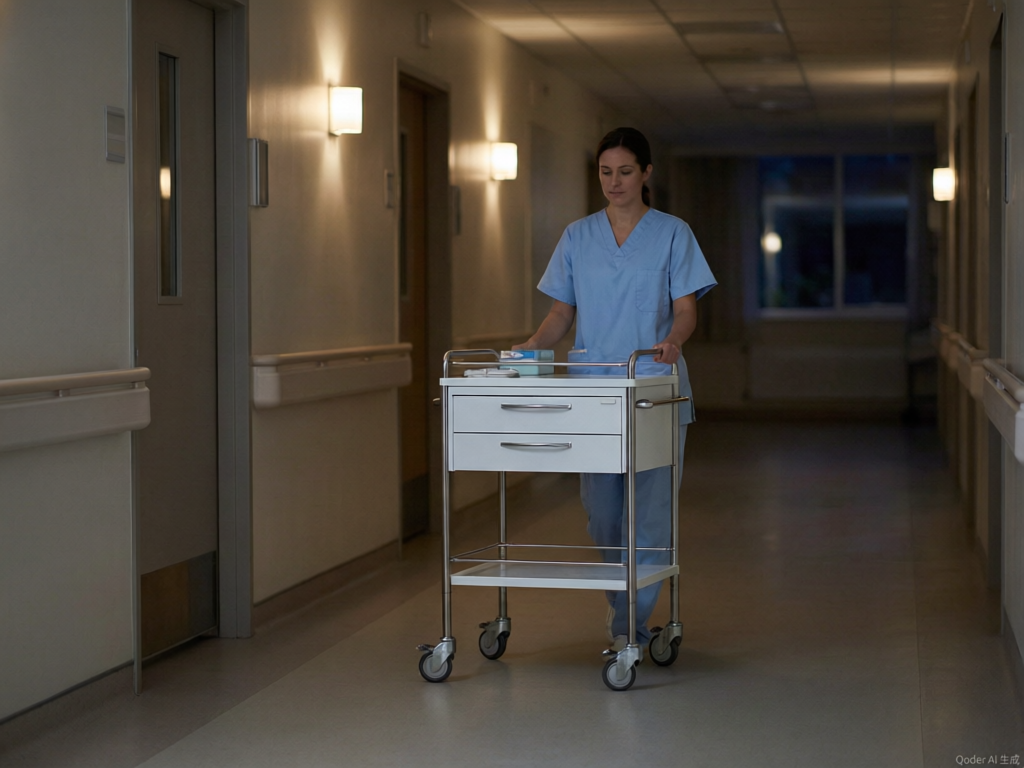
Postnatal rooms need fewer bells and more reliability: manual or semi-electric beds that tolerate heavy turnover, bedside trollies for mother-and-newborn care, and privacy screening that actually moves on its casters. The trolley decisions mirror the configurations discussed in our guide to medical trolley accessories, with two maternity-specific additions: a bassinet platform or newborn cot that pairs with each bed, and feeding-friendly side tables. Noise deserves a line on the spec sheet, because postnatal wards run quiet shifts, and casters and dampers that roll silently change the ward’s character at 3 a.m.
NICU-ready touches without a full NICU budget
Not every maternity ward needs a NICU, but every delivery room needs to be ready for the first minutes of a newborn who needs help. That readiness list is short and specific: a resuscitation trolley with warmer or radiant heat source, suction, airway set, and a transport incubator arrangement for moves to the regional unit. Procurement teams should price these as a package with the delivery rooms because the resuscitation readiness scales with delivery volume, not with bed count. Facilities planning a fuller neonatal build can extend this list with our walkthrough of a minor procedure room equipment list, which shares much of the same infrastructure.
Procurement notes: quantities, spares and delivery timing
Three buying notes close the package. Quantity follows peak occupancy, not average: maternity runs seasonal, and the ward that equips for average admits trolleys in corridors at peak. Spare parts belong in the first order, mattresses and casters especially, because downtime on a delivery bed is an admission diverted. And delivery timing should target commissioning before the first antenatal class, so staff train on the actual beds; our hospital bed range on the hospital beds product page and the trolley line on the medical trolleys page both ship with commissioning support for maternity projects.
Video: equipment for maternity programs
A maternity ward package is three zones, delivery, postnatal and newborn readiness, bought as one list with quantities set by peak occupancy and spares in the first order. Teams that buy it that way open on time and keep every bed in service when the season peaks.
También te puede interesar...

Bariatric OR Package: Table, Bed and Trolley Coordination
A bariatric OR package coordinates the operating table, the patient bed and the trolley for...

Lumen vs Lux: What These Surgical Light Units Mean
Lumen and lux are not the same thing. Lumen measures the total light a fixture...

Emergency Department Equipment for Trauma, Resuscitation and Triage
An emergency department is built around speed, and its equipment has to be ready the...