Private-label surgical lights are how distributors and hospital groups put their own brand on a ceiling product without building a factory, and the program behind a good light is more involved than a logo file: photometric performance, electrical safety verification, branding depth, packaging language and the certificate trail that lets the light enter the buyer’s market under the buyer’s name. This guide walks the OEM surgical light program from first samples to private-label rollout, written from the factory side of dozens of such programs.
What “OEM Surgical Light” Actually Includes
An OEM program transfers the product with the buyer’s identity on it, and identity runs deeper than a decal. The visible layer: logo on the light’s arm head and control pod, color-matched housings where the distributor’s brand palette exists, packaging printed in the buyer’s language with the buyer’s brand. The technical layer: control UI language (our localization covers Spanish, Portuguese, Russian, Arabic and more), default settings matched to the buyer’s market (lux foot-candle conventions versus lux, voltage stability assumptions), and manual and quick-start documentation under the buyer’s brand. The certificate layer decides what the buyer can legally claim: CE marking under the factory’s technical file, or the buyer’s own registration path where their market requires importer-of-record certification. Testing for these paths runs through accredited laboratories such as Intertek’s medical device programs, whose reports anchor both the factory’s file and the buyer’s registration. Buyers starting a program see the branding and localization options on our OEM and localization page.
Phase One: Samples That Prove the Photometrics
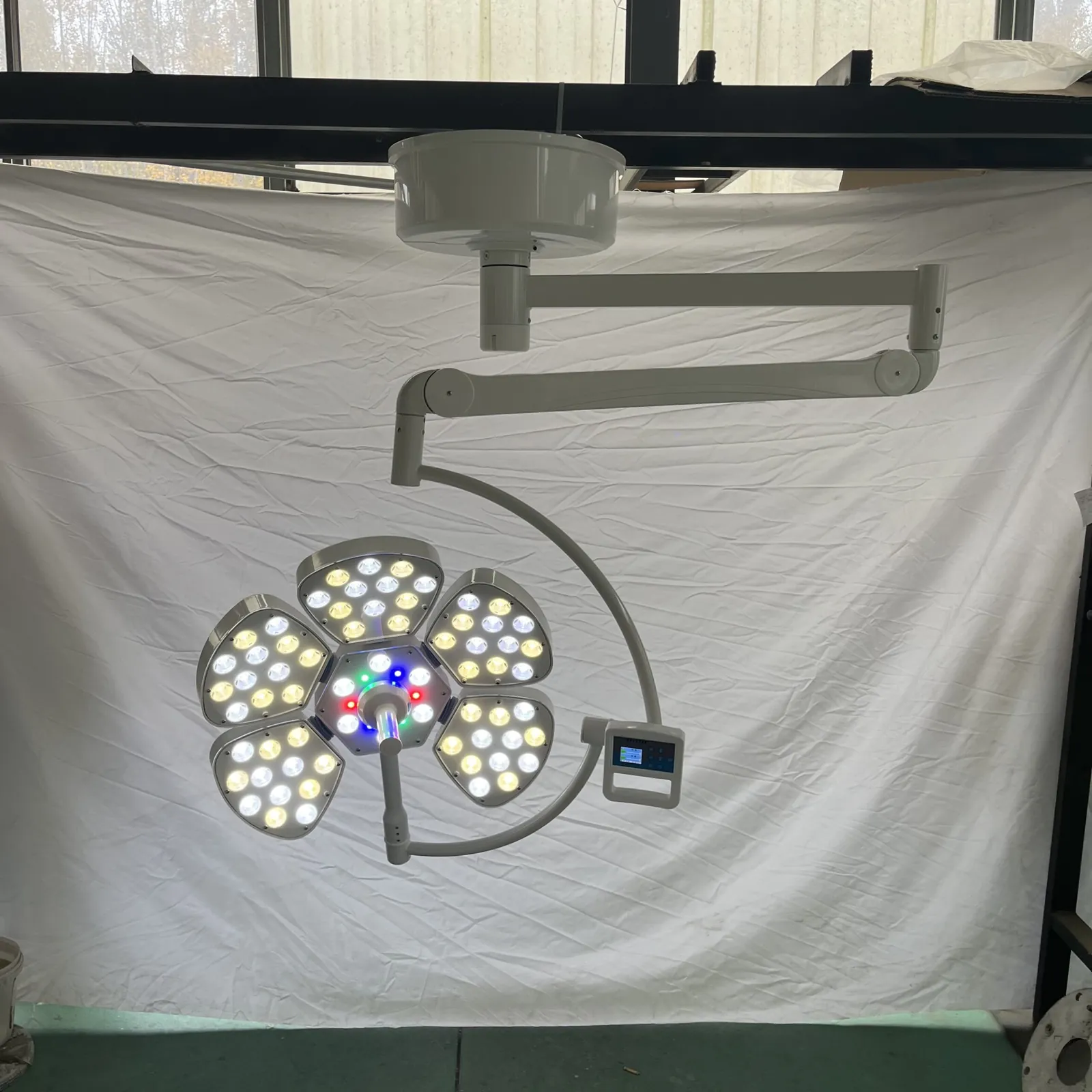
Surgical lights sell on what they deliver to the wound, so the sample phase verifies photometrics, not just appearance: central illuminance at working distances, light field diameter at defined depths, color rendering that shows tissue tones honestly, and the shadow-dilution behavior that matters when two heads and four hands work over one incision. The sample report records measurements against the datasheet, because a private-label program inherits the datasheet’s promises under the buyer’s brand, and a discrepancy found by the buyer’s first hospital customer is a brand injury, not a warranty ticket. Our sampling includes the photometric report as standard, and the surgical light line publishes the underlying figures per model so the comparison starts before samples ship.
Phase Two: Branding, Localization and Compliance Files
With samples approved, the program builds the buyer’s identity in: logo application files finalized to the housing molds, packaging designed and translated, manuals re-branded, and UI language set for the destination market. In parallel, the compliance file assembles: the factory’s CE technical file and ISO 13485 system certificates, test reports, and the documents the buyer needs to register the product as importer or local license holder. Distributors launching their own brand should also plan the spare parts identity, bulbs or LED modules, fuses, handles, shipped under the buyer’s label, because the first service call is where private-label credibility is tested. The program timeline from approved samples to first branded batch typically runs four to eight weeks depending on packaging tooling and registration scope.
Phase Three: Rollout, Exclusivity and the Long Game
Private-label rollouts that succeed share three structural decisions. Territory and exclusivity: the buyer and factory agree where the buyer’s brand may sell and whether the agreement is exclusive, in writing, because the factory’s other OEM customers deserve clarity as much as the buyer does. Volume architecture: pricing tiers tied to annual quantities, with the first order sized to prove the market rather than fill a warehouse. And roadmap: new models and feature updates flow into the private label on the same cadence the factory’s own brand receives them, keeping the buyer’s catalog competitive without a new sourcing cycle. Distributor agreement mechanics, territory, exclusivity and MOQ structures, are covered in detail in our guide to the distributor agreement essentials.
الأسئلة المتكررة
How deep can private-label branding go on surgical lights?
Logo on housing and control pod, color-matched housings, branded packaging and manuals, and UI language localization; the certificate trail follows the agreed registration path.
What should the sample phase prove?
Photometrics against the datasheet: central illuminance, field diameter, color rendering and shadow dilution, recorded in a report the private label will stand behind.
Who holds the CE certificate on a private-label light?
Typically the factory holds the technical file and CE path, while the buyer registers as importer or local license holder where their market requires it; the split is agreed in writing.
How long from approved samples to first branded batch?
Commonly four to eight weeks depending on packaging tooling and the registration scope of the destination market.
Building a private-label surgical light program? Contact sanyang10086@gmail.com or WhatsApp +86 195 0862 5836, and our OEM desk will scope branding, localization and the compliance file. Line overview: أضواء جراحية.
قراءات ذات صلة: Cybersecurity for Connected OR Equipment
قد يعجبك أيضًا...

Medical Equipment Tenders: Writing Specifications That Do Not Exclude Suppliers
A tender specification is a description of need written for people who will not read...

Service Contracts and SLAs for OR Equipment: What Buyers Should Negotiate
A service contract looks like a maintenance formality until a light fails at 02:00 before...

Import Document Pack: What Customs Asks for Medical Devices
A medical equipment shipment stops at customs for one reason more than any other: the...