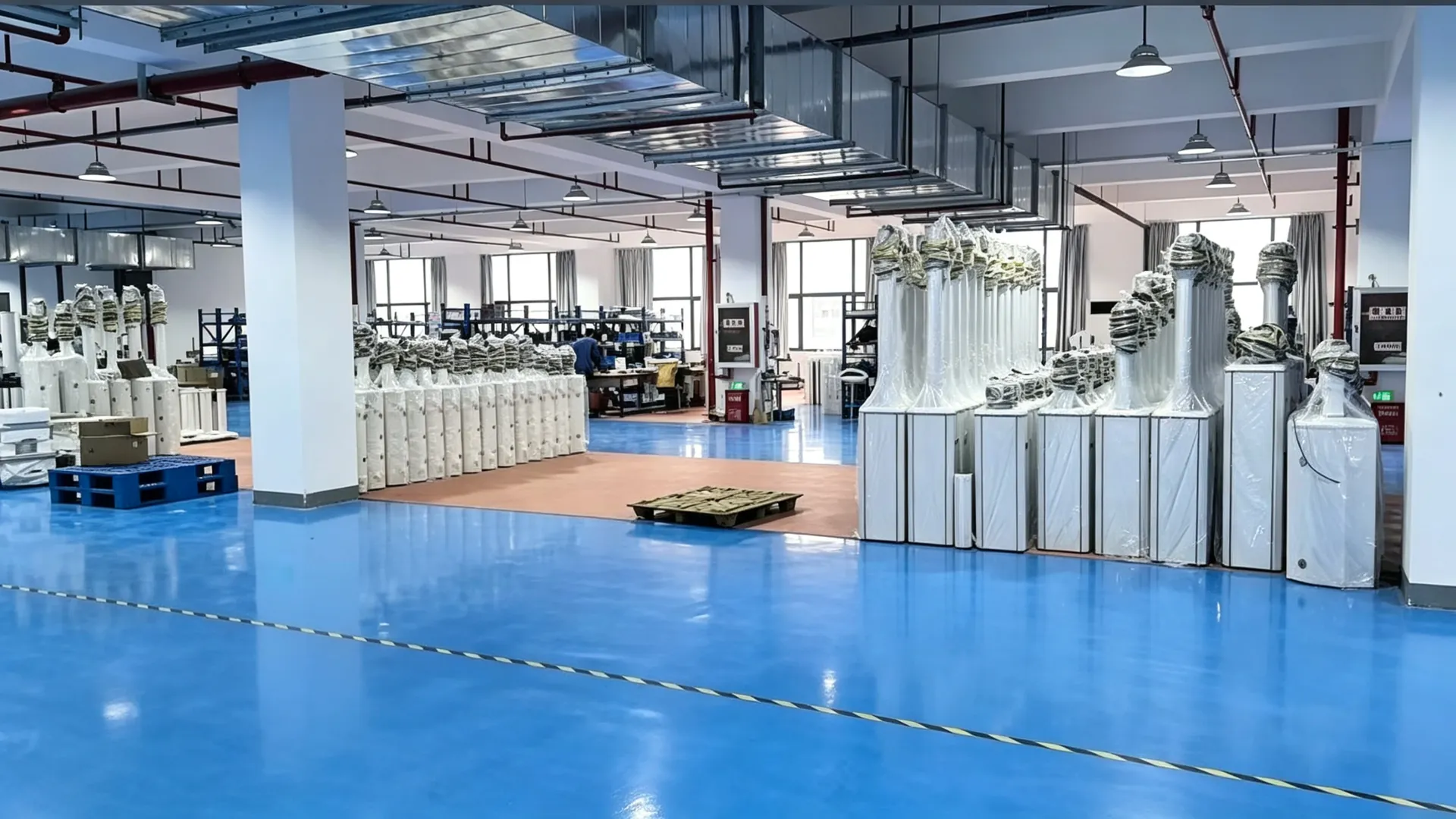

A third-party inspection is an independent quality check performed at the factory by a company that has no stake in the shipment. For medical equipment buyers, that independence is the point: the inspector’s report does not protect the factory’s reputation, it protects the buyer’s payment. Under the standard factory terms used by Chinese manufacturers, 30 percent T/T starts production and 70 percent is due before shipment, which puts the inspection exactly at the payment gate. A clean report releases the balance; a report with findings starts a correction while the money is still in your bank.
This guide covers the inspection types, what inspectors check on medical devices, and how to commission an inspection that produces evidence you can act on.
Types of Third-Party Inspection
Inspection services are sold by stage, and each stage answers a different question. Pre-production inspection verifies that the factory has the materials, tooling, and processes in place before the production run starts. During-production inspection checks a rolling sample as units come off the line, which catches process drift while correction is still cheap. Pre-shipment inspection verifies the finished, packed order against the purchase order before the container loads. Container loading supervision checks the actual loading, carton condition, and seal numbers at the port.
Buyers who order only one stage usually choose pre-shipment, because it sits at the payment gate. Buyers who order two add during-production, because the pre-shipment report cannot show what the first three weeks of production looked like. More than 70 percent of quality disputes in medical equipment imports trace back to insufficient pre-production verification, so for first orders with a new factory, the pre-production visit is the highest-value stage of all.

What a Pre-Shipment Inspection Covers
| الفئة | What the inspector checks | Document produced |
|---|---|---|
| السلامة الكهربائية | Earth continuity, leakage, insulation, functional run | Test readings sheet |
| التكوين | Model, voltage, accessories against the PO | Configuration checklist |
| Cosmetic condition | Scratches, dents, stains, weld and seam quality | Photo log |
| Packing | Export cartons, foam, marking, container loading | Packing list verification |
| التوثيق | DoC, test reports, IFU, certificates, commercial papers | Document pack review |
Electrical safety and configuration are the reject conditions. A unit that fails either one should not proceed to packing, because a hospital cannot put a light with a missing earth connection or a table with the wrong voltage into service. Cosmetic findings are usually conditional: documented, repaired, or discounted. Packing and documentation findings rarely stop the shipment but cost money when missed, because customs and the receiving hospital both check them.
Electrical Safety Testing in the Field

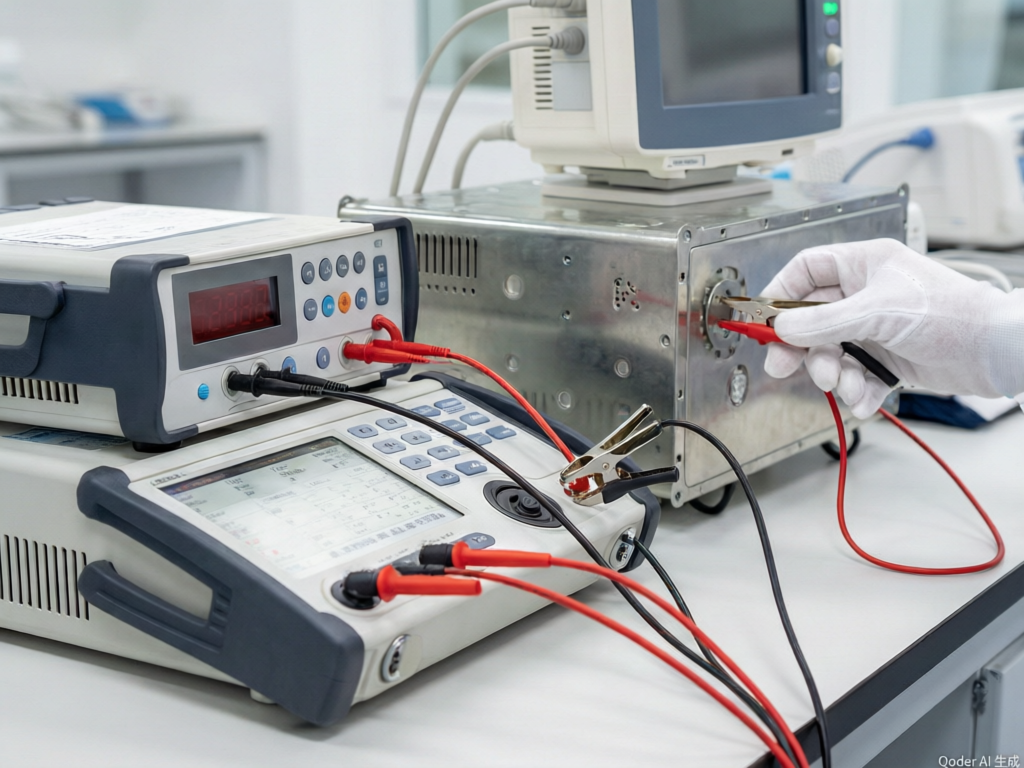
Medical electrical equipment is covered by IEC 60601-1, the general standard for basic safety and essential performance. The checks that run in a factory inspection session are the same family a hospital’s biomedical team runs on receipt: earth continuity from the frame to the supply plug, leakage current at operating voltage, insulation resistance, and a functional run of every motor, light, or actuator the device has.
Ask the inspector to watch the factory demonstrate each test live rather than accept a report alone. A report proves a unit passed on the day it was tested; a live demonstration proves the test equipment works, the operator understands the procedure, and the unit on the floor is the unit being measured. The same distinction applies to the certificates the factory shows: a photocopy of an ISO 13485 certificate issued years ago means little if the factory has not passed a surveillance audit in the last 18 months, and an inspector on site can verify the certificate’s current scope.
Sampling, AQL, and the Report
Inspectors do not check every unit in a large order. They draw a sample using attribute sampling with an agreed acceptance quality limit, per the ISO 2859-1 framework, and the sample size is fixed before the inspection so neither side can argue it after the fact. The contract should state the AQL for major and minor defects, the sample size, and what happens when the sample exceeds the limit: 100 percent screening, repair, or rejection.
The report itself is the deliverable that matters. A professional inspection report names the inspector, the date, the sampling plan, and every finding with a photo reference, and it separates critical, major, and minor findings so the buyer can decide what blocks shipment. Require the report template to be agreed before production starts, and state in the RFQ that release of the balance payment requires a report signed by both parties. Buyers who negotiate that line at the start never have to argue about it at the factory gate; the pre-shipment inspection guide covers the five categories in detail, and the certificate verification guide explains how to check the documents the report references.
Third-Party Inspection vs Factory Quality Control
Factory QC and third-party inspection are complements, not substitutes. A factory’s own quality process runs every day: Sanyang Medical operates 23 dedicated test stations for surgical lights alone, covering lux meter uniformity, color temperature drift over 10 hours, and ingress protection tests, and a proper factory walkthrough checks at least 15 critical control points from raw material storage to final pre-shipment inspection. That in-house process is what makes a shipment good.
The third-party inspector verifies that the process worked for the units in front of them. The two layers catch different failures: factory QC catches drift over time, while the independent inspection catches the sample-level problems that QC documentation sometimes misses, such as material substitution. A documented audit finding is 201-grade stainless steel shipped where 304-grade was approved, a difference an on-site inspector with a handheld XRF scanner can catch at the raw material stage before it becomes a corrosion failure in year two. The دليل تدقيق المصنع الطبي الصيني walks through the 15 control points and what to verify at each one.
Regulatory Third-Party Assessment
A separate layer of third-party inspection exists for regulatory compliance. Under the European Union’s medical device regulation, notified bodies act as independent conformity assessment organizations: they audit the quality system, review the technical documentation, and issue the certificates that let a device carry the CE mark. The European Commission’s medical devices sector page explains how notified bodies are designated and what their assessment covers. A shipment-level inspection report and a notified body certificate answer different questions, and both belong in the buyer’s file for any device entering a regulated market.
Commissioning an Inspection
Three contract points make an inspection usable. First, name the inspection stage, the sample size, and the AQL in the purchase order. Second, agree the report template before production starts, including the critical, major, and minor finding definitions. Third, tie the balance payment to the signed report so the inspection has real authority. When the report comes back with critical findings, the correction belongs to the factory: rework the units, re-inspect the sample, and re-issue the report before the container is booked. That loop is the reason the contract names both parties and sets a correction deadline. Inspection fees are quoted per inspector day plus travel, and the fee is a small fraction of the balance payment it protects, which is why the clause belongs in the contract rather than being negotiated on site.
An independent set of eyes at the right stage turns a quality dispute into a correction notice. The مجموعة منتجات سانيانغ الطبية is available for sample testing and factory visits before you commit, and every order ships with the test records and documentation pack that an inspector will ask to see.
Third-Party Inspection for Medical Equipment FAQ
What is third-party inspection for medical equipment?
Third-party inspection is an independent quality check performed at the factory by an external company with no stake in the shipment. It verifies electrical safety, configuration, cosmetic condition, packing, and documentation before the balance payment is released.
When should a buyer order a third-party inspection?
Inspections are ordered by stage: pre-production, during production, pre-shipment, or container loading. Pre-shipment is the minimum for most buyers; pre-production is the best addition for first orders with a new factory.
What do inspectors check on medical devices?
Inspectors check electrical safety (earth continuity, leakage, insulation, functional run), configuration against the purchase order, cosmetic condition, export packing, and documentation including the Declaration of Conformity and test reports.
How much does a third-party inspection cost?
Inspection fees are quoted per inspector day plus travel, and vary with scope, unit count, and factory location. The fee is a small fraction of the balance payment it protects, so put the clause in the purchase order.
Does an inspection report replace factory certificates?
No. An inspection report covers the specific shipment, while certificates such as ISO 13485 and CE cover the manufacturer and product type. Buyers need both: the report for the order, and verified current certificates for the factory.
قد يعجبك أيضًا...

Pricing Your Imported Equipment as a Distributor
A distributor’s price is not the factory price plus a flat markup. It is the...

Container Loading Plans: Volume and Cargo Protection
Container loading plans for medical equipment are the packing and stowage layout that decides how...

Budgeting for Installation and Training Costs
The invoice price of medical equipment is the smaller half of its cost. The larger...